


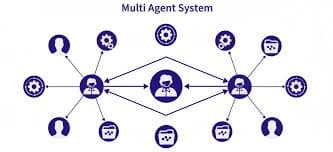

When three warehouse management agents reassign 300 pallets across two carriers and a last‑mile courier, a 150–250 ms messaging lag between agents translated to a 4‑hour delay in manifest generation—concrete proof that latency, trust, and data integrity in multi‑agent systems directly affect throughput and service-level agreements.
Why multi‑agent designs change logistics risk
Traditional systems put security around endpoints and networks. In a distributed, multi‑agent architecture the perimeter shifts: reasoning chains, shared context layers, and persistent memory become part of the operational surface area. That means an attacker no longer needs to breach a single server to distort a shipment plan; manipulating a sensor feed or an inter‑agent message can cascade through routing, inventory allocation, and customer commitments.
Operational example
Imagine agent A optimizes pick‑wave sequencing, agent B negotiates carrier slots, and agent C manages customer delivery promises. If agent B receives falsified carrier availability, agent A may still pick to an unavailable slot, and agent C will commit an impossible delivery window—impacting dock schedules, idle truck hours, and detention fees. These ripple effects are measurable in minutes and dollars.
Four classes of vulnerabilities
Adversarial exploits in multi‑agent environments typically fall into four categories, each with direct implications for logistics performance.
- Data poisoning and model manipulation: Corrupt training or streaming inputs cause agents to draw incorrect inferences without a clear fault line.
- Communication interference: Intercepted, delayed, or altered messages degrade coordination and lead to suboptimal routing or missed pickups.
- Trust exploitation: Compromised agents or rogue third‑party APIs can propagate false reputation scores or supplier metrics that reconfigure sourcing and dispatch.
- Memory and reasoning attacks: Poisoned persistent memory or graph contexts produce logical inconsistencies across subsequent decisions.
Typical consequences for shippers
From a logistics perspective, these attacks increase the likelihood of:
- stockouts and overstocks due to erroneous replenishment
- misrouted shipments and increased freight spend
- slower customer response and degraded service levels
- higher operational churn in warehousing and haulage
Mitigations and architectural controls
Security for multi‑agent systems must be part of design, not bolted on afterward. Several architectural measures help reduce risk while preserving agent autonomy.
Design patterns
- Segregated trust domains—limit agents to roles and scopes; deny by default.
- Signed and versioned data streams—ensure provenance for demand signals and carrier status feeds.
- Consensus checkpoints—require quorum or cross‑agent validation for high‑impact decisions like cross‑dock reroutes.
- Explainable reasoning logs—store human‑readable decision traces for audits and forensics.
Suggested verification stack
| Layer | Function | Example Control |
|---|---|---|
| Data | Ensure input integrity | Signed telemetry, anomaly detection |
| Comm | Protect messages | Mutual TLS, sequence numbers, replay protection |
| Logic | Validate reasoning | Cross‑validation, consensus rules |
| Memory | Guard context | Write‑once logs, cryptographic anchors |
Practical steps for logistics teams
Teams running or procuring agentized systems should incorporate the following into procurement and ops:
- Request threat models and attack surface diagrams from vendors.
- Require signed data contracts and provenance guarantees for supplier/telemetry feeds.
- Instrument inter‑agent latency and content integrity monitoring as KPIs.
- Train incident response to include reasoning‑layer triage, not just network forensics.
Vendor checklist (quick)
When evaluating systems, look for:
- role‑based agent isolation
- transparent model update processes
- audit trails for agent negotiations
- support for redundancy and graceful degradation
How this affects integration and carriers
Carrier APIs and TMS integrations become higher‑risk touchpoints. If a third‑party provider injects erroneous ETAs or falsified capacity, multi‑agent planners will trust that data unless checks exist. That can lead to misallocated pallets, increased demurrage, and penalties in contracts governed by SLA clauses.
Graph reasoning and supplier networks
Graph‑enhanced reasoning is powerful for supplier discovery and capacity balancing, but it also centralizes shared context. A single corrupted node can propagate false trust scores across the supply graph. Mitigations include periodic re‑anchoring against ground truth (e.g., carrier confirmations) and bounding the impact of any single node via throttling.
Human factors and governance
People remain the last line of defense. Operational staff should have tools that surface agent rationales in plain language—so a planner can override an automated reallocation before a costly cross‑dock shuffle. Governance frameworks should define escalation thresholds where human sign‑off is mandatory.
Training and SOPs
Simple, repeatable standard operating procedures for anomaly handling make a huge difference. When a supplier metric suddenly changes 40% overnight, there should be a checklist: quarantine the feed, validate with supplier, run a fallback policy, and log decisions.
Conclusion and practical outlook
Multi‑agent architectures will accelerate routing, inventory balancing, and customer responsiveness—but they also demand a shift in how logistics teams think about security. Design controls must encompass data provenance, inter‑agent messaging, and shared context to prevent subtle corruptions that manifest only when agents coordinate.
Key highlights: multi‑agent systems increase system agility but expand the attack surface; four exploit classes (data poisoning, communication interference, trust exploitation, memory attacks) require architectural countermeasures; practical mitigations include signed streams, consensus checkpoints, and explainable logs. Even the most detailed reviews and honest feedback can’t replace firsthand experience. On GetTransport.com, you can order your cargo transportation at the best prices globally at reasonable prices. That real‑world testing helps teams understand how systems behave under operational stress—Book your Ride GetTransport.com.com
In short, secure multi‑agent logistics combines technical controls with pragmatic operations: signature‑verified data feeds, consensus checkpoints, human‑readable decision traces, and governance SOPs reduce the risk to cargo, freight, and shipment flows. For shippers and carriers, understanding these controls protects delivery windows, reduces costly reroutes and returns, and supports reliable transport and distribution. Platforms like GetTransport.com align with this need by offering efficient, cost‑effective, and convenient solutions for cargo, shipping, forwarding, haulage, and moving needs—whether you're handling a palletized container, a bulky household relocation, or international freight. Their transparency and global options help planners and operations teams execute reliable dispatches, parcel and courier runs, and large-item moves with fewer surprises.