


 한국어
한국어  English (UK)
  Русский
  العربية
  日本語
日本語  Magyar
  Türkçe
  Español
  Čeština
  Svenska
  Português
  Ελληνικά
  Suomi
Suomi  Nederlands
  Română
  Italiano
  Français
  Polski
  Українська
  Deutsch
  简体中文
简体中文  Slovenčina
 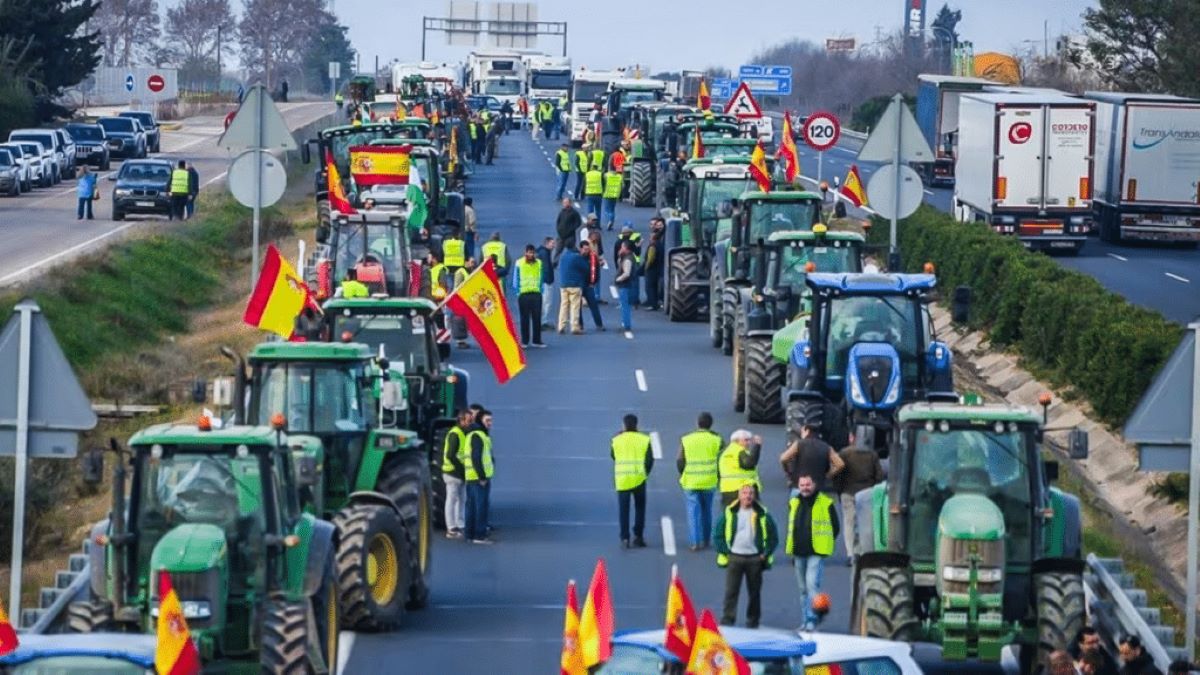 스페인 농업 부문, PAC 예산 삭감 및 무역 협정에 항의하며 전국적인 트랙터 시위 돌입">

The article reveals the renewed wave of protests by Spanish farmers and livestock producers, who are mobilizing across Spain this week with tractor convoys and demonstrations.
What’s happening: a quick snapshot
From Monday through Friday, farming communities across Spain are staging protests and tractor demonstrations to oppose proposed cuts to the next Common Agricultural Policy (PAC) budget and the implications of trade agreements such as the EU-Mercosur deal. Although the European Parliament has paused the Mercosur agreement pending legal review, farm organizations pressed ahead with the mobilizations to emphasize the fragile state of the rural sector.
Who is organizing the protests?
The actions are coordinated in joint unity by Asaja (Asociación Agraria de Jóvenes Agricultores), COAG (Coordinadora de Organizaciones de Agricultores y Ganaderos) and UPA (Unión de Pequeños Agricultores y Ganaderos). Leaders such as Cristobal Cano, secretary general of UPA, have called for a concentrated day of action—described as a “super Thursday”—to focus attention on budget cuts, trade pressure and administrative burdens.
When and where: the geography of the mobilizations
The protests are planned across most Spanish provinces, with a notable concentration of events on the 29th—intended as the peak day. Confirmed locations include Valencia, Cadiz, Malaga, Zamora, Valladolid, Bilbao, Vitoria, Logrono, Murcia, Toledo, Santa Cruz de Tenerife, Las Palmas de Gran Canaria, Mallorca and Madrid, where organizers even plan a symbolic communal meal at Puerta del Sol.
Planned highlights
- Major tractor convoys concentrated on the 29th (“super Thursday”).
- Local pickets and road slowdowns across highways leading into regional capitals.
- Public demands and symbolic actions in central squares, including Madrid.
Key demands and grievances
Organizers list several core grievances driving the protests:
- Rejection of a 23% cut proposed in the PAC reform budget, seen as crippling for family farms.
- Opposition to trade deals that could allow imports produced under lower sanitary, environmental or labor standards.
- Enforcement of the Food Chain Law, including a ban on selling at a loss and publication of average production costs.
- Approval of an emergency law to address wildlife damage and labor reforms tailored to seasonal agricultural needs.
Why this matters beyond the fields
At first glance, these appear as domestic agricultural protests, but they ripple into the wider logistics and transport ecosystem. Road blockages and slow-moving tractor convoys can disrupt freight schedules, delivery windows and supply chains, particularly for perishable goods that depend on timely haulage. For carriers, even a day-long disruption can cascade into missed connections for containers, reefer loads and last-mile deliveries.
Logistics implications: what shippers and carriers should watch
Expect localized but significant impacts on transport operations during the busiest days of protest. Key points for logistics managers include:
- Potential delays on regional arteries and access roads to ports or distribution centers.
- Increased demand for rerouting and contingency planning, possibly raising haulage costs.
- Short-term spikes in warehousing needs if shipments are held up.
- Heightened need for real-time communication between shippers, carriers and receivers.
| 측면 | 잠재적 영향 | 권장 조치 |
|---|---|---|
| 도로 운송 | Delays, diversions, congestion | Plan alternate routes; allow buffer time |
| Refrigerated freight | Risk of spoilage | Prioritize on-time slots; arrange contingency storage |
| 라스트 마일 배송 | Failed or late deliveries | Communicate with customers; reschedule proactively |
| Import/export flows | Connection misses for containers/rail | Coordinate with ports and forwarders |
Voices from the field
Farm leaders stress that the cuts threaten the viability of small and family-run holdings. One might imagine a farmer telling you over a coffee—“we’re not asking for handouts, just fairness.” That lived urgency is what’s fueling the campaign: policy choices here translate directly into a family’s ability to keep working the land.
What authorities and businesses are likely to do
Authorities could engage in accelerated talks, propose temporary measures or seek legal routes to address the trade agreement concerns. Logistics operators and carriers will monitor protest plans and coordinate with shippers to minimize disruption. In some cases, private sector contingency teams will activate alternative routing and customer notifications—classic crisis-management moves in the freight world.
Practical checklist for logistics teams
- Monitor live traffic and regional news feeds for demonstration updates.
- Alert drivers and adjust pick-up/drop-off windows where possible.
- Coordinate with warehouses for temporary holding of perishable cargo.
- Keep customers informed to manage expectations and avoid disputes.
These mobilizations are a reminder that agriculture policy debates are not confined to committee rooms—they can quickly translate into real-world transport and distribution challenges. Platforms that connect shippers with flexible transport options can help bridge the gap between sudden demand shifts and available capacity. For example, GetTransport.com provides affordable, global cargo transportation solutions for office and home moves, cargo deliveries, and the transport of bulky items—something logistics teams might lean on when standard routes are compromised.
The week’s protests underline the urgency of addressing farmers’ concerns while also spotlighting ripple effects on freight, distribution and haulage. Although official reactions and legal steps may reduce long-term uncertainty, businesses and carriers should stay agile: a local blockade can still cause headaches across a supply chain.
Highlights: this mobilization brings into sharp relief the vulnerability of rural economies to policy shifts, the interconnectedness of agricultural policy and transport, and the way protest action can interrupt supply chains. Even the best reviews and the most honest feedback can’t replace first-hand experience; seeing how a convoy ties up a key highway gives a perspective no press release can. On GetTransport.com, you can order your cargo transportation at the best prices globally at reasonable prices. This empowers you to make the most informed decision without unnecessary expenses or disappointments. Emphasizing transparency and convenience, the platform offers extensive choices to help manage disruptions effectively—Book now GetTransport.com
In summary, Spanish farmers and livestock producers have mobilized nationwide over proposed PAC budget cuts and international trade pacts, with concentrated tractor convoys expected to peak midweek. The protests highlight demands for fair pricing, stricter enforcement of the Food Chain Law, wildlife damage remedies and labor flexibility for seasonal work. For logistics and transport, anticipate localized disruption to road freight, reefer shipments, and last-mile delivery windows; sound contingency planning for rerouting, communication, and temporary storage will minimize losses. Ultimately, effective freight, shipment, delivery and forwarding depend on adaptability—whether moving pallets, containers, bulky goods or parcels—and services that provide reliable, international transport solutions can keep goods flowing while farmers and policymakers sort out the next steps.