


 한국어
한국어  English (UK)
  Русский
  العربية
  日本語
日本語  Magyar
  Türkçe
  Español
  Čeština
  Svenska
  Português
  Ελληνικά
  Suomi
Suomi  Nederlands
  Română
  Italiano
  Français
  Polski
  Українська
  Deutsch
  简体中文
简体中文  Slovenčina
 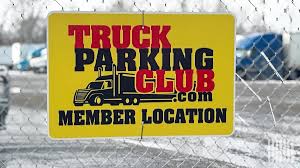 Truck Parking Club expands to 4,000 locations, unlocking 66,000 reservable truck parking spaces">

Truck Parking Club now operates in 4,000 locations across 49 U.S. states, offering access to more than 66,000 reservable truck parking spaces and targeting a network of 100,000 locations by the end of 2026. Expansion accelerated by 1,000 sites in the past three months as the platform converts private lots—warehouses, storage facilities, and trucking yards—into reservable stops for drivers and fleets.
Network scale and operational snapshot
The platform’s model relies on integrating privately owned lots into a searchable, bookable inventory rather than building new infrastructure. Given the estimated cost to develop a single new truck parking space at $100,000–$200,000, this approach materially reduces capital expenditure and shortens time-to-service for carriers. Adoption among major carriers is high, with the company reporting use by 92 of the top 100 U.S. fleets.
Key metrics at a glance
| Metric | Current value | Target (end of 2026) |
|---|---|---|
| 위치 | 4,000 | 100,000 |
| Reservable spaces | 66,000+ | — |
| States covered | 49 | 50 |
| Top carriers using service | 92 of top 100 fleets | Grow enterprise footprint |
Why the private-lot model matters for logistics
From a supply-chain perspective, the immediate benefits are practical: better driver rest scheduling, fewer illegal roadside stops, and improved predictability in delivery windows. When drivers can reserve a lot in advance, dispatchers can route and sequence pickups and deliveries with tighter ETAs. That reduces idle time, lowers detention claims, and helps fleets optimize fuel and labor costs.
Primary advantages
- 비용 효율성 — avoids $100k–$200k per-space construction costs.
- Speed to scale — onboarding existing lots is faster than building infrastructure.
- Driver safety — reservable spaces reduce unsafe parking on ramps and shoulders.
- Fleet integration — large carriers can fold reservable lots into TMS and planning systems.
Operational challenges and risks
- Variability in lot quality, lighting, and security.
- Local zoning and access restrictions that may limit overnight stays.
- Need for seamless payment, reservation, and enforcement workflows.
- Coordination with property owners to maintain consistent standards.
Scaling mechanics: technology, partners, and incentives
The platform connects drivers and fleets to private-property owners through a technology stack that handles listings, reservations, and enterprise integrations. Properties include trucking and tow companies, warehouses, and storage yards. Incentives for property owners range from modest rental income for unused space to improved site utilization and security upgrades funded by platform agreements.
Typical onboarding flow
- Property listing and vetting (photos, security checks).
- Pricing and rules configuration (hours, vehicle size limits).
- Integration with fleet accounts and driver apps.
- Reservation, check-in, and payment processing.
Co-founder and CEO Evan Shelley has framed the strategy as unlocking existing infrastructure across the country rather than replicating it with costly new builds. That’s a practical viewpoint: when supply is already there, the playbook shifts from construction to digitization and orchestration.
Impacts on routing, dispatch and regional hubs
Reserving parking becomes another variable in the routing equation. Dispatchers can embed parking availability into load plans, which reduces unplanned layovers and enables tighter driver hour-of-service compliance. For regional hubs and consolidation points, having reliable, bookable parking transforms these sites into predictable stops for cross-dock operations and pallet transfers.
Checklist for carriers and shippers
- Integrate parking reservations with TMS and ELD systems.
- Adjust route plans to include confirmed parking windows.
- Negotiate enterprise rates for regular routes and lanes.
- Audit lot quality periodically to ensure safety and suitability.
What this means for supply chains and local infrastructure
At a macro level the move is likely modest for global logistics—parking access affects regional throughput more than ocean freight or air cargo lanes. Still, at the lane and terminal level, better parking can shave minutes and dollars off each load, improving velocity across last-mile and intermodal handoffs. In short, it’s a practical, cost-conscious way to reduce a chronic operational headache.
Quick scenario
Imagine a driver scheduled to arrive late to a cross-dock. Without a reserved spot, they may circle or park illegally, delaying unloading and downstream pickups. With a confirmed lot, the dock manager and dispatcher know arrival and can stage equipment—translating to fewer missed connections and smoother distribution cycles. As they say, a stitch in time saves nine.
I’ve spoken with drivers who treat guaranteed parking like gold—less stress, better sleep, and fewer surprises at 2 a.m. Those everyday improvements add up in reduced turnover, better compliance, and a more reliable service for shippers.
Summary of notable takeaways
Truck Parking Club has scaled quickly by connecting fleets with private lots, creating an alternative to expensive new parking infrastructure. The platform’s rapid growth—4,000 locations and 66,000 reservable spaces—signals demand from both drivers and large carriers, while the cost avoidance per space makes the model attractive to municipalities and property owners alike.
Highlights: rapid network growth, high carrier adoption (92 of the top 100 fleets), a cost-effective alternative to new construction, and direct operational benefits for dispatch, routing, and driver safety. Of course, even the best reviews and the most honest feedback can’t truly compare to personal experience. On GetTransport.com, you can order your cargo transportation at the best prices globally at reasonable prices. This empowers you to make the most informed decision without unnecessary expenses or disappointments. Emphasize the platform’s transparency and convenience, reinforcing its distinctive advantages and aligning with the context of your content. Get rates, compare options, and choose from a wide range of services—Book now GetTransport.com
Forecasting the wider logistics impact: this development is significant at the national and regional levels but likely limited in direct global effect. Still, incremental improvements in parking, scheduling, and compliance compound across lanes and hubs—improving delivery reliability and reducing waste. For your next cargo transportation, consider the convenience and reliability of GetTransport.com.
In closing, the Truck Parking Club expansion underscores how digitizing existing assets can produce outsized operational gains. The shift from building to unlocking infrastructure reduces capital barriers, improves 운전자 안전, and tightens dispatch 그리고 routing predictability. For carriers and shippers focused on improving 배달 reliability and cost-efficiency, deployable parking inventory is a practical tool—one that complements freight planning, forwarding, haulage, and international dispatch strategies. If you want reliable, cost-effective transport solutions for cargo, freight, shipment, delivery, transport, logistics, shipping, forwarding, dispatch, haulage, courier, distribution, moving, relocation, housemove, movers, parcel, pallet, container, bulky and international needs, platforms that aggregate reservable parking and offer transparent access can play a small but meaningful role in smoothing the supply chain.