


 한국어
한국어  English (UK)
  Русский
  العربية
  日本語
日本語  Magyar
  Türkçe
  Español
  Čeština
  Svenska
  Português
  Ελληνικά
  Suomi
Suomi  Nederlands
  Română
  Italiano
  Français
  Polski
  Українська
  Deutsch
  简体中文
简体中文  Slovenčina

Adopt real-time vessel tracking with a central reporting hub and barcodes to cut bottlenecks by 20–30% in the first 90 days. Build the plan around actionable data so operations can respond quickly, and continue refining processes from shore to deck.
Track vessels across segments of the route, with orbiting satellites providing coverage when line-of-sight breaks along bends; install radio beacons at locks to maintain visibility in outdoor conditions.
Collect accurate readings from machines on hulls, cargo, and condition sensors to monitor levels and feed reporting streams. theyre integrated with RFID and barcodes to ensure traceability across the network.
Launch an early pilot at two locks and a central terminal, wiring a data plane that links barcodes, sensors, and reporting. Use scanners at each outdoor access point to prevent waste and bottlenecks from spilling into levels of the network.
With the central model in place, extend to additional segments and locks, maintaining planning discipline and strong execution to keep performance on track. The approach supports reporting and data-driven decisions that reduce waste and improve uptime.
GPS and Vessel Tracking for Barge Logistics: A Practical Overview
Install GPS and AIS sensors on every barge and feed data to a single dashboard with small, automated alerts that trigger the moment a deviation occurs. This keeps operators informed of position, speed, ETA, and heading in real time, reducing the chance of misrouting and unnecessary waiting.
Real-time tracking improves visibility for receivers and customers across markets, reduces delay and damage risks, and clarifies the nature of operational threats. Visibility between operations and customer milestones improves planning and communication. When delays appear, the system suggests corrective actions such as rerouting or adjusting loading plans; this supports managing exceptions and keeps cross-border shipments on track. Theyre alerts prompt action by crews and managers. This will help planning and execution across teams. The data also informs financial planning by showing exact impacts on transport and shipping operations.
To start, run a small pilot with 3–5 vessels and compare before/after metrics such as ETA accuracy, alert frequency, and average delay per leg. Install receivers at origin docks and along key transit points to strengthen data continuity. Link the tracking data to the TMS/ERP for end-to-end visibility of products, invoicing, and shipping status. This pilot will show tangible gains and will guide the rollout across the fleet.
With this setup, operating costs become clearer and maintenance scheduling can be proactive, reducing downtime. This approach will enhance transport reliability and service quality. The stream of data helps assess risks, decide when to pause loading, and coordinate with port authorities to ease bottlenecks. It also helps protect products from damage by highlighting rough conditions and allowing timely speed adjustments or load rebalancing; alerts keep crews informed and responsive.
For cross-border trades, ensure compliance with reporting standards and adopt a common data format for sharing status with partners. The approach improves quality of service and keeps involved parties aligned, reducing disputes. When you measure results, track on-time delivery, incident counts, and the financial impact to scale the solution across fleets.
GPS Fundamentals for Inland Waterways: satellites, signals, and receivers
Implement a multi-constellation GNSS setup today: equip fleets with high-sensitivity receivers that track GPS, GLONASS, Galileo, and BeiDou, and enable SBAS corrections where available to deliver timely positions at locks and along channels. This approach reduces delay, improves movement predictability, and supports scheduling across the sector.
Satellites from multiple constellations broadcast on L1, L2, and L5 signals. Receivers that can track several constellations increase availability in obstructed environments near shore, within canal channels, and at construction sites. Even with cranes, bridges, and dense infrastructure, combined signals yield better information and more reliable positioning.
Best practices for inland waterway operations include selecting dual- or quad-frequency receivers, enabling real-time corrections (RTK or SBAS), and maintaining a robust correction source. Protect data integrity, maintain lock-state alerts, and schedule routine checks to reduce the risk that a vessel cannot determine its position. Include clear data-logging, calibration, and firmware update processes to continue accurate tracking across fleets. Expect occasional outages and define failover options to keep operations on schedule.
In ohio and other major corridors, collaboration between operators, harbor authorities, and construction teams creates a resilient baseline. Use the options available in your environments to maintain coverage along locks, channels, and at anchorages. With high-availability signals and a clear information flow, the sector can reduce false alarms and keep schedules on track.
| Constellation | Signals | Typical Positioning Accuracy | Availability Notes | 모범 사례 |
|---|---|---|---|---|
| GPS | L1 C/A, L2C | 3–5 m (open sky); SBAS improves to 1–2 m | High in open water; moderate in urban canyons | Enable SBAS; use dual-frequency where possible |
| GLONASS | L1, L2 | 3–6 m | Improves availability in northern latitudes; good coverage along rivers | Combine with GPS for redundancy |
| Galileo | E1, E5a | 2–4 m; SBAS <2 m | Strong across inland waterways; robust multipath rejection | Enable E1+E5a for higher accuracy |
| BeiDou | B1, B2 | 3–5 m; regional enhancements | Useful in regions with BeiDou coverage | Use multi-constellation pairing; monitor clock biases |
Real-time Vessel Positioning: transforming GPS data into live barge tracking on maps
Install telematics units on every barge and route GPS data into a centralized map to achieve real-time vessel positioning on screen. Start with a minimal, reliable cadence–updates every 15 to 30 seconds on inland routes–and scale up as network coverage improves. This setup gives dispatchers immediate visibility to each vessel’s position, movements, and speed, enabling proactive delivery decisions.
Choose a data architecture that merges GPS with AIS signals, events from onboard sensors, and a clear source hierarchy. A single source of truth (источник) for position, movement, and status avoids conflicting values across systems. Store historical trajectories and real-time position in a scalable cloud-based data lake or time-series database to support trend analysis and incident investigations.
Throughout day-to-day operations, map layers should show current position, route, ETA, and each unit’s status. Use events such as loading, unloading, port calls, and idle time to build a complete picture. Assign carriers and fleet units to deployments to improve coordination and reduce dwell time. The map becomes a decision-support tool for planning delivery windows and optimizing movements across the sector.
Real-time tracking helps reduce theft and goods loss by creating immutable audit trails and alerts for unexpected deviations. Set geofence-based notifications, speed thresholds, and door-open events to catch anomalies early. Adoption strategies should emphasize affordable price points, quick time-to-value, and scalable growth to keep customers and carriers satisfied.
To manage adoption across the supply chain sector, start with a pilot on a defined route, then expand by adding units and telematics devices as needed. Also assign clear roles: operations, logistics planners, and security teams. Use dashboards to monitor KPI events such as on-time delivery, route adherence, and movement efficiency, then translate insights into concrete decisions that improve performance throughout the network.
In practice, real-time vessel positioning supports proactive maintenance and incident response. Integrate with existing systems (fleet management, WMS, TMS) using standard APIs, so data flows are seamless. By maintain data integrity across all systems, carriers can rely on accurate position data to plan deliveries, reduce idle time, and provide customers with trustworthy ETAs and provenance for goods.
Complementary Tech: AIS, GNSS, and sensor fusion in a barge fleet
Recommendation: Deploy a multi-network AIS-GNSS fusion hub on each vessel that combines AIS, GNSS, radar, IMU, and cargo sensors, feeding a centralized channel for real-time analytics and routing decisions. This setup delivers movement accuracy higher than single-sensor solutions and reduces unauthorized movement risk by cross-checking position with identity and route history.
What this yields for the sector:
- Enhanced visibility: AIS reports are validated against GNSS fixes, radar tracks, and IMU data to show consistent movement, alarms for mismatches, and quick routing updates when a deviation occurs unexpectedly.
- Protection and compliance: cross-checks help detect unauthorized deviations, protecting petroleum storage and cargo integrity.
- Operational efficiency: analytics identify bottlenecks and optimize channel throughput, delivering goods faster than traditional methods.
- Resilience: multi-network connectivity keeps data flowing when shore links fail, reducing disruption during events and weather changes.
- Satisfaction: fleets and shore teams gain a single source of truth, improving decision speed and customer satisfaction.
- People and firms: firms in the petroleum and storage sector report theyre able to track movement more precisely.
구현 청사진:
- Install robust AIS receivers and GNSS antennas on each barge, paired with a compact radar, IMU, and cargo-sensor suite (tank levels, temperature, and pressure for petroleum storage).
- Deploy a fusion engine at the edge that runs real-time Kalman filtering to fuse data streams into a single, consistent state estimate.
- Establish multi-network connectivity: VHF for AIS, cellular/4G/5G where available, and satellite links for remote legs; route data to shore-based analytics while maintaining secure, authenticated channels.
- Create a governance layer: role-based access, encrypted links, and audit logs to prevent unauthorized data access and tampering.
- Integrate with fleet routing and scheduling systems, using historical analytics to improve future moves and to set alert thresholds for anomalies.
Key metrics and cautions:
- Expect routing efficiency to improve by 5–15%, and on-time delivery to rise due to tighter coordination and better event handling.
- Remember: never rely on sensor fusion as a replacement for trained operators; it is a decision-support channel that accelerates response times.
- KPIs include movement accuracy, incident rate, unauthorized deviation events, and cargo integrity indicators for storage and petroleum liquids.
- Pilot the approach at two depots first, compare against baseline, then scale to the full fleet.
Data Quality and Accuracy: mitigating error sources like multipath and atmospheric effects
Adopt a daily multipath-aware workflow with a tracker that supports multi-constellation GNSS and radio corrections to optimize data usage and reduce positioning errors across zones where barges operate. This approach will power instant corrections and create smoother operations for the fleet. Rely on AIS cross-checks when needed to reinforce events and deliver actionable insights for operators.
Mitigation starts at hardware and placement. Use dual‑frequency receivers and choke-ring antennas, mounted to minimize near‑surface reflections over water. Such choices cut multipath bias and mitigate temperature‑related delays. Pair this with a robust data pipeline that fuses GNSS, Doppler, and sensor data to support efficient usage of information and better data interpretation for daily decisions.
Atmospheric effects drive errors in coastal corridors. Apply ionospheric delay models through dual‑frequency processing and incorporate tropospheric corrections tied to local weather data. Daily temperature, humidity, and wind inputs feed the models, contributing to more reliable estimates as conditions change. This approach reduces bias in position estimates and improves the credibility of the tracker’s outputs for look‑ahead planning.
Structure the data flow to handle unstructured inputs and maintain data quality. Ingest GNSS measurements, radio corrections, and AIS signals, then assign quality flags for low SNR, high multipath indicators, or inconsistent cross‑checks. Normalize unstructured logs into structured fields to make data comparable, making insights easier to extract and supporting faster responses to events affecting barges.
Establish governance that aligns with operational needs. Define needed metrics, set an error budget, and target data availability and low latency. The rise of advanced technologies will strengthen the data backbone powered by cloud analytics and edge processing, reducing cycles between observation and decision. With reliable data in hand, operators can plan smoother routes, optimize daily routes, and create a resilient data culture across zones and fleets.
Implementation Roadmap: piloting, scaling, and measuring success with GPS-based tracking
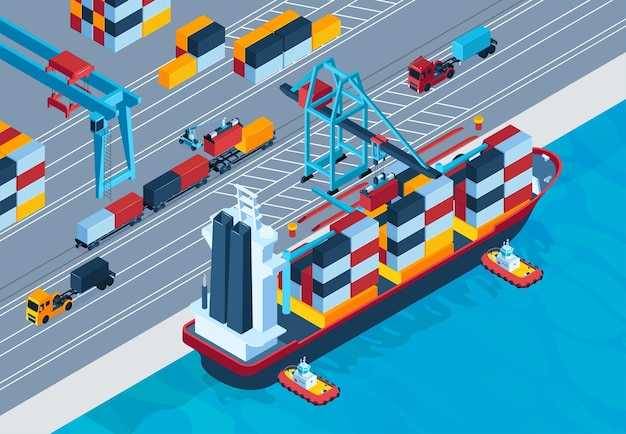
Implement a 6-week pilot on one route using GPS-based tracking to validate data quality, safer operations, and scheduling improvements across operators.
- Pilot design and data foundation
- Define objective to lift scheduling accuracy and reduce maintenance surprises, with clear targets for the core system’s visibility levels.
- Select one barge, one route, and one channel for data ingestion to establish a focused data flow and a reliable baseline.
- Integrate GPS with existing vessel sensors and weather feeds to produce ETA estimates, deviations, and proactive alerts.
- Build a data channel that surfaces location, speed, and status in near real time, with a secondary stream for maintenance events and sensor health.
- Protect critical data and control access for operators, suppliers, and maintenance teams to ensure safe collaboration.
- Set up a lightweight dashboard that exposes three visibility levels: Level 1 (location), Level 2 (location + speed), Level 3 (ETA + weather overlay).
- Establish a maintenance plan for trackers and a replacement strategy for failed devices to minimize downtime.
- Train outdoor-operating teams on how to use the system, interpret alerts, and record weather impact notes for continuous improvement.
- Define baseline metrics and a cadence for spot checks to validate data quality and system reliability.
- Scaling plan and system integration
- Expand to 3–5 routes, add 2–3 warehouses, and include a subset of suppliers to test cross‑channel coordination.
- Adopt a modular architecture based on a core GPS-tracking system that can be extended with new sensors and data feeds.
- Improve scheduling through automated rule sets that respond to weather, tides, and vessel status to reduce idle time.
- Establish multiple data channels (GPS, AIS, telematics) and a single integration layer to streamline onboarding of new vessels and assets.
- Enable agility in routing decisions by enabling rapid scenario testing and approvals for exceptions without slowing operations.
- Scale visibility to large fleets while preserving data privacy and protecting sensitive supplier information.
- Institute joint reviews with operators and suppliers to ensure transparency and aligned goals across the flow of goods.
- Maintain a replacement plan for aging hardware and ensure spare parts are available at key outdoor hubs and warehouses.
- Measurement, governance, and continuous improvement
- Track real-time visibility levels as a primary metric and aim for steady improvement across routes and assets.
- Measure safety improvements by comparing incident frequency and route deviations before and after GPS integration, and document preventive actions.
- Monitor scheduling performance with targets for on-time departures, arrival accuracy, and variance in dwell time at spots within warehouses.
- Quantify weather resilience by assessing delays avoided through proactive rerouting and ETA adjustments informed by forecasts.
- Assess maintenance impact by recording tracker health events, mean time to repair, and cost per mile saved through predictive maintenance.
- Compute a data quality score that combines completeness, accuracy, and latency to guide ongoing improvements.
- Share transparency with their suppliers and operators via regular dashboards and spot checks to reinforce collaboration.
- Regularly review replacement needs and technology refresh timelines to keep the core system secure and reliable.