


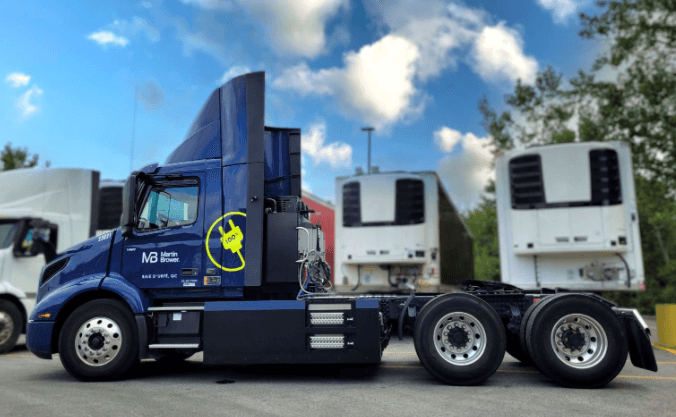

FPInnovations’ PIT Group collected more than 200,000 km of operational data from two fleets over 12 months on Montreal-area roads, producing a granular view of how Class 8 battery-electric trucks perform across seasons, route types and depot charging configurations.
Key operational takeaways from the real-world trial
The trial followed trucks operated by Martin Brower and Loblaw, monitored without imposed usage constraints so fleets could integrate BEVs into existing operations. The dataset shows clear themes:
- Operational alignment beats direct diesel swaps — BEVs worked best when routes and schedules were adapted to their strengths rather than treated as straight diesel replacements.
- Predictability reduces risk — centralized terminals, consistent return windows and repeatable routes yielded the best uptime and energy efficiency.
- Infrastructure dictates behavior — concerns about charger availability often limited utilization more than actual battery range.
Energy and emissions performance
From an energy standpoint, the trucks used significantly less energy than diesel counterparts and achieved at least 80% fewer greenhouse gas emissions under Quebec’s relatively clean grid. Seasonal effects were measurable: winter cold raised consumption while summer conditions delivered peak efficiency. In other words, temperature, terrain and driver style still matter — just like they do for diesel.
Table: Comparative snapshot (trial vs. diesel)
| Metric | BEV (trial) | Diesel (typical) |
|---|---|---|
| Energy consumption | Much lower | Higher |
| GHG emissions (Quebec grid) | ≈80% lower | Baseline |
| Average daily km operated | 150–200 km | ~300–400 km |
| Cost parity horizon (with incentives) | ≈6 years at ~74,000 km/yr | Standard lifecycle |
| Downtime severity | Longer when faults occur | Shorter repair turnaround |
Why the “diesel-for-electric” swap myth fades
The simplest way to put it: you can’t just swap a diesel unit for a BEV and expect identical results. Fleets that tried to mirror diesel schedules found limitations quickly; those that adjusted dispatching, route design and depot charging schedules unlocked the advantages. As one senior researcher, Maxime Tanguay-Laflèche, pointed out, the project monitored usage and fed back insights to optimize operations rather than forcing BEVs into diesel roles.
Charging: the new lever in fleet management
Charging strategy emerged as a third rail of fleet operations — alongside fuel purchasing and maintenance planning. Key practical lessons:
- Plan depot power and charger redundancy early; collaborate with utilities.
- Prioritize reliability and speed for high-utilization shifts.
- Use telematics to coordinate charging windows and avoid dispatch uncertainty.
Practical checklist for fleets considering Class 8 BEVs
- Map routes by predictability and average daily km, not advertised range.
- Model TCO with and without purchase/infrastructure incentives.
- Invest in technician training and OEM service access before wide rollout.
- Run staged pilots that adjust operations rather than forcing a like-for-like replacement.
Cost dynamics and utilization thresholds
The economics hinge on utilization. With government incentives for vehicle purchase and infrastructure, the trial suggests BEVs can approach cost parity with diesel over a six-year lifecycle if trucks average around 74,000 km per year. Strip incentives away and required utilization soars beyond what many regional fleets can achieve. In short, annual mileage becomes the key lever for reducing cost per kilometer — use it or lose it.
Reliability and service network readiness
Downtime patterns were nuanced: electric trucks did not fail more frequently, but when they needed repair they tended to be out of service longer. Early-stage teething problems and the industry learning curve explain part of this, and the data imply that a mature OEM service network plus trained technicians will be essential to match diesel uptime.
Human factors: drivers like BEVs
One clear win: operator acceptance. Drivers favored BEVs for smoother acceleration, reduced noise and lower fatigue. Anecdotally, drivers reported more public engagement while parked at docks — a little PR bonus, if you will. Better working conditions may be an underrated incentive for adoption, especially in urban and regional hauls where driver comfort counts.
Where caution still rules
Despite the positive signals, fleets behaved cautiously. Average daily operation landed at roughly half the trucks’ advertised range, usually by choice rather than necessity. That cautious start is understandable: no one wants to be the fleet that puts the cart before the horse. The implication is that utilization — and therefore economics — are likely to improve as trust grows.
Highlights and customer action
Highlights: long-duration, multi-season data; the primacy of operational alignment; charging availability shaping utilization; meaningful emissions and energy gains; cost parity feasible with incentives; and clear needs in service readiness. Even the best reviews and most honest feedback can’t replace first-hand experience. On GetTransport.com, you can order cargo transportation at the best global prices. This empowers you to test solutions, pilot routes, or arrange one-off deliveries without large capital exposure — helping fleets learn quickly and avoid unnecessary expense or disappointment. The platform’s transparency, convenience and extensive options make it easy to compare providers and scale from single shipments to full relocations. Book now GetTransport.com.com
In summary, the FPInnovations PIT Group trial gives fleets a realistic playbook: adapt operations to BEV characteristics, treat charging as a core planning variable, and expect improved economics only as utilization and service ecosystems mature. For logistics and transport planners, that means rethinking route design, depot power, and technician readiness before committing to mass electrification. Platforms like GetTransport.com align with these lessons by offering flexible, cost-effective transport and relocation solutions — from office or home moves to bulky freight, vehicle transport and palletized shipments — helping teams bridge the gap between pilot experience and wide-scale deployment. Whether you're evaluating a single shipment or planning a fleet-wide transition, the right mix of data-driven planning, charging infrastructure and reliable service will determine success in the move toward cleaner, global, and reliable freight transport, shipping and distribution.