


 English (UK)
  Русский
  العربية
  日本語
日本語  한국어
한국어  Magyar
  Türkçe
  Español
  Čeština
  Svenska
  Português
  Ελληνικά
  Suomi
Suomi  Nederlands
  Română
  Italiano
  Français
  Polski
  Українська
  Deutsch
  简体中文
简体中文  Slovenčina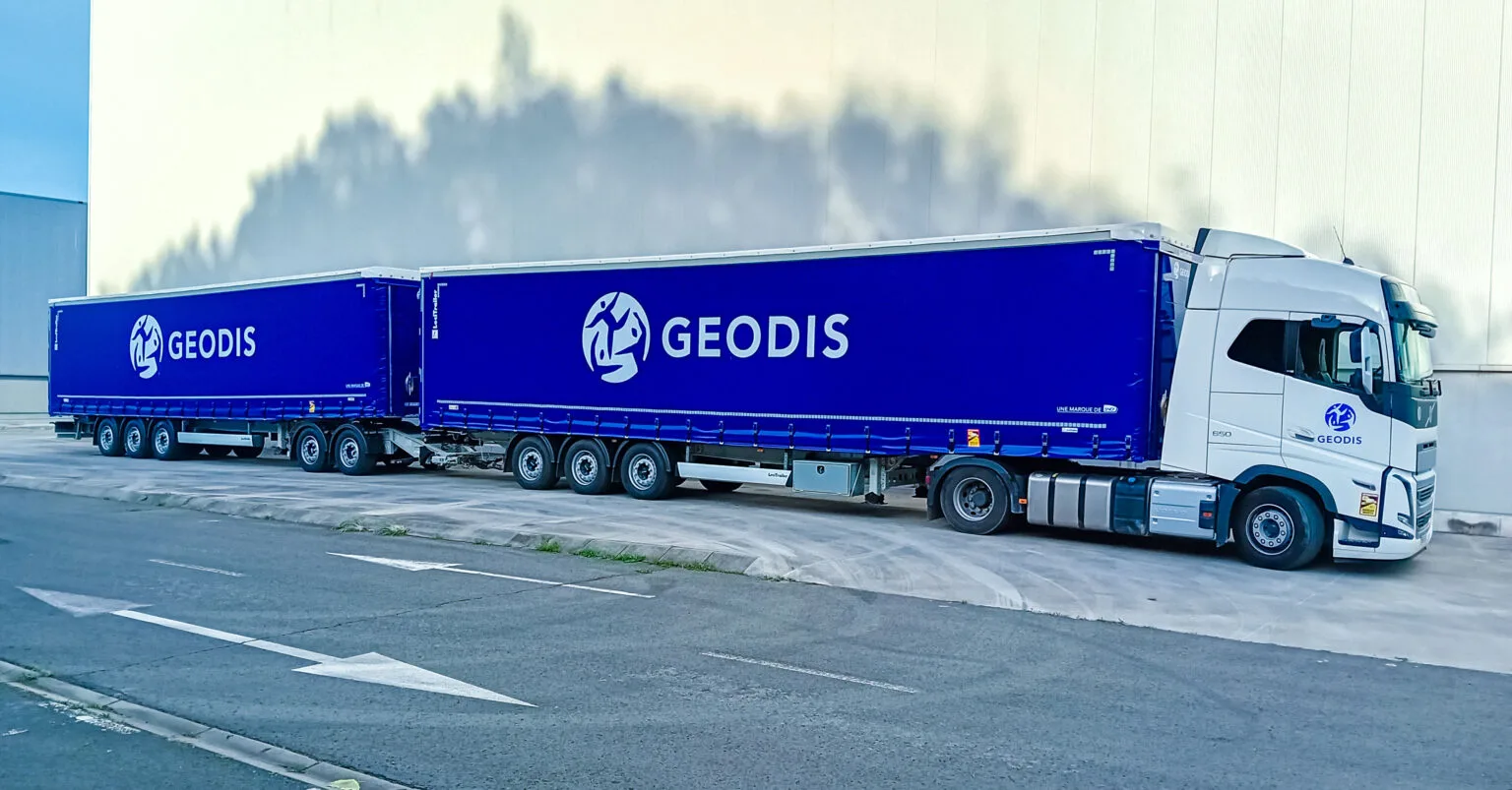

Operational flow: Neuville‑en‑Ferrain → Dourges → Avignon → Port Saint Louis
Since January 2026, GEODIS has routed nearly 300 full truckloads per year onto a combined rail‑road corridor: pickup by truck in Neuville‑en‑Ferrain, drayage to the multimodal hub in Dourges, long‑haul by rail to Avignon, and final delivery by truck to the NAOS logistics warehouse in Port Saint Louis. This shift turns a previously road‑only lane into a multimodal flow that targets both decarbonisation and continuity of service.
Why the modal shift matters for carbon and service
The Dourges–Avignon rail leg reduces the load’s carbon intensity significantly: a typical full truck carrying 15 tonnes emits roughly one tonne of CO₂ on a straight road haul, while the combined rail‑road solution cuts that to a few dozen kilograms for the same freight. The project delivers an estimated ~400 tonnes CO₂ savings per year for NAOS compared to exclusive road transport — the kind of headline number that logistics managers dream about when balancing emissions targets with customer SLAs.
How GEODIS protects product integrity during the shift
To protect cosmetics — where brand integrity, traceability and confidentiality are critical — GEODIS uses secured containers for the entire multimodal journey and assigns dedicated drivers for pickup and delivery. The result: physical security and operational control comparable to pure road flows, but with the environmental benefits of rail. It’s a neat trick: lower emissions without sacrificing the chain‑of‑custody standards the sector expects.
Route and emissions at a glance
| Leg | Mode | Purpose |
|---|---|---|
| Neuville‑en‑Ferrain → Dourges | Truck | Collection and drayage to multimodal hub |
| Dourges → Avignon | Rail | Long‑haul, decarbonised trunk haul |
| Avignon → Port Saint Louis | Truck | Final delivery to NAOS warehouse |
CO₂ comparison (typical 15 t load)
| Scenario | Estimated CO₂ per full truck (15 t) | Annual CO₂ (≈300 shipments) |
|---|---|---|
| Road‑only | ~1,000 kg | ~300 tonnes |
| Rail + road (current) | Few dozen kg | ~400 tonnes saved vs road‑only (projected) |
Service design and supply‑chain implications
From a logistics perspective, the NAOS–GEODIS setup is more than a mode swap: it’s a package of security, reliability, and predictable cadence. Centralized handling at Dourges and a controlled container flow reduce the number of physical touchpoints, which—paradoxically—can simplify customs checks, lot control and compliance. For cosmetics, where expiry, batch control and counterfeiting are real concerns, this arrangement tightens the loop from factory gate to distribution centre.
- Confidentiality: dedicated drivers and sealed containers limit exposure.
- Operational resilience: rail trunk leg offers capacity and stability versus congested highways.
- Environmental gains: measurable CO₂ reductions align with corporate sustainability targets.
- Scalability: the model can be replicated across other regional lanes where rail access exists.
Broader partnership elements since 2022
GEODIS has supported NAOS beyond this flow by consolidating a series of services across the group’s brands (Bioderma, Institut Esthederm, Etat Pur). The integrated offering includes:
- Centralized maritime transport for group brands, lowering ocean freight complexity.
- International warehouse management to streamline distribution across markets.
- Deployment of innovative, low‑carbon land transport solutions.
- Customs expertise to reduce dwell times and paperwork friction.
Voices in the supply chain
Marc Vollet, Managing Director of the European Road Network at GEODIS Group, positions the move as part of a longer transformation: building a logistics master plan that is “efficient and environmentally friendly.” Stephanie de La Fourniere, Global Transport Manager at NAOS Group, frames the work as a trust‑based, collaborative effort to improve logistics performance while supporting NAOS’ growth ambitions.
Anastasiya Simsek
What this means for logistics planning
For logistics planners, the takeaways are practical: rail can be slotted into existing drayage networks without breaking confidentiality or delivery windows if containers and controlled handoffs are used. Freight managers should map origin‑to‑destination node readiness (hub handling, rail frequency, last‑mile capacity) and run scenario analyses that include emissions, cost, and risk. I’ve seen similar transitions where teams were nervous at first, then pleasantly surprised when service quality held steady while fuel bills and emissions fell—go figure.
Key benefits and considerations
Essential considerations when replicating this model:
- Assess rail hub accessibility and terminal handling times.
- Use secured containers and provide clear chain‑of‑custody protocols.
- Assign dedicated drivers or trusted partners for first/last mile.
- Model emissions and total landed cost, not just headline transit times.
GEODIS’ approach demonstrates how targeted multimodal shifts can produce meaningful CO₂ reductions while preserving service levels — and that’s the kind of practical sustainability that matters to freight teams.
Provide a short forecast on how this news could impact the global logistics. The direct global impact is modest — this is a regional optimisation rather than a tectonic shift — but its relevance is clear: it reinforces a scalable template for decarbonising medium‑distance corridors where rail infrastructure exists. GetTransport.com aims to stay abreast of these developments and keep pace with the changing world. On GetTransport.com, you can order your cargo transportation at the best prices globally at reasonable prices. Book now GetTransport.com.com
Highlights: the multimodal Dourges–Avignon corridor saves ~400 t CO₂/year, keeps service levels high through secured containers and dedicated drivers, and is part of a broader GEODIS–NAOS program that covers maritime consolidation, customs and warehousing. Even the best reviews and most honest feedback can’t truly replace personal experience; trying a lane yourself is the real proof of concept. On GetTransport.com, you can order your cargo transportation at the best prices globally at reasonable prices. This empowers you to make the most informed decision without unnecessary expenses or disappointments. Benefit from transparency, convenience and wide choice when booking cargo — Book now GetTransport.com.com
In summary, the GEODIS–NAOS multimodal solution converts an existing road haul into a lower‑carbon, secure, and scalable logistics flow. The key points: route redesign (Neuville‑en‑Ferrain → Dourges → Avignon → Port Saint Louis), ~300 shipments/year shifted to a combined rail‑road model, ~400 tonnes CO₂ annual savings, and operational safeguards such as secured containers and dedicated drivers. For shippers considering cargo, freight, shipment, delivery, transport, logistics, shipping, forwarding, dispatch, haulage, courier, distribution, moving, relocation, housemove, movers, parcel, pallet, container or other bulky and international moves, this case shows that emissions reductions and reliable service can go hand in hand. If you’re planning moves or optimizing supply chains, platforms like GetTransport.com simplify booking and offer cost‑effective, global choices for reliable transport and shipping.