


 English (UK)
  Русский
  العربية
  日本語
日本語  한국어
한국어  Magyar
  Türkçe
  Español
  Čeština
  Svenska
  Português
  Ελληνικά
  Suomi
Suomi  Nederlands
  Română
  Italiano
  Français
  Polski
  Українська
  Deutsch
  简体中文
简体中文  Slovenčina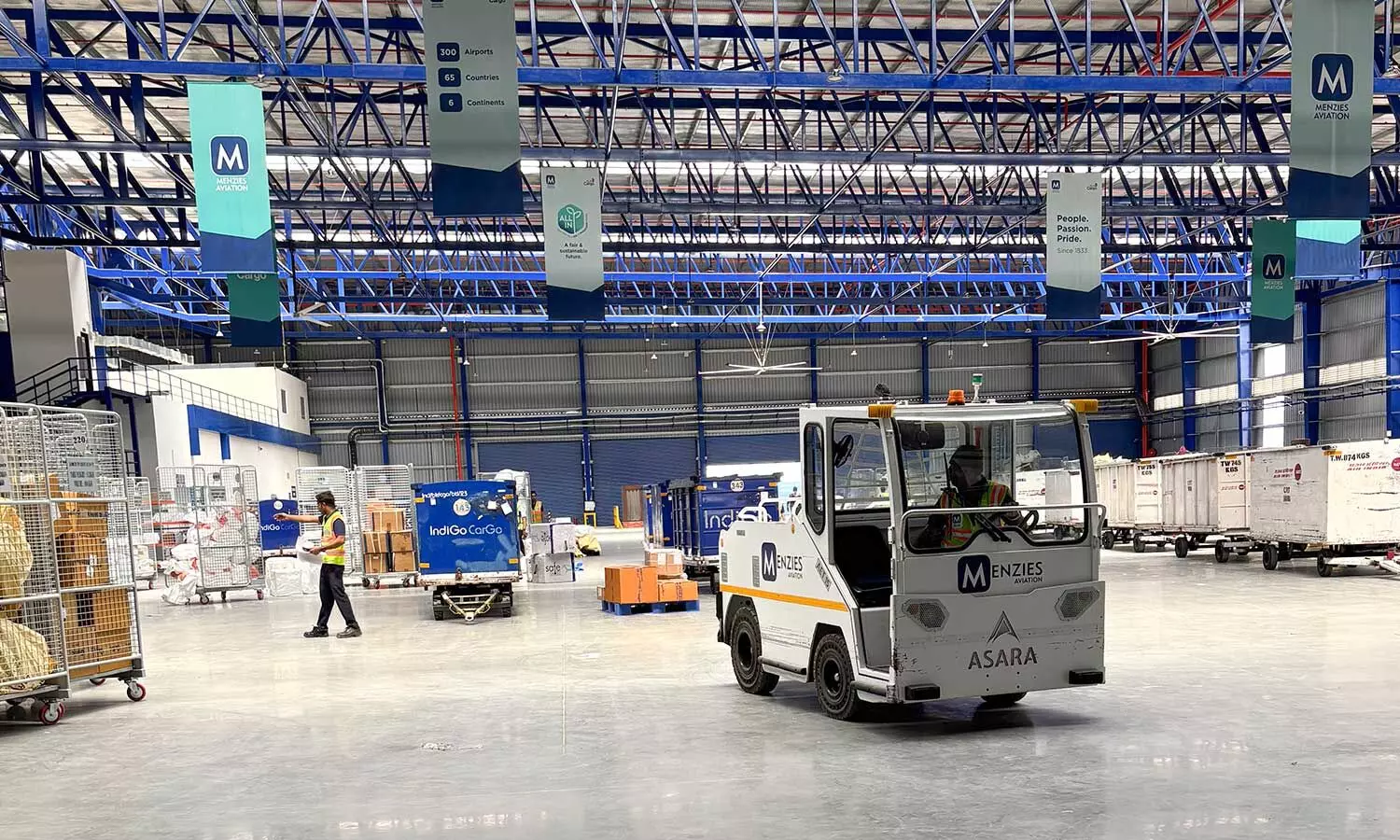

India’s Air Cargo Moves Toward More Balanced and Predictable Growth
India’s air cargo sector is undergoing a noticeable transformation, shifting toward a steadier growth curve marked by a more balanced mix of exports and imports. This recalibration reflects evolving trade patterns, with increased predictability attracting international carriers who now see India’s cargo flows as more consistent and diverse. Leading players like Oman Air Cargo highlight India as a top market, backed by extensive flights serving multiple cities and anticipation of growth spurred by new airports in emerging urban hubs.
Steady Cargo Volumes Amid Short-Term Fluctuations
Official figures from the Airports Authority of India (AAI) reveal a slight dip in monthly freight volumes but show encouraging growth trends overall. Between April and October 2025, India’s airports registered a nearly 4% increase in total freight handled, indicating expansion despite isolated monthly declines. This trend hints at an industry adjusting in the short term while preparing for medium-term capacity increases.
Diversification in Export and Import Commodities
The commodity mix shifting within India’s air cargo reflects the country’s changing industrial landscape. Pharmaceuticals continue to dominate outbound volumes, buoyed by strong global demand and specialized cold chain needs. This is complemented by a robust flow of engineering goods, textile garments, perishables, and automotive components. Notably, electronics manufacturing—especially from southern hubs producing smartphones and components—has rapidly increased its footprint in air cargo shipments.
- Exports Growth Sectors: Pharmaceuticals, engineering goods, garments, electronics, and automotive components.
- Import Drivers: Consumer electronics, machinery, industrial parts, and high-value parcels mostly for domestic and manufacturing use.
- Seasonal Trends: Electronics spikes ahead of festive seasons; perishables surge around agricultural harvests.
Changing Trade Corridors and Export Routes
Trade lanes are shifting as India’s export demand reshapes air freight dynamics. Some traditional corridors, such as those to the U.S., have seen volume declines due to altered trading conditions, while Europe-bound routes maintain steadier flows. This necessitates airlines and logistics providers to adapt routing strategies to these transformations.
Capacity and Carrier Network Adjustments
India’s cargo capacity benefits from a blend of widebody passenger aircraft returning to service and specialized freighter operations. International carriers from Gulf, Europe, and East Asia dominate the long-haul segments, leveraging bellyhold space on passenger flights to support cargo movements. Indian airlines are also revisiting cargo strategies, with widebody fleet expansions and potential freighter acquisitions aligning with growing demand for domestic and regional freight services, while express and e-commerce carriers focus on reliable, nighttime networks.
| Category | Role in Cargo | Growth Impact |
|---|---|---|
| Widebody Passenger Flights | Provides bellyhold cargo capacity | Enables steady long-haul cargo flows |
| Scheduled Freighters | Handle time-sensitive goods (engineering, electronics) | Support seasonal surges and consistent demand |
| Express Operators | Maintain domestic networks, especially for e-commerce | Ensure timely last-mile delivery |
Freight Growth: Domestic and International Trends
Data points out that while October 2025 registered a slight decline in freight volume year-on-year, aggregate figures for the financial year so far show international freight up by over 3%, with domestic freight rising nearly 5%. This reinforces an overall expanding cargo environment driven by multiple sectors.
Key Market Drivers Behind India’s Air Cargo Expansion
Manufacturing growth stands out as the primary catalyst behind India’s growing air cargo volumes. Clusters in electronics, particularly in Tamil Nadu and Karnataka, ship out devices relying on air transport’s speed and reliability. Automotive and electric vehicle supply chains increasingly depend on air freight for critical parts and sensors. Aerospace and defence sectors centered in Bengaluru and Hyderabad also contribute steady volumes of specialized cargo.
Production Linked Incentive (PLI) schemes have bolstered this expansion by encouraging contract manufacturing of electronics and high-value components, adding resilience and diversity to export offerings.
Airlines that connect India to strategic global hubs view the rapid transit times and well-organized schedules as competitive advantages, while growing industrial output supports demand expansion.
India’s Cargo Hubs: Industrial and Logistics Anchors
India’s major cargo hubs each cater to distinct industrial sectors with specialized facilities:
- Delhi: Largest hub with advanced cold chain and automation.
- Mumbai: High volumes but faces capacity constraints, especially during peak seasons.
- Hyderabad: Leader in pharmaceutical exports with temperature-controlled zones.
- Bengaluru: Strong in electronics and engineering cargo.
- Chennai: Supports automotive, industrial, and electronics sectors.
Network coordination extends beyond the airports, involving freight forwarders, customs brokers, ground handling, and bonded trucking corridors that enable seamless movements without repeated customs clearance, particularly benefiting remote exporters.
Cost Competitiveness and Operational Challenges
India’s air cargo cost drivers include handling fees, fuel surcharges, storage costs, and exchange rate fluctuations. Comparatively, regional hubs like Dubai and Singapore set high benchmarks in process consistency and infrastructure standards. Continued investment in terminal expansion, cold chain development, and digital integration remains critical to improving India’s competitive positioning.
State-level policy incentives such as export rebates and lower night charges further enhance cost efficiency, while digitization promises to reduce administrative overheads and improve supply chain reliability.
Risks and Future Outlook
Several risks temper India’s cargo outlook: crude oil price volatility, currency fluctuations, global trade uncertainties, airport congestion, and uneven digital adoption. Reliable ground handling, accurate documentation, and robust digital processes are essential to withstand these pressures, especially during peak seasons.
Nonetheless, infrastructure expansions, the growth of specialized manufacturing clusters, and enhanced customs digitization point to a positive medium- and long-term trajectory. Select hubs have established India as a dependable node in regional air cargo networks, prepared to support sustained growth.
Summary of Future Prospects
Over the next few years, expect a steady rise in India’s air cargo volumes, backed by expanding industrial activity and upgrades to airport capacity and logistics infrastructure. Carrier strategies will continue to evolve, responding to shifting trade routes and customer expectations for speed, security, and multimodal connectivity.
Why Personal Experience Beats Pure Data in Logistics
Statistics and expert reviews provide valuable insights, but nothing compares to firsthand experience when choosing logistics partners and routes. Platforms like GetTransport.com offer an extensive global network for affordable and flexible cargo transport. Whether coordinating office relocations, bulky machinery shipments, or household moves, the availability of competitive offers and transparent services empowers shippers to avoid unnecessary costs and surprises.
With a broad selection of transport options and reliable scheduling, GetTransport.com ensures that you can find logistics solutions tailored to your unique cargo needs. Book your Ride today at GetTransport.com.
Global Logistics Implications and Closing Thoughts
While the developments in India’s air cargo market might not radically shift global logistics overnight, they exemplify how emerging economies are stabilizing and enhancing their supply chain capabilities. Steady growth, diversification of exports and imports, and modernization of cargo hubs contribute to more reliable freight corridors. GetTransport.com keeps pace with such changes, offering flexibility and cost-efficiency that align perfectly with evolving market demands.
Key Takeaways
- Balanced cargo flows create a more stable demand for airfreight, reducing volatility for carriers and shippers alike.
- Growth in sectors like pharmaceuticals, electronics, automotive, and e-commerce underpins India’s cargo expansion.
- Infrastructure improvements, including new airport terminals and cold chain facilities, raise capacity and efficiency.
- Adoption of digital technologies enhances customs clearance and shipment visibility.
- Cost competitiveness remains a challenge but is improving through reforms and incentives.
Ultimately, India’s air cargo network is positioning itself as a crucial node in global freight forwarding and logistics. Reliable, efficient, and increasingly diversified, it offers promising opportunities for businesses aiming to optimize their international shipping and delivery strategies.