


 English (UK)
  Русский
  العربية
  日本語
日本語  한국어
한국어  Magyar
  Türkçe
  Español
  Čeština
  Svenska
  Português
  Ελληνικά
  Suomi
Suomi  Nederlands
  Română
  Italiano
  Français
  Polski
  Українська
  Deutsch
  简体中文
简体中文  Slovenčina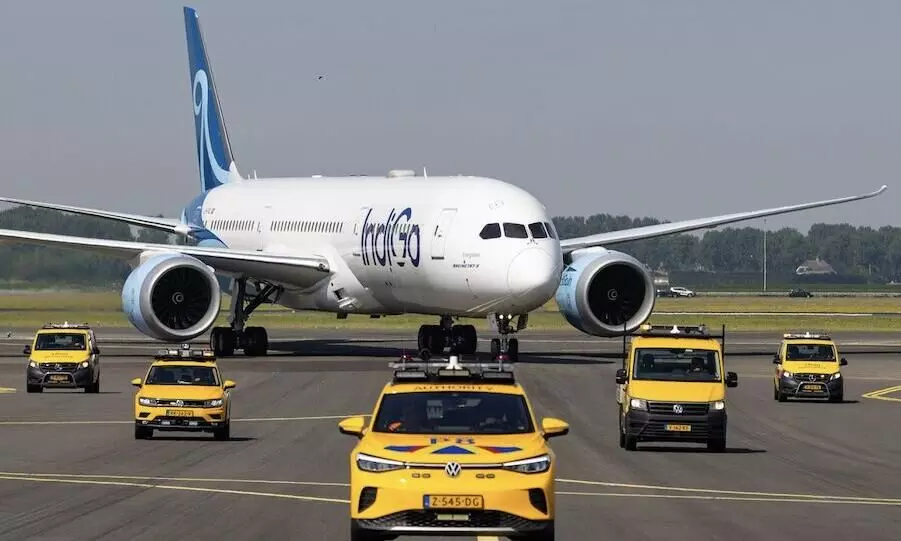

Overview of IndiGo’s Cargo Operations
IndiGo, a prominent airline, emphasizes the importance of its domestic cargo operations even as it expands its long-haul service network. The airline’s domestic cargo accounts for a significant 85% of its total cargo volumes, while international cargo contributes around 11%. This article delves into IndiGo’s strategic focus on domestic cargo and how it positions itself within the broader logistics landscape.
Key Insights from IndiGo’s Cargo Strategy
During a recent interview at the Air Cargo Forum India (ACFI) in New Delhi, Mark Sutch, the Chief Commercial Officer – Cargo at IndiGo, shed light on the strategies that reinforce this focus. The airline is steadfast in utilizing its narrowbody fleet for domestic deliveries, positioning this segment as the backbone of its cargo operations.
Expanding Horizons with Long-Haul Flights
While domestic cargo remains the heart of IndiGo’s operations, the entry into international markets is evident. The airline has recently introduced long-haul routes to Europe, signaling growth potential for international cargo capacity. Despite this, the existing domestic network continues to serve as the crucial foundation for its cargo strategy. According to Sutch, “We’ve grown from 350,000 to 400,000 tonnes in our last fiscal year alone.” This indicates not just growth, but also a solid demand for domestic services.
Shifting Focus on Cargo Routes
IndiGo’s plans also include developing direct point-to-point cargo connections in smaller cities across India. By establishing these routes, the airline aims to cut down reliance on major hubs while catering to the burgeoning demand in tier-two and tier-three cities.
The Shift from Boeing to Wider Options
As part of its expansion, IndiGo announced the discontinuation of its Boeing 777-300ER flights to Istanbul by the end of August 2025. This decision stems from a strategic shift in how airlines manage international routes. The airline previously leased two Boeing 777 aircraft from Turkish Airlines to sustain routes during the grounding of its Airbus A320neo fleet, but shifting regulations now necessitate a reevaluation of operational strategies.
International Expansion through New Fleets
The expansion doesn’t stop at domestic routes. On a global scale, IndiGo launched its first widebody flights from Mumbai to Manchester and Amsterdam in July 2025. By leasing six Boeing 787s, IndiGo is gearing up to significantly increase its cargo capacity in international markets, particularly in Europe, with plans to include Copenhagen and London within the next few months.
Modernizing Operations with New Aircraft
The introduction of the Airbus A350 into IndiGo’s fleet marks another pivotal step in enhancing cargo capabilities. Starting in early 2028, these aircraft are expected to serve as efficient carriers, creating wide opportunities in cargo transport. Sutch emphasizes the importance of modern aircraft in scaling the airline’s cargo business as they can function akin to freighters. With a current order for 69 Airbus A321XLR planes, IndiGo is poised to augment its operations to Europe, the Far East, and Australia.
Enhancing Cargo Products for Growth
One of the key takeaways from Sutch’s insights is the importance of building robust cargo products. With an eye on market growth, IndiGo recognizes the need to enhance its offerings, particularly in temperature-controlled pharmaceutical shipments. Sutch noted, “I refuse to promise something we cannot deliver,” emphasizing a commitment to quality and reliability in cargo operations.
Challenges and Opportunities in India’s Cargo Market
Discussing the broader landscape, Sutch highlighted the government’s ambitious goal of reaching 10 million tonnes of annual cargo throughput by 2030. While optimistic, he insists that achieving this target requires addressing existing challenges. India’s cargo framework currently struggles with the distribution of capacity across multiple hubs, lacking the efficiency seen in global logistics leaders.
Regulatory Consistency and Infrastructure
To maximize the use of airport infrastructure, Sutch pointed out the need for standardized regulations, particularly in customs and processing across different airports. Discrepancies in rules can hinder exporters and forwarders, leading to an uneven logistics landscape. “We can’t have ten hubs,” he asserts, suggesting that the spotlight needs to be on strengthening key airports for effective transshipment and connectivity.
Conclusion: A Path Forward for IndiGo
IndiGo’s cargo operations illustrate a compelling blend of domestic focus and international aspirations. With the airline actively enhancing its fleet, establishing new routes, and prioritizing cargo product development, the future looks promising. Even though the domestic market remains the bedrock, the move towards international long-haul services will undeniably shape the logistics sector in India and improve global connections.
While reviews and expert feedback are invaluable, nothing compares to firsthand experience. For your next cargo transportation needs, GetTransport.com offers globally competitive rates, making it easier to navigate your moving, shipping, and distribution plans. Enjoy the convenience, transparency, and extensive options available on this platform for all your logistics needs. Book your ride with GetTransport.com today!