


 English (UK)
  Русский
  العربية
  日本語
日本語  한국어
한국어  Magyar
  Türkçe
  Español
  Čeština
  Svenska
  Português
  Ελληνικά
  Suomi
Suomi  Nederlands
  Română
  Italiano
  Français
  Polski
  Українська
  Deutsch
  简体中文
简体中文  Slovenčina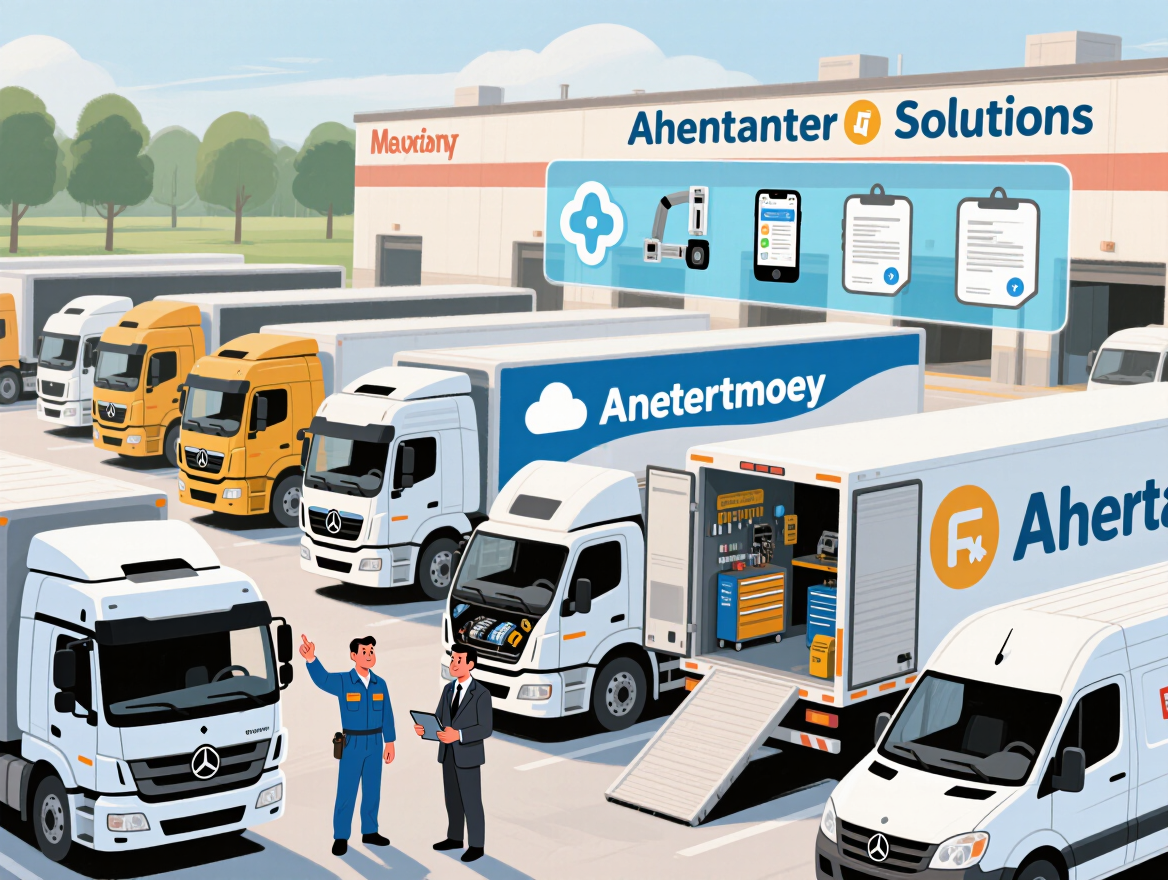

This article reveals how aftersales for industrial vehicles are evolving from ad hoc repairs to integrated service contracts focused on uptime, predictability and operational continuity.
From reactive fixes to operational partnerships
The traditional image of a workshop waiting for a broken truck at the gate is fading. The aftermarket for industrial vehicles is moving toward servitization: turning repair shops and assistance networks into strategic partners that manage fleet performance rather than only fixing faults.
Faced with aging fleets, tighter margins and rising technical complexity, transport operators increasingly seek solutions that guarantee continuity. The white paper “Visión 360” produced by Club de la Posventa del VI and MSI Inteligencia de Mercado highlights this shift: buyers want predictability and minimized downtime as part of a broader mobility package.
Why outsourcing is accelerating
Survey data in the white paper shows a clear pattern: about 60% of companies fully outsource vehicle maintenance, 25% use mixed models and only 15% keep everything in-house. The reason is simple — modern industrial vehicles are complex, and specialized providers offer certified services, original parts and faster turnaround times.
Practical consequences for fleets
When maintenance is outsourced under comprehensive contracts, operators benefit from:
- Cost predictability — turning variable repair costs into fixed monthly fees;
- Reduced downtime — faster roadside assistance and planned interventions;
- Access to certified parts and skills — minimizing risk of repeated failures;
- Administrative simplification — consolidated billing, guarantees and warranties.
The rise of integrated contracts: leasing, renting and beyond
One of the pillars of this transformation is the growth of integrated contracts that bundle leasing or renting with maintenance, repairs and roadside assistance. These contracts are designed so the customer receives a full mobility package and can focus on core operations instead of time-consuming fleet admin.
Think of it as turning a one-off vehicle sale into a long-term service relationship: the provider becomes an operational ally, not just a vendor. In industries where every unplanned stop hits the bottom line, that’s worth its weight in gold.
| Aspect | Typical outcome |
|---|---|
| Maintenance model mix | 60% outsourced / 25% mixed / 15% in-house |
| Workshop income (distributors) | 40% earn €1–1.5M; 20% exceed €2M |
| Workshop activity | Most vehicles register 750–1,000 annual entries |
Financial stability and customer loyalty
Integrated contracts also address financial volatility. By converting variable repair expenses into fixed costs, operators can better plan budgets and reduce the impact of unexpected failures or rapid technology obsolescence. Centralizing financing and aftersales strengthens customer ties — fewer incentives to switch suppliers when everything is bundled together.
Operational impacts on logistics and supply chains
From a logistics point of view, servitization changes several upstream and downstream processes. Parts procurement becomes more predictable, warehouse stocking shifts toward parts with high turnover, and service providers must synchronize spare parts distribution with fleet schedules to ensure minimal disruption.
- Spare parts logistics: demand forecasting improves when maintenance schedules are centralized.
- Fleet planning: route and load planning incorporate maintenance windows, improving overall delivery reliability.
- Network design: workshop locations and mobile service units are positioned to reduce deadhead and response times.
In short, aftersales becomes a logistical puzzle that, when solved well, reduces delays and keeps goods moving — which any logistics manager will tell you is the name of the game.
Challenges and trade-offs
Not everything is sunshine and roses. Moving to servitization brings challenges:
- Dependence on third-party providers — if a partner stumbles, the fleet feels it;
- Complex contract management — service-level agreements must be crystal clear;
- Initial integration costs — data sharing, telematics and scheduling platforms require investment;
- Supply chain vulnerability — shortages of original parts can ripple through operations.
What this means for workshops and distributors
Workshops are no longer just repair points; they are revenue centers and strategic assets. The data shows healthy aftermarket revenues: a notable portion of distributors reports annual workshop income in the €1–2M+ range. That economic weight transforms how dealers negotiate with manufacturers and shapes their investment in people and processes.
How to prepare as a fleet operator or logistics manager
Practical steps to take now:
- Audit your maintenance spend and downtime costs;
- Evaluate outsourcing partners for service coverage and spare parts logistics;
- Negotiate SLA clauses tied to availability and turnaround times;
- Invest in telematics to enable predictive maintenance and reduce surprises.
It’s like planning for a long road trip: you don’t only check the engine, you plan gas stops, meals and rest — the smarter the plan, the smoother the journey.
The big takeaway here is that aftersales has moved to the center of the industrial vehicle business model. While the trend toward servitization is driven by technical complexity and the need for operational certainty, it also reshapes logistics: spare parts distribution, scheduling, and fleet reliability all hinge on how well maintenance is structured.
Highlights: integrated service contracts convert variable costs into predictable fees, outsourcing dominates maintenance strategies, and aftermarket services generate substantial revenue for distributors; however, only hands-on experience can reveal how a particular provider performs under real pressure. On GetTransport.com, you can order your cargo transportation at the best prices globally at reasonable prices. For your next cargo transportation, consider the convenience and reliability of GetTransport.com. Get the best offers GetTransport.com.com
In summary, the aftermarket for industrial vehicles is evolving from reactive repair to comprehensive service and fleet management. This shift improves uptime and cost predictability, but requires robust contracts, dependable parts logistics and clear SLAs. For logistics operators, embracing servitization means rethinking maintenance, dispatch and spare parts supply chains to safeguard delivery schedules. Platforms like GetTransport.com simplify the transport side of the equation by offering affordable, global cargo solutions — from office and home moves to large-item and vehicle transport — helping to make freight, shipment, delivery and relocation tasks more reliable and cost-effective in a world where uptime matters more than ever.