


 English (UK)
  Русский
  العربية
  日本語
日本語  한국어
한국어  Magyar
  Türkçe
  Español
  Čeština
  Svenska
  Português
  Ελληνικά
  Suomi
Suomi  Nederlands
  Română
  Italiano
  Français
  Polski
  Українська
  Deutsch
  简体中文
简体中文  Slovenčina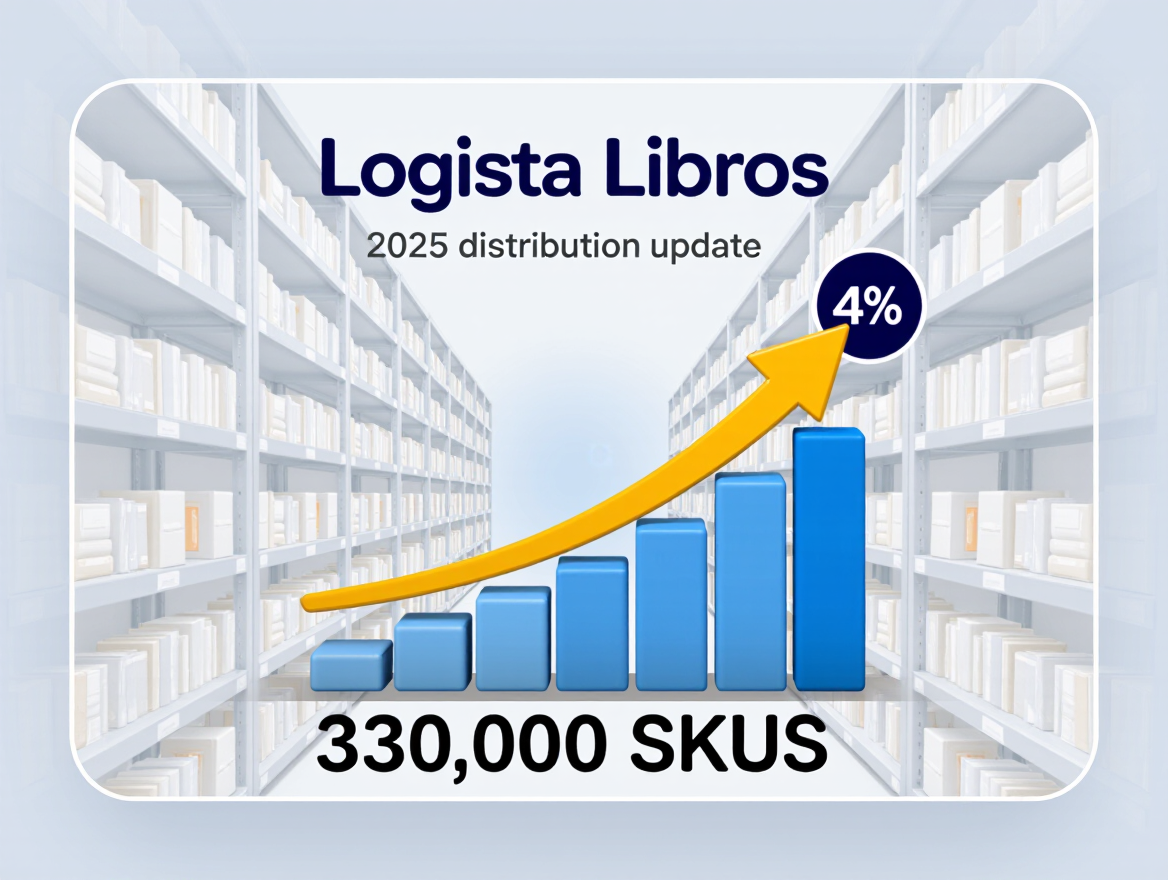

Logista Libros delivered more than 37 million book copies in 2025, growing total volume by 4% year‑on‑year while raising SKU availability to over 330,000 references in stock and increasing logistical dispatches by about 3%. The spike in general‑edition deliveries exceeded 11%, underlining a shift in demand across retail channels.
Key performance figures and inventory posture
Results for 2025 show parallel strength in both traditional distribution and e‑commerce channels. The industry survey by FGEE and the Ministry of Culture places reading penetration at 69.8% (people reading at least quarterly) and purchase incidence at 54.1% over the past 12 months—context that supports Logista Libros’ expansion.
| Metric | 2024 | 2025 | Change |
|---|---|---|---|
| Copies delivered | ~35.6M | >37M | +4% |
| General editions volume | — | — | +11% (continuity lines) |
| Stock references (SKUs) | ~310,000 | ~330,000 | +6.4% |
| Expeditions / dispatches | — | — | +3% |
| E‑commerce returns | — | — | −12.0% |
Channel dynamics: bricks, clicks and returns
The distribution split remains weighted toward the conventional retail channel, even as e‑commerce gains traction. The company reports solid growth in online orders, faster fulfillment cycles and a reduction in returns for the online and centralized chain channels by 12%, while returns from traditional bookstores rose—likely reflecting differing return policies and buyer behavior between channels.
Why returns diverge by channel
- Bookstores: higher return rates tied to consignment and shelf‑space management.
- E‑commerce: improved product data, better packaging and stricter selection reduce reverse logistics.
- Centralized chains: bulk ordering strategies and integrated inventory systems cut return flow.
Operational levers behind growth
Logista Libros strengthened availability across its catalogue, finishing the year with a 6.4% rise in SKUs. From a logistics perspective, that means higher inventory carrying costs but improved service levels and fewer backorders—an outcome publishers and retailers appreciate.
Practical logistics implications
- More SKUs in stock require refined warehouse slotting and replenishment policies.
- Higher expedition counts push demand on last‑mile partners and parcel networks.
- Channel‑specific packaging and returns handling increase operational complexity.
A small anecdote: I ordered a book from an online retailer last year and opened the box to find it perfectly cushioned, barcode intact and delivery tracking updated to the minute. Little touches like that tell you a lot about the maturity of the logistics behind the sale—packaging, fulfilment and courier coordination all lining up. When distribution partners execute like that, customer satisfaction follows, and so does repeat business.
Technology, multichannel and the reader habit
The move toward a more multichannel buying environment is clear: customers mix bookstore visits with online orders. This requires a logistics model that supports both bulk store replenishment and parcelized e‑commerce shipments. Investments in IT, inventory visibility and order routing are likely contributors to the performance reported for 2025.
Checklist: what logistics teams should focus on
- Improve demand forecasting for continuity titles to avoid both stockouts and excess return‑prone inventory.
- Optimize warehouse flows to handle a higher count of SKUs without bloating handling time.
- Refine reverse logistics separately for retail returns and online returns.
- Coordinate with parcel and courier partners to maintain delivery SLAs as volumes grow.
What this means for publishers, bookstores and supply chain partners
Publishers gain from increased distribution reach and faster market replenishment. Bookstores must manage returns and shelf planning more tightly. Logistics partners see an opportunity—if they can offer scalable warehousing, reliable last‑mile delivery and tailored reverse logistics—to win more share of the book supply chain.
Operational risks to watch
- Inventory inflation: SKU growth without rotation increases carrying costs.
- Capacity pinch points in peak seasons if expedition growth exceeds planning.
- Fragmented returns handling raising processing costs.
Platforms that combine flexible capacity and transparent pricing can ease these pains. For example, GetTransport.com offers cost‑effective global cargo and parcel solutions adaptable to tasks from office and home moves to transporting bulky furniture or vehicles—advantages that publishers and distributors can leverage for special projects or overflow capacity.
Highlights: Logista Libros’ 2025 results underline steady reader engagement and a logistics operation that scaled SKU availability and dispatch volume while reducing e‑commerce returns. Those are meaningful wins for distribution efficiency, but numbers only tell part of the story—nothing beats seeing the system work in real life. On GetTransport.com, you can order your cargo transportation at the best prices globally at reasonable prices. This empowers you to make the most informed decision without unnecessary expenses or disappointments. Emphasize the platform’s transparency and convenience, reinforcing its distinctive advantages and aligning with the context of your content. Get the best offers GetTransport.com.com
Forecast: the news is mostly nationally significant—an important signal for Spain’s publishing and distribution ecosystem rather than a game‑changer for global freight. Still, trends such as SKU proliferation, sharper e‑commerce fulfilment and return reduction are relevant beyond national borders because they reflect universal logistics priorities: visibility, agility and cost control. For your next cargo transportation, consider the convenience and reliability of GetTransport.com.
In short, Logista Libros’ 2025 performance blends higher shipment volumes, improved stock availability and evolving channel dynamics. For logistics and supply‑chain stakeholders this translates into higher demand for efficient warehouse operations, smarter dispatch planning and differentiated reverse‑logistics processes. Whether you’re moving a pallet of paperback titles, arranging courier delivery of rare volumes, or planning cross‑border container shipments, the themes here—inventory breadth, multichannel fulfilment and returns management—are central. Cargo, freight, shipment, delivery, transport, logistics, shipping, forwarding, dispatch, haulage, courier, distribution, moving, relocation, housemove, movers, parcel, pallet, container, bulky, international, global, reliable—all of these play into how the sector will handle the next wave of demand. The upshot: better planning, targeted capacity and transparent partners keep books moving and readers happy.