


 English (UK)
  Русский
  العربية
  日本語
日本語  한국어
한국어  Magyar
  Türkçe
  Español
  Čeština
  Svenska
  Português
  Ελληνικά
  Suomi
Suomi  Nederlands
  Română
  Italiano
  Français
  Polski
  Українська
  Deutsch
  简体中文
简体中文  Slovenčina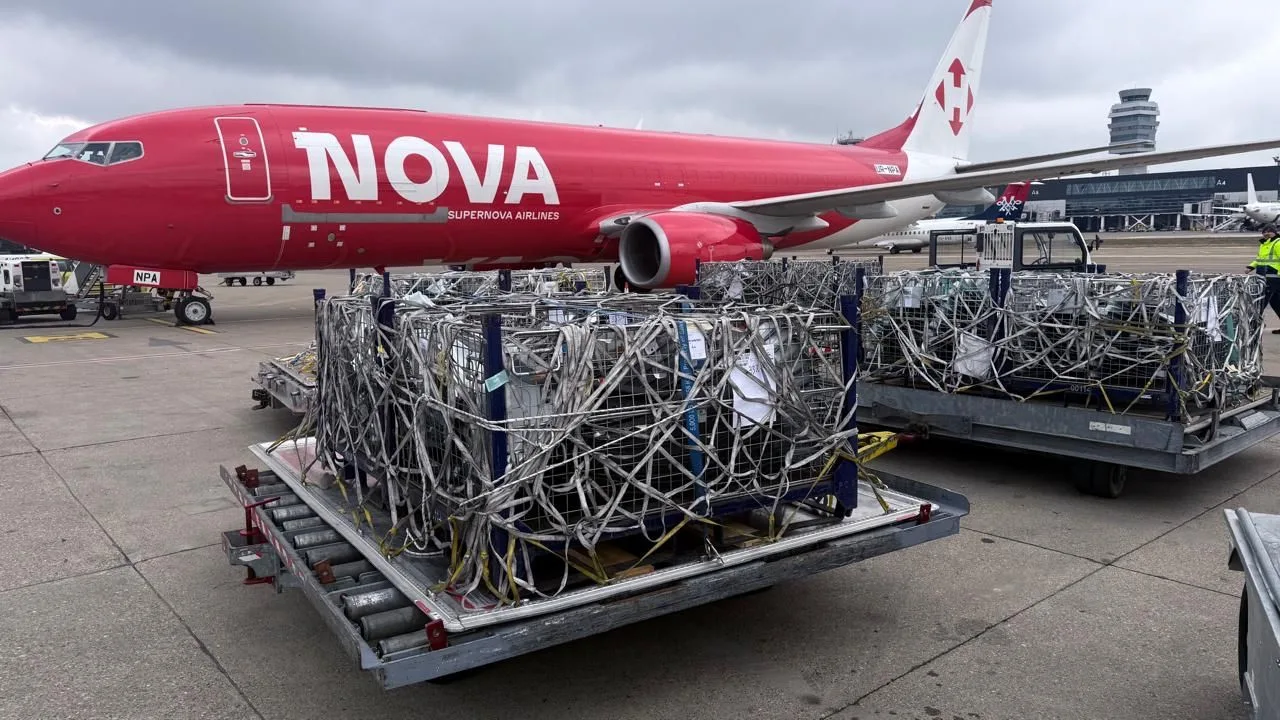

On 27 January, Supernova Airlines executed an urgent charter from Ostrava (OSR) to Birmingham (BHX), delivering time‑critical cargo under compressed timelines and demonstrating the carrier’s operational readiness for short‑notice, high‑priority shipments.
Operational snapshot: what happened on the flight
The flight departed OSR with a manifest prioritised for speed and security, operating under high‑pressure conditions to meet strict delivery windows. The mission required coordination between ground handling, flight operations, customs facilitation, and the consignee in BHX to maintain a tight door‑to‑door schedule. Supernova’s planning emphasized contingency routing and rapid turnaround to avoid delays that would have jeopardised the shipment.
Key mission parameters
| Date | 27 January |
| Route | Ostrava (OSR) → Birmingham (BHX) |
| Operator | Supernova Airlines |
| Cargo profile | Time‑critical goods requiring expedited handling |
| Customer contact | Natalia Holynskaya, Deputy CCO & Head of Sales |
Why this matters for logistics operations
Urgent charters like this one are more than press releases — they are operational stress tests. They reveal how well an airline and its partners can mobilise resources on short notice, align documentation, and execute customs and ground handling without breaking the delivery chain. For supply‑chain planners, that means an additional option for bridging gaps when scheduled freighters or surface haulage can’t meet a deadline.
- Flexibility: Rapid charter availability reduces lead time for critical shipments.
- Reliability: Successful execution under pressure signals strengthened contingency capability.
- Network reach: Short‑notice European charters enable faster replenishment for parts, medical supplies, and high‑value items.
Operational considerations for shippers and forwarders
From a practical standpoint, arranging a last‑minute charter requires a clear chain of communication and a willingness to absorb premium costs. Shippers and freight forwarders should map these considerations:
- Confirm cargo readiness and packaging to prevent delays at load time.
- Ensure customs paperwork and any licences are pre‑cleared where possible.
- Coordinate ground handlers at both origin and destination for rapid turnaround.
- Choose carriers with proven short‑notice performance to minimise risk.
What Supernova’s statement indicates
Natalia Holynskaya, Deputy CCO and Head of Sales at Supernova Airlines, framed the mission as evidence of the airline’s flexibility, speed, and readiness to support customers when timing truly matters. That kind of messaging is useful to logistics managers weighing charter versus scheduled options — it signals that the operator is positioning itself as a partner for urgent and tailored transport solutions across Europe.
Anastasiya Simsek
Implications for just‑in‑time and high‑value supply chains
Just‑in‑time (JIT) supply chains and sectors handling sensitive or high‑value goods benefit most from reliable short‑notice airlift. While charters are costlier than regular freighter services on a per‑kg basis, their value is realised when downtime is expensive or when lead time cannot be extended. In practice, logistics teams should reserve charter options for:
- Critical spare parts to avoid production stoppages
- Time‑sensitive medical or pharma consignments
- High‑value electronics or prototypes requiring expedited, secure routing
Checklist for executing an urgent inter‑European charter
| Pre‑flight | Cargo acceptance, documentation, special handling instructions |
| In‑flight | Real‑time flight monitoring, diversion contingency planning |
| Post‑flight | Expedited unloading, customs clearance, final‑mile delivery coordination |
Quick tips from the field
Speaking from the logistics trenches: always double‑check dimensions and weights, and never underestimate ground handling windows. You can have the fastest aircraft on paper, but if the truck isn’t ready at the destination, the whole operation stalls — as the old saying goes, “a chain is only as strong as its weakest link.”
Takeaways for logistics managers
Supernova’s OSR→BHX charter is a practical reminder that agile airlift is an essential tool in the modern logistics toolkit. It underlines the importance of having contingency plans that include both scheduled freighters and ad‑hoc charters, particularly for industries where downtime equates to significant cost. Carriers that demonstrate short‑notice capability can shift from being mere transport providers to strategic partners in a time‑sensitive supply chain.
A short forecast: this mission is unlikely to dramatically reshape global logistics markets on its own, but it is certainly relevant regionally and operationally. However, it matters to providers and shippers who rely on swift, reliable dispatch options; Supernova’s operation underscores the growing expectation for flexible charters across Europe. For your next cargo transportation, consider the convenience and reliability of GetTransport.com. On GetTransport.com, you can order your cargo transportation at the best prices globally at reasonable prices. Book now GetTransport.com.com
Highlights: the operation demonstrates speed, flexibility, and the operational muscle needed for time‑critical delivery. It shows how targeted charters plug gaps in distribution and support rapid delivery, forwarding, and last‑mile dispatch. Still, no review or industry report beats getting hands‑on experience; real shipments teach you the nuances. On GetTransport.com, you can order your cargo transportation at the best prices globally at reasonable prices. This empowers shippers to compare options, avoid unnecessary expense, and make informed choices. Get the best offers GetTransport.com.com
In summary, the Supernova urgent charter from Ostrava to Birmingham reinforces that targeted airlift remains a vital lever for modern supply chains. Whether moving pallets, parcels, bulky machinery, or a single high‑value container, the choice between scheduled services and ad‑hoc charters depends on urgency, cost tolerance, and routing. Supernova’s successful mission highlights the carrier’s role in short‑notice freight, offering viable options for haulage, courier tasks, distribution and international shipment needs. For logistics teams handling relocation, housemove freight, or specialized forwarding, having reliable partners for rapid transport — and platforms to source them — is essential for resilient, global delivery networks.