


 Nederlands
  English (UK)
  Русский
  العربية
  日本語
日本語  한국어
한국어  Magyar
  Türkçe
  Español
  Čeština
  Svenska
  Português
  Ελληνικά
  Suomi
Suomi  Română
  Italiano
  Français
  Polski
  Українська
  Deutsch
  简体中文
简体中文  Slovenčina
  Container Track and Trace in Logistics – A Practical Guide">

Implement real-time visibility across all shipping units now by deploying unified platforms connecting ports, terminals, inland networks; carrier partners. This approach delivers instant status for shipments, reduces dwell times, supports fast decision-making for staff in operations centers.
Adopt a technical architecture built on unified platforms pulling data from ports, oceans, inland facilities. The construction of standardized data models enables uniform dimensions, timestamps to align; quick analyzing of shipments status that informs decisions becomes feasible. Staff receive instant notifications, particularly when thresholds are breached, offering actionable insights.
Measure performance across core dimensions to detect trends in dwell times, coverage, vessel utilization; offering data-driven change management for staff. Whether facing port congestion or weather disruptions, the platform should allow immediate alerts with recommended actions.
Governance design emphasizes clear roles for staff, suppliers, carriers; define escalation routines, dimensions for service level expectations. Prioritize cargo protection, secure data sharing, instant audit trails across the chain from the port to final destination.
Operational rollout steps include piloting on a single corridor; then expanding to regional networks; use staff feedback to refine vendor choices, increasing instant visibility for shipments. Evaluate platforms by their ability to handle changing dimensions, multi-carrier data feeds; compliant timestamps, particularly when operating across oceans and ports. A note on data quality: nlds supports good data governance; fosters construction of a reliable baseline for ongoing improvements.
Container-level vs Shipment-level Visibility: Define scope and KPIs
Adopt shipment-level visibility as the default scope and enable shipping-unit detail for high-value or regulated consignments. This precise approach reduces manual checks, helps alert the right staff faster, and saves time across global operations. Implement a standardized interface to ingest data from carriers, forwarders, customs, and warehouses today.
Scope and data sources
Define the lifecycle events required at the shipment level: departure, origin loading, in-transit waypoint, arrival at a hub, customs processing, final delivery, and exception handling. For per-unit visibility, track loading counts, unit seals, transfers between facilities, and final unload verification. Use a standardized interface to pull data from carrier systems, ERP/WMS/TMS platforms, customs feeds, and third-party providers to ensure related data is provided in a consistent format across the globe.
Structure the data stack to support real-time or near-real-time updates, with time-synced timestamps and unique unit identifiers. Ensure the data model aligns with widely adopted standards so the company can operate with offshore and onshore teams without bespoke integrations. A well-defined scope reduces staffing overlaps and speeds deployment against existing systems.
KPIs and deployment plan
Shipment-level KPIs: on-time delivery rate, ETA accuracy (deviation tolerated in minutes or hours), visibility uptime (percent of shipments with current status), data completeness (percent with all critical milestones populated), exception rate with mean time to resolve, and notify latency (time from event to alert). Track related cost-to-serve impact to demonstrate benefits to the business unit.
Unit-level KPIs: loading/unloading timing accuracy, seal integrity success rate, unit-level mismatch rate (manifest vs. actual units), per-unit dwell time at origin and destination docks, and temperature or humidity breaches when handling sensitive goods. Monitor the number of false positives in exception triggers to optimise staffing and reduce workload.
Deployment plan: start with a pilot in two offshore hubs featuring high-volume outbound and inbound flows, then scale to other lanes. Assign a small core team to govern standards, with 2–4 staff in key centers plus offshore support. Use phased deployment to validate the interface, data quality, and alerting rules. Leverage a standardized data stack and ensure customs data feeds are aligned with global standards while maintaining strict access controls.
Recommendations for execution: create a single source of truth for status updates, implement automated notifications via multiple channels, and lock in a monitoring cadence for exception handling. Ensure the interface and data model support ongoing optimisation efforts and allow rapid recalibration of KPIs as standards evolve. This approach improves tracing across units, supports well-informed decisions, and strengthens the company’s ability to manage loading events and final delivery more efficiently.
Sensor options: GPS, RFID, BLE, and cellular IoT – practical install considerations
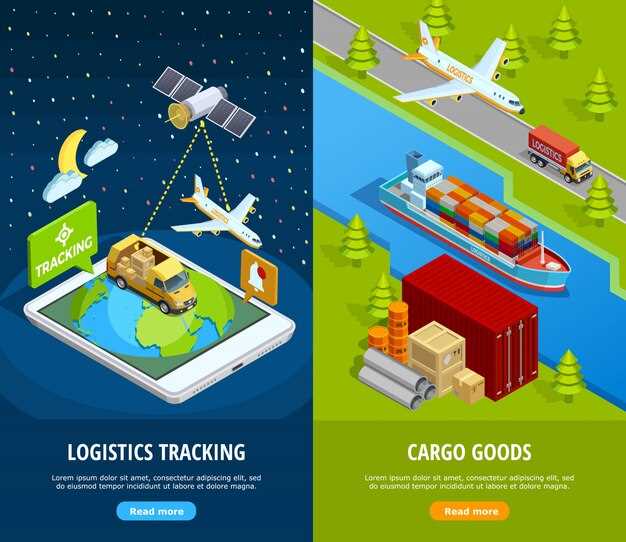
Recommendation: deploy a mixed stack that uses GPS for movement tracking, RFID at facilities to capture handling events, BLE beacons for granular zone visibility, and cellular IoT for reliable backhaul. This configuration exists across most fleets and supports both shipments movement and event capture across intermodal operations.
Definitions of the four options:
- GPS: relies on satellite signals to pinpoint location, typically used for vehicle tracking and route movement with accurate timestamping.
- RFID: uses radio-frequency identification tags (passive or active) to confirm presence or handling at gates, docks, or conveyors, often in facility edges.
- BLE: Bluetooth Low Energy beacons provide proximity data inside facilities or yards, enabling micro-location without continuous wide-area connectivity.
- Cellular IoT: NB-IoT or LTE-M solutions deliver low-power, wide-area connectivity for sensors during transit and at fixed sites, with SIM management and backhaul over cellular networks.
Technology-specific install notes:
- GPS with satellite visibility: mount a rugged antenna on the vehicle roof or high on a trailer; ensure minimal obstruction to sky view; in urban canyons supplement with dead-reckoning for continuity; expect accuracy within 5–10 meters under open skies.
- RFID at facilities: install readers at loading/unloading points and along conveyors; choose UHF (860–960 MHz) for long read ranges and fast throughput; use passive tags for low cost and active tags for event-rich visibility; plan reader density to cover peak move times.
- BLE beacons: place beacons at key zones (docks, warehouses, yard entrances) with staggered advertising intervals to balance detection rate and battery life; typical beacon battery life ranges from 1–3 years depending on duty cycle; ensure secure pairing with gateways to prevent spoofing.
- Cellular IoT devices: select NB-IoT or LTE-M modules based on coverage; pick devices with low sleep current and edge encryption; ensure SIM provisioning and plan alignment with data needs; factor roaming if shipments cross borders.
Cross-cutting install considerations:
- Power and battery management: passive RFID tags draw no power; BLE beacons and many IoT sensors rely on batteries or solar options; design for predictable replacement cycles to minimize downtime.
- Antenna and sensor placement: orient GPS antennas to maximize sky view; place RFID readers where conveyors or doors pass shipments; locate BLE beacons where assets enter and leave zones; document mounting points for maintenance.
- Data frequency and throughput: GPS streams can be high volume; cellular IoT can throttle back by policy; plan event-driven reporting for RFID reads and BLE proximity to reduce load.
- Frequency and compliance: ensure devices operate within regional regulatory bands; validate interference with other systems in facilities or offshore environments.
- Security and unauthorized access: enable device authentication, encryption in transit, and regular credential rotations; implement anomaly detection for spoofed location data or unexpected tag reads.
- Data management and ownership: define data ownership across stakeholders; agree on data schemas, retention periods, and access controls; align with definitions for what constitutes a meaningful event.
- Temperature considerations: for temperature-sensitive shipments, use sensor modules with built-in thermometers and alert thresholds; ensure calibration and time-sync accuracy.
- Intermodal and offshore applicability: ensure devices tolerate vibration, humidity, and salt exposure; verify battery performance and backhaul reliability in remote or offshore facilities.
Implementation approach for post-covid demand patterns:
- Start with a pilot on high-volume trucking routes and imports-heavy shipments to demonstrate value quickly.
- Scale to intermodal corridors with multiple facilities; involve stakeholders from operations, IT, compliance, and security to align goals.
- Use pilot data to define standard operating procedures, maintenance cadence, and alert thresholds that reflect current demand fluctuations.
Pilot and rollout plan (first steps):
- Define goals, KPIs, and stakeholders; map the most valuable shipments and facilities for initial testing.
- Choose a sensor mix with GPS plus at least one complementary option (RFID or BLE) to capture both movement and events.
- Deploy in a controlled corridor (intermodal route) and collect at least 4–6 weeks of data to assess performance.
- Validate data quality, latency, and security controls; adjust antenna placement and read ranges as needed.
- Document procedures for battery management, reader calibration, SIM provisioning, and incident response.
- Scale to additional facilities and regions, iterating on configurations based on observed risks and benefits.
Risks and mitigations:
- Unauthorized access or tampering: enforce mutual authentication, encryption at rest and in transit, and tamper-evident enclosures where applicable.
- Data gaps in transit: combine RFID or BLE with GPS to offset gaps when GPS is obstructed in tunnels or dense canyons.
- Battery degradation or downtime: schedule preventive maintenance, keep spare batteries, and design for hot-swappable replacements where possible.
- Coverage gaps at offshore facilities or remote depots: verify carrier footprints, consider satellite-enabled backhaul backups, and pre-cache critical waypoint data.
- Cost escalation or ROI uncertainty: run cost- benefit analyses per route, monitor false reads, and optimize reader/ beacon density to balance capex and opex.
Data standards and exchange: GS1, SSCC, and EPCIS in day-to-day operations
Adopt GS1-aligned data exchange across key points of receipt, handling, and transit using SSCCs as unit identifiers and EPCIS event data to capture what happened, where, and when. This setup enables efficient retrieval of journey histories and current statuses while maintaining consistent addresses and date across developing environments.
SSCCs should be assigned to each logical grouping that moves together, and EPCIS events should be attached to that SSCC with process details, date, and location identifiers (addresses). Ensure relationships between parent and child identities are preserved so asset histories remain coherent during import, transit, and storage, and capture events for packaging levels and containers where present to maintain history. GS1 codes play a critical role in linking product, packaging, and asset identifiers, and these should integrate with ERP, WMS, and TMS systems to gain end-to-end visibility and allow quick retrieval for each item and area of operation.
Governance and deployment considerations: keep master data in a single source of truth, maintain data quality, and import supplier data in a standard CSV or XML feed that aligns with existing codes. Introduced approaches should support developing, testing, and production environments, with phased deployment across area clusters. Plan for seavantage and bagge tagging in legacy environments to avoid gaps, and monitor times for event capture to prevent latency; this yields a flexible data fabric that supports complex relationships and flexible deployment. This approach stays lean, just something that can scale.
Implementation steps
1) Define data maps for addresses, locations, and codes; 2) enable scanning and auto-population of SSCC and EPCIS event data; 3) build interfaces to retrieve data from ERP, TMS, and WMS; 4) run a pilot in a single area and then scale to multiple environments; 5) measure efficiency gains in asset retrieval and in transit status updates; 6) refine processes based on feedback and times.
Data quality framework: validation, timestamps, deduplication, and reconciliation
Adopt a unified data quality framework that enforces validation, timestamps, deduplication, and reconciliation across all feeds from carriers, trucking operations, warehouse systems, and IoT devices. Build self-contained modules capable of running independently, yet connected through a standard data model, ensuring information flows to management and stakeholders with integrity and reducing dark data that hides exceptions.
Validation should enforce structure, type, and value rules. Define a standard data model with fields such as event_id, timestamp, location, movement_id, mode, status, carrier_id, and device_id. Implement schema checks, ISO 8601 timestamp formats, GPS coordinate bounds, speed and ETA constraints, and cross-field validations (for example, movement_id must match the referenced transport mode). Reject or quarantine records that fail core rules, and auto-correct obvious formatting issues where safe, so those things do not propagate into downstream systems.
Timestamping relies on a single time basis and transparent provenance. Use UTC as the canonical clock, record both event_time and system_time, and capture time_source metadata (device, gateway, or system). Normalize time across modes such as trucking, rail, and air, and document any offsets or delays. This approach reduces misalignment between vendors and internal operations and makes first-event sequencing reliable, even when connectivity is intermittent or devices drift in time.
Deduplication targets the rise of duplicate records across devices and feeds. Implement a dedup logic that hashes key fields (event_id, movement_id, timestamp, location) and keeps a short-lived window (for example, 5–10 minutes) to catch near-duplicate submissions. Maintain a last_seen ledger per movement and per carrier, with a lightweight, durable store that survives restarts. A low dedup rate directly lowers exception handling workloads and improves confidence in the entire dataset.
Reconciliation aligns information between external sources and internal operations. Compare event streams from carriers with truck fleet systems, warehouse movements, and IoT sensors to produce a reconciliation status: matched, partial, or missing. Expose mismatch details–times, locations, modes, or statuses–so stakeholders can assign responsibility and trigger targeted corrections. Use automated reconciliation runs at defined intervals (daily or per shift) to prevent backlog and keep the management view trustworthy.
Governance and standards underpin the framework. Establish data ownership and a management cadence that involves those responsible for carriers, operations teams, and IT. Define key performance indicators such as validation pass rate, time-to-reconciliation, and duplicate rate, and publish dashboards accessible to stakeholders. Embrace standard technologies and interoperability guidelines to ensure lower friction when onboarding new data sources, whether self-contained sensors or cloud-connected devices, and to sustain a transparent information flow across the entire ecosystem.
Alerts and incident workflows: thresholds, notification routes, and corrective actions
Adopt tiered alert thresholds; automated notifications cut incident response time by up to 50% when paired with predefined corrective actions. Start with real-time telematics data from all assets equipped with wireless trackers; calibrate signals for cargo temperature; door status; route deviation. Configure thresholds by criticality: red for immediate action; amber for attention within 30 minutes; green for normal operation. Ensure delivery milestones trigger cross‑functional alerts to management; trucking crews; terminal personnel.
Define notification routes by role; route maps specify who notify shippers; who notify terminal teams; who notify management for escalation. For each incident type, publish a default escalation ladder: sensor anomaly; driver report; terminal fault; cargo compromise. Provide contact points: mobile numbers; emails; bulk distribution lists in the telematics platform. Ensure compliance with standards for data privacy; keep audit trails since post-covid operations; align with mckinsey findings on resilience in trucking networks.
Implement corrective actions within 60 minutes for red alerts; within 4 hours for amber; addresses root-cause; assign owner; update chain management dashboards. Use a closed loop: alert triggers action; action closes loop; incident closed when cargo status returns to green. Leverage mobile telematics; whole cargo visibility; terminal workflow software. Shorten berth clearance times; easier handoffs between trucking crews; terminal staff. Monitor metrics: MTTR; delivery accuracy; exception rate; compare month over month starting tomorrow; integrate with shippers’ relationships; carrier scorecards. Align with post-covid resiliency strategy; adopt standards for data exchange; rely on cloud-based management capabilities; ensure shift coverage tomorrow through cross-trained teams. This framework strengthens businesss continuity. Over time, these capabilities reduce costs significantly; mckinsey suggests focusing on governance; data quality; integration across the chain; use this to refine the threshold model; notify patterns.