


 Nederlands
  English (UK)
  Русский
  العربية
  日本語
日本語  한국어
한국어  Magyar
  Türkçe
  Español
  Čeština
  Svenska
  Português
  Ελληνικά
  Suomi
Suomi  Română
  Italiano
  Français
  Polski
  Українська
  Deutsch
  简体中文
简体中文  Slovenčina
  Daimler Truck North America Faces Steep Q3 Sales Decline Amid Market and Tariff Pressures">

Third Quarter Sales Take a Significant Hit
Daimler Truck North America experienced a substantial downturn in the third quarter with unit sales falling by 39% compared to the previous year. Incoming orders also slipped by nearly 29%, illustrating the depth of the contraction in the U.S. heavy truck market. This sharp decline primarily impacts the production and distribution segments, affecting logistics chains and freight capacity planning throughout the region.
Factors Behind the Sales Slump
A key contributor to this drop was the company’s strategic push to accelerate deliveries in the second quarter. By front-loading orders before the possibility of more stringent tariffs, Daimler aimed to shield customers and itself from increased import costs. While this maneuver bolstered Q2 numbers, it inadvertently caused a sales vacuum in Q3, as many orders had already been fulfilled.
- Q3 unit sales: 30,225 trucks sold, down from 49,346 in 2024.
- Revenue decline: a 33% drop from 6 billion euros last year to 4 billion in Q3.
- Full-year sales guidance: revised down to 135,000–155,000 units, from 308,000 in 2024.
Financial and Market Insight
Daimler is navigating through a tough North American freight landscape, described as a “lingering freight recession.” This environment has made customers hesitant, with truck orders and freight rates remaining subdued. The mood is cautious, with many in the market adopting a ‘wait and see’ stance, awaiting better freight conditions before committing to new purchases.
Tariffs continue to chip away at profitability. Existing duties have inflicted a financial hit in the “low triple-digit million” euro range this year alone. Daimler has passed some costs on to customers through a tariff surcharge set earlier in the year, which remains active. However, uncertainties about upcoming tariff measures, such as those related to Section 232, keep the outlook cloudy.
Manufacturing and Production Flexibilities
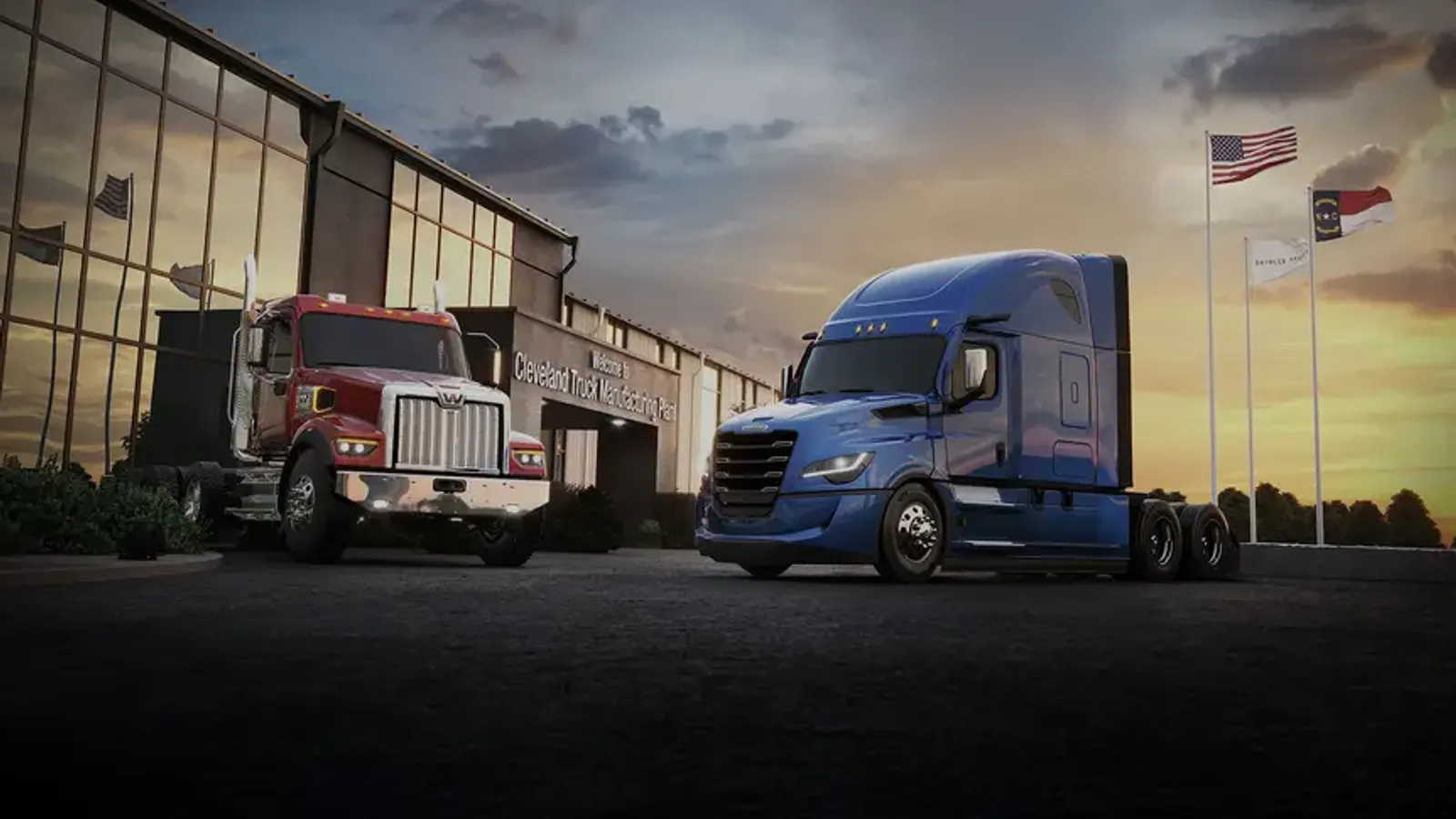
Daimler’s production footprint in North America spans plants in Portland, Oregon; Cleveland, North Carolina; and facilities in Santiago Tianguistenco and Saltillo, Mexico. This diversified manufacturing network provides a degree of flexibility, allowing the company to adjust output and potentially mitigate tariff impacts by shifting production volumes geographically.
Backlog and Outlook Into 2025
Despite Q3’s difficulties, Daimler’s order backlog offers some cushion. The company’s 2025 sales forecast still aims for 135,000 to 155,000 units, a reflection that while current orders have weakened, existing contracts should sustain production. Nonetheless, a lasting recovery in North America is not forecasted before mid-2026, meaning logistics planners must brace for continued market softness.
Sales and Market Performance Summary
| Metrisch | Q3 2025 | Q3 2024 | Verandering |
|---|---|---|---|
| Unit Sales | 30,225 | 49,346 | -39% |
| Revenue (euros) | 4 billion | 6 billion | -33% |
| Full-Year Sales Guidance | 135,000–155,000 units | 308,000 units | ~50% decline |
Implicaties voor de logistieke sector
This steep sales decline signals tight conditions ahead for freight and shipping networks. Reduced truck availability directly impacts freight capacity, vehicle dispatch scheduling, and haulage costs. Logistics providers may see increased pressure on their fleet utilization, and cargo movement could face challenges if supply chain operators hesitate to expand truck orders amid market uncertainties.
Companies managing supply chains, including parcel, pallet, and container movements, should factor in these market signals. The potential delay in truck replenishment or fleet upgrades could slow delivery times or increase reliance on third-party courier and forwarding services. This context makes platforms offering flexible and affordable cargo transport solutions, such as GetTransport.com, increasingly relevant for businesses and individuals seeking dependable shipping options.
Facing the Future — Challenges and Opportunities
It’s clear that tariff pressures and a subdued freight market are major obstacles. Yet, with existing backlogs and a flexible production network, Daimler is positioning itself cautiously for a market rebound further down the line. The situation is a classic example of how macroeconomic factors ripple through manufacturing and logistics chains alike.
Belangrijkste opmerkingen
- Advance deliveries before tariff hikes can distort quarterly sales cycles.
- Tariff-related costs directly impact pricing and profitability for manufacturers and customers.
- A cautious market mood demands agility in freight and transport planning.
- Logistics providers need to anticipate tighter truck availability and potential shipping delays.
Final Reflections: Experiences Over Reviews
While data and industry reviews paint a solid picture of Daimler’s current challenges, nothing replaces firsthand experience when choosing freight and transport partners. On GetTransport.com, customers benefit from transparent, competitive pricing and a broad selection of transport options—whether moving bulky freight, vehicles, or household goods worldwide. Choosing wisely helps prevent wasted cost and disappointment, offering peace of mind in an unpredictable logistics landscape.
With extensive global coverage and options that fit every budget, GetTransport.com is a smart choice for anyone needing reliable dispatch or haulage services.
Boek nu op GetTransport.com.
Vooruitblik: Impact op de wereldwijde logistiek
Though these sales developments primarily affect the North American market, they echo broader global themes in freight and shipping. A slowdown in truck sales signals potential shifts in cargo volumes and delivery timing that ripple across international supply chains.
Staying in tune with such market changes is key for platforms like GetTransport.com, which aims to stay ahead of the curve by offering efficient, cost-effective transport solutions that meet evolving market demands.
Begin met het plannen van uw volgende levering en beveilig uw lading met GetTransport.com.
Samenvatting
The Q3 plunge in Daimler Truck North America sales reflects a complex mesh of tariff maneuvers and a hesitant freight market. Declines of nearly 40% in unit sales, coupled with tariff surcharges biting into profits, create a cautious climate for manufacturers and logistics alike. Though the order backlog offers some administrative breathing room, a full market recovery isn’t expected until well into 2026.
This scenario underscores the intertwined nature of vehicle manufacturing and freight logistics—both subject to market emotions, policy, and economic pressures. For shippers, movers, and suppliers balancing cost, time, and reliability, solutions like GetTransport.com provide accessible and flexible pathways for cargo, freight, and bulky goods transportation globally, helping smooth out the bumps of this volatile landscape.