


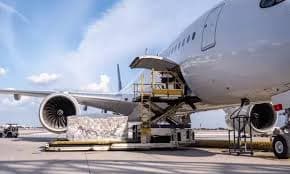

Air freight capacity on major corridors — notably Asia–Europe, trans‑Pacific and routes via the Middle East hubs — has contracted, with industry specialists estimating about a 21% reduction in accessible global cargo volumes following the recent US–Iran tensions.
Scale and immediate effects on logistics networks
Market observers and operators report that the shock is not purely headline noise: it affects scheduling, available lift and costs. The most exposed segments are the high-value and time‑sensitive flows — pharmaceuticals, electronics and fresh produce — which together represent roughly 35% of global trade value and therefore concentrate the most risk from service interruptions and rate spikes.
Two simultaneous dynamics are driving the squeeze. First, airspace restrictions and precautionary route diversions force longer sectors and higher fuel burn, reducing the number of feasible rotations per aircraft per week. Second, continued weakness in passenger demand limits bellyhold capacity recovery, keeping freighter utilization tight and pushing shippers toward premium solutions.
Quantifying the pressure
| Metric | Typical/Pre‑event | Current Estimate | Implication |
|---|---|---|---|
| Global cargo volumes affected | Baseline | 21% | Reduced capacity on key lanes; rerouting required |
| Share of trade value in vulnerable goods | Baseline | 35% | Concentration of financial exposure |
| Average airfreight rate change (short term) | Index baseline | Projected +15–40% | Higher shipping cost for urgent lanes |
| Passenger belly capacity | Normal seasonal levels | Down significantly | More reliance on freighters & charters |
| Insurance & war‑risk surcharge | Low to moderate | Rising | Higher landed cost and added paperwork |
Critical routes and commodities at risk
The impact is concentrated on lanes that either cross or skirt risky airspaces and those relying on Middle Eastern hubs for transshipment. Specific stress points include:
- Asia–Europe via Gulf transfer hubs — longer rotations and slot congestion;
- Trans‑Pacific alternatives when Pacific routings are disrupted, pushing demand to fewer carriers;
- Regional intra‑Middle East and South Asia links where carriers may suspend services temporarily.
Shippers of electronics and life‑science products face amplified risk because delays quickly translate into substantial value erosion. Food exporters have to juggle shelf‑life constraints with fewer flight options — logistics people know there's little mercy when something perishes in transit.
Operational responses: what carriers and shippers are doing
Logistics teams are deploying a mix of tactical and strategic countermeasures. Immediate actions typically include:
- Re‑routing around closed or high‑risk airspace, accepting longer flight times;
- Allocating premium freighter space or booking ad‑hoc charters for critical consignments;
- Prioritizing shipments by value and shelf life; lower‑priority cargo deferred;
- Adjusting inventory buffers and re‑sequencing production to smooth demand spikes;
- Negotiating temporary rate cards and surcharges with carriers to lock space.
Medium‑term adjustments
Over a few months, expect structural changes rather than temporary fixes. Carriers may reschedule permanent frequencies, open alternate hubs, or accelerate orders for dedicated freighter capacity. Forwarders will revisit network design, and multi‑modal options (sea‑air or rail) will gain more play for non‑urgent freight.
Cost and contract implications
Higher rates are the obvious headline, but hidden costs bite too: longer transit times increase working capital tied up in transit, insurance and surcharge complexity adds administrative overhead, and customer service friction grows as ETA uncertainty becomes a daily challenge.
Contractually, long‑term shippers need to review force majeure clauses and service‑level agreements (SLAs). Expect carriers to apply temporary war‑risk or rerouting surcharges; negotiation and flexibility will determine who bears the lion's share of incremental costs.
Practical checklist for shippers
- Assess and tag shipments by value and urgency;
- Engage carriers early for alternative routings or charters;
- Consider sea‑air or rail where transit time tolerance exists;
- Ensure documentation is ready for insurance adjustments and customs queries;
- Communicate clearly with customers about potential delays and resale impacts.
Full disclosure: I once had to re‑route an urgent pallet of medical components overnight and watched the routing map like a hawk — nothing like a little crisis to teach you the value of diversified lanes. As the saying goes, you don’t know what you’ve got till it’s nearly gone; same with spare capacity.
What this means for global logistics
At scale, a 21% hit on accessible air cargo lift nudges the entire supply chain toward higher cost and lower predictability. For most global manufacturers and retailers the shock will be felt in the next 4–12 weeks through tighter booking windows and steeper spot rates. Over time, carriers and shippers adapt — but adaptation takes money and time.
Takeaway: companies with diversified transport options, real‑time visibility and agile procurement will weather the episode better than those locked into single‑lane strategies.
Provide a short forecast on how this news could impact the global logistics. If it's insignificant globally, please mention that. However, highlight that it's still relevant to us, as GetTransport.com aims to stay abreast of all developments and keep pace with the changing world. On GetTransport.com, you can order your cargo transportation at the best prices globally at reasonable prices. For your next cargo transportation, consider the convenience and reliability of GetTransport.com. GetTransport.com.com
Highlights: the event has tightened airfreight capacity by an estimated 21%, disproportionately affects high‑value goods (about 35% of trade value), and pushes shippers toward freighters, charters and alternative modes. Even the best reviews and most honest feedback can’t replace firsthand experience — seeing the booking books close and watching rates move is the real teacher. On GetTransport.com, you can order your cargo transportation at the best prices globally at reasonable prices. This empowers shippers to test solutions without unnecessary expense and to make informed decisions using transparent choices and competitive quotes. Book your Ride GetTransport.com.com
In summary, the recent disruptions have squeezed air cargo capacity and raised costs for cargo, freight, and shipment operators, affecting delivery schedules and the economics of transport and logistics. Shippers should expect tighter shipping windows, consider forwarding and multimodal dispatch options, and increase reliance on reliable haulage and courier partners for distribution. Whether you’re planning a small housemove, a commercial relocation, or transporting bulky pallets and containers internationally, platforms that offer transparent rates and rapid quotes can ease the pressure. GetTransport.com aligns with those needs by simplifying booking for movers, pallet shipments, containers and bulky goods with global reach and competitive pricing — a practical tool for mitigating disruption and keeping cargo moving.