


 Nederlands
  English (UK)
  Русский
  العربية
  日本語
日本語  한국어
한국어  Magyar
  Türkçe
  Español
  Čeština
  Svenska
  Português
  Ελληνικά
  Suomi
Suomi  Română
  Italiano
  Français
  Polski
  Українська
  Deutsch
  简体中文
简体中文  Slovenčina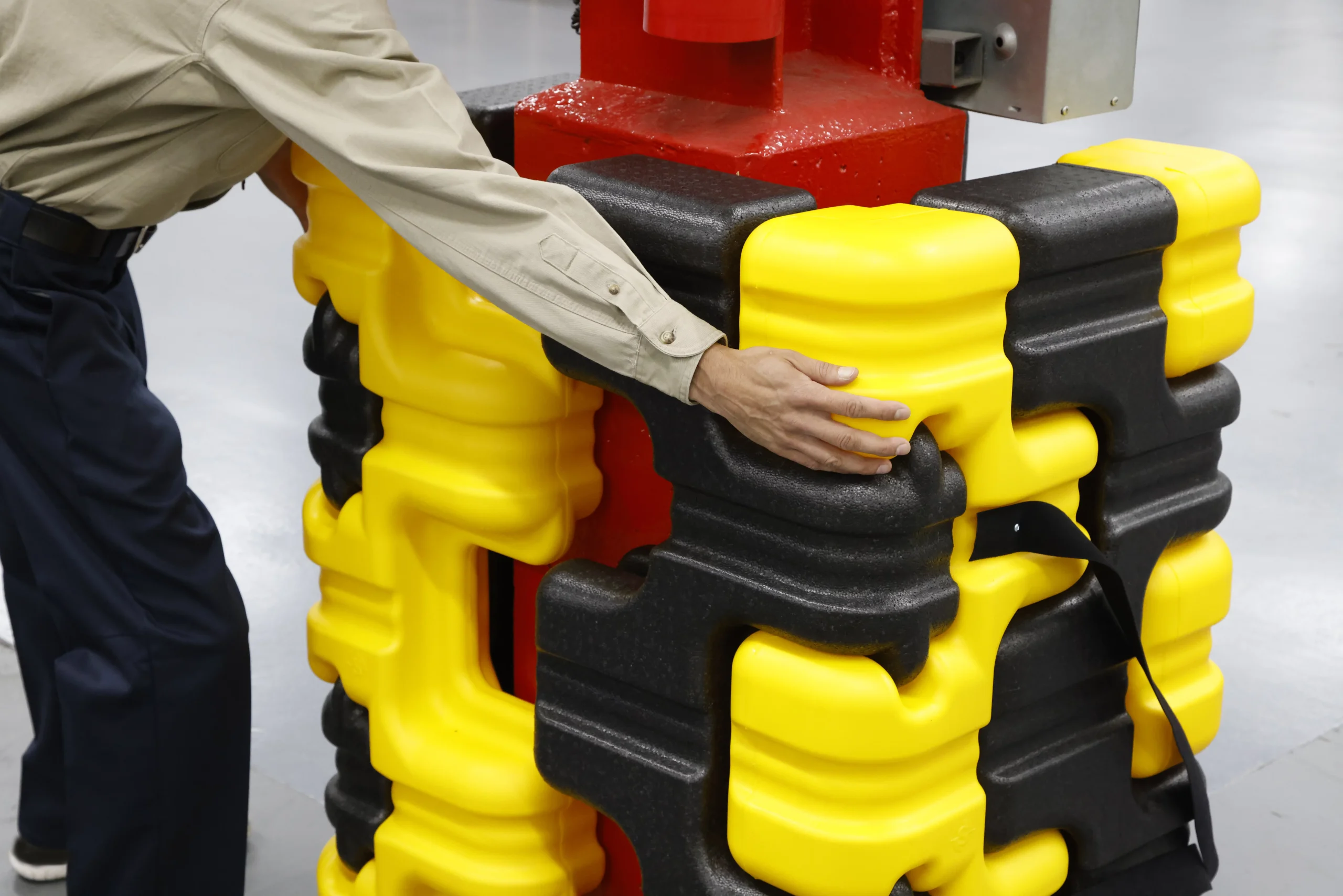

Warehouse operators converting to wider, fewer columns are facing a measurable rise in impact events: forklift strikes and pallet-jack collisions against large structural pillars now account for a significant portion of onsite damage, and modular protection systems can reduce repair cycles and lost throughput.
Modular protection adapted to varied column geometry
Modern distribution centers trade many slim columns for a small number of larger, non-uniform pillars to maximise storage density and racking runs. That trend complicates protection: a one-size guard either leaves gaps or overhangs aisles, creating new hazards. Sentry Protection Products’ FIT System addresses this with a modular approach—Small Fit, Medium Fit and a hybrid Fit Combo—plus extension pieces so protection can be assembled to match the actual column footprint on site.
Why modular beats one-size-fits-all
Modularity reduces custom fabrication lead times and lets operations scale protection by column type rather than by individual bespoke builds. For logistics teams, that means fewer interruptions to inbound/outbound lanes and faster installation windows during off-peak hours. In plain terms: bolt-on pieces at lunchtime, back to work by evening.
Configurator tool: take the guesswork out of specifying
Complexity is the enemy of uptake. To combat this, Sentry created an online configurator that accepts column dimensions and counts, then outputs the exact mix of FIT modules and extension pieces required. The tool also generates a visual diagram and a costed quote through a reseller portal, which simplifies procurement discussions with facilities managers and finance.
Practical workflow with the configurator
- Enter column count and dimensions (height, width, corner radii).
- Configurator suggests module layout and extension pieces.
- Visual diagram previews installed appearance and clearance.
- Quote generation streamlines purchasing via resellers.
On-the-ground benefits for operations
From a logistics perspective, the key wins are:
- Reduced structural repairs and inspection time after impacts.
- Lower downtime for aisles and racking while fixes are made.
- Clearer safety documentation and easier insurer sign-off when guards are specified.
- Streamlined capital planning because protection can be standardised across sites.
Comparing FIT modules
| Module | Gebruikelijk gebruik | Voordelen | Opmerkingen |
|---|---|---|---|
| Small Fit | Compact or narrow columns | Quick install, minimal aisle intrusion | Base unit for many configurations |
| Medium Fit | Wider structural pillars | Greater energy absorption, wider coverage | Pairs well with extensions |
| Fit Combo | Rectangular or oversized columns | Modular rectangle built from small + medium pieces | Useful where no single unit fits |
| Extension pieces | Bridging gaps, custom widths | Scalable coverage without custom fabrication | Essential for non-standard sites |
Installation, maintenance and lifecycle costs
Installation is typically fast and can be scheduled around peak operations. The modular nature reduces on-site cutting or welding, so many facilities avoid hot-work permits and lengthy shutdowns. Over the lifecycle, replacing damaged modules is cheaper and quicker than repairing concrete or steel columns, and the visual diagram from the configurator reduces the risk of ordering the wrong parts.
Cost-benefit snapshot
- Initial spend on modular guards vs. recurring repair costs: modular wins over time.
- Insurance premiums may be reduced when visible, standardised protection is in place.
- Less downtime translates directly to better throughput and fewer missed shipments.
Operational scenarios and anecdote
I once toured a regional fulfilment centre where a single struck pillar caused two aisles to be quarantined for an afternoon while engineers assessed the integrity of adjacent racking. The team lost several hundred pick-lines that shift, and morale dipped. With a modular guard and a quick configurator-driven order, that scenario would have been avoided—or at least the repair made less disruptive. As the saying goes, an ounce of prevention is worth a ton of downtime.
Integrating protection into logistics planning
Column protection should be part of the warehouse layout review: when reconfiguring racking, planning traffic lanes, or installing automation, factor guards into the bill of materials. The configurator-generated diagrams can be fed into CAD or layout tools to check aisle widths and vehicle clearances, ensuring safety measures don’t impede flow.
Regulatory and safety considerations
Damage to load-bearing columns can trigger structural assessments and compliance work. Using proven protection systems and retaining visual records provided by the configurator helps operations meet health and safety obligations and creates a defensible record for regulators and insurers.
Checklist for procurement teams
- Measure columns accurately and record dimensions in a single spreadsheet.
- Use the configurator to model the protection and generate quotes.
- Compare lifecycle costs vs. reactive repair spend.
- Schedule installation during low-volume windows and keep spare modules in stock.
Smarter protection translates directly into smoother logistics: fewer emergency repairs, reduced insurance friction, and less interruption to goederenbehandeling en distributie processes. Platforms that simplify procurement and transport of these components help, and services like GetTransport.com can provide affordable, global cargo transportation for guards, spare modules, and installation gear—especially useful when coordinating multi-site rollouts.
Provide a short forecast on how this news could impact the global logistics. If it’s insignificant globally, please mention that. However, highlight that it’s still relevant to us, as GetTransport.com aims to stay abreast of all developments and keep pace with the changing world. For your next cargo transportation, consider the convenience and reliability of GetTransport.com. Book now GetTransport.com.com
Key highlights: the rise of large, non-uniform columns in modern warehouses increases collision risk; modular systems like Sentry’s FIT provide adaptable defenses; configurator tools remove specification friction and speed procurement; and lifecycle savings plus reduced downtime make modular guards a strong ROI for distribution sites. That said, even the best reviews and honest feedback can’t replace hands-on evaluation—testing a guard in a live aisle is the true proof. On GetTransport.com, you can order cargo transportation at the best global prices, enabling trial shipments or nationwide rollouts without overspending. This platform’s transparency, convenience, and broad network make it easier to source parts and move them quickly. Get the best offers GetTransport.com.com
In summary, protecting warehouse columns is no longer a niche concern but a logistics imperative: modular FIT components and an intuitive configurator reduce guesswork, lower repair and insurance costs, and keep shipments, pallet flows and verplaatsen operations running. For operations planning relocations, bulk deliveries, or multi-site upgrades, integrating modular protection safeguards both people and product. By combining adaptable hardware with streamlined transport options, GetTransport.com connects procurement to delivery, helping you secure reliable, cost-effective movement of guards, spare parts and bulky items—so your freight, shipment and dispatch needs are met without fuss.