


 Nederlands
  English (UK)
  Русский
  العربية
  日本語
日本語  한국어
한국어  Magyar
  Türkçe
  Español
  Čeština
  Svenska
  Português
  Ελληνικά
  Suomi
Suomi  Română
  Italiano
  Français
  Polski
  Українська
  Deutsch
  简体中文
简体中文  Slovenčina
 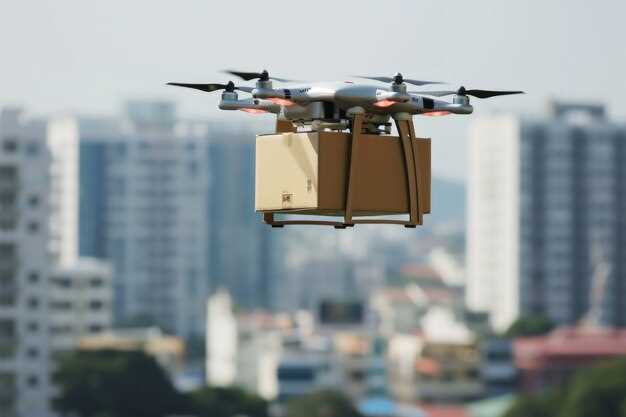 Kunnen bezorgrobots last-mile logistieke problemen oplossen?">

Recommendation: deploy a mixed fleet where autonomous delivery robots handle short, low-traffic blocks and customers receive a precise time window; partnered human drivers handle exceptions. This approach can reduce last-mile labor hours by 20 to 35 percent in urban areas and university campuses, depending on parcel size and route density. That combination can make the experience smoother for customers and staff, united around the goal; that is, it serves user needs while protecting safety for each doorstep interaction.
Electric, compact delivery robots operate on sidewalks and curb spaces, serving surroundings around campuses, retail hubs, and apartment clusters. While looking for parcels, they verify addresses and form a plan to reach the front door while minimizing disruption to people. examples include campus lunch runs, grocery restocks, and pharmacy deliveries. Each success informs the form factors used in other neighborhoods, showing how each route can be tuned for local conditions.
Safety remains central. Lookouts and sensors help detect pedestrians, pets, and errant obstacles, reducing risk to people in crowded areas. In a partnered model, robots and human couriers share routes with clear protocols; that collaboration reduces conflicts and improves reliability. Stakeholders should publish transparent safety metrics and policies about data collection, and test in controlled environs before expansion.
To scale responsibly, operators should begin in controlled surroundings such as campuses and business districts before expanding to mixed residential areas. A united approach that coordinates with building managers, local couriers, and emergency services helps reduce conflicts and tailor routes to each setting. Personalization matters: customers can choose personalized delivery windows that fit their routines, with notifications that respect safety and accessibility for people with mobility needs. Electric robots can serve late hours when foot traffic is lower, extending coverage while preserving safety.
Delivery Robots and Last-Mile Logistics: A Practical Plan
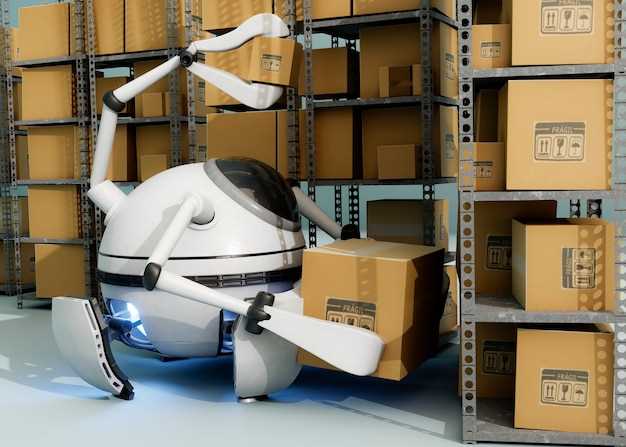
Begin with a six-month pilot in the city center, deploying a capable fleet of ground-delivery robots to handle packages within a 2-km radius. Target timely delivery with a fixed window and minimal human involvement; capture data to guide expansion.
- Phase 1 – Center-area design and governance: Map primary corridors, curb zones, and loading points. Establish safety rules, define right-of-way for robots, and set environmental sensors to monitor pavement interactions.
- Phase 2 – Technology and vehicles: Choose low-speed, multi-terrain ground robots with modular containers for packages, battery-ready charging nests, and trackable IDs. Use a small fleet (4–6 units) in the initial area.
- Phase 3 – Optimizing operations: Build a route grid and apply basic optimization to assign tasks at short intervals. Create a track feed for delivery status, with remote monitors for exceptions and safety holds.
- Phase 4 – Environmental and safety safeguards: Implement adaptive speed controls to respond to weather, pedestrian density, and road work. Log incidents and apply pattern analyses to reduce risk in developing roads and busy areas.
- Phase 5 – Adaptation and learning: Collect examples across scenarios (tight sidewalks, curbside pickup, stair-free access) and adjust robot behavior. Train the system to adapt to new districts with minimal human involvement.
- Phase 6 – Scaling to new landscapes: Roll out to additional areas in stages, prioritizing regions with high package volumes and synchronized delivery windows. Maintain a united plan with retailers and municipal authorities.
Among the constraints to manage are safety, cost control, and public acceptance. Align policies with municipal rules to ensure a united implementation across districts, while focusing on environmental sensors and community feedback to drive continuous improvement.
Key metrics to track: on-time delivery rate, average stop-to-stop time, robot utilization, energy consumption per package, and safety incidents per 10,000 km of ground track. Use these data to refine center-area layouts, adjust vehicle mix, and expand to new landscapes without disrupting existing services, delivering reliable results for residents and businesses alike.
What Are Delivery Robots? Core Capabilities, Autonomy Levels, and Sensor Suites
Recommendation: Deploy robotic vehicles in targeted corridors to perform deliveries efficiently, boost customer satisfaction, and support a rise in several packages delivered per hour, while keeping humans available for exceptions.
Delivery robots combine precise localization, mapping, obstacle avoidance, and reliable handoffs from curb to door. In public surroundings, lidar and cameras detect pedestrians and obstacles where space allows, while radar improves operation in rain or fog. Over years of field tests, these systems are developing stronger decision making for delivering to doorsteps and lockers, with the process staying transparent to customers and operators alike.
Autonomy levels span from assisted operations to high autonomy within defined zones. In several pilots, Level 3 and Level 4 configurations keep a safety driver on standby while the robot handles the core path and decisions for delivering to thresholds and secure lockers. This approach works where routes are repetitive and away from heavy traffic, reducing cycle time and enabling a steady stream of deliveries.
Sensor suites combine lidar, cameras, radar, ultrasonic sensors, GPS/IMU, and edge compute. Lidar provides 3D maps, cameras read addresses and signs, radar aids long-range detection in fog or rain, and ultrasonic sensors handle close-range sensing near doors. Local processing runs SLAM, path planning, and safety checks to keep pace with the public surroundings and deliver reliably to where customers expect their packages.
In practice, payloads typically range from 2 to 7 kg, speeds hover near 5–6 mph, and 8–12 hours per charge cover many shifts. A vehicle can complete 2–3 deliveries per hour on typical urban routes, translating to several dozen deliveries per shift in dense neighborhoods. Public pilots in angeles and other major cities confirm the model’s viability across varying weather and street layouts.
To scale, major operators partner with city authorities to align curb management, safety rules, and data reporting. The current landscape shows a rise in autonomous delivery as a major component of last-mile services, with fleets deployed on campuses, business districts, and apartment clusters. Offering transparent performance metrics helps maintain trust and customer satisfaction across multiple stakeholders.
For retailers, start with controlled pilots in neighborhoods where demand is predictable and where delivering to residences or offices will ease the process. Build a phased plan with clear KPIs for on-time deliveries, theft risk, and satisfaction, and ensure a smooth handoff if a robot cannot complete a delivery.
Major Players in the Delivery Robot Space: Serve, Starship Technologies, Amazon, Waymo, and More
Implement a mixed fleet from day one: Starship Technologies and Serve handle doorstep deliveries in busy neighborhoods, while Amazon Scout extends reach in angeles-area campuses and business centers, and Waymo Via handles larger loads and time-sensitive routes. This full, multiple-city deployment lets you compare what works where, streamlining operations and delivering timely fulfillment. Start with angeles-area corridors to validate the model and scale to nearby neighborhoods. In angeles, pilots test sidewalk routes.
Serve’s sidewalk units operate on geofenced rights of way, with compact chassis and reliable sensor suites that avoid obstacles and people. Starship robots run on sidewalks with a simple, fast path planning engine that supports multiple stops in a single outing. The combination gives you a flexible, timely frontline for low-value items and meal- or parcel-like shipments. Their deployment supports personalized delivery windows and doorstep handoffs, which reduces the need for human couriers in busy blocks.
Amazon Scout packs small packages into weatherproof robots that deliver to home porches or curbside stops within residential corridors and campus zones. Amazon has run pilots in several cities and campuses, with a focus on self-contained charging and remote monitoring. The cost structure leans toward per-delivery pricing with service-level tiers; what you gain is a steady, scalable deployment that can extend to full fulfillment at the doorstep while maintaining low human labor requirements. Deployment in angeles-area neighborhoods has helped refine the integration with notification and order tracking.
Waymo Via leverages autonomous driving tech for mid-mile and last-mile freight, often partnering with retailers and logistics hubs. It shifts driving away from humans in routes that fit well with fixed centers and declared delivery windows. This capability lets you extend operations without adding as many couriers, and it complements robot-to-doorstep models by filling gaps during peak times. When combined with robot fleets, it enables timely, cost-efficient delivery services even in busy centers.
Beyond these names, players such as Nuro, Kiwi, and Udelv push the field forward with specialized robots for trunk-to-door or curbside delivery. These options provide alternatives for various use cases, from groceries to dry goods. For developing fleets, map a center strategy: begin with a few hubs, then scale to multiple neighborhoods, and finally expand to a broader region. A clear deployment plan reduces risk, improves operator training, and accelerates implementation.
Use Case Spectrum: Food, Grocery, and Retail Deliveries Across Urban and Campus Environments
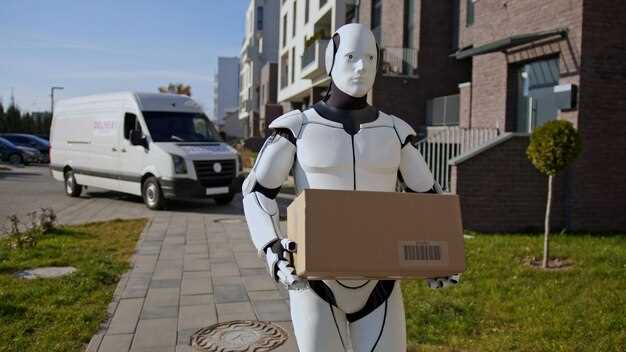
Recommendation: Deploy ground delivery robots for food, grocery, and retail orders in dense urban centers and on campuses to reduce costs, improve safety, and advance environmental outcomes. Local deployments near home hubs keep ground operations focused, where peak-hour demand creates reliable tracks from center facilities to customer doors. This approach comes with strong learning potential and builds capabilities for companies and their partners. This approach creates a place where learning comes from local teams.
Why this spectrum matters: food deliveries demand rapid response, grocery orders carry heavier payloads, and retail picks benefit from predictable, timed routes. In urban landscapes and campus environments, machines navigate sidewalks and low-speed streets at ground level, reducing environmental impact and safety risks for pedestrians. The benefits include lower costs per order, fewer vehicle miles, and safer neighborhoods; deployment scales as learning accumulates and local teams adapt. Operational resilience holds for any hour of the day.
Food delivery specifics: temperature-controlled containers and rapid handoff at a center or nearby pickup point keep meals fresh. In busy hours, robots can reach students and workers within 15-25 minutes, avoiding long queues and parking hassles. By taking repetitive trips away from drivers, venues improve throughput, and the approach helps restaurants and ghost kitchens extend reach while reducing emissions.
Grocery delivery specifics: robots handle chilled and frozen items from local stores, dormitory clusters, and neighborhood markets, delivering directly to home entrances or building lobbies. This reduces costs for fleets, cuts last-mile miles, and strengthens sustainable shopping channels. Local stores gain innovation and new capabilities to compete with larger players, while customers appreciate consistent delivery windows tracked in real time. They are capable of handling fragile produce and heavy cartons.
Retail deliveries on campuses and urban centers: campus bookstores, convenience shops, and kiosks use bots to restock and fulfill orders quickly. Ground machines feed a center-based micro-fulfillment hub, pushing orders to home or campus pickup points, expanding local businesses’ reach without extra delivery vans. The deployment strengthens safety, reduces environmental impact, and helps companies capture more of the order flow while growing customer loyalty.
Risks, Challenges, and Barriers to Adoption
Start with a six-month, two-city pilot that runs across busy last-mile corridors, including the angeles market, to establish clear KPIs for on-time deliveries, route efficiency, and customer satisfaction. Track sensor uptime, battery/charging cycles, and maintenance hours hour by hour to separate hardware from software issues. Keep a dedicated cross-functional team to handle data, safety, and customer feedback, and set a go/no-go decision point after the first 60 days.
Safety and regulatory hurdles ride alongside public acceptance. Authorities require rigorous testing, geofencing, and fail-safe disengagement in crowded home environments where pedestrians mix with ground robots. Where legal, you’ll need permits, insurance, visual monitoring, and an escalation path for incidents. In busy urban cores like downtown angeles, expect seasonal variances in approval timelines and a need for continuous documentation of safety drills and near-miss reporting.
Technology and reliability pose persistent barriers. Robots rely on multiple sensors, cameras, LiDAR, and ground-tracing maps that must work in rain, glare, and low-light hours. When sensors misread a crossing or a curb, the system must track its position and switch to a safe- mode state without stopping service. Years of field testing show that redundancy–dual sensors, robust OTA updates, and local edge computing–improves uptime and reduces delivery delays.
Cost and capital allocation strain the business case. Electric powertrains and on-board computing add upfront CAPEX and ongoing maintenance. A common tactic is to deploy robots as an assistive layer rather than full replacement, pairing them with human couriers for busy periods and uneven terrain. In multiple pilots, fleet-level savings emerge after the first year as utilization rises, but the break-even horizon remains sensitive to route density and energy costs, especially where electricity pricing fluctuates by hour or season.
Labor and workforce transitions require careful planning. Robots can handle repetitive routes and late-hour deliveries, freeing staff for exceptions and high-value tasks. The pros include reduced fatigue, improved schedule reliability, and better coverage of peak hours. The challenge is retraining, safety coordination, and aligning incentives with new collaboration models. Keep a transparent change plan, provide ongoing assistance to drivers, and offer skill-building for maintenance and monitoring roles that emerge with robotic fleets.
Urban infrastructure and sidewalk dynamics present barriers. Ground robots must share space with pedestrians, cyclists, and animals, complicating where and how they operate. Examples from early deployments highlight the need for clear pathing, predictable behavior patterns, and time-windowed deliveries to avoid congestion. In dense neighborhoods, developers must adapt curb management and consider curbside pickup points that reduce busy-hour overlaps and protect ground routes used by aging fleets and electric vehicles.
Privacy, security, and data governance add risk layers. Robots collect footage and sensor data to navigate, which raises concerns about surveillance and data retention. Implement encryption, strict access controls, and secure OTA updates. Regular security audits and incident response drills help keep customer trust intact while preserving operational visibility across multiple partners and fleets.
Where to start, and how to scale, hinges on a measured roadmap. Begin with a narrow set of routes, measure the impact on delivery speed and reliability, and use a staged rollout to learn from each corridor. Keep an eye on weather impact, route variability, and energy efficiency, then expand to additional hours and neighborhoods as the technology demonstrates stable performance and predictable ground behavior. Use these findings to refine the business case and align with customer expectations across the world.
| Risk | Impact | Mitigatie |
|---|---|---|
| Veiligheid en naleving van regelgeving | Vertragingen, beperkte openingstijden en beperkte routes in drukke gebieden | Geofencing, verplichte veiligheidsoperateurs voor piloten, formele vergunningen en regelmatige veiligheidsoefeningen |
| Technologische betrouwbaarheid | Leververtragingen door sensorstoringen of communicatieproblemen | Redundante sensoren, edge computing, robuuste OTA-updates en continue incidentbewaking |
| Kosten en ROI | Hoge initiële CAPEX met onzekere korte-termijn terugverdientijd | Gefaseerde implementatie, lease-opties en het koppelen van robots aan menselijke assistentie tijdens piekuren |
| Arbeidsovergang en paraatheid | Verzet van personeel, opleidingsbehoeften en coördinatieproblemen | Duidelijke verandermanagement, omscholingsprogramma's en gezamenlijke operationele centra |
| Stedelijk ontwerp en basisregels | Operationele conflicten met voetgangers en gebruik van trottoirs | Geoptimaliseerde routeplanning, tijdsvakafgebonden leveringen en beveiligde ophaalpunten |
| Privacy en cyberveiligheid | Misbruik van gegevens en ondermijning van het vertrouwen | Sterke encryptie, toegangscontrole en regelmatige beveiligingsbeoordelingen |
Toekomstige Trends en Voorkomende Innovaties in Bezorgrobots
Neem modulaire bezorgrobots in gebruik in geselecteerde corridors met een hoge vraag om routes en veiligheid te valideren voordat de schaal wordt uitgebreid naar het bezorgen van pakketten aan huis.
In de volgende golf zullen diverse diensten uitbreiden: maaltijden bezorgen van cafés, boodschappen, apotheken en retailbestellingen. Robots zullen aanbieden gepersonaliseerd bezorgvensters, waardoor winkeliers exacte tijden kunnen kiezen en tegelijkertijd mislukte bezorgingen kunnen verminderen. Om dit te ondersteunen, zullen teams paren machines met sensoren om nauwkeurige overdrachten en beveiligde pakketten bij de deuropening of veranda te waarborgen, waardoor een naadloos biedingen voor klanten.
Kosten- en mogelijkheden gegevens tonen dat de gemiddelde eenheidskosten variëren van $35.000 tot $60.000, met een batterijduur van 8–12 uur en laadcycli van 2–4 uur. In drukke gangen, robots deliver 40–60 pakketten per dag, waardoor de laatste mijl-kosten met ongeveer 15–25% worden verlaagd ten opzichte van handmatige koeriers tijdens piekuren. A sensor de suite inclusief lidar, camera's en ultrasone modules is geïntroduceerd om de betrouwbaarheid te verbeteren, en een prestatiebord ondersteunt managers bij het volgen van routes, belading, energieverbruik en levertijden. Gepartnerde retailers en restaurants stroomlijnen de orderafhandeling en retourneringen, wat een duidelijk waardepropositie aantoont voor gemengde-gebruik vloten.
Bezorgpatronen laten zien dat het aanbieden van real-time statusupdates klanten op de hoogte houdt. Het systeem kan de status van elk pakket van begin tot eind volgen, waardoor contactloze overhandigingen aan porches of slimme lockers mogelijk zijn. Met winkelintegratie blijven voorraad- en ordergegevens gesynchroniseerd, waardoor verkeerde pakken en retourzendingen worden verminderd. Kopers hebben 24/7 zichtbaarheid en de gemiddelde tijd van bestelling tot deuropgang daalt in pilot zones met 20–35%.
Het ecosysteem vormt zich rond gezamenlijke inspanningen: retailers, logistieke dienstverleners en restaurantmerken werken samen om het bestellen, de verpakking en de bezorging tot de laatste kilometer te synchroniseren. Met verbeterde sensoren en AI, deze machines handle routine routes in various weather conditions, maintaining performance with a lightweight safety layer. Voorbeelden uit verschillende steden laten zien ROI binnen 12–18 maanden en een opmerkelijke stijging van de klanttevredenheid dankzij gepersonaliseerde aflevermomenten en snellere bezorgingen.
Om verantwoordelijk te schalen, stel duidelijke KPI's in: levertijd op tijd, integriteit van pakketten, klanttevredenheid en energie-efficiëntie. Voer een pilot uit in een gecontroleerde omgeving met een toegewijd veiligheidsteam; breid vervolgens uit naar drukke woonwijken tijdens specifieke dagdelen. Bouw een toegewijd data platform om pakketten, sensorgegevens en klantfeedback bij te houden; publiceer driemaandelijks veiligheids- en prestatierapporten om transparantie te behouden met kopers en toezichthouders.