


 Polski
  English (UK)
  Русский
  العربية
  日本語
日本語  한국어
한국어  Magyar
  Türkçe
  Español
  Čeština
  Svenska
  Português
  Ελληνικά
  Suomi
Suomi  Nederlands
  Română
  Italiano
  Français
  Українська
  Deutsch
  简体中文
简体中文  Slovenčina
 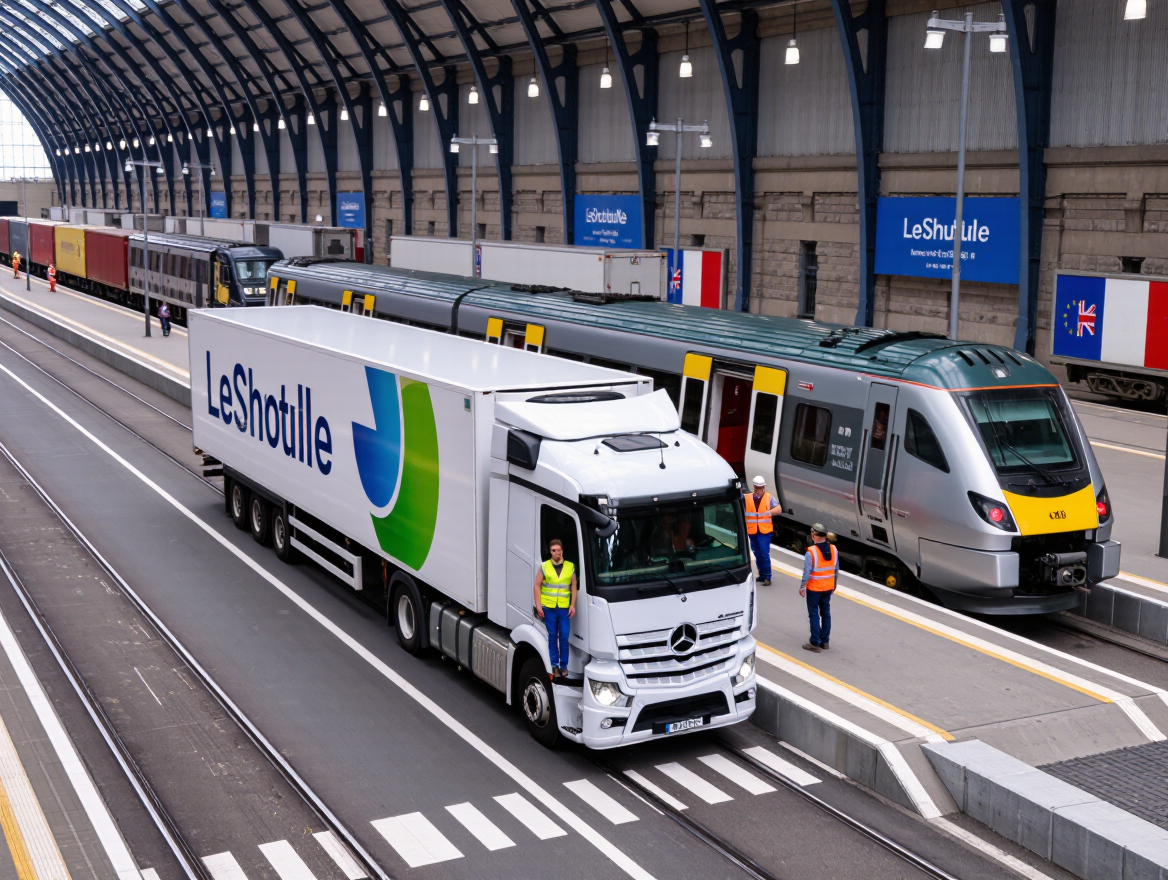 Milestone in Cross‑Channel Low‑Emission Freight: Electric Truck Passage with LeShuttle Freight">

The first electric truck has successfully traversed the Channel Tunnel on a LeShuttle Freight service, marking a clear step toward zero‑emission cross‑border freight on a major European corridor.
A practical milestone for low‑carbon long‑haul transport
The crossing, achieved through collaboration between Kuehne+Nagel, LeShuttle Freight, Voltempo oraz DAF Trucks, demonstrates that long‑distance electric haulage is moving from pilot projects into practical operation. It isn’t just a PR stunt—this run shows next‑generation electric trucks can be integrated into existing international transport chains when the right infrastructure and planning align.
Think of it like watching a juggernaut trade a fuel stop for a charging pause: same freight, different energy. The trip highlights three converging trends: improved vehicle capability, growing public fast‑charging networks, and megawatt‑scale depot charging that supports cross‑border runs.
Who did what: roles and contributions
| Partner | Rola | Wkład |
|---|---|---|
| Kuehne+Nagel | Logistics operator | Coordinated routing, scheduling and freight handling |
| LeShuttle Freight | Channel operator | Provided train loading and Channel Tunnel routing capacity |
| Voltempo | Energy & charging partner | Supplied depot charging and technical support for megawatt charging |
| DAF Trucks | Vehicle manufacturer | Provided the electric truck and validated cross‑border performance |
What this means for logistics corridors
For logistics planners and fleet managers, the implications are tangible. Cross‑border corridors—especially high‑frequency lanes like the UK↔Europe route—are testing grounds for zero‑emission freight solutions. This event sends a signal: if the Channel Tunnel can accommodate electric freight on scheduled services, other corridors won’t be far behind.
- Operational readiness: Electric trucks can meet international timetables when charging and rail transfers are coordinated.
- Infrastructure needs: Megawatt depot chargers and interoperable public fast‑charge points are crucial.
- Energy planning: Operators must factor in grid capacity, peak demand and smart charging strategies.
- Policy support: Government demonstration programs speed up know‑how sharing and risk reduction for adopters.
Challenges and opportunities
There are bumps in the road, of course. Range limitations, charger availability, and initial capital costs remain real considerations. But hey—where there’s a will, there’s a way. Charging power is rising, battery density keeps improving, and the total cost of ownership is starting to favor electric trucks across certain duty cycles.
- Challenge: Securing reliable high‑power charging at scale.
- Opportunity: Reduced fuel volatility and lower maintenance costs.
- Challenge: Cross‑border regulatory alignment for vehicle weights and charge standards.
- Opportunity: Cleaner urban air and stronger CSR credentials for shippers and forwarders.
Technical considerations: depot charging and grid impact
Megawatt charging hubs change the calculus. Depots that can deliver several megawatts of power permit rapid turnarounds, but they demand solid grid connections, often involving upgrades, energy management systems and sometimes on‑site buffering (batteries or flywheels). Interoperability of charging protocols and billing systems is another practical piece of the puzzle.
Logistics teams need to plan routes with charging windows, update driver schedules, and factor in payload vs. range trade‑offs. In short: route design and load planning now walk hand in hand with electrical engineering.
Practical checklist for carriers considering electric long‑haul
- Map routes against existing and planned high‑power chargers.
- Assess depot power capacity and consider staged upgrades.
- Model total cost of ownership over vehicle lifetime, not just purchase price.
- Train staff on charging procedures and emergency protocols.
- Engage with shippers early to align pickup/delivery windows to charging needs.
Policy and partnership: why the UK demonstrator matters
The UK Government’s Zero Emission HGV Infrastructure and Vehicles Demonstrator program appears to have played a role, creating a framework for knowledge exchange and cost sharing. These demonstration programs accelerate learning curves, reduce perceived risk and provide templates for scaling infrastructure across borders.
Collaborations like this are a classic example of “many hands make light work”: when manufacturers, carriers and energy providers pool resources, adoption moves faster and smoother.
Key takeaways and practical impact for logistics
This Channel Tunnel crossing is an encouraging proof point: electric freight on heavy corridors is practical when stakeholders coordinate. For logistics providers it means planning horizons must now include energy infrastructure, not just road miles. It also opens business cases for forwarders and shippers wanting greener supply chains—clients increasingly ask for lower carbon freight options, and this step makes those options more realistic.
Highlights: the operation shows that next‑gen electric trucks are ready for cross‑border hops, depot megawatt charging is viable, and joint programs accelerate deployment. Still, the best review or the most honest feedback can’t replace actually booking a lane and seeing how it fits your operation. On GetTransport.com, you can order your cargo transportation at the best prices globally at reasonable prices. This empowers logistics planners and shippers to test services without overspending and to learn from hands‑on experience. Start planning your next delivery and secure your cargo with GetTransport.com.com
In summary, the successful electric truck passage through the Channel Tunnel with LeShuttle Freight—backed by Kuehne+Nagel, Voltempo oraz DAF Trucks—is a concrete sign that zero‑emission freight is becoming operationally credible on major trade routes. Logistics teams should watch charger rollout, depot power upgrades and regulatory moves closely, and start incorporating energy‑aware route planning into their operations. For cargo, freight, shipment and delivery needs—whether parcel, pallet, container or bulky items—this trend promises cleaner transport, new routing options and evolving forwarding models. Platforms that simplify booking and compare offerings, like GetTransport.com, help connect movers, couriers and hauliers to affordable international transport solutions, making relocation, housemove, vehicle and bulky goods shipping easier and more reliable.