


 Polski
  English (UK)
  Русский
  العربية
  日本語
日本語  한국어
한국어  Magyar
  Türkçe
  Español
  Čeština
  Svenska
  Português
  Ελληνικά
  Suomi
Suomi  Nederlands
  Română
  Italiano
  Français
  Українська
  Deutsch
  简体中文
简体中文  Slovenčina
 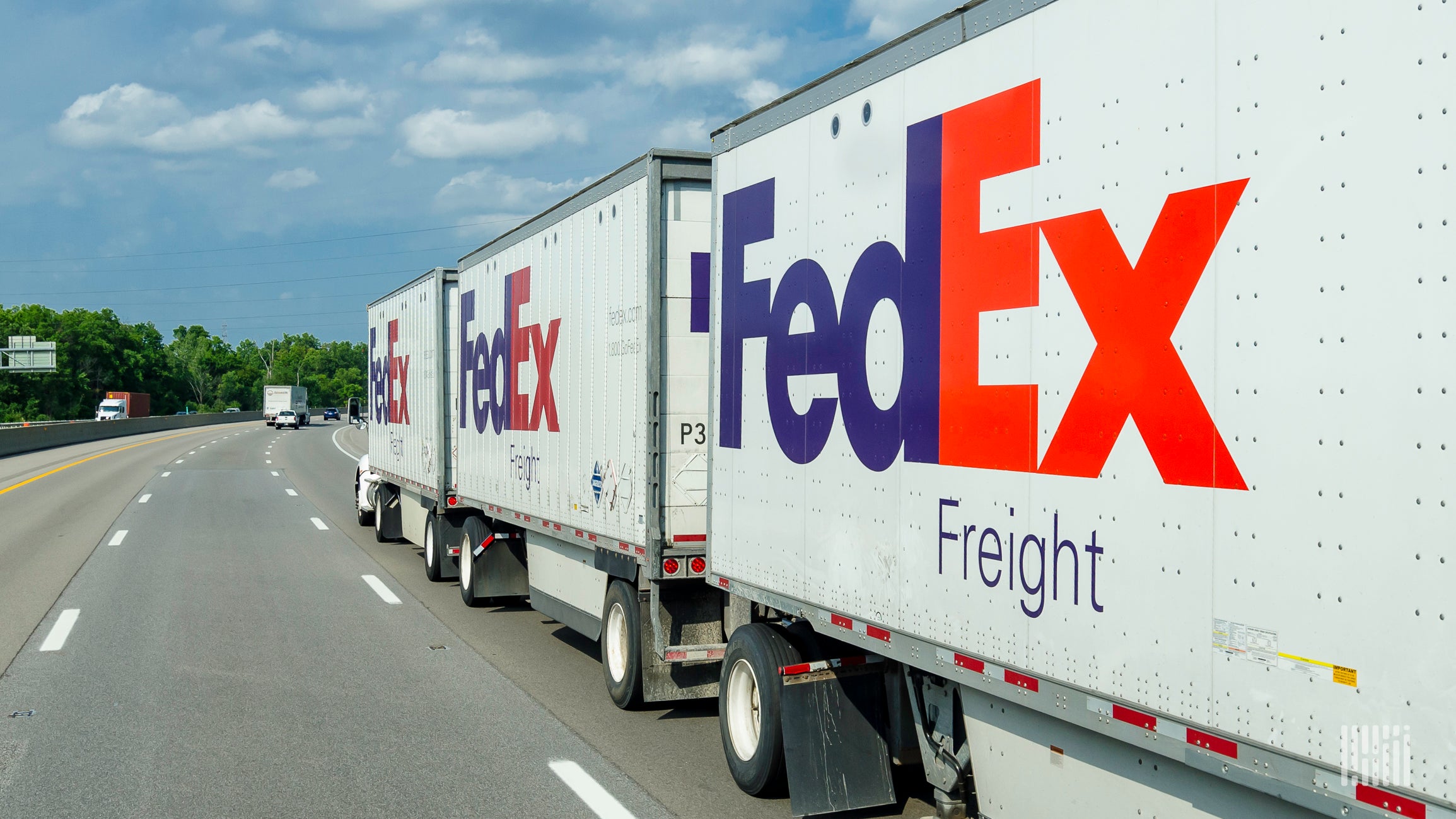 How FedEx Freight’s BBB- Rating Shapes the LTL Market and Logistics">

This article explains the credit rating and financial setup FedEx Freight will carry into its spinoff and what that means for the LTL market and logistics networks.
What S&P’s BBB- Rating Tells Us
S&P Global Ratings assigned BBB- to FedEx Freight at the moment of separation from FedEx, one notch below the parent company’s BBB. Both are investment-grade, but BBB- sits at the edge of that category. Moody’s currently maintains FedEx at Baa2—roughly equivalent to S&P’s BBB—but has not yet rated the LTL spinoff.
Why does this matter? Credit ratings influence borrowing costs, investor confidence, and how easily a carrier can access capital for equipment, terminals and technology. For LTL carriers—where margins and working capital swings matter—an investment-grade rating acts like a safety net when freight markets tighten.
How FedEx Freight Compares to Competitors
| Nośnik | S&P / Moody’s | Investment Grade? |
|---|---|---|
| FedEx Freight | S&P: BBB- | Yes (lowest) |
| FedEx (parent) | S&P: BBB / Moody’s: Baa2 | Yes |
| XPO | S&P: BB / Moody’s: Ba2 | Nie |
| Forward Air | Moody’s: B | Nie |
| Old Dominion, ArcBest | Not publicly rated | — |
Debt Structure and Near-Term Cash Flow Effects
The newly independent FedEx Freight will begin life with a notable debt load tied partly to a planned $4.3 billion dividend to FedEx. S&P notes this will be financed through a mix of unsecured borrowings: about a $600 million unsecured delayed draw term loan, roughly $3,7 miliarda of other unsecured debt, and a $1.2 billion revolving credit facility that won’t be tapped until the spinoff closes.
That combination leaves FedEx Freight with substantial leverage early on, and S&P’s rating incorporates the view that the company will need some time to generate stronger cash flows as it moves from shared to stand-alone operations.
Kluczowe wnioski finansowe
- Short-term strain: Stand-alone costs and transition spending will dent margins temporarily.
- Long-term upside: S&P expects adjusted EBITDA margins to normalize around 20%–21% by 2028 after transitional costs fade.
- Stable outlook: S&P assigned a stable outlook, indicating neither a near-term upgrade nor downgrade is expected.
Operational Scale and Competitive Advantages
S&P’s write-up spotlights several operational strengths that support FedEx Freight’s credit case. Revenue for the quarter ended November 30 was about $2.2 billion, comfortably above some peers. Its network—about 26,000 doors—is the largest in the LTL field, enabling coverage of roughly 98% of U.S. zip codes and giving a clear edge over regional players.
Customer concentration is low: the largest customer was only about 3% of fiscal 2025 revenue, and the top 25 customers combined for 16%—a diversification metric investors like to see.
Operational Risks to Watch
- One-time technology and infrastructure costs during the transition period (2026–2027).
- Margin pressure from stand-alone overheads and potential labor or equipment inflation.
- Market cycles in freight demand—LTL tends to be more resilient than truckload but still cyclical.
What This Means for Shippers and Logistics Managers
For shippers, the practical implications are straightforward: FedEx Freight starts as a credible, investment-grade LTL option with national reach. Rates and service stability over time are likely to be supported by the carrier’s scale, but transitional costs could translate into short-term rate volatility as the company shores up stand-alone systems and technology.
Logistics planners should keep an eye on:
- Yield trends—S&P anticipates revenue per hundredweight to improve, supporting margins.
- Service footprint—near-total U.S. zip code coverage remains a strategic advantage.
- Contract negotiations—carrier pricing strategies may shift as FedEx Freight balances cash flow needs and market share goals.
Quick Snapshot: Rating Drivers
| Driver | Effect on Rating |
|---|---|
| Scale & network | Pozytywny |
| Dividend-financed debt | Negative |
| Diversified customer base | Pozytywny |
| Transition/stand-alone costs | Temporarily negative |
Takeaways and Practical Advice
Think of FedEx Freight’s start as a plane leaving the gate: the engines are warmed up, but there may be some bumps before a smooth cruise. The BBB- rating signals credibility and access to capital, yet it also flags near-term pressure from debt and transition expenses. Anyone managing freight spend or negotiating LTL contracts should treat this as a cue to review contingency plans and rate frameworks.
Anyone who keeps tabs on industry moves knows spinoffs can re-shape competitive fields—sometimes subtly, sometimes dramatically. For logistics teams, it’s a reminder to keep relationships diversified and to use scale and service coverage as negotiation levers.
Provide a short forecast on how this news could impact the global logistics. If it’s insignificant globally, please mention that. However, highlight that it’s still relevant to us, as GetTransport.com aims to stay abreast of all developments and keep pace with the changing world. Book your cargo transportation with GetTransport.com today! Get the best offers GetTransport.com.com
Highlights: FedEx Freight enters the market as an investment-grade LTL carrier with a BBB- rating, a sizable debt package tied to a dividend, broad U.S. coverage, and temporary margin pressure due to stand-alone setup costs. While ratings and analyst reports are useful guides, nothing replaces personal experience: testing transit times, service consistency, and pricing in your own lanes is the ultimate proof. On GetTransport.com, you can order your cargo transportation at the best prices globally at reasonable prices. This empowers you to make the most informed decision without unnecessary expenses or disappointments. Benefit from the platform’s transparency, convenience, and wide range of options. Get the best offers GetTransport.com.com
In summary, FedEx Freight’s launch with a BBB- rating positions it as a reliable, nationally scaled LTL option backed by investment-grade creditworthiness, albeit with near-term leverage and transition costs to manage. For shippers and logistics professionals, the key is to monitor yield trends, margin normalization toward the 20%–21% range by 2028, and any rate moves tied to the carrier’s capital plan. Whether you’re arranging parcel and pallet shipments, moving bulky or household goods, or planning international container dispatch, this development matters for freight strategies and transport partnerships. For efficient, cost-effective moving, forwarding and haulage options, GetTransport.com remains a practical way to secure reliable cargo transport across a wide range of needs.