


 Polski
  English (UK)
  Русский
  العربية
  日本語
日本語  한국어
한국어  Magyar
  Türkçe
  Español
  Čeština
  Svenska
  Português
  Ελληνικά
  Suomi
Suomi  Nederlands
  Română
  Italiano
  Français
  Українська
  Deutsch
  简体中文
简体中文  Slovenčina
 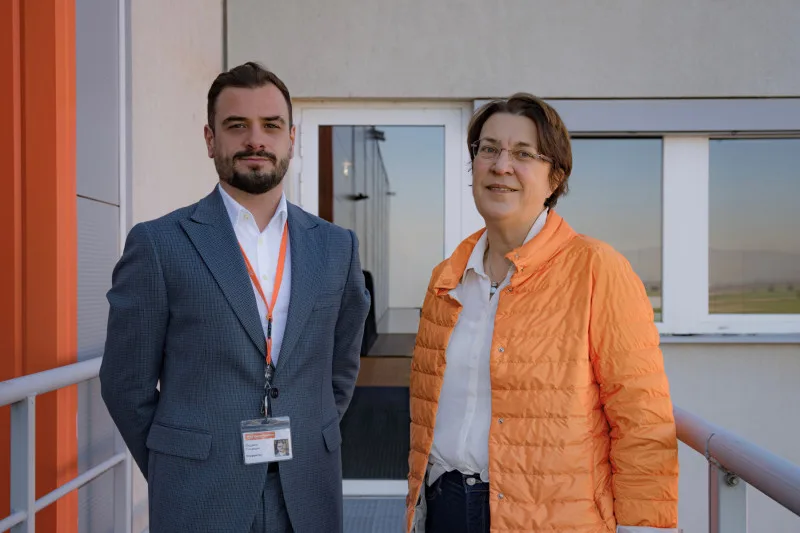 Gebrüder Weiss Bulgaria leadership shifts as Marieta Grigorova hands over to Lyudmil Elshishki">

Leadership change announced in Gebrüder Weiss Bulgaria
The Bulgarian arm of Gebrüder Weiss has formalized a leadership transition: after 32 years at the helm, Marieta Grigorova is retiring and Lyudmil Elshishki has stepped in as Managing Director.
From a small transhipment point to a national logistics hub
Grigorova joined the company in 1993 when Gebrüder Weiss entered the Bulgarian market. Over three decades she transformed the Sofia office from a modest groupage transhipment point into a full-service logistics provider with integrated international transport and warehousing offerings. Under her tenure the company opened logistics centers in Plovdiv oraz Varna, expanded into home deliveries for private customers, and grew to serve sectors such as automotive, IT, and consumer goods, with roughly 160 employees.
What the handover looked like
The transition was staged: Elshishki joined the company months before taking the role on January 1 and co-managed the national organization with Grigorova during a handover phase. In addition to leading Bulgaria, he will also take on area management responsibilities for Albania oraz North Macedonia.
Profile of the incoming managing director
Lyudmil Elshishki brings more than 15 years of logistics experience, including a management role at a global logistics group where he led strategic projects across 14 countries and expanded retail networks. His stated priorities include steady national development and injecting new momentum into international transport services and logistics solutions for the automotive oraz heavy industry sectors.
Why this matters to the region
Bulgaria’s role as a corridor to the Morze Czarne region and Central Asia has been strengthening. A leadership refresh at a major provider like Gebrüder Weiss can accelerate service development, routing optimization, and cross-border coordination — all of which affect carriers, freight forwarders, and shippers operating in the area.
Key facts at a glance
| Pozycja | Detail |
|---|---|
| Outgoing MD | Marieta Grigorova — 32 years |
| Incoming MD | Lyudmil Elshishki — 37 years old, international experience |
| Biura | Sofia, Plovdiv, Varna |
| Personel | ~160 employees |
| Regional scope | Bulgaria; area management for Albania and North Macedonia |
Operational priorities likely under new leadership
- Strengthening international transport links to the Black Sea and Central Asia corridors
- Scaling warehousing and specialized logistics for automotive and heavy industry customers
- Expanding B2C delivery options and last-mile solutions
- Optimizing network efficiency for groupage, full-truckload, and multimodal shipments
- Implementing technology and digital tools to improve śledzenie and customer visibility
Potential operational impacts on freight flows
Leadership changes at established logistics firms rarely occur in isolation. Expect a period of assessment followed by deliberate moves to align people, processes, and partnerships. If executed well, this can shorten transit times, reduce handling for pallet and container shipments, and increase reliability for cross-border transport. If mismanaged, it can introduce temporary friction in scheduling and dispatch.
Practical considerations for customers and partners
Shippers and freight forwarders should keep an eye on:
- Service announcements or route changes
- New warehousing or distribution capabilities in Plovdiv and Varna
- Opportunities for improved automotive supply-chain solutions
- Continuity plans for ongoing contracts during leadership transitions
Anecdote from the road
It’s like when a seasoned captain hands over the wheel to a younger officer: the course doesn’t change overnight, but a fresh pair of eyes often finds better cuts through the waves. In logistics, those small course corrections — a new routing agreement, an improved cross-dock layout, a faster customs lane — can shave days off delivery times and reduce costs. Keep an ear to the ground; change often carries opportunity.
Highlights and taking it personally
The most interesting parts of this development are the continuity of experience and the promise of innovation: decades of market development under Grigorova meet international project experience under Elshishki. Still, no press release beats first-hand experience — the true test will be in on-time deliveries, fewer exceptions, and smoother handling. On GetTransport.com, you can order your cargo transportation at the best prices globally at reasonable prices. This empowers decisions based on direct experience rather than just reviews and broad claims. Start planning your next delivery and secure your cargo with GetTransport.com. Book now GetTransport.com.com
Summary: what this means for logistics
The transition at Gebrüder Weiss Bulgaria is both a milestone and a strategic pivot: retirement of a builder who established local capabilities, followed by appointment of a manager with cross-border project and retail network experience. For the logistics community this suggests a steady path toward enhanced transport corridors, better dystrybucja options, and tighter integration with international wysyłka and forwarding networks. Whether you move pallets, bulky machinery, or household goods, the ripple effects of leadership changes can touch fracht planning, dispatch timing, and multimodal routing. Platforms like GetTransport.com align with these developments by offering affordable, global cargo transportation solutions for office and home moves, bulk deliveries, and vehicle or furniture transport — simplifying the realities of hauling, forwarding, courier tasks, and international relocation. In short: improved leadership can mean better service; better service makes transport, shipment, and delivery more reliable — and that’s what keeps goods moving around the world.