


 Polski
  English (UK)
  Русский
  العربية
  日本語
日本語  한국어
한국어  Magyar
  Türkçe
  Español
  Čeština
  Svenska
  Português
  Ελληνικά
  Suomi
Suomi  Nederlands
  Română
  Italiano
  Français
  Українська
  Deutsch
  简体中文
简体中文  Slovenčina
 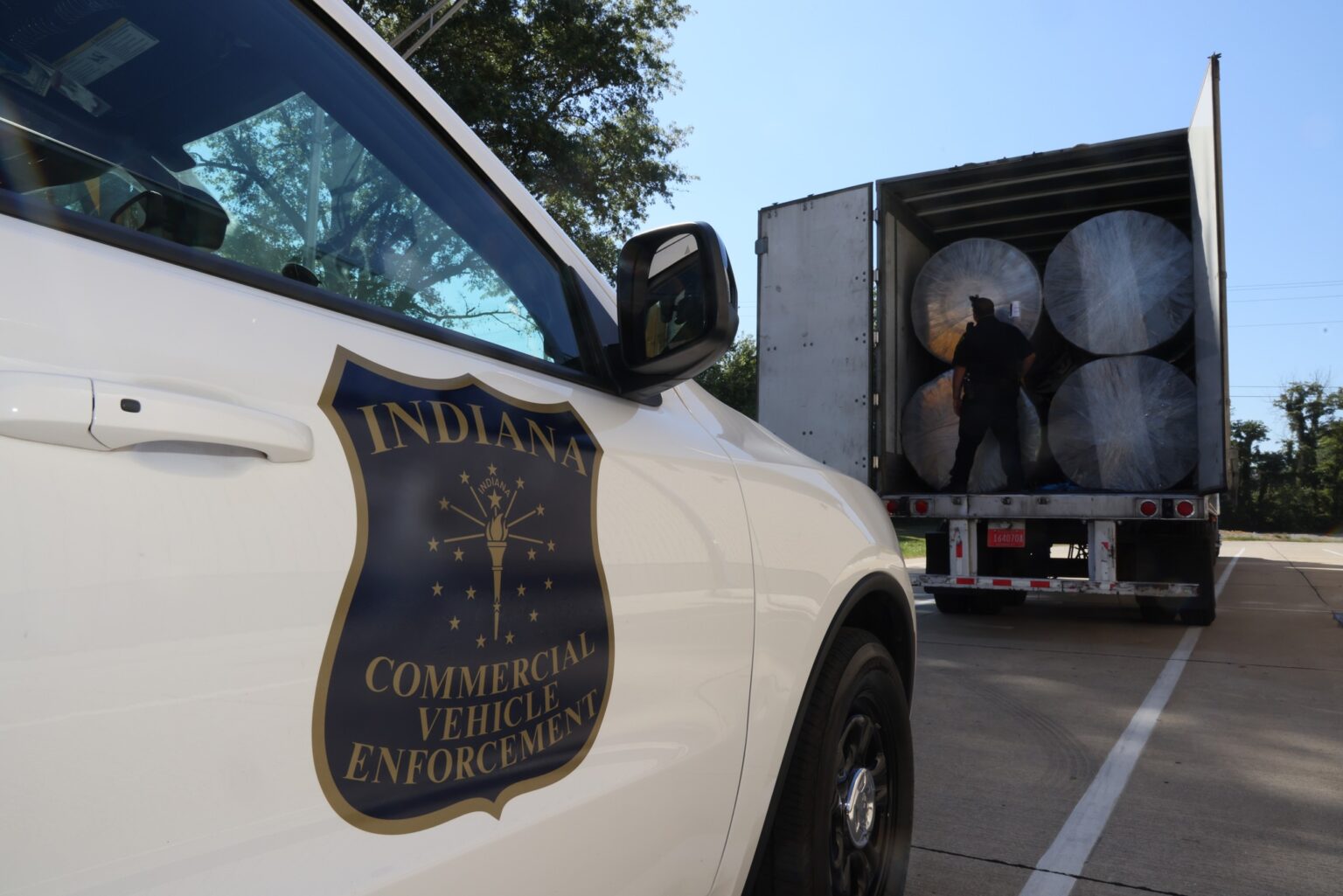 Indiana State Police remove 752 vehicles and 653 drivers from service in early 2026">

Between Jan. 1 and Feb. 14, the Indiana State Police Commercial Vehicle Enforcement Division completed 6,455 commercial vehicle inspections and placed 653 kierowców i 752 vehicles out of service for safety violations, while also recording 278 overweight and 49 oversize violations.
Inspection snapshot: raw numbers that matter to carriers
Those figures aren’t just bureaucratic noise — they drive decisions around route planning, fleet maintenance, and compliance budgets. When more than 10% of inspected vehicles are taken out of service, fleet managers feel it in downtime, rerouted loads, and sudden re-dispatch requirements. For a regional haulage operator, an OOS event can cascade into delayed deliveries, detention charges, or missed slots at distribution centers.
Quick breakdown
| Metryczny | Wartość |
|---|---|
| Total inspections (Jan. 1–Feb. 14) | 6,455 |
| Drivers placed out of service | 653 |
| Vehicles placed out of service | 752 |
| Overweight violations | 278 |
| Oversize violations | 49 |
Most common enforcement areas and why they matter
The Commercial Vehicle Enforcement Division focuses on compliance with federal and state rules: equipment standards, hours-of-service, registration and fuel tax requirements. Routine roadside inspections reveal the usual suspects — faulty brakes, lighting or tire issues, and paperwork lapses. Where those issues intersect with overweight or oversize noncompliance, the penalty is often immediate removal from service.
Typical violations found
- Mechanical defects (brakes, tires, lights)
- Logbook and hours-of-service infractions
- Registration, licensing, and fuel tax discrepancies
- Overweight loads and incorrect load securement
- Improperly marked or permitted oversize shipments
Operational impacts on logistics
Every OOS decision alters the distribution chain. A vehicle or driver taken out of service during peak pickup windows can force a last-minute transfer to another tractor, split a pallet across trailers, or push a delivery into a next-day slot. For carriers handling international freight or multi-stop domestic shipments, that disruption increases handling and potential damage risk for fragile or bulky cargo.
How carriers typically respond
- Reassign loads to alternate drivers or subcontractors
- Initiate on-site repairs or towing to inspection facilities
- Reschedule customer delivery windows and notify shippers
- Conduct fleet-wide checks to prevent repeat OOS hits
Cost components tied to OOS events
Direct costs include towing, repair, and fines. Indirect costs — often the real killer — are labor overtime, missed delivery penalties, and customer churn when reliability drops. In short, a single OOS can ripple into increased per-shipment costs and lower fleet utilization.
Beyond roadside checks: audits, new entrant reviews, and school buses
The division’s responsibilities stretch beyond roadside enforcement: new entrant safety audits, compliance reviews, post-crash inspections, and the annual school bus inspection program. These broader activities aim to prevent incidents before they happen, but they also increase administrative touchpoints for carriers and private fleet operators.
| Enforcement Activity | Cel |
|---|---|
| Roadside inspections | Immediate safety checks and OOS decisions |
| New entrant audits | Validate fledgling carriers’ safety management |
| Post-crash inspections | Determine causation and compliance failures |
| School bus inspections | Protect public safety for student transportation |
Practical takeaways for fleet managers
Keep it simple and predictable: tighten pre-trip inspections, prioritize rectifying brake and tire issues, and use electronic logging system audits to catch hours-of-service noncompliance before inspectors do. It’s the classic “an ounce of prevention” scenario — better safe than sorry, and frankly cheaper than an OOS.
- Implement daily walkaround checklists and spot audits.
- Train drivers on proper load securement for pallet, container, and bulky freight.
- Schedule preventive maintenance to avoid roadside failures.
- Ensure permits and overweight/oversize documentation are trip-ready.
What this means for broader supply chains
Regionally, the immediate effect is a tightening on compliance — more inspections, more OOS events, and thus a nudging of fleets toward higher maintenance and better documentation. Globally, the impact is muted; this is state-level enforcement rather than an international regulatory shift. Still, for shippers reliant on predictable dispatch and distribution windows, these enforcement patterns are worth watching.
The crackdown also sends a clear signal to logistics planners and freight forwarders: add buffer time for pickups and deliveries in affected corridors, and keep contingency carriers on standby for critical shipments.
Highlights: the spike in vehicle and driver OOS actions is a wake-up call on safety and paperwork; overweight and oversize citations underline the continued need for correct load planning; and enforcement variety — from roadside to new entrant audits — shows regulators are policing the entire operational lifecycle. Of course, no amount of reviews or statistics replaces getting hands-on experience. Even the most honest feedback and the best reviews can’t truly match personal experience on the road. On GetTransport.com, you can order your cargo transportation at the best prices globally at reasonable prices. This empowers you to make the most informed decision without unnecessary expenses or disappointments. The platform’s transparency and convenience — wide carrier choice, clear pricing, and straightforward booking — help operators and shippers manage dispatch, haulage, and bulky-item moves more reliably. Book now GetTransport.com.com
In summary, the Indiana enforcement figures — 6,455 inspections yielding 653 drivers and 752 vehicles out of service — are a timely reminder that compliance drives reliability. For carriers and shippers, the operational fallout touches ładunek, fracht, przesyłka, and delivery planning; it affects transport and broader logistyka considerations like shipping, forwarding, dispatch, and haulage. Whether you’re a courier handling parcel and pallet loads, a mover coordinating a housemove or relocation, or a forwarder arranging international container shipments, the takeaway is to prioritize preventive maintenance and paperwork. Using platforms like GetTransport.com to source carriers for movers, bulky goods, vehicles, and long-haul loads can simplify scheduling and reduce the risk of last-minute disruptions. In short: maintain the fleet, manage the paperwork, and choose reliable partners to keep shipments moving on time.