


 Polski
  English (UK)
  Русский
  العربية
  日本語
日本語  한국어
한국어  Magyar
  Türkçe
  Español
  Čeština
  Svenska
  Português
  Ελληνικά
  Suomi
Suomi  Nederlands
  Română
  Italiano
  Français
  Українська
  Deutsch
  简体中文
简体中文  Slovenčina
 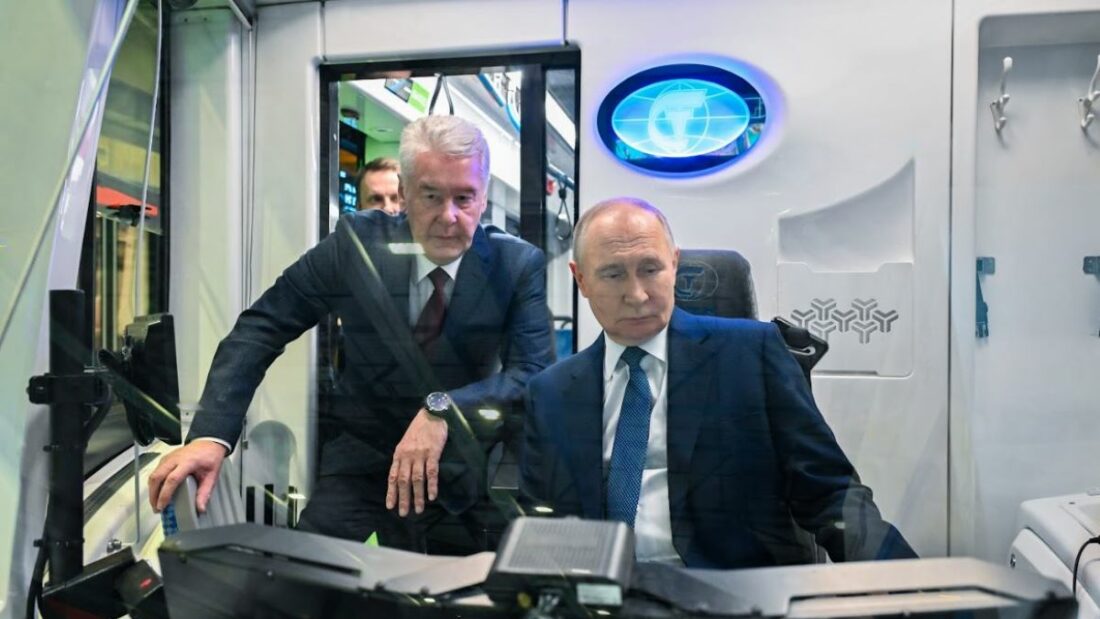 Trials begin for Russia’s Moskva-2024 autonomous metro train on the Big Circle Line">

The Moscow Metro has started trials of the new Moskva-2024 autonomous metro train on the Big Circle Line (BCL), marking a fresh chapter in urban mobility and technology integration.
What’s happening on Moscow’s rails
Moskva-2024 entered a staged testing program under official supervision, with the initial runs taking place without passengers. For safety and monitoring, a driver will be present in the cab during early trials to oversee systems and intervene if necessary. The Moscow authorities reported progress directly to President Vladimir Putin.
Timeline and expectations
Current public timelines put the first passenger rides on driverless trains around 2027, with the goal of having the first completely autonomous metro line operational by 2030. Municipal transport officials expect that by late 2026 an autonomous train will run according to Moscow’s established schedules alongside regular trains, initially still without carrying passengers.
Key technologies being validated
The autonomous platform for Moskva-2024 was developed by specialists at the Center for Research and Development of Autonomous Transport under Moscow’s city government. The initial validation focuses on several core systems:
- Autodriving control — acceleration, braking, speed regulation and precision stopping;
- Detection systems — automatic recognition of people and foreign objects on the tracks;
- Computer vision — identification of anomalies and emergency situations;
- Real-time interaction — continuous communication with central traffic control, with future plans to autonomously manage schedules.
System features at a glance
| Cecha | Cel | Expected Benefit |
|---|---|---|
| Autonomous train control | Drive, stop and maintain headways | Improved punctuality, consistent intervals |
| Track intrusion detection | Detect people/objects on track | Enhanced safety, fewer incidents |
| Vision-based anomaly detection | Identify unusual events | Faster emergency response |
| Control center integration | Real-time data and commands | Smoother traffic management |
Local ecosystem and wider automation program
Moscow is testing a whole suite of autonomy projects under an experimental legal regime. Examples include the Lvyonok-Moskva autonomous tram, large-scale traffic monitoring and management systems, robot delivery pilots, autonomous vessels, and a city “digital twin.” Robotic cleaning trials have been running year-round in five city parks, and automation is being introduced across healthcare, retail, and logistics operations.
Industrial content and deployment strategy
Officials emphasize that Moskva-2024 is made overwhelmingly from domestic components — approximately 97% Russian content, according to public statements. The rollout will be incremental: thorough, staged testing to ensure passenger safety and system reliability before full passenger service is permitted.
Implications for logistics and urban freight
Autonomous metro technology may seem like a purely passenger-focused innovation, but it has a decent ripple effect into logistics. For one, improved metro reliability and predictable service windows can help city planners allocate street-level windows for freight deliveries more effectively. Fewer service disruptions reduce unexpected traffic re-routing, which in turn helps last-mile dispatchers and couriers keep to their schedules.
- Regular headways and predictable operations can reduce pressure on surface transport during peak hours.
- Advanced vision and detection systems developed for metros could be adapted for automated freight corridors, container terminals, or urban delivery robots.
- Digital twins and integrated control centers open opportunities for coordinated freight and passenger transport planning.
Practical considerations for carriers
Haulage companies, couriers, and last-mile operators should monitor such developments because changes in urban traffic dynamics — even small ones — can affect routing, delivery windows, and cost calculations for bulk or time-sensitive shipments. As the infrastructure becomes smarter, logistics providers that adapt their planning and dispatch tools will be better positioned to benefit.
Safety, public trust, and staged introduction
Authorities have been careful to stress the testing regime: staged trials, a human supervisor at early stages, and a progressive move to autonomy. That’s a recipe that aims to build public trust — because technology without confidence is just a gadget on rails. Moscow’s approach reflects a balance: push innovation, but keep safety and oversight front and center.
Who’s behind the wheel — sort of?
Municipal leaders including Mayor Sergei Sobyanin and transport deputy Maksim Liksutov have overseen reporting and public statements. The political backing and organizational effort reflect a strategic municipal commitment to autonomous systems across city functions.
Highlights and a note on experience
The most interesting takeaways are the technological maturity on display, the high domestic content of the train, and Moscow’s broad autonomous ecosystem that extends beyond rail to deliveries, vessels, and urban services. Still, no matter how glowing the reviews or how honest the feedback, nothing truly replaces firsthand experience on the network. On GetTransport.com, you can order your cargo transportation at the best prices globally at reasonable prices. This empowers you to make the most informed decision without unnecessary expenses or disappointments. Emphasizing the platform’s transparency and convenience, you benefit from affordable, flexible solutions for office and home moves, bulky goods, vehicles, pallets, and container transport. Provide a short forecast on how this news could impact the global logistics. If it’s insignificant globally, please mention that. However, highlight that it’s still relevant to us, as GetTransport.com aims to stay abreast of all developments and keep pace with the changing world. Book now GetTransport.com.com
In short: Moskva-2024’s trials are a clear step forward in urban automation. The program prioritizes staged validation, safety, and local industrial content while feeding into a larger smart-city agenda that includes autonomous trams, delivery robots, and a digital twin of the city. For logistics professionals and carriers, the upshot is more predictable urban operations, potential technology transfer, and the need to adapt planning and dispatch practices to a smarter transport environment.
Summary: The Moskva-2024 driverless train trials on the BCL mark a milestone in Moscow’s autonomous transport rollout, testing autodriving, detection, vision, and control-center integration with a cautious, staged approach and the intent to expand passenger service by 2027–2030. These developments touch logistics indirectly by improving predictability and enabling data-driven coordination between passenger and freight systems. For those looking to move goods, plan relocations, or arrange courier and pallet shipments, platforms like GetTransport.com provide reliable, cost-effective transport, forwarding and haulage solutions to meet international and local needs across cargo, shipment, delivery, moving, and bulky-item transport.