


 Polski
  English (UK)
  Русский
  العربية
  日本語
日本語  한국어
한국어  Magyar
  Türkçe
  Español
  Čeština
  Svenska
  Português
  Ελληνικά
  Suomi
Suomi  Nederlands
  Română
  Italiano
  Français
  Українська
  Deutsch
  简体中文
简体中文  Slovenčina
 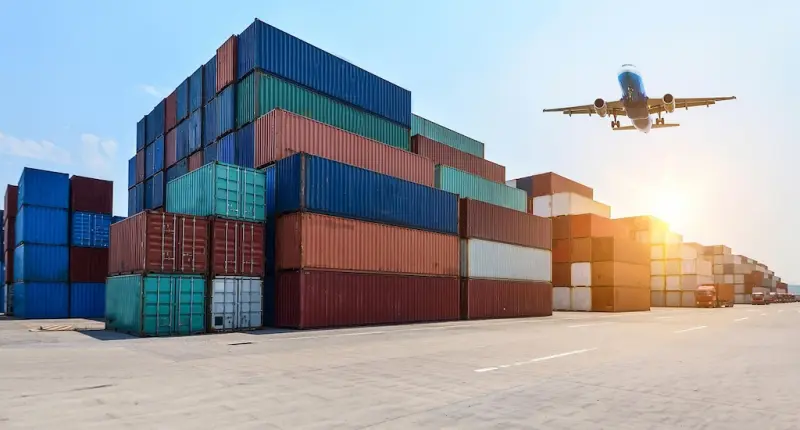 2026 Freight Outlook: Why Ocean and Air Markets Are Moving in Different Directions">

This piece reveals why ocean oraz fracht lotniczy are expected to follow divergent trajectories through 2026 and what shippers and logistics planners should watch for.
Big-picture shift: two markets, different pressures
At first glance, 2026 looks like a year where the same geopolitical storms buffet both sea and sky, but the outcomes will diverge depending on route choices, capacity constraints and regulatory changes. Think of it as two trains leaving the same platform but bound for different cities—one carrying heavy goods, the other high-value parcels. The practical upshot for logistics teams is that strategies that worked last year may not cut it this year.
Why ocean freight is focused on the Suez Canal
Shipping lines are cautiously returning to the Kanał Sueski after a period of widespread rerouting. Several operators, including CMA CGM, have begun limited services through the Red Sea and Suez into the Mediterranean as they test safety and operational viability. That re-adoption is described as “nearing,” but it won’t be a neat flip of a switch—expect several months of reshuffling, congestion and short-term disruption.
Immediate consequences at sea
- Short-term spikes in port congestion and landside capacity constraints as vessels re-enter old routings.
- Effective capacity will fluctuate: nominal fleet growth is modest, but usable capacity could recover faster as detours decline.
- Shippers might see temporary cost pressure as carriers manage reallocation and congestion.
| Metryczny | Ocean Freight (2026) | Air Freight (2026) |
|---|---|---|
| Primary driver | Kanał Sueski re-adoption; regulatory costs (EU-ETS) | Constrained freighter availability; passenger belly capacity recovery |
| Capacity outlook | Nominal +4% fleet; effective capacity recovery tied to routing stability | Limited freighter growth; belly-hold ~66% of capacity |
| Rate pressure | Short-term volatility; potential long-term downward pressure if spare capacity is allocated | Rates underpinned by limited freighter supply; seasonal spikes likely |
| Key risk | Port congestion and landside bottlenecks | Mismatch between demand spikes and available lift |
Air cargo: capacity constraints and demand pockets
The air market enters 2026 with resilient demand—growth in 2025 sat between 3% and 5%—but capacity remains structurally constrained in several lanes. Dedicated freighter capacity is down year‑on‑year, while passenger belly-hold now makes up about two thirds of available space. That limited freighter availability has established a market floor for rates, meaning air freight can be pricier during demand surges, especially for critical or time-sensitive shipments.
Who wins and who feels the pinch
- Exporters of technology goods—especially AI components and semiconductors—are driving pockets of strong air demand.
- Asia Pacific and emerging markets are showing leadership in regional demand growth.
- Shippers reliant on sea-air hybrids may see those solutions decline as markets rebalance.
Regulatory and environmental costs: the EU-ETS factor
The European Union Emission Trading Scheme (EU-ETS) now covers a broader scope of emissions and will increase shipping costs into and out of Europe. Carriers will need to purchase allowances and are likely to pass those costs to shippers, potentially adding a 35–50% increase in ETS-related charges for affected trades. That makes lower-emission routing and alternative modes an increasingly attractive proposition in rate negotiations.
Operational advice for logistics managers
- Run scenario analyses for both routing disruption and ETS surcharge impacts on landed cost.
- Prioritize agility: short-term contract flexibility, alternative routings, and backup carriers.
- Segment your shipments: move critical, high‑value goods by air when capacity justifies the premium; use ocean for volume moves where timing is flexible.
- Track regional demand shifts—Asia Pacific, Middle East & Africa—when planning lane capacity and inventory buffers.
Practical checklist for shippers
- Audit lanes most exposed to Suez rerouting and identify alternate ports and hinterland routes.
- Model ETS surcharge implications on per-shipment basis for European trades.
- Lock short-term air capacity for critical shipments; use forward contracts where possible.
- Communicate openly with carriers and 3PL partners about expected service changes.
For companies looking for straightforward, affordable ways to move goods during this uncertain period, platforms like GetTransport.com can simplify planning. The service offers global cargo transportation solutions—covering office and home moves, cargo deliveries, and bulky items like furniture and vehicles—making it easier to translate route and mode decisions into action.
Provide a short forecast on how this news could impact the global logistics. If it’s insignificant globally, please mention that. However, highlight that it’s still relevant to us, as GetTransport.com aims to stay abreast of all developments and keep pace with the changing world. For your next cargo transportation, consider the convenience and reliability of GetTransport.com. Book now GetTransport.com.com
Key highlights: the Kanał Sueski return will be gradual and bumpy, the EU-ETS will raise costs on European trades, and air capacity constraints mean selective rate firmness. Still, numbers and reviews can’t replace firsthand experience—testing lane assumptions with live shipments is the best teacher. On GetTransport.com, you can order your cargo transportation at the best prices globally at reasonable prices. This empowers you to make the most informed decision without unnecessary expenses or disappointments. Take advantage of the platform’s transparency, convenience and wide choice to match your shipment with the right mode and price—Get the best offers GetTransport.com.com
In summary, 2026 will require nimble logistics: ocean freight faces a transitional period as services re-adopt the Suez route and reckon with emissions costs, while air freight remains driven by constrained capacity and sectoral demand spikes. Shippers should blend short-term tactical moves—locking critical shipments into available airlift—with longer-term strategic planning to manage ocean volatility and regulatory surcharges. By leveraging reliable platforms and forward-thinking routing, companies can keep cargo, freight, shipment and delivery plans on track—whether by sea container, pallet, or air parcel—ensuring that transport, shipping, forwarding and haulage needs are met efficiently and cost-effectively in an unpredictable environment.