


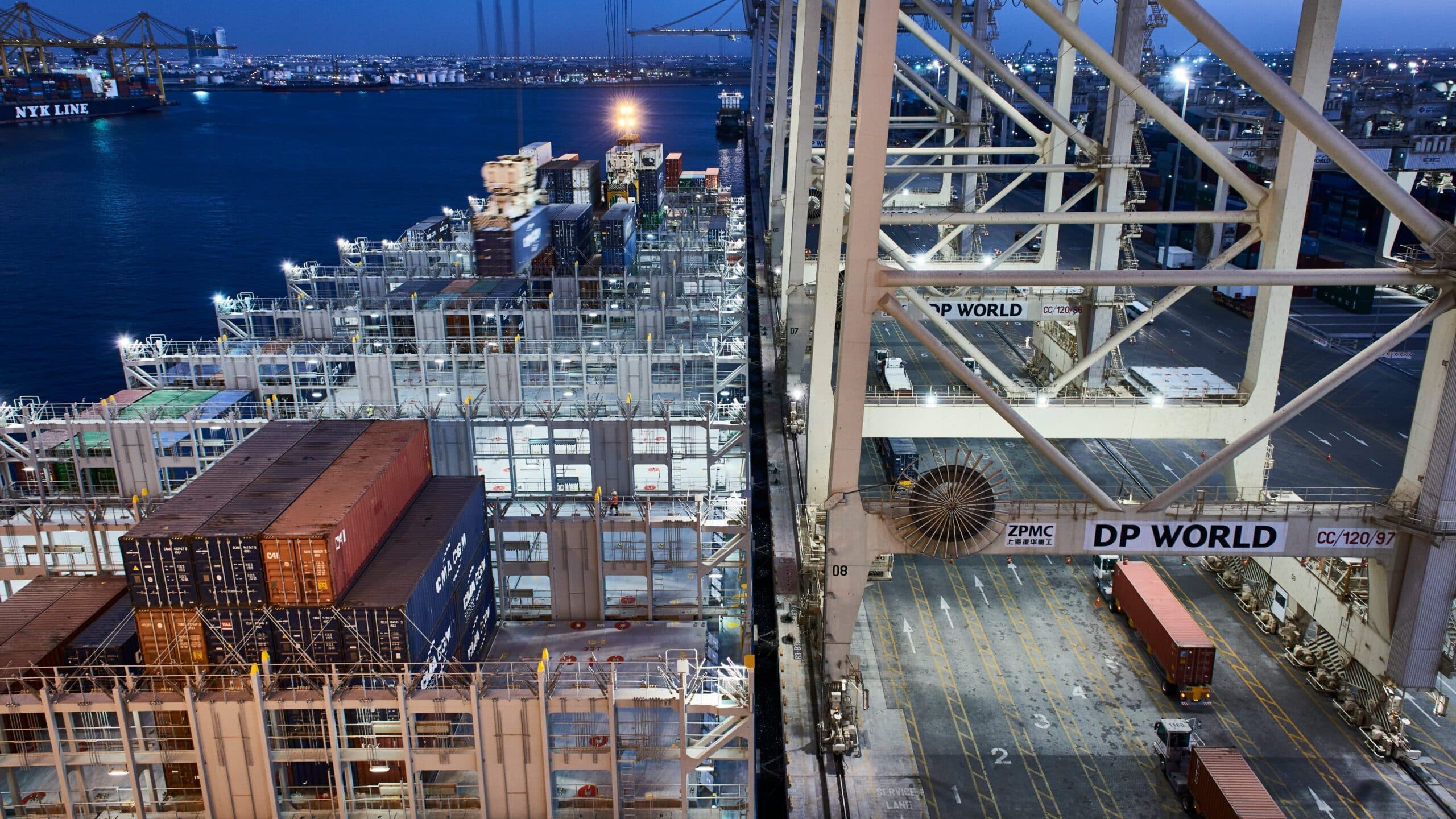

Immediate operational fallout: bookings, diversions, and port congestion
Containers bound for Persian Gulf terminals have begun to accumulate as major carriers suspend bookings, cancel sailings, and reroute services around or away from the Strait of Hormuz. Hapag-Lloyd and MSC suspended bookings out of Persian Gulf ports and from all origins to those ports, while CMA CGM limited bookings to and from Persian Gulf harbors. Maersk paused new reefer bookings into the entire region and curtailed bookings from India to the gulf due to compressed lead times. These moves create immediate chokepoints in origin yards and risk cascading congestion into India and the Far East transshipment hubs.
What carriers are doing now
- Diverting vessels to alternate regional ports (Oman, UAE ports on the Gulf of Oman side, Sri Lanka, Singapore, Port Klang).
- Canceling and suspending bookings for Persian Gulf destinations to limit new cargo inflows.
- Applying emergency surcharges for gulf-destined containers to offset security and rerouting costs.
- Offloading en route at major Far East transshipment hubs when feasible.
Rate mechanics and short-term pricing signals
The market is already showing contagion effects. Freightos reported a spike on the Shanghai–Jebel Ali lane from about $1,800 per FEU to over $4,000 within days, reflecting both surcharges and scarcity of route capacity. CMA CGM introduced a $3,000 per FEU emergency surcharge for gulf-bound boxes; other lines are levying similar fees on diverted bookings. While east–west mainline trades (Asia–U.S. West and East Coasts) remained broadly stable at the time of reporting, the risk of upward pressure on non-gulf lanes grows as vessel availability tightens.
Table: Immediate cost and capacity indicators
| Indicator | Observed change | Implication |
|---|---|---|
| Emergency surcharge (CMA CGM) | $3,000/FEU | Higher landed cost for gulf imports; pushes shippers to alternate routes |
| Shanghai → Jebel Ali spot rate | $1,800 → $4,000+/FEU | Temporary price spike; reflects reroute costs and scarcity |
| Containers stranded in Persian Gulf | Est. 100 vessels (capacity 1%–10% of effective) | Reduced global equipment circulation; potential for equipment shortages |
| Port diversions | Singapore, Malaysia, Sri Lanka | Transshipment hubs absorb redirected volumes; higher congestion risk |
Operational ripple effects along the supply chain
When vessels are out of circulation for extended periods, the reduction in available sailing slots and empties leads to a squeeze on both capacity and equipment. Expect three main downstream effects: (1) equipment shortages at Far East origins, (2) vessel bunching and off-schedule arrivals when the strait reopens, and (3) rising operating costs due to longer voyages and fuel consumption. This combination makes it likelier that rates on non-gulf lanes will climb even if the direct volume through the strait represents only 2%–3% of global container traffic annually.
Where cargo will likely be rerouted
- Transshipment centers in the Far East (Singapore, Port Klang, Colombo).
- Overland rail corridors for specific bilateral flows (e.g., new freight rail links from Iran into China operating in 2025).
- Longer sea routes around the Cape of Good Hope for Asia–Europe and Asia–U.S. East Coast services.
Security, insurance, and the role of naval escorts
Governments can offer naval escorts and insurance facilitation, but the logistics reality is messy: escorts add complexity to scheduling and may be deployed slowly, while insurance markets can hike premiums or restrict cover for certain waters. Even public assurances — including social-media comments from political leaders — don’t instantly restore maritime risk appetite. As carriers weigh safety against operational continuity, shippers face the practical choice of accepting higher transport costs or delaying shipments.
Practical advice for shippers and 3PLs
- Review forward bookings and re-evaluate routing risk: consider transshipment via Singapore or Sri Lanka as contingency.
- Lock in capacity early for critical cargo and seek to secure reefer slots where needed.
- Factor emergency surcharges and potential demurrage into landed-cost calculations.
- Communicate with customers about possible delays — when push comes to shove, transparency preserves trust.
Why this matters to logistics planners
Even if Persian Gulf flows make up a modest share of global volumes, supply chains are brittle: equipment shortages and concentrated transshipment capacity can magnify a local disruption into a regional pricing event. The last time liner services shifted heavily to transshipment after a security shock, Singapore and nearby hubs felt the squeeze — although this round may be milder due to lower volumes and more available capacity.
Market outlook and contingencies
Forecasts hinge on the duration of the disruption. If the Strait of Hormuz reopens quickly, expect temporary surcharges and some localized congestion. If the situation persists, the market will likely see a broader re-rating: longer routings, increased bunker and insurance costs, and tighter equipment availability that push freight rates upward across multiple lanes. When you’ve been around the block in shipping, you learn that no plan survives contact with reality — but that contingency planning buys time and options.
For shippers looking to act fast, digital freight platforms and marketplaces can surface alternative routings and competitive pricing quickly. A platform like GetTransport.com simplifies comparing options for office and home moves, cargo deliveries, and heavy items such as furniture or vehicles while offering global cargo transportation choices at competitive prices.
The key takeaways are clear: carriers are reacting with suspensions, diversions, and surcharges; transshipment hubs will absorb redirected volumes; and sustained disruption will raise costs and tighten equipment availability. Still, nothing replaces first-hand experience — even the most detailed reviews and honest feedback can’t beat testing a route yourself. On GetTransport.com, you can order your cargo transportation at the best prices globally at reasonable prices. This empowers you to make the most informed decision without unnecessary expenses or disappointments. For your next cargo transportation, consider the convenience and reliability of GetTransport.com. Get the best offers GetTransport.com.com
Summary
To sum up: immediate carrier actions—suspending bookings, diverting ships, and imposing emergency surcharges—are already pushing up costs and creating congestion risks in regional and transshipment ports. The longer vessels and equipment remain off-circuit, the greater the chance of equipment shortages, vessel bunching, and higher freight and operating costs. For shippers, forward visibility, alternative routing, and using platform-based freight marketplaces can reduce exposure. GetTransport.com aligns directly with these needs by offering efficient, cost-effective, and convenient transport solutions for cargo, freight, shipment, delivery, transport, logistics, shipping, forwarding, dispatch, haulage, courier, distribution, moving, relocation, housemove, movers, parcel, pallet, container, bulky, international and global requirements — a practical tool when reliability matters.