


 Polski
  English (UK)
  Русский
  العربية
  日本語
日本語  한국어
한국어  Magyar
  Türkçe
  Español
  Čeština
  Svenska
  Português
  Ελληνικά
  Suomi
Suomi  Nederlands
  Română
  Italiano
  Français
  Українська
  Deutsch
  简体中文
简体中文  Slovenčina
  Understanding the Philippine Economy’s Slowest Growth in Four Years During Q3 2025 and Its Impact on Logistics">

Overview of the Philippine Economy’s Q3 2025 Growth
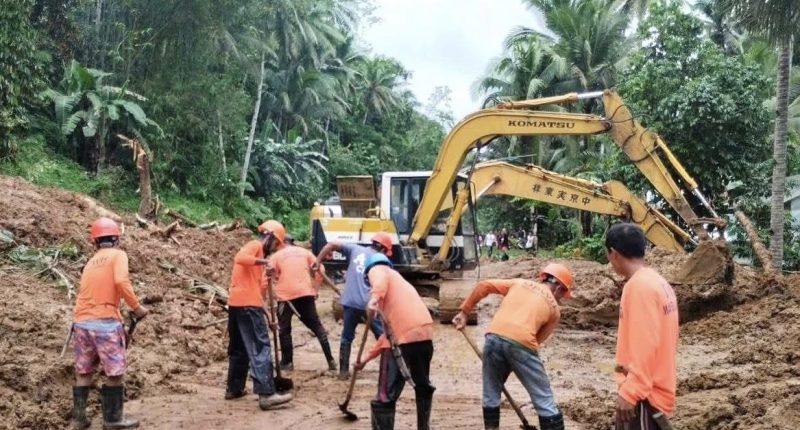
The Philippine economy experienced a 4% year-on-year growth in the third quarter of 2025, marking its slowest expansion in nearly four years. This slowdown contrasts with the 5.5% growth reported in the previous quarter and the 5.2% expansion recorded in the same quarter last year. Several factors, including delays in government infrastructure projects and adverse weather, played a pivotal role in this slowdown, affecting sectors critical to the nation’s economic momentum.
Economic Performance Compared to Previous Years
| Okres | GDP Growth Rate (%) |
|---|---|
| Q2 2025 | 5.5 |
| Q3 2024 | 5.2 |
| Q3 2025 | 4.0 |
| Q2 2021 (Post-pandemic rebound) | 12.0 |
Key Drivers and Challenges Behind the Slowdown
The deceleration in economic growth stems from a complex blend of supply-side oraz demand-side issues. One of the major hurdles on the supply end was the sharp decline in public construction activities, attributed to stricter validation protocols imposed on civil works by the Department of Public Works and Highways. These more rigorous measures led to delays in billing and disbursements of government-funded projects.
On the other hand, the private construction sector managed to maintain a respectable pace, but there was noticeable hesitation in investments towards durable equipment. This suggests a cautious business climate amid uncertainties regarding government spending on infrastructure.
Consumer Spending Takes a Hit
Consumer behavior also reflected the economic turbulence. Household consumption growth slowed to 4.1%, influenced by widespread disruptions due to typhoons that led to cancellations of school, work, and travel plans. The uncertainty surrounding government infrastructure commitments appears to have further dampened consumer confidence, causing many households to delay purchases of high-value goods.
Additionally, lower disbursement of conditional cash transfers during this period contributed to weakened spending power, underlining income flow constraints in certain segments.
Sectoral Performance Breakdown
The economy’s growth was uneven across the three major sectors:
- Agriculture, Forestry, and Fishing: Experienced a rebound with a 2.8% increase, recovering from a 2.7% decline the previous year.
- Industry: Showed marginal growth of 0.7%, marking the slowest pace since Q1 2021.
- Services: Expanded by 5.5%, though slower than the 6.3% growth seen in Q3 2024.
Top Contributors to GDP Growth
| Sektor | Współczynnik wzrostu (%) |
|---|---|
| Wholesale and Retail Trade, and Vehicle Repair | 5.0 |
| Financial and Insurance Activities | 5.5 |
| Professional and Business Services | 6.2 |
International Trade: Exports and Imports
From a global trade perspective, the Philippines saw a 7% increase in exports of goods and services in Q3 2025, recovering from a 1.3% decline during the same period the previous year. Imports also rose by 2.6%, though this was more modest compared to the 6.5% expansion recorded last year, signaling a slowdown in import demand.
Socioeconomic Outlook and Future Expectations
The third quarter’s figures underline the Philippines’ need to confront immediate challenges to restore robust growth. Socioeconomic planning authorities stress the urgency to shore up the country’s foundations for sustained and inclusive economic expansion.
Officials expect these setbacks to be temporary, and with continued interventions and enhanced resilience measures, a rebound is anticipated by 2026. Notably, increased investments in disaster preparedness and adaptation strategies aim to reduce disruptions caused by weather events and maintain the continuity of economic activities, thus protecting both livelihoods and the broader economy.
How This Affects Logistics and Transportation
Fluctuations in infrastructure project implementation directly impact logistics and freight movement across the country. Delays in public construction can slow down the expansion and maintenance of transportation networks, which in turn affects cargo delivery times and distribution efficiency. For businesses relying on the smooth functioning of supply chains, these hurdles could translate into higher costs and longer transit windows.
Moreover, reductions in consumer spending, especially on durable goods, can shrink cargo volumes connected to retail distribution and warehousing. On the bright side, steady export growth signals continued demand for freight forwarding and international shipping services.
Platformy takie jak GetTransport.com szczególnie cenne w takich wahaniach, oferując konkurencyjne i elastyczne rozwiązania logistyczne na całym świecie. Zarządzając przeprowadzkami biur lub domów, obsługując duże ładunki, takie jak meble lub pojazdy, lub poruszając się po złożonych łańcuchach dostaw, użytkownicy usług mogą polegać na GetTransport.com w zakresie przystępnych cenowo, niezawodnych i różnorodnych opcji transportowych, które dostosowują się do zmieniających się warunków rynkowych.
Szersza Perspektywa i Doświadczenie Osobiste
Nawet najbardziej szczegółowe analizy ekonomiczne czy szczere raporty zwrotne nie dorównują wnioskom płynącym z bezpośredniego, osobistego doświadczenia. W sektorze logistycznym, bezpośrednie kontakty z przesyłkami, planowaniem czasu i zarządzaniem kosztami dostarczają bezcennej wiedzy, która pozwala podejmować mądrzejsze decyzje.
Korzystanie z serwisów takich jak GetTransport.com umożliwia klientom eksplorację globalnego rynku transportu ładunków po najbardziej rozsądnych stawkach, zapewniając wybory, które minimalizują niepotrzebne wydatki i rozczarowania. Przejrzystość platformy, łatwość użycia i szeroki wybór sprawiają, że łatwiej znaleźć najlepsze dopasowanie transportowe, od międzynarodowych wysyłek po obszerne lokalne przeprowadzki.
Zarezerwuj przejazd teraz na GetTransport.com i skorzystaj z wygodnych i przystępnych cenowo rozwiązań frachtowych, które odpowiadają Twoim unikalnym potrzebom logistycznym.
Prognoza: Wpływ na globalną logistykę
Chociaż spowolnienie filipińskiej gospodarki w III kw. 2025 r. ma ograniczone konsekwencje dla globalnej logistyki jako całości, pozostaje wysoce istotne dla regionalnych operacji frachtowych i dostawczych. Opóźnienia w infrastrukturze i zakłócenia pogodowe mogą powodować efekt domina dla przepływu towarów, harmonogramów łańcucha dostaw oraz popytu na usługi transportowe w Azji Południowo-Wschodniej.
Rozpoznając tę dynamikę, GetTransport.com na bieżąco śledzi takie zmiany, aby zapewnić, że jego oferty są zgodne z ewoluującymi realiami rynku. Platforma wspiera firmy i osoby prywatne, dostarczając elastyczne i opłacalne rozwiązania logistyczne, które pasują do zmieniających się realiów ekonomicznych.
Zacznij planować kolejną dostawę i zabezpiecz swój ładunek dzięki GetTransport.com.
Podsumowanie
Spowolnienie wzrostu filipińskiej gospodarki do 4% w III kw. 2025 r. podkreśla wyzwania związane z realizacją infrastruktury rządowej i zaufaniem konsumentów, na które wpływają zakłócenia pogodowe. Podczas gdy rolnictwo, przemysł i usługi pozostają pozytywnymi czynnikami, tempo ekspansji zwolniło, wpływając na popyt krajowy i działalność budowlaną.
Te zmiany gospodarcze wiążą się z istotnymi implikacjami dla logistyki i operacji transportowych, wpływając na wolumeny frachtu, niezawodność łańcucha dostaw oraz harmonogramy dostaw. Usługi takie jak GetTransport.com oferują kluczowe wsparcie, zapewniając przystępne cenowo, niezawodne i wszechstronne rozwiązania transportowe dla ładunków na całym świecie, od codziennych dostaw paczek po złożone przemieszczenia obejmujące gabarytowe towary.
Wykorzystując takie platformy, przedsiębiorstwa i konsumenci mogą lepiej poruszać się w nurtach zmian gospodarczych, zapewniając niezawodną wysyłkę i dystrybucję przez granice i branże.