


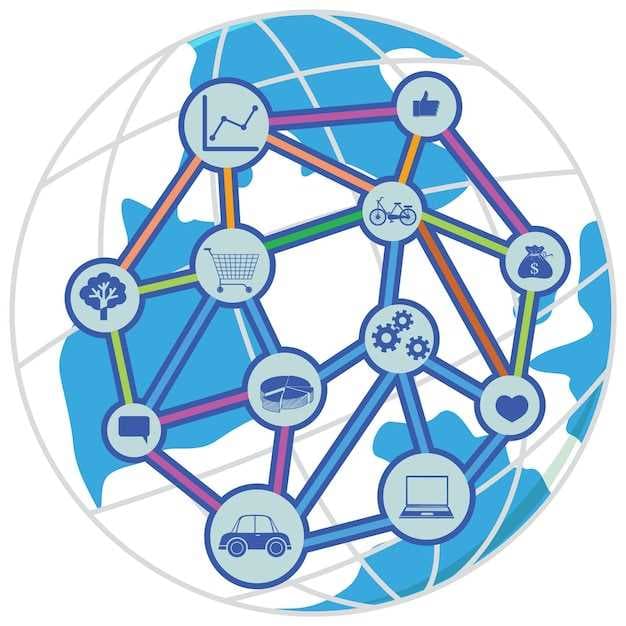

Begin with a targeted network assessment and run a pilot redesign in a controlled zone to validate changes before full deployment. This thorough, data-driven step accelerates evolution in your supply chain and yields actionable insights for operations.
Designing the network in four to six steps clarifies ownership and reduces risk between facilities and routes. As part of the plan, map each step from supplier onboarding to last-mile delivery, then quantify gains in speed, cost, and service levels.
Our team helps you collect data, model inventory and transportation flows, and developing scenarios that align with operations needs. By comparing base and redesigned flows, you identify the need for capacity adjustments and warehouse automation to support more resilient service.
continuously monitor KPIs across cost, service, and resilience, and adjust even as demand shifts, then iterate every 6–8 weeks to stay aligned with those changes. Implement dashboards tracking total landed cost, on-time delivery, and fill rate by region, and update design decisions as market signals change.
In a dynamic environment, where disruptions may occur, switch to alternate routes within hours and revalidate the plan in days, not weeks.
Implementation guidance: Start with 2–3 design scenarios focused on regional coverage, material flow, and supplier collaboration, then pilot in 1–2 distribution centers for 8–12 weeks. If results show a 10–20% reduction in landed cost and a 5–10% improvement in on-time delivery, scale to additional facilities.
7 steps to reduce costs through supply chain network optimization
-
Map the current network with a comprehensive view of centers, suppliers, plants, DCs, and routes. Having a baseline that quantifies wasted movements and money tied to each hop reveals the highest-cost corridors and the areas most impacted by disruptions.
-
Rebalance the network by evaluating modes and locating near-market centers. Leverage scenario analysis to compare modern options across other regions, identify the highest saving opportunities, and create a flexible design that adapts to shifts in markets.
-
Align planning and sourcing with demand signals: implement ongoing demand sensing, use basic data across procurement, and establish a feedback loop across markets. This reduces buffer, lowers landed costs, and improves quality and needs fulfillment.
-
Redesign the physical network by consolidating underutilized centers and realigning inventories to match needs. This requires governance, clear decision criteria, and a focus on components such as storage capacity, automation, and replenishment policies.
-
Invest in data quality and technology to support a single network view. Deploy integrated systems across suppliers and internal teams, track metrics that reflect impact on money saved, wasted handling, and cycle times. Strong data foundations improve planning and responsiveness for ongoing operations.
-
Run controlled pilots to validate changes before full rollout. Measure the impact on cost, service levels, and flexibility, and capture feedback from operations. Use the results to iterate and ensure improvements occur quickly and cost reduction continues.
-
Scale the successful model across markets and ongoing operations. Maintain a dynamic network by monitoring feedback, refining modes, and investing in areas that deliver the highest impact while keeping money and costs in check.
Step 1–2: Define objectives, cost drivers, and network scope
Define the objective set first and lock in measurable targets for service levels, total landed cost, strategic growth, and a global footprint. Here, you align targets across functions to ensure every decision moves the business forward.
Identify cost drivers by capturing data across levels and modes of transport, and by linking to demand signals. List drivers: transportation costs per mile, per kilogram, warehousing and handling costs per square meter, inventory carrying costs per stock unit, obsolescence, packaging, duties, taxes, and currency exposure. Use software to generate full visibility and compute total costs across scenarios using both internal data and other sources. This model does reveal where cost leaks occur; blockchain-enabled traceability can reduce risk in transactions and improve auditability. Focus on the most impactful factors first and track changes in real time. These things–demand signals, supplier reliability, policy changes–drive the difference between a good plan and a great plan.
Define the network scope with clear boundaries: number of levels, regional footprints, and the set of markets to serve. Determine which facilities are needed (factories, distribution centers, cross-docks) and how they connect to demand centers. Describe the intended service levels by market and channel, including lead times, order cycles, and fill rates. Map transactions and data exchanges across the network to enable scenario testing and capacity planning. Consider twin digital representations of the network to compare options without physical moves; incorporate blockchain for provenance, and stress-test with different modes (road, rail, ocean, air) to uncover bottlenecks.
With objectives and scope defined, build a deep, full model that supports designing growth for businesses. Use scenarios that combine the factors listed above, including demand volatility, supplier lead times, and freight costs; test stock levels and safety stock, and optimize stock placement to maximize service while minimizing inventory. Incorporating data governance, this plan should be implementable in phased steps and monitored using dashboards. Here, align governance, milestones, and change management across software platforms and partners to ensure consistency and accelerate value realization.
Step 3: Collect, cleanse, and harmonize data for reliable modeling

Collect and standardize data from all providers using a shared schema within 24 hours of receipt. Start with a data dictionary covering sourcing, logistics, components, and customer-centric metrics to align on what matters across the network and to achieve reliable outcomes.
Ingest data from ERP, WMS, TMS, supplier portals, and sourcing records; normalize units, currencies, lead times, and calendar horizons so they map to the same design.
Deduplicate entries and fix mismatches with explicit rules; impute missing values where appropriate and flag gaps for manual review.
Harmonize data into a unified flow that supports a customer-centric view of the network across companys and providers. Add flexible data fields to accommodate new providers and schedule changes. Plan for future modes such as hyperloop when evaluating rapid transit options. Align data on components, sourcing, and logistics, so models reflect real-world design choices and potential efficiency gains, delivering an advantage in meeting demand. leveraging cross-functional feedback improves accuracy.
Set data quality gates: validate each source, record lineage, and assign data stewards who attend a weekly meeting to review updates, leveraging cross-functional feedback to refine rules.
Establish data governance with a clear data lineage map that tracks source, transformation, and destination for each field, enabling traceability and faster troubleshooting.
Deliverable: a clean, harmonized dataset that enables reliable modeling, accelerates scenario analysis, and supports proactive decision making for sourcing networks and logistics planning.
Step 4–5: Build and compare network designs using optimization and scenario analysis
Run three optimized network designs across base, demand-shift, and disruption scenarios to identify a streamlined configuration that significantly reduces total cost while maintaining service levels across markets.
Begin with clean data: facility costs, transport rates, lead times, demand by markets, and capacity constraints. For multinational networks, align designs according to the same corporate strategy and regulatory context, then map them to multi-echelon chains. Use artificial intelligence–enabled optimization to determine the most resilient paths and to quantify risk exposure in each scenario. This approach supports designing resilient networks across several markets, determining capacity and routing levers. Automation helps speed decisions and keep the team aligned in agile execution.
Define objective and constraints: minimize total cost (CapEx + OpEx), maximize service levels, and minimize exposure to disruption. Focus on designing strategies that balance cost and resilience. Build three designs: centralized hub, regional hubs, and direct-to-market flows. Evaluate tradeoffs with scenario analysis; compare robustness across varying demand and supply conditions.
Design evaluation should be streamlined and focus on critical metrics: total landed cost, inventory levels, transport time, and carbon footprint. Use a solid framework to measure capabilities and determine how quickly you can reconfigure if markets shift. Engage the team early, align decisions according to feedback, communicate findings, and iterate until you achieve a lean, agile design that supports several markets with the same technology backbone.
| Design | CapEx (USD mln) | OpEx/year (USD mln) | Total 5y Cost (USD mln) | Service Level Target (%) | Avg Inventory (units) | CO2e (tonnes) | Notes |
|---|---|---|---|---|---|---|---|
| Centralized Hub (A) | 12.0 | 3.8 | 31.0 | 98.5 | 4,200 | 3,200 | Low cost, higher risk of disruption |
| Regional Hubs (B) | 18.0 | 4.5 | 36.5 | 99.3 | 3,500 | 2,900 | Balanced cost and resilience |
| Direct-to-Market (C) | 9.5 | 2.9 | 25.2 | 97.8 | 4,800 | 3,500 | Faster response, higher working capital |
From these results, pick the design that offers the best balance between cost and resilience, then outline a phased implementation plan. The chosen path should be capable of supporting the same strategy across several markets, with clear milestones and a technology-enabled support system to keep performance aligned with evolving demands.
Step 6: Assess risks, service levels, and capital vs. operating costs
Adopt a risk-aware service level target and pair it with a capital-vs-operating cost model to guide investments and policies across the network. This approach uses demand-driven analytics with real-time data from suppliers, customers, and logistics partners to support decisions across road, rail, and air routes in key markets.
- Risk characterization: identify domains–demand variability, supplier reliability, transportation disruptions, product quality, and regulatory changes–along with concrete triggers (e.g., forecast error above 12%, supplier lead time variance, or road closures). Include perishable food items and high-demand products to test resilience.
- Service levels: define targets by product family and customer segment. For core food items, aim OTIF of 98–99% with 1–2 day lead times in core regions; for seasonal or promotional products, target OTIF of 92–95% with longer windows; maintain minimum fill rates of 95–98% where feasible.
- Impact quantification: monetize service levels by linking stockouts to margin loss, carrying costs to inventory value, and expediting to transport spend. Consider penalties or SLA breaches with suppliers to capture risk exposure.
- Modeling framework: build a model that links demands, capacity, and disruptions; use modeling and simulations, including Monte Carlo, to compare scenarios and identify robust policies.
- Data and analytics: consolidate data from ERP, WMS, TMS, supplier portals, and point-of-sale feeds; apply demand-driven analytics to detect shifts in demands and adjust network configuration in real time.
- Risk mitigation options: design contingency options such as dual sourcing for critical components, regional safety stock buffers, nearshoring where viable, agile contracts with logistics providers, and route diversification over road, rail, and sea to reduce exposure.
- Capital vs operating cost trade-off: evaluate options with a cost-of-ownership lens; compute NPV and payback for facility expansions, automation investments (including autonomous warehouses and robotics), versus savings from improved routing, cross-docking, and inventory reductions; account for depreciation and energy usage.
- Implementation and governance: define roles and metrics, assign owners, and establish a quarterly review cadence; integrate risk and service targets into the strategy of organisations and their operating models; set dashboards to monitor real-time performance and adjust quickly.
These steps enhance resilience, enhancing the agility of organisations to respond to market shifts.
Step 7: Plan phased implementation with KPIs, governance, and continuous alignment
Establish a four-quarter phased rollout anchored by a KPI hub and cross-functional governance to keep the plan agile and measurable. Define KPIs such as cost-to-serve, on-time-in-full, facility utilization, and emissions, plus metrics for road network efficiency and the distances between facilities. Developing and refining models that optimise resource allocation across the network, and deploy tools that deliver a single источник of truth for decisions. Align expectations with customer needs and market trends from the outset.
Roadmap and milestones: Phase 1 maps the current network, collects data, and delivers several quick wins–reduced transport distances, better demand-supply alignment, and early cost visibility. Run a pilot with one facility and a limited set of routes; Phase 2 scales to several sites, tests emerging scenarios, and validates proprietary models. Phase 3 expands to additional applications and facilities, while Phase 4 sustains gains through continuous monitoring and governance.
Governance: establish a clear RACI, appoint a program owner, and form a steering committee with customer and partnerships representatives. Set cadence for reviews–monthly dashboards and quarterly strategy sessions. Ensure data integrity by designating a single источник of truth and standardising data definitions, so factors tracked align and trends are interpretable. This structure helps between teams coordinate decisions and accelerate corrective actions when gaps appear.
Continuous alignment: implement closed-loop feedback through weekly check-ins and quarterly adjustments; use a digital twin (twin) of the network to simulate scenarios and validate design changes. Align with customer expectations and evolving market trends; update KPIs and contracts as needed. Leverage several applications and tools to keep the network optimised.
Execution readiness and adjustments: When performance drifts from targets, trigger a phased adjustment, reallocate capacity, and refresh partnerships. Train staff, update procedures, and keep the road map as a living document that adapts to developing factors and even small customer feedback. Maintain a continuous alignment loop with quarterly reviews and monthly data checks, ensuring reduced risk and an optimal network design.