




Begin with implementing a route optimization platform that integrates with your apps and dispatch workflow to cut idle time by 10–25%. A well-designed solution provides real-time routing, seamless sequencing of task lists, and updates across devices, delivering fast wins for your operation.
In real-world fleets, modeling constraints is critical: service windows, vehicle capacities, driver hours, and traffic patterns. The system allows you to adjust these constraints and automatically recompute routes, boosting on-time performance by 5–20% and reducing miles by 8–15% on average, while automating routine planning reduces planning time by 30–60% and frees dispatchers for exception handling.
Different operation types benefit differently: last-mile, field service, and regional distribution all gain from routing intelligence. For growing fleets, prioritize scalability: multi-depot management, API access for apps, and route sharing between drivers. A platform that supports scaling offers seamless integration, customization options, and the ability to meet meeting service commitments.
Advanced analytics unlock potential ROI by identifying patterns: stops that add the most time, which customers tolerate flexible windows, and where delays recur. Use customization to tailor routes by vehicle type, driver preferences, and safety constraints. Real-world case studies show fleets cut fuel costs by 12–20% and improve delivery windows by up to 25% when routing is combined with automating dispatch and updates.
Implementation tips to maximize effect: run a 4–6 week pilot with 1–3 depots, compare key metrics (fuel, time, on-time rate), and iterate. Choose a provider that provides API access, seamless data exchange, and robust advanced routing features. Align with stakeholders to address meeting SLAs, scale across operations, and automate real-world scenarios.
Route Optimization: A Practical Guide for Fleet Managers
Launch a 4-week pilot on 20% of orders using a centralized route optimization solution to achieve 12–15% fewer miles and faster on-time deliveries. Use real-time tracking to validate gains and then expand.
Assign a dedicated resource group–one fleet planner and one data analyst–to own route decisions, monitor outcomes, and build skill in data-driven decisions; share insights with the wider team.
Collect initial data: orders, service windows, vehicle capacities, depot locations, and road constraints. Build a baseline by mapping current routes and logging hours, miles, and service times to establish a comparison point for improvement and to operate efficiently.
Define constraints: varying service windows, driver hours, and load limits. Explore multiple route variants per cycle, calculate ETA accuracy, and compare total miles, fuel use, and overtime with and without optimization. Weigh pros and cons of different routing rules. The route optimization solution should continuously learn from outcomes, not just one-off tweaks.
With an initial success, scale to more depots and vehicles to realize scalability. Use monitoring dashboards to track metrics: miles per order, idle time, on-time rate, and customer satisfaction. Use insights from these metrics to refine rules and weightage for orders, time windows, and traffic patterns, tying planning to logistics objectives.
Incorporate fareyes data for traffic and incident alerts to adjust routes on the fly. Integrate with fleet telemetry to track actual vs calculated times and to identify improvement opportunities. Take the learnings from these adjustments to inform future routing decisions.
Take advantage of the gained insights to formalize a repeatable workflow, documenting the rules, data sources, and monitoring cadence, supporting maximizing returns from your route optimization investment.
What is Route Optimization? A Practical Guide to Fleet Performance; Reporting and Analytics
Start by collecting a single, representative week of route data to establish a baseline and quantify quick gains within days.
Route optimization integrates multiple data streams, including demand windows, traffic, weather, and vehicle capacities, to generate routes that reduce miles, shorten service windows, and improve on-time delivery.
Capture real-time status from GPS, telematics, orders, and fuel consumption to feed the data-driven engine; planners receive clearer guidance within the planning cycle and can adjust routes when alerts fire.
Use a planning model that prioritizes strategic objectives, such as reducing empty miles, meeting service windows, and supporting limited resources. The reporting and analytics module should include current dashboards, trend views, and alert rules to highlight difficult deviations and track improvement.
To make adoption easier, design workflows that show what to change, who approves it, and how scaling will affect capacities across depots. Provide data-driven recommendations and maintain an accessible audit trail.
| Step | Action | Impact |
|---|---|---|
| 1 | Capture data from orders, telematics, and fuel consumption | Establishes current baseline and reveals inefficient routes |
| 2 | Integrates data sources across multiple systems | Improves visibility into service windows and fleet constraints |
| 3 | Run optimization to generate optimal plans | Increases utilization and yields clearer, actionable outputs for planners |
| 4 | Set alerts for delays and deviations | Supports quick responses and maintains current service levels |
| 5 | Scale results across fleets and depots | Ensures consistent planning and improved forecasting capabilities |
Define clear, measurable routing goals for your fleet
Set 3–5 clear targets that apply to your operations, including on-time deliveries, route efficiency, and charging planning for EV fleets. Define what success looks like and the timeframe to achieve it; youll be able to measure progress and adjust quickly.
- On-time performance: target a defined percentage of deliveries within the agreed window, monitor start-to-delivery time, and track average lateness per route.
- Route efficiency: aim to reduce total miles and drive time per shift, and minimize detours by evaluating detour rate and average distance per stop.
- Destinations and scheduling: support multiple destinations including service windows and dynamic re-sequencing when orders change; consider driver hours, vehicle capacity, and charging needs.
- Sustainability: set reductions in fuel use or emissions per mile, and plan charging to maximize charging efficiency while avoiding idle time.
- Disruptions handling: define contingency routes, set thresholds for re-optimization, and document response times to incidents.
- Customer experience: improve ETA accuracy, increase first-attempt delivery or service rate, and provide proactive updates to customers.
The experience gained from real-world routes informs targets that are ambitious yet feasible. This approach does provide needed clarity for planning, providing ongoing guidance alongside growing networks. When you monitor progress weekly, you can adjust routing rules promptly. Pros include sharper focus, faster troubleshooting, and stronger stakeholder alignment. This framework will offer clear, concrete guidance for planners and drivers.
When you monitor progress weekly, you can adjust routing rules promptly.
- Analyze current operations: collect baseline data on on-time rate, total distance, stops, dwell times, and charging events if you operate EVs; calculate KPI baselines to reveal gaps and opportunities.
- Set thresholds and timelines: define near-term milestones (weeks to a few months) and longer-term targets, ensuring goals align with customer commitments and fleet capacity.
- Specify routing constraints: establish time windows, priorities, vehicle types, and charging constraints; document how toursolver or other optimization tools will handle these rules.
- Choose tools and methods: use toursolver alongside your existing TMS or dispatch system to compute routes that meet multiple destinations including charging stops; plan scenarios alongside sustainability objectives.
- Pilot and validate: run real-world tests on representative routes, compare results to baselines, and record improvements in service levels and cost efficiency.
- Monitor and adjust: track KPIs in dashboards, review weekly, and recalibrate goals as capacity or demand grows, ensuring continued optimization of experience and reliability.
Collect and clean data from GPS, telematics, orders, and road updates
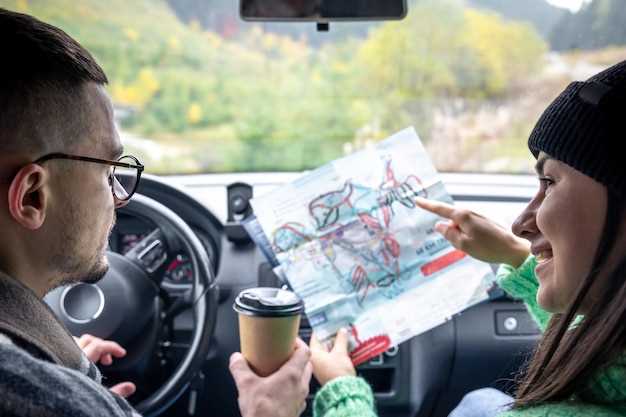
Start by collecting data from GPS, telematics, orders, and road updates into a single data pipeline with consistent timestamps. Capture GPS at a high frequency (1 Hz or higher), logged with vehicle_id, latitude, longitude, speed, and heading. In parallel, pull telematics data for engine load, fuel usage, odometer, and fault codes; record orders with route details, schedules, and priority; and ingest road updates for incidents, construction, closures, and speed advisories. This upfront collection gives analytics a reliable foundation to work from and helps you spot disruptions early, reducing delays later. Just align expectations with stakeholders on data availability and reporting cadence.
Standardize schema and units. Choose a single coordinate system (decimal degrees) and a common time zone (UTC). Normalize timestamps to ISO 8601. Normalize units: speed in km/h, distance in meters. Use a construction phase to build a canonical feature set that combines vehicle, trip, and road context. This choice makes downstream analytics easier and reduces errors in the data flow, supporting improved decision-making.
Deduplicate and validate. Remove duplicates by vehicle_id and timestamp within a small tolerance. Validate that required fields exist (vehicle_id, timestamp, lat, lon). Flag suspicious values (speed above 200 km/h, impossible coordinates) for review. Implement automated checks to catch sensor outages and time drift, eliminating noise before analysis. This step reduces errors that would otherwise distort route optimization outcomes.
Clean and enrich. Fill missing values with rules: if GPS is missing, use last known good point for a short window; if telematics missing, flag the data but do not fill with guesswork. Map-match GPS points to the road network to align routes with road geometry. When road updates appear, tag affected segments and adjust planned routes. Highlighting disruptions in the data helps you understand real-world constraints and solve for robust schedules.
Join datasets to enable leading decision-making. Link orders to trips, correlate road events with detours, and attach emissions estimates to route changes. Use analytics to surface patterns such as recurring bottlenecks or vehicles with repeated data gaps. Focus on data quality signals early, so decisions become faster and more reliable. This approach drives improved efficiency and time savings across planning and operations.
Validate data quality and governance. Maintain lineage for each data source, track changes, and document cleansing rules. Run periodic audits to keep time on schedules accurate and data consistent. If a data issue arises, trace it to source and respond quickly–time saved here compounds across operations, making fleet planning more robust in practice, and less error-prone.
Decide on routing approach: heuristics, exact algorithms, or a hybrid

Adopt a hybrid routing approach: heuristics for fast, cost-effective decisions and exact algorithms for difficult, capacity-constrained legs. This mix handles dynamic orders within growing networks and thoroughly examines critical routes, delivering optimized results for diverse scenarios within one planning cycle.
Heuristics shine when speed matters and the fleet must react to changing variables. They provide good, close-to-optimal solutions within minutes, enabling work to continue without long computation pauses. Use them to cover daily operations, especially when demands are high and reliability is key, providing quick, practical baselines.
- When to lean on heuristics: many stops, relaxed service windows, real-time changes, or limited computing capacity.
- Key inputs for heuristics: order counts, distances, traffic, vehicle capacities, depot locations, and schedule priorities.
- Expected outcomes: faster planning cycles, reduced idle times, and cost-effective routing with acceptable emissions.
Exact algorithms deliver the fullest optimization under tight constraints. They find the truly optimal configuration within a fixed problem scope, capturing complex interactions between stops, windows, and capacities. Use them for high-stakes lanes, multi-depot networks, or when the cost of a suboptimal route exceeds the computational effort; this approach yields thoroughly optimal plans at the decision point.
- Choose exact routing for: small to medium networks where constraints are strict, high-value customers, or windows that must be met with little slack.
- Pros: provable optimality, reproducibility, better handling of large-variance demand and time windows.
- Limitations: growing problem size leads to longer compute times; may require problem decomposition or hardware upgrades.
Hybrid integration creates a scalable, adaptable workflow. Generate a baseline with heuristics, then apply exact algorithms to a filtered set of routes that matter most. Consider modularizing the pipeline into planning, optimization, and execution modules, and reuse the same logic across different fleets. This approach supports expanding the use of routexl for specific legs, while keeping the overall schedule dynamic and manageable. Begin with a baseline and move toward optimized, targeted improvements that fit changing needs.
- Principles: keep computations focused, manage capacities, and avoid overfitting a single solution.
- Practical steps: run heuristics daily, then schedule occasional exact optimizations on critical clusters, rerun as orders change, and save results for auditability.
- Outcome: a flexible, scalable process that fits growing demands and reduces emissions while staying cost-effective.
Implementation tips: validate with real-world data, track KPIs such as route length, total distance, fuel use, on-time performance, and service level compliance. Document the decision criteria and maintain a record of why a given route was chosen, which helps managing changing demands or expanding to new modules and capacities. A well-structured setup supports finding improvements across fleets within a single, coherent workflow, and helps teams save time while expanding capabilities within diverse operations.
Execute a pilot: compare new routes against your current plan and document results
Run a controlled pilot on a representative subset of routes for 7–14 days, benchmark against your current plan, and document results in a shared scorecard. Having a real-world basis, compare key indicators such as cost, fuel consumption, on-time performance, and asset utilization to establish a clear baseline within regulatory constraints.
Before starting, define success criteria that reflect regulatory compliance, safety, and cost-effectiveness. Use a tailored scorecard to capture the impact on costs and savings, and make the pilot customizable for different routes or times of day. Gather feedback from drivers, planners, and customers to create a personalized view of performance.
During the pilot, collect fast, scalable data on fuel burn, idling, miles, load factor, delivery windows, and late or missed pickups. Capture information about resource allocation, route changes, and any regulatory alerts. Track costs directly tied to the pilot and compare with the current plan to quantify savings and improvement, and determine whether the new routes consistently outperform the current plan under changing conditions.
Use a structured analysis to decide whether to extend or terminate the new routes. If results show tangible savings and smarter routing, plan a broader rollout within budget and with a scalable, cost-effective approach. Document the rationale, expected impact, and any changing conditions that could affect performance.
Create a final report that consolidates real-world results, metrics, and learnings. Include a tailored implementation plan and a prioritized list of actions–focusing on adjustable parameters, asset utilization, and resource reallocation–to maximize ongoing improvement and future gains.
Build performance dashboards: track ETA accuracy, fuel usage, and on-time rates
Create a dashboard that tracks etas, fuel consumption, and on-time rates, with clear targets for managers and the driver team. Aim for etas within ±5 minutes for 90% of trips, keep fuel consumption under the current baseline by 3%, and sustain an on-time rate above 95%. Link targets to daily work and update them as routes or seasons change to drive savings and performance.
Integrate data from telematics, GPS, dispatch, and fuel cards; replace paper reports with digital feeds; thoroughly cleanse and reconcile data to avoid skew from missing timestamps. Track etas and actual times for each individual driver to surface missed ETAs, current route issues, and fatigue risks. Use this insight to prioritize coaching and adjustments.
Design modular panels: ETA accuracy by route and driver, fuel consumption by vehicle, and on-time rates by shift. Layer congestion and weather context to explain deviations, and include a clear indicator when a forecast misses the ideal window by more than a defined threshold. Identify what routes face the biggest deltas, and enable fast drill-down with various filters such as origin, destination, vehicle type, and time of day. Alongside this, the technical setup supports seamless data flow.
To sustain improvements, involve managers and drivers in a disciplined process: use the dashboard in daily work, schedule weekly reviews, and create actions tied to concrete savings. Discuss how improved ETAs protect the reputation and reduce penalties, and ensure fatigue and tired driver risk are part of the agenda. Provide focused coaching on driver behavior and idle-time reduction; keep extra context from notes and observations in the record.
This approach fits fast-growing fleets and various operation sizes. It stays current and delivers quick wins, turning data into immediate improvements. The ideal outcome is credible, data-driven decisions that improve ETA accuracy, reduce consumption, and raise on-time rates, strengthening the reputation of your service. Maintain the process, validate the numbers, and continue refining the dashboard to realize ongoing savings.