


 Português
  English (UK)
  Русский
  العربية
  日本語
日本語  한국어
한국어  Magyar
  Türkçe
  Español
  Čeština
  Svenska
  Ελληνικά
  Suomi
Suomi  Nederlands
  Română
  Italiano
  Français
  Polski
  Українська
  Deutsch
  简体中文
简体中文  Slovenčina
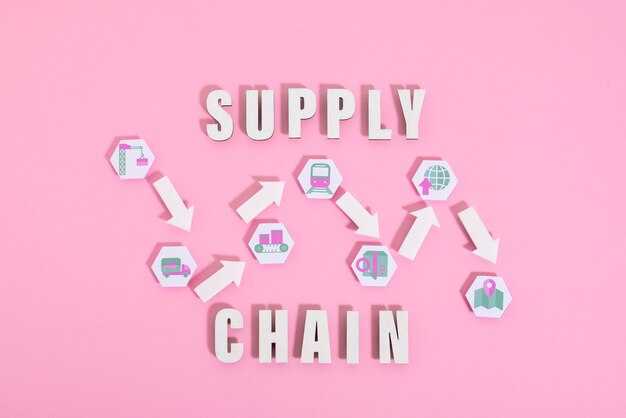
Begin with a documented map from origin to customer; identify every node, link, time window. This concrete action boosts responsiveness, reduces blind spots, keeps teams able to react to changes quickly.
Whether you operate with in-house fleets or rely on external carriers; visibility into capacity, orders, needs drives efficiency.
In a dark corridor of routes, blind spots appear where delays dent reliability; implement real‑time tracking, alert thresholds, predictable replan triggers.
Tip 1: Build stage by stage load plans to raise orders fulfillment; measure cycle time between stages; adjust resources accordingly.
Tips cover transportation options, route planning, data capture, risk signaling; each move remains controllable.
In practice, improving transportation flows requires a mindset shift; teams manage more efficiently when data flows freely between silos; training raises capability, enabling higher performance.
This approach offers measurable gains in order fill rate, cycle time, capacity utilization; the result is higher customer satisfaction, lower risk, better cost control.
This has been validated across several networks; it reduces waste, saves margin.
Need alignment across departments; implement a pilot, measure results, scale cautiously; keep milestones visible to stakeholders.
Thoughts from a supervisor who manages operations flows underline the value of transparent data, enabling quicker decisions.
Logistics and Supply Chain Optimization: Top 10 Challenges & Last-Mile Delivery Strategies
Implement a centralized, real-time report hub across the location network to reduce inefficiencies by up to 20% over 90 days.
Last-mile routing with flexible schemes; larger centers require reliable schedules; those want predictable delivery windows.
Robust analysis using available data sources reveals key factors affecting speed: location gaps, weather, traffic, manual handoffs. Rather than quarterly checks, deploy continuous dashboards.
Lack of automation in manual workflows creates issues. Having automation replaces manual touchpoints, reducing workload.
Global expansion requires a single, scalable map of location, centers, carrier relationships to avoid misaligned capacity. The system manages capacity across markets.
Having a uniform data standard across markets reduces inefficiencies; without it factors vary by location.
Your team will benefit from a living playbook covering routine tasks, offering a flexible framework to handle exceptions; clarify the role of humans in decision points.
With the right coverage, larger markets still require multiple centers; optimize via micro-distribution nodes near high-demand zones.
Travel time improvements translate into the lowest cost factor; prioritize proximity to demand pockets.
Previously markets were fractured by data silos; implement governance.
Coming months require a tight feedback loop: measure, compare, iterate.
Report findings to leadership, highlight what works; expand coverage; expose dark spots in coverage.
Practical roadmap to tackle the most pressing logistics challenges across the supply chain

Adopt a single forecasting analytics platform for end-to-end visibility; unify data sources to cut workload, speed decisions, reduce costly exceptions.
Build a phased transformation plan focusing on people, process, technology; set measurable milestones with quarterly reviews to verify progress.
cant rely on gut feeling; taking data-driven decisions across planning cycles.
Prioritize cost-effective automation that saves manual tasks; start with high-workload areas such as order processing, yard handling.
Leverage analytics to forecast demand, capacity, transport needs; this reduces stockouts, delays, reactive firefighting.
Invest in flexible services, digitization; free up resource capacity for strategic initiatives without sacrificing service levels.
Develop scenario planning to cope with volatility; whether disruption is climate-driven or supplier outage, you will react quickly while maintaining customer experience.
Implement a governance model with leaders from operations, manufacturing, procurement; assign clear accountability and decision rights to speed actions.
Improve forecasting accuracy through data quality controls, master data standards, cleansing routines; analytics will become more reliable for planning.
Technology choices focus on cloud platforms, AI models, IoT sensors, route optimization engines; this combination reduces cost, improves service, strengthens resilience.
Example: building a real-time dashboard that monitors order cycle time, on-time delivery, inventory turns, transportation spend to inform quick actions.
Forecasting improvements translate into better resource allocation, lower buffer stock, cost-effective throughput across the network.
Establish a final set of KPIs focused on service levels, cost per unit, cycle times; leaders review progress monthly, adjust priorities.
Resource planning embraces agile staffing; cross-trained teams improve responsiveness, reduce downtime; training builds resilience.
Final note: this transformation yields significant ROI when tied to loss reduction, service level improvements, cost savings across processes.
They will see growth as capabilities scale across functions.
Every phase yields learning that informs next steps.
Forecasting accuracy for volatile demand: integrating demand signals, seasonality, and promotions
Recommendation: adopt a demand-signal fusion framework leveraging promotions lift estimates, seasonality, base demand; apply probabilistic forecasts to capture disruptions; this cost-effective approach yields significant reductions in stockouts; applications across channels become more resilient within fast-changing markets.
- Data foundation: consolidate internal consumption, travel insights, shopping patterns, logging outputs, promotions calendars; there is siloed information across regions, requiring a data fabric within global management.
- Modeling approach: implement a two-layer structure: base-demand models (seasonality, trend) plus a signal-adjustment layer; employ probabilistic outputs to reflect uncertainty, supporting resource allocation decisions.
- Signal sources: demand signals, promotions data, seasonality, disruptions, travel patterns, shopping trends, macro changes; combine using weighted signals to reflect right priorities; unable to rely on a single cue; minimize misalignment.
- Estimation approach: calculate lift estimates for promotions using historical effects; apply adjustments for different promo types; treat promotions as separate events; follow mckinsey insights on elasticity to calibrate lifts.
- Forecast output: provide distributions, scenario analysis; illustrate with 90% confidence intervals; logs track forecast performance; ongoing refinement drives increased accuracy.
- Execution plan: pilot in two regions; scale within 12 weeks; measure KPI improvements; monitor disruptions; maintain cost-effective stock placement; reduce inefficient inventory placements; compare pre-implementation baselines to post-implementation results; this helps management decisions.
- Governance: break silos; establish cross-functional reviews weekly; implement ongoing data quality checks; create and apply structured methods; provide targeted training; monitor cost-benefit.
- Security; loss controls: safety; resource theft; shrinkage risk; forecast-informed stock policies reduce opportunities for theft; optimize inventory placement to minimize risk.
- Performance indicators: track disruption frequency; forecast accuracy; service levels; inventory turns; cost per handling; show significant improvements in stock availability; cost efficiency.
- Industry guidance: mckinsey highlights taking a holistic view on demand signals; leverage this approach within the workflow to capture upstream changes.
Outcome focus: increase forecast accuracy translates into resilience; lower safety stock, cost-effective replenishment, stronger management in global markets; ongoing logging supports continual learning.
This process will help teams take proactive actions.
End-to-end visibility: instrumenting real-time tracking of inventory, orders, and exceptions
Recommendation: Build a flexible data fabric that wires real-time telemetry from warehouse systems, transportation carriers, customer portals into a single accessible view. Use event-driven streaming to capture inventory levels, order status, exceptions. This reduces blind spots that slow deliveries. Align with multiple product lines, from consumer products to spare parts, to maintain a total, cross-functional perspective.
Key steps: instrument inventory tracking with IoT sensors, barcodes, RFID; connect order management with carrier APIs; surface exceptions via a prioritized alert system. Ensure teams remain informed with actionable alerts. Track shipments across modes; ensure data quality with check processes; calibrate with historical trends via a survey of recent performance to set baselines. Provide a total view including inbound, outbound, in-transit stock; enable proactive actions. Luckily, automation reduces manual checks.
Technology choices: adopt a modular platform; integrating ERP, WMS, TMS via APIs; connect additional data sources such as carrier performance metrics; use message buses; use edge computing at plants to push data locally; cloud-based analytics for anomaly detection; apply machine learning to forecast demand, anticipate changes; maintain free flow of data to partnerships; customers gain transparency. This supports growth, higher service levels, strategic decisions; flexible response to disruptions. Traditionally, data sat in silos; this approach unifies it. This would translate into faster responses during peak loads; performance rises higher than prior baselines.
Operational practices: define a single source of truth; enforce data quality checks; implement role-based access; publish real-time dashboards for executives, managers, frontline staff; provide a customer-centric view showing ETA, shipment history, exception reasons. Use KPI percentages: on-time delivery rate, order cycle time, inventory accuracy; track historical improvements from baseline to demonstrate performance increase; automated checks for changes to orders, stock, routes; include a daily check to surface anomalies. Tie outcomes to field operations. Data quality remains a factor in accuracy.
Measurement and evaluation: conduct quarterly survey of stakeholders to capture satisfaction; identify gaps; prioritize changes. Compare planned versus actual results; anticipate bottlenecks before disruptions; prepare contingencies for peak travel seasons; measure cost-to-serve for each route, multiple modes. Use these insights to refine partnerships; routes evolve toward higher value.
Inventory optimization across multi-echelon networks: balancing safety stock, lead times, and service levels

Recommendation: implement a centralized policy using forecasts, lead-time distributions, cost targets to shape safety stock levels across centers, reducing blind spots in access to data.
Dealing with demands, lead times, shipment times requires a footprint across a warehouse network; take a data-driven approach to map supply points, production centers, distribution nodes, plus stores.
Define base-stock per node; apply safety stock pooling across centers where feasible; this reduces total carrying costs.
SS_i = z_i * sigma_LT; service level target will determine z_i values; this keeps safety stock at the lowest risk level.
Lead time variability enters SS; slow cycles require additional stock; status updates on shipment times support adjustments.
Active collaboration between providers, centers, warehouse teams improves experience; this reduces silos.
Aside from core data, incorporate customer preferences; apply applications of such policy to several categories.
Benefits include lower cost of carrying stock, higher service levels, expand access to products; this also supports expand to new regions via a scalable framework.
Your planning culture will take a data-driven stance. Thoughts from field teams inform iterations; access to informed data will inform decisions, reducing blind spots.
| Echelon | Typical Challenge | Policy Approach | Target SLA | Lead Time (avg; variability) | SS Method |
|---|---|---|---|---|---|
| Suppliers | Lead time variability high; forecast error present | SS pooled across sources; base-stock per node | 95% | 7–21 days; sigma 2–5 days | Dynamic SS linked to forecast error, local signals |
| Manufacturing centers | Capacity swings; delays | Flexible base-stock; buffer by line | 95% | 2–8 days; sigma 1–2 days | Dynamic SS by line performance |
| Distribution centers | Transit delays; congestion | Cross-DC replenishment; pooling | 97% | 1–4 days; sigma 0.5–1 day | SS pooling across DCs |
| Stores / Retail warehouses | Demand spikes; variability for slow movers | Localized SS; shelf availability focus | 98% | Same-day to 3 days; sigma 0.5–1 day | Dynamic replenishment, proactive signals |
Transportation network design and routing under constraints: modal mix, capacity, and service commitments
Recommendation: design a constraint-aware routing plan leveraging a modal mix aligned with service commitments. Run a needs survey to capture demands for shipments across routes; time windows; establish a baseline split: road 60%, rail 25%, sea 10%, air 5%. Choose vehicle types with capacity limits; implement rules that ensure reliable performance at each leg; this supports seamless handoffs between modes.
Model capacity constraints per link to prevent bottlenecks: highway corridors 500–1,500 pallets per shift; rail segments 1,200–2,800 containers daily; port throughput 7,000 TEU weekly. Link service commitments to this capacity; allow flexible rerouting when forecasts warn about shortfalls. Anticipate fluctuations due to weather, holidays, or market spikes; pre-position stock to sustain service levels.
Approach to routing: blend heuristics; automated tools, aiming at optimizing path selection under capacity constraints; while preserving service commitments. This design reflects need for flexibility.
Data sources: siloed datasets create blind spots; centralize information with a unified source of truth – источник.
Cons: siloed data, legacy planning processes, manual approvals pose risks to speed.
Seamless execution: automated processes replace manual steps such as route approvals, load planning, cross-dock handoffs; streamline throughput, theft risk reduction, overall efficiency gain.
Costs: track total landed costs by mode; identify opportunity to shift shipments to off-peak windows, reducing charges.
Results: expect 8–12% efficiency gains after 6 months of implementing automated routing; better vehicle utilization; smoother service commitments.
Conclusion: ongoing efforts require continuous survey of demands; revise modal mix quarterly to reflect changing needs, costs.