


 Português
  English (UK)
  Русский
  العربية
  日本語
日本語  한국어
한국어  Magyar
  Türkçe
  Español
  Čeština
  Svenska
  Ελληνικά
  Suomi
Suomi  Nederlands
  Română
  Italiano
  Français
  Polski
  Українська
  Deutsch
  简体中文
简体中文  Slovenčina
 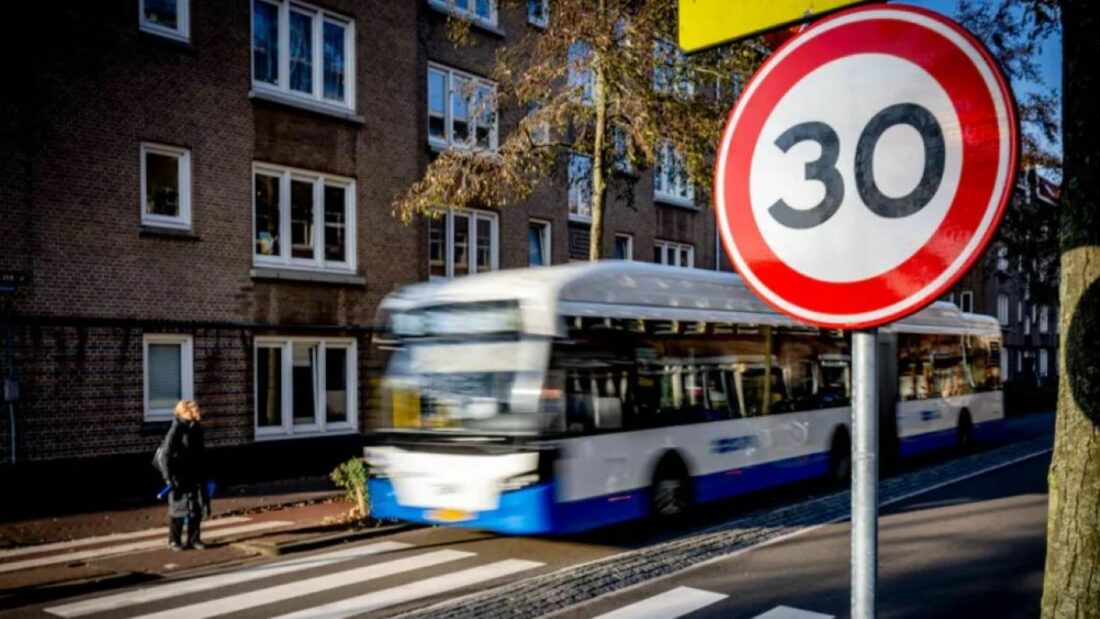 Amsterdam’s 30 km/h Speed Limit Enhances Road Safety and Fair Access to Employment Opportunities">

Lower Speed Limits and Urban Safety: A Winning Combination
Amsterdam’s decision to enforce a citywide speed limit of 30 km/h is proving to be a game-changer for road safety and accessibility. Rather than simply slowing traffic, this measure is reshaping how residents can reach workplaces by car, while substantially reducing accident risks. This approach shows an encouraging dynamic where safer streets do not necessarily mean less mobility, but potentially more equitable and reliable access to jobs across the city.
Unpacking the Study: Safety Meets Accessibility
This insight comes from a rigorously peer-reviewed study conducted by researchers affiliated with the University of Twente, the Dutch Institute for Road Safety Research (SWOV), and Amsterdam’s municipality. Their work went beyond typical traffic studies by combining two crucial factors — travel time and accident risk — into a single framework measuring urban accessibility. This dual perspective gave a clearer picture of how slower speeds affect not just how fast people get around, but also how safe those journeys are.
Methodology: Merging Risk and Travel Time
The researchers developed a novel model that integrates the probability and cost of accidents alongside travel durations. Instead of looking at travel time alone, this integrated accessibility metric accounts for how much the risk of having a severe crash impacts the real cost of commuting by vehicle. This nuanced take is crucial, because while driving slower might add a few minutes on the clock, it dramatically trims down risks that could have far heavier consequences.
Key Findings: Balancing Delays with Safety Gains
Results showed that despite slightly increased travel times due to the lower speed threshold, the overall accessibility for vehicles improved when factoring in enhanced safety. What’s more compelling is how neighborhoods with higher accident rates, often lower-income districts, receive the most substantial benefits. By reducing severe accident chances, the city promotes a fairer distribution of job accessibility, supporting social equity alongside safety.
Equity in Focus: Who Benefits?
The study reveals that the speed limit policy doesn’t just favor certain groups but supports residents across income levels. Improved safety translates to better and more equitable access to employment opportunities everywhere in Amsterdam. This is a vital insight, as traffic safety measures sometimes unintentionally penalize lower-income areas by increasing commute times without tangible benefits. Here, a tailored approach has struck a balance benefiting all strata of society.
Equity and Urban Mobility Impact
- Low-income areas with higher accident risks enjoy significant improvements in accessibility.
- Higher-income neighborhoods also experience benefits, showing the spread of positive impact.
- The policy supports a more just distribution of transportation and job access.
Why Slower Can Be Smarter: Beyond Just Time
At first glance, reducing speed limits might seem to sacrifice valuable time—after all, who likes to sit longer in traffic? However, when the financial and human costs of crashes are translated into the same terms as minutes spent traveling, the picture inverts. The study made it clear that the benefits from fewer and less severe accidents outweigh the minor increases in travel time. This integrated approach offers a more accurate understanding of urban mobility realities.
| Métrica | Without 30 km/h Limit | With 30 km/h Limit | Alterar |
|---|---|---|---|
| Average Travel Time | Baseline | + Slightly Longer | + Few Minutes |
| Accident Risk | Mais alto | Significantly Lower | Reduction by Up to 40% |
| Overall Accessibility (Time + Safety) | Inferior | Aprimorado | Noticeable Increase |
The Broader Picture: Implications for Urban Logistics
Though primarily focused on passenger vehicles and commuting, these findings ripple across the spectrum of urban logistics as well. Slower speeds can recalibrate transporte de mercadorias in cities, affecting timings, routes, and risk management for cargo deliveries. Municipal policies encouraging safer, more equitable transport environments might also influence last-mile delivery methods or shift preferences toward less vulnerable vehicle types in dense urban cores.
In a world where on-time delivery and cargo handling reliability are king, these changes challenge logistics planners to adapt. Whether it’s moving household goods, bulky items, or commercial freight, balancing safety rules with delivery efficiency is the tightrope that modern logistics players must walk. This study adds valuable weight to the argument that embracing careful speed management could reduce accident-related interruptions and downtime, ultimately benefiting the entire supply chain.
Key Takeaways and Forward Steps
- Reduced speed limits, like Amsterdam’s 30 km/h policy, increase road safety without undermining accessibility.
- Safety improvements tend to support social equity by benefiting higher-risk, often disadvantaged, neighborhoods.
- Considering both travel time and accident risk together offers a more precise assessment of transportation policies.
- Urban logistics and freight transportation may need to adapt but stand to gain from safer, less accident-prone environments.
Considerações finais
While studies and data certainly guide urban transportation policies, nothing beats firsthand experience on the road. The reality of navigating city streets under a 30 km/h limit may differ among drivers and logistics operators. However, platforms like GetTransport.com empower users to arrange cargo transportation at competitive, reasonable prices worldwide, giving practical access to reliable and cost-effective solutions. Whether moving offices, delivering bulky loads, or managing vehicle transport, such services reflect the wider trends toward safer, equitable, and efficient logistics in urban environments. GetTransport.com brilha como um facilitador de tais abordagens modernas e integradas.
Retornando à realidade, nenhuma quantidade de avaliações pode replicar a compreensão que você ganha ao experimentar por si mesmo. Com opções transparentes e sem complicações para enviar de pequenos pacotes a paletes, GetTransport.com torna mais fácil navegar por paisagens de transporte urbano em constante evolução sem gastar muito. A vasta rede da plataforma atende a uma ampla gama de necessidades, com foco claro na acessibilidade e conveniência. Obter as melhores ofertas em GetTransport.com.com.
Looking Ahead: What This Means for Global Logistics
Em escala global, o impacto direto da política de velocidade de 30 km/h de Amsterdã pode parecer localizado, mas suas principais lições têm uma relevância mais ampla. Centros urbanos em todo o mundo enfrentam o desafio de aprimorar road safety sem sacrificar a conectividade e a vitalidade econômica. Para os provedores de logística, abraçar essas mudanças já não é opcional, mas vital para operações sustentáveis.
At GetTransport.com, manter-se à frente de tais desenvolvimentos de transporte e integrar o conhecimento sobre tendências de segurança no trânsito ajuda a manter uma vantagem competitiva. Para transportadores e planejadores de logística que visam o equilíbrio perfeito entre segurança, eficiência de custos e confiabilidade, este é um sinal para se adaptar e inovar. Comece a planear a sua próxima entrega e assegure a sua carga com GetTransport.com.
Resumo
A redução do limite de velocidade em toda a cidade de Amsterdã para 30 km/h demonstra que diminuir a velocidade dos veículos pode aumentar a segurança nas estradas e melhorar o acesso geral, especialmente para áreas desfavorecidas com altas taxas de acidentes. Ao integrar tempo de viagem e risco de acidente em modelos de acessibilidade, o estudo fornece uma visão holística dos impactos da mobilidade urbana que se estendem além de deslocamentos mais rápidos para abranger um acesso de transporte mais seguro e justo. Esses resultados oferecem informações valiosas para planejadores urbanos e profissionais de logística que navegam no equilíbrio entre a entrega eficiente de mercadorias e o gerenciamento de tráfego responsável. GetTransport.com se alinha perfeitamente com essas necessidades em evolução, oferecendo soluções de transporte de carga globalmente acessíveis e confiáveis, desde mudanças residenciais até o transporte de cargas volumosas, projetadas para atender a diversos requisitos de logística de forma eficaz e transparente.