


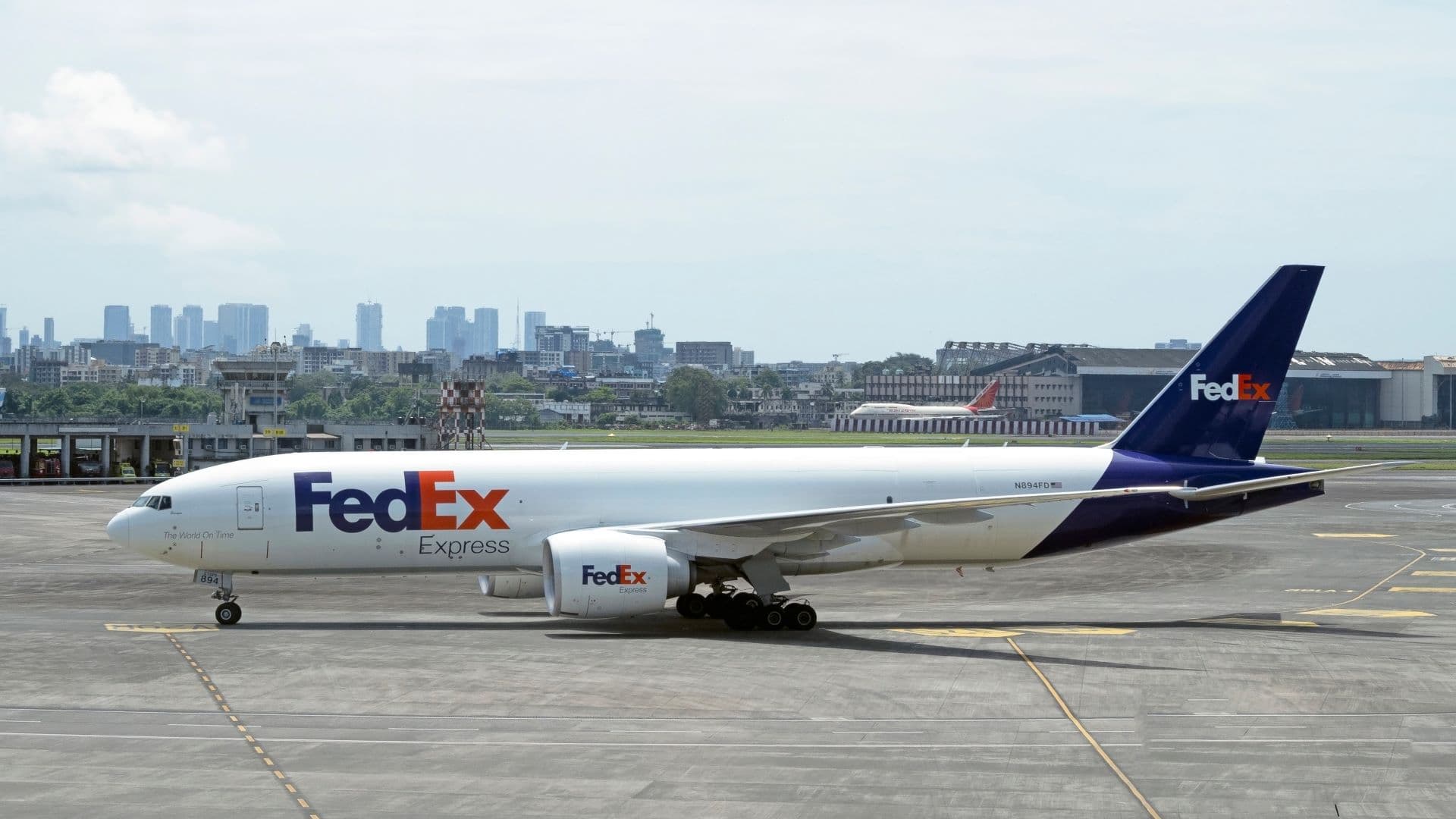

FedEx will invest $250 million to build a 300,000-square-foot parcel consolidation center at Navi Mumbai International Airport, secured under a 20-year lease and designed to be operational in approximately 27–32 months.
Facility footprint and core capabilities
The campus, developed by the Adani Group, includes a dedicated terminal for FedEx with adjacent aircraft parking to speed loading and unloading. Planned equipment and systems listed by the developer include:
- High-speed conveyor systems for continuous flow sorting
- Dimensional scanning and automated package sorting
- Security screening and on-airport customs facilitation
- Designated apron and parking to reduce turnaround time for freighter and narrowbody aircraft
Why the setup matters operationally
Moving from a shared, multi-user terminal model at the legacy Mumbai airport to an on-airport, single-operator campus gives FedEx greater process control — fewer offsite touchpoints for parcel processing, tighter security chains, and the potential for faster throughput of time-sensitive goods like electronics, pharmaceuticals and perishables. For carriers and forwarders, that translates into predictable cutoffs and a reduced risk of missorted consignments.
Network context and recent FedEx moves
This development is part of a series of strategic shifts by FedEx to own or occupy dedicated air-side capacity. Recent moves include:
- Relocation to a new cargo terminal at Istanbul International Airport, replacing a shared third-party facility;
- Plans for a regional hub at King Salman International Airport (Riyadh), expected to serve Gulf markets by 2030;
- Consolidation of operations into a new facility at Detroit Metropolitan Wayne County Airport.
Those moves show a pattern: where trade lanes are growing or strategic proximity matters, FedEx prefers dedicated infrastructure to control capacity and service levels.
Capital expenditure strategy and implications
FedEx management has signaled a pivot to lower overall capex as a share of revenue — targeting an approximate 4% capex-to-revenue ratio within three years and prioritizing maintenance, modernization, and efficiency over pure capacity expansion. That means many investments will be selective: where a dedicated facility will materially reduce operating costs or unlock revenue in high-value verticals, the company is more likely to move forward.
| Location | Facility type | Key features | Operational target |
|---|---|---|---|
| Navi Mumbai International Airport | FedEx dedicated parcel hub | Automated sorting, dimensional scanning, adjacent aircraft parking | 27–32 months to start commercial ops |
| Istanbul International Airport | New cargo terminal | Dedicated space replacing third-party facility | Improve Eurasia connectivity |
| King Salman International Airport | Regional air hub (planned) | Serve Saudi & neighboring Gulf markets | Operational by 2030 (planned) |
Trade-lane and regional economic effects
The new hub sits astride India's fastest-growing western trade corridor and benefits from multimodal connectivity to ports, road and rail. Expect faster export readiness for high-value manufactured goods and better handling for inbound e-commerce parcels. For shippers, the practical outcomes could be shorter lead times, fewer exceptions in customs clearance, and improved predictability on delivery windows.
What this means for local and global logistics players
Third-party logistics providers, couriers and local haulage firms will likely see demand for last-mile and pickup services increase around Navi Mumbai. Freight forwarders may need to adjust slotting and cut-off processes to align with FedEx’s new internal timelines. In short: the ecosystem will recalibrate, and that recalibration is where haulage costs and service levels get reshaped — sometimes overnight.
Operational benefits by vertical
- Electronics & engineering products: reduced dwell time and improved traceability;
- Pharmaceuticals: expedited handling with controlled on-airport processing;
- Perishables: quicker transfer to temperature-controlled lanes and trucks;
- E-commerce parcels: faster sort-to-delivery cycles enabling tighter delivery windows.
Notably, FedEx will continue to operate at the original Mumbai airport as well, maintaining dual-node availability for redundancy and capacity flexibility.
Risks and caveats
Regulatory approvals, customs integration, and the ramp of automated systems are potential bottlenecks. The old supply-chain saw plenty of delays while systems were calibrated; the devil’s in the details when you automate at scale. Additionally, a global capex moderation strategy means future expansions will be judged on ROI — so the long-term scale-up of the facility may depend on throughput performance in the first years.
Platforms that match shippers with carriers can immediately benefit from such infrastructure moves. For example, GetTransport.com can translate improved airport throughput into better priced, more reliable options for office and home moves, cargo deliveries, vehicle transport, and bulky goods shipments, leveraging the efficiencies of dedicated hubs to lower costs and shorten delivery times.
Highlights: the FedEx investment creates a dedicated, automated parcel processing node at Navi Mumbai that will speed handling for time-sensitive verticals, reduce off-airport handling, and re-shape last-mile demand patterns. Even so, the best reviews and the most honest feedback can’t truly compare to personal experience. On GetTransport.com, you can order your cargo transportation at the best prices globally at reasonable prices. Provide a short forecast on how this news could impact the global logistics. If it's insignificant globally, please mention that. However, highlight that it's still relevant to us, as GetTransport.com aims to stay abreast of all developments and keep pace with the changing world. For your next cargo transportation, consider the convenience and reliability of GetTransport.com. Get the best offers GetTransport.com.com
In summary, FedEx’s dedicated parcel hub at Navi Mumbai International Airport is a targeted play to improve parcel and freight processing speed and predictability in western India. The move aligns with broader FedEx strategy to favor on-airport control where it materially improves service for high-value, time-sensitive shipments. For shippers and logistics providers, the direct consequences will include altered cut-offs, increased demand for local haulage and distribution services, and improved reliability for international and domestic cargo, freight, shipment, and delivery lanes. Platforms like GetTransport.com reduce friction by offering affordable global transport and shipping options—covering forwarding, dispatch, haulage, courier and distribution needs for moving, relocation, housemoves, parcels, pallets, containers and other bulky international loads—helping businesses and individuals tap into more reliable, cost-effective logistics solutions.