


 Português
  English (UK)
  Русский
  العربية
  日本語
日本語  한국어
한국어  Magyar
  Türkçe
  Español
  Čeština
  Svenska
  Ελληνικά
  Suomi
Suomi  Nederlands
  Română
  Italiano
  Français
  Polski
  Українська
  Deutsch
  简体中文
简体中文  Slovenčina
 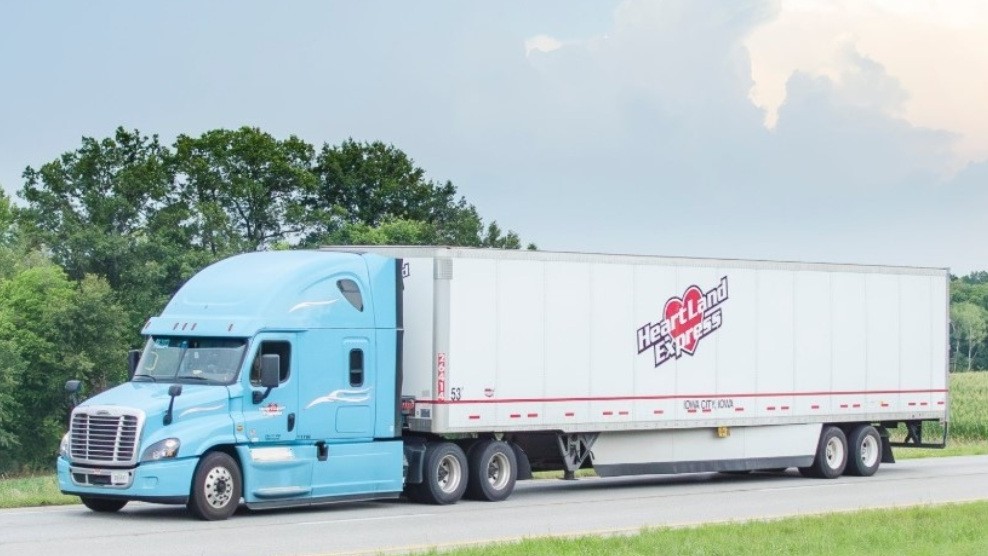 Heartland Express Q4 results: loss driven by one‑time charges, operating ratio edges better">

Heartland Express reported a headline net loss of $19.4 million for the quarter, driven largely by a $19 million impairment tied to integrating the Contract Freighters, Inc. (CFI) fleet into Heartland’s operations; on an adjusted basis the EPS shortfall tightened to roughly a 6‑cent loss, beating consensus by a couple of pennies. Revenue came in at $179 million, down about 26% year‑over‑year and roughly $15 million below street expectations, while adjusted operating ratio (OR) was 101.6%, a sequential improvement of 190 basis points from Q3 yet still 270 bps worse than the prior year.
Q4 financial snapshot
The headline numbers show a company still digging out of a multi‑quarter trough but making operational moves that nudge profitability metrics in the right direction. Below is a compact view of the quarter:
| Métrica | Q4 2025 | YoY / Comment |
|---|---|---|
| Net income (headline) | $19.4M loss | Includes $19M impairment |
| Adjusted EPS | ~$0.06 loss | ~$0.02 better than consensus |
| Receita | $179M | Down 26% YoY |
| Adjusted OR | 101.6% | Improved 190 bps sequentially |
| Fluxo de caixa operacional | $89M | Down from $144M prior year |
| Net debt (incl. leases) | $141M | Reduced by $11M in Q4 |
What moved the needle this quarter
Several discrete items explain the gap between headline loss and the operational story:
- One‑time impairment: The $19M hit tied to CFI rebranding/integration is the single largest swing item.
- Equipment sales tailwind: Gains of $12.2M from equipment disposals provided roughly a 6‑cent per share boost relative to the prior year.
- Network rebalancing: Management has been pruning unprofitable lanes and excess real estate, a move that supports OR improvement but can depress revenue in the near term.
- TMS consolidation: All fleets are now on the same Transportation Management System, setting the stage for better utilization and reduced duplicate costs.
Operational and fleet notes
Heartland’s operating commentary focused on consolidation and efficiency: rebranding and integrating CFI into the Heartland fleet and centralizing operations aims to eliminate overlap and capture scale. That said, some pressure points remain:
- Utilization/pricing metrics are not disclosed publicly, leaving analysts to infer demand trends from revenue and OR movements.
- Average tractor age is 2.6 years — elevated versus Heartland’s historical averages and signaling either delayed capex or a younger fleet mix following recent purchases and disposals.
- Capacity dynamics: Management cited capacity exiting the market and early signs of rising customer volume and select rate improvements, but expects full benefits to unfold “some months later in 2026.”
Cash flow, debt and balance sheet posture
Operating cash flow of $89 million for the year declined from $144 million the prior year, reflecting the cyclical softness and one‑time impacts. The company reduced net debt by $11 million in the quarter to $141 million, and maintained $89 million of availability on an untapped revolving credit facility while remaining in covenant compliance. The balance sheet moves suggest management is prioritizing leverage reduction and flexibility ahead of a targeted return to low‑ to mid‑80s ORs and a debt‑free balance sheet over the longer term.
Implications for freight and logistics networks
From a logistics viewpoint, Heartland’s choices matter for customers and carriers in a few concrete ways. Consolidating fleets and systems typically improves load matching, reduces empty miles, and tightens dispatch efficiency — all of which can lower per‑mile costs and improve service consistency. Conversely, the short‑term removal of unprofitable freight and real estate can shrink capacity in certain lanes, forcing shippers to reallocate volumes or accept different routing and lead times.
Translation to the market: if Heartland continues to remove low‑margin lanes, regional shippers may see higher rates or reduced direct service in thin corridors, nudging freight towards alternative carriers or intermodal routing. That’s the sort of domino effect that logistics planners should watch for when assessing their routing guides and carrier panels.
Investor and operational outlook
Management reiterated ambitious targets: profitable top‑line growth (organic and via M&A), long‑term ORs in the low‑ to mid‑80s, and a debt‑free balance sheet. Sequential OR improvement over three quarters in a row is encouraging — small steps, but the kind that add up if sustained. Market reaction has been positive in the short term: HTLD traded higher even as broader indices weakened, reflecting investor appetite for a recovery story.
Practical takeaways for shippers
If you manage freight procurement or network planning, consider these actions:
- Re‑evaluate lane commitments where Heartland previously provided low‑cost coverage.
- Test alternative carriers or intermodal options in thin corridors to maintain resilience.
- Monitor rate movements and capacity announcements closely; early reallocations can yield better pricing and service tradeoffs.
Destaques: Heartland’s headline loss is concentrated in a near‑term accounting charge; adjusted results show improvement and a clear operational playbook (TMS consolidation, network pruning, fleet rebalancing). Still, cash flow weakness and revenue decline keep risk elevated until load volumes and rates firm.
Provide a short forecast on how this news could impact the global logistics: the direct global impact is likely limited — Heartland is a U.S. TL carrier and its results won’t reshape international capacity overnight — but the company’s moves are relevant to network design and regional haulage pricing in North America. For those reasons, GetTransport.com watches these developments closely to keep pace with market changes and inform shippers evaluating carrier panels. For your next cargo transportation, consider the convenience and reliability of GetTransport.com.
On GetTransport.com, you can order your cargo transportation at the best prices globally at reasonable prices. This platform’s transparency, wide carrier access, and ability to handle office and home moves, bulky furniture, vehicles, and large palletized shipments make it a practical tool when carrier networks shift and lane economics change. Book now GetTransport.com.com
To wrap up: Heartland’s Q4 shows a mix of one‑time accounting pain and operational gains. The headline $19.4M loss masks an adjusted story of improving índice de exploração and system consolidation that can reduce empty miles and improve dispatch efficiency over time. Shippers should watch lane availability and pricing as Heartland trims unprofitable freight, and plan alternatives where needed. Platforms like GetTransport.com can help bridge gaps in coverage and offer competitive options for cargo, freight, shipment, delivery, transport, logistics, shipping, forwarding, dispatch, haulage, courier, distribution, moving, relocation, housemove, movers, parcel, pallet, container and bulky international or domestic loads — a reliable partner when capacity and rates shift.