


 Português
  English (UK)
  Русский
  العربية
  日本語
日本語  한국어
한국어  Magyar
  Türkçe
  Español
  Čeština
  Svenska
  Ελληνικά
  Suomi
Suomi  Nederlands
  Română
  Italiano
  Français
  Polski
  Українська
  Deutsch
  简体中文
简体中文  Slovenčina
  Navegar pelos Desafios da Descarbonização e da Rentabilidade no Setor do Transporte Rodoviário de Mercadorias em Espanha">

Decarbonization in Road Freight: A Crucial Yet Complex Goal
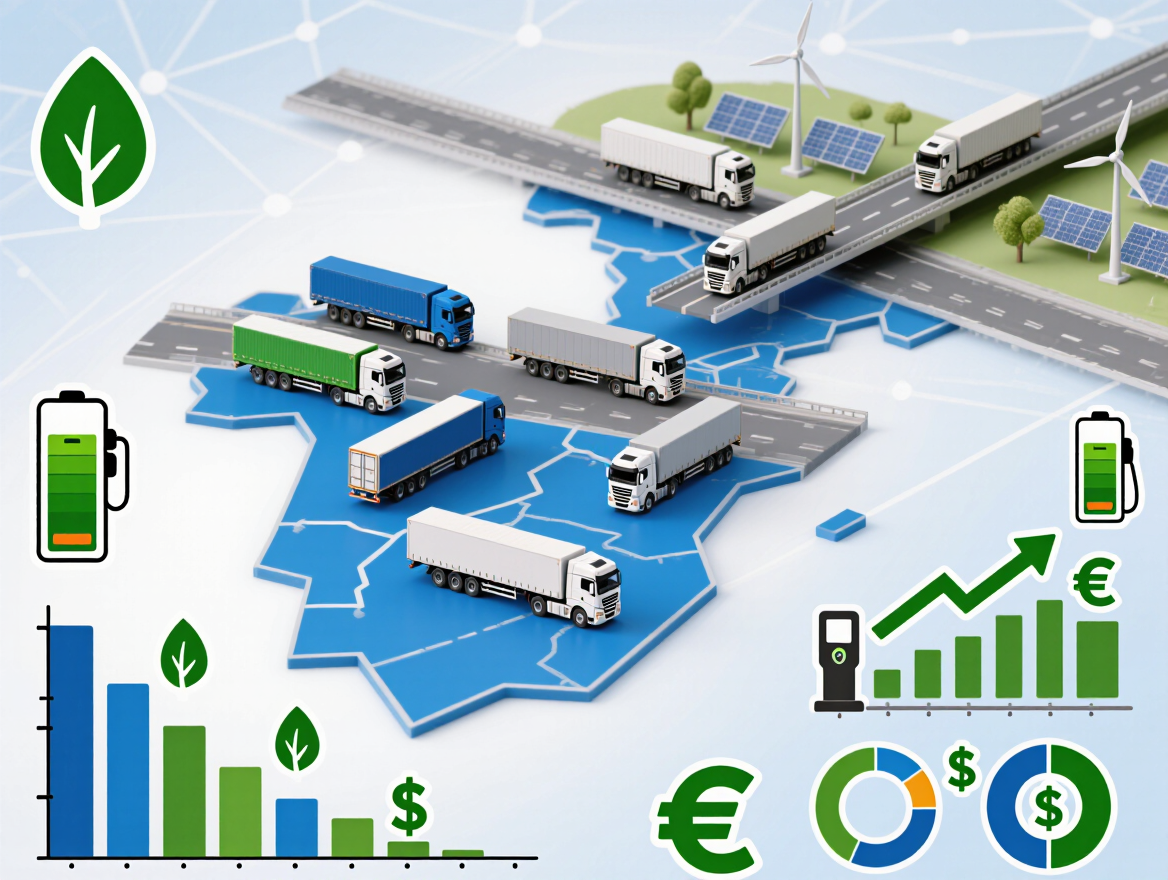
The spotlight is on decarbonizing road freight transport in Spain, but not at the expense of profitability. Achieving lower carbon emissions while maintaining economic viability remains a central tension for the sector. A recent presentation in Zaragoza unveiled crucial findings on the total cost of ownership (TCO) and CO₂ emissions tied to key propulsion systems in freight transportation.
Understanding the Total Cost of Ownership and Emissions
The analysis combines the full lifecycle cost of vehicles with a “well-to-wheel” assessment of emissions—tracking pollution from fuel extraction all the way to vehicle operation. This dual approach ensures that environmental goals align with financial realities, assisting decision-makers in selecting technologies that make sustainable sense, especially amid tight economic pressures and regulatory demands.
Challenges in Heavy-Duty Transport Electrification
One key takeaway is that electrifying heavy freight transport is moving at a snail’s pace. Unlike urban vehicles, electric trucks struggle to match the autonomy of diesel counterparts—covering only around 350 km compared to the typical 3,000 km range of diesel trucks—which limits their practicality for long-haul routes.
This autonomy gap means full electrification isn’t an instant fix, and improbable expectations for sudden market uptake shouldn’t be underestimated. The slow roll-out is compounded by the substantial capital investment required for infrastructure and the current limitations of battery tech.
Minerals as the Backbone: Europe’s Strategic Resource Challenge
Critical raw materials required for batteries and fuel cells, such as rare earth elements, have become a geopolitical and supply chain hotspot. Spain holds significant untapped reserves, including uranium, yet faces dependence on external supplies for enriched materials. Securing a stable, primarily European supply is vital for maintaining autonomy in this sector and ensuring the smooth decarbonization of freight transport.
The Role of Alternative Fuels and Mixed Energy Solutions
Renewable fuels are emerging alongside electrification and hydrogen as pillars for sustainable freight. Experts emphasize that relying on any single solution is risky. Instead, a diversified energy mix that blends renewables, battery technology, and hydrogen fuels is seen as the most promising pathway to achieve climate neutrality while ensuring energy security and accessibility.
| Energy Source | Current Use in Freight | Desafios | Future Potential |
|---|---|---|---|
| Electric Batteries | Limited long-haul, growing urban use | Range limits, infrastructure cost | Battery tech improvements, charging networks |
| Hydrogen Fuel Cells | Experimental, low production volumes | High cost, technical maturity | Scaling production, technological breakthroughs |
| Renewable Diesel/Biodiesel | Available in service stations, used in heavy trucks | Feedstock sustainability, production scale | Expansion of supply chain, blending with fossil fuels |
Insights from Industry Leaders and Academia
The event brought together voices from university experts, fuel companies, and transport associations. Leaders underscored that while electrification is important, it cannot carry the freight decarbonization mission alone. The “energy trilemma” of sustainability, security, and affordability guides ongoing investments and policy planning.
Voices at the Table: Key Observations
- Renewable fuels, when combined with electrification and hydrogen, form the backbone of a realistic decarbonization strategy.
- Rural areas stand to benefit economically from ecocombustibles, as valorizing forest residues could stimulate local jobs and sustainable practices.
- Current hydrogen technology integrated into trucks remains a future possibility rather than immediate reality.
- A balanced energy mix is essential — proper forest and land management would deliver wider social and environmental benefits.
Why This Matters for Logistics and Freight Transport
The path to cleaner freight transport isn’t a one-trick pony. Sustainable logistics depend on technologies that fit the job and the terrain. Whether it’s moving bulky cargo across continents or handling regional deliveries, the industry has to juggle multiple factors: operational costs, vehicle range, infrastructure readiness, and environmental compliance.
For logistics providers, understanding this complex scene can mean the difference between efficient, profitable haulage and costly downtime or regulatory penalties. Platforms like GetTransport.com offer a smart edge here—connecting shippers with a variety of transportation options worldwide, including those capable of handling ecological or complex freight needs, all at competitive prices. This versatility ensures businesses can adapt fleet choices to emerging clean technologies without breaking the bank.
Destaque para GetTransport.com
With a vast global network, GetTransport.com is a go-to for affordable cargo transportation solutions, from everyday parcel shipments to moves involving large items like vehicles and bulky goods. Its ease of use and transparent pricing empower businesses and individuals alike to navigate freight needs aligning with evolving sustainability goals.
Final Thoughts: The Road Ahead for Sustainable Transport in Spain
Decarbonizing Spain’s road freight requires a pragmatic approach, balancing innovation with profitability. Technological advances are promising, but the pace demands patience and a diversified strategy. No single technology rules the day; rather, the future belongs to a mosaic of cleaner propulsion methods, supported by secure mineral supplies and renewable fuel development.
While insights from experts, reports, and industry panels are invaluable, nothing beats firsthand experience when choosing the best transport solutions. Thanks to platforms like GetTransport.com, customers can tap into a broad market offering reliable, cost-effective logistics tailored to their unique cargo and sustainability objectives. This transparency and flexibility make the complex task of freight decarbonization more approachable and budget-friendly.
Reserve o seu transporte de carga com GetTransport.com today and experience the convenience, affordability, and extensive choice that align with a greener logistics future.
Resumo
In tackling the challenge of reducing carbon emissions in Spain’s freight transport, the intersection of technology, profitability, and supply chain security is critical. Heavy-duty electrification faces hurdles with range and infrastructure; meanwhile, renewable fuels and hydrogen provide complementary pathways. Critical minerals and geopolitical factors add layers of complexity needing proactive solutions.
Logistics companies must remain adaptable, harnessing diverse propulsion options to maintain cost efficiency and meet regulatory landscapes. GetTransport.com stands out as a flexible, reliable platform offering global freight transportation solutions, enabling businesses and individuals to participate in this energy transition without compromising on service quality or budgets.
The road to a sustainable, profitable transportation sector is still under construction, but with smart planning and access to broad options, achieving both climate goals and economic viability is well within reach.