


 Português
  English (UK)
  Русский
  العربية
  日本語
日本語  한국어
한국어  Magyar
  Türkçe
  Español
  Čeština
  Svenska
  Ελληνικά
  Suomi
Suomi  Nederlands
  Română
  Italiano
  Français
  Polski
  Українська
  Deutsch
  简体中文
简体中文  Slovenčina
 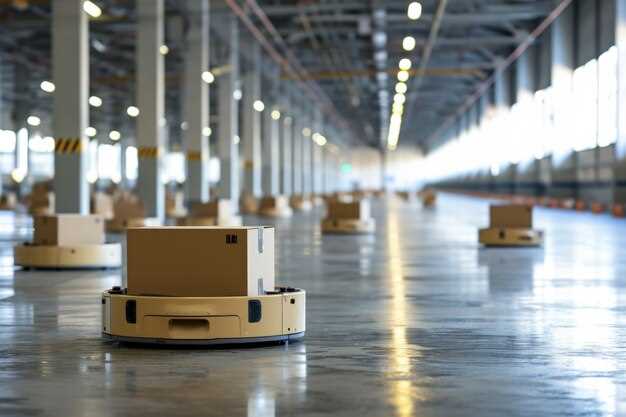 Automação de Armazém e Seu Impacto na Logística – Acelerando Rumo ao Futuro">

Implement modular automation in small, measurable steps to stay competitive. Start with high-impact processes such as goods-to-person picking, automated storage and retrieval, and real-time inventory visibility. Run a pilot in one zone to validate ROI within 8–12 weeks; typical pilots deliver 15–30% throughput gains and 30–50% labor reductions in that zone. Build a foundation that matches the size of your operation, with a balanced mix of conveyors, sorters, and voice picking to boost effectiveness and reliability.
Advancements in robotics, sensors, and cloud software bring sophisticated control and faster decision cycles. Yet every option carries weaknesses: high upfront investment, longer lead times, and integration challenges with legacy systems. Limited IT staff and in-house maintenance capacity can bottleneck deployments; plan a phased rollout that aligns with your requisitos and budget.
The covid-19 period underscored the value of automation for resilience. Systems that reduce manual handling will lower exposure risks and keep operations running during disruptions. A data-driven approach improves tracking accuracy and effectiveness across inbound, storage, and outbound steps; better data minimizes rework and less waste, delivering measurable gains. Budgeting for maintenance, software updates, and cybersecurity remains essential to prevent outages, and it helps you stay ahead of emerging threats.
Em resumo: Start with a clear metrics plan: cycle time, accuracy, and equipment utilization. For a midsize facility, target a full automation footprint in 12–18 months, with quarterly milestones: digitize receiving, implement pick-to-light or voice, then deploy sortation and palletizing automation. Track requisitos for uptime (99.5% target), energy consumption, and maintenance windows; choose modular hardware to keep size and capital outlays in check. A phased approach minimizes risk, reduces waste, and sustains throughput as operations scale.
WMS Foundations for Automated Warehouses
Follow a phased WMS deployment with a solid configuration baseline for products, locations, and movements. The system should establish authoritative lists for item masters, packing units, and storage zones, then link them to the automation layer and related hardware. Avoid traditional silos by starting with cross-functional governance from day one.
Set a target inventory accuracy of 99.5–99.9% and measure progress by counting discrepancies monthly for high-turn items. Use cycle counting with a fixed number of cycles per week; keep reports in a consistent format and present results in dashboards. This plan doesnt rely on manual re-entry, and a wizard-assisted onboarding helps convert new SKUs quickly and align them with the master data lists.
Integrate the WMS with automation assets such as AS/RS, conveyors, robotic pickers, and sorters. Build environmental models in the system to reflect temperature zones, humidity, and safety zones, so operators and robots operate with clear means of coordination. Use field research to refine pick paths and zone boundaries for higher throughput.
Define product attributes and packing formats early: item number, lot/serial, weight, dimensions, and plate assignments for dual- or multi-slot placement. Use standard format schemas like GS1 barcodes and Data Matrix to ensure scanning works across handheld devices and fixed scanners. This reduces mis-picks and speeds up replenishment in the lot-controlled flow.
Address regulatory directives by recording traceability events, batch changes, and disposal notes within the WMS. Align with environmental regulatory expectations for reporting energy use and waste, and provide consumers with clear data when needed.
Use a lightweight wizard for SKU onboarding, slotting, and fulfillment rules. Create a set of predefined lists for locations, carton types, and packing steps. Include a point of contact and a structured approach for exception handling and alerts, so operators know immediately where to act.
Monitor core KPIs and conduct quarterly reviews of configuration and automation performance. Track throughput per hour, pick rate, and accuracy, and adjust the layout of zones to match demand. Maintain a single source of truth for products and directives, and iterate on the setup to support evolving consumer needs.
Key automation-enabled processes supported by a WMS

Adopt wave-based automation with a configurations-driven WMS release strategy to cut travel time by 25-45% and present the next best task to workers in a preview, delivering a compelling ROI in an instance when order volume spikes, achieving faster throughput than traditional flows.
Automate receiving and put-away by scanning inbound goods to perform put-away tasks, capture item attributes, and print labels at receipt. The WMS uses configurations to assign optimal locations based on item characteristics, reducing misplacements, improving accuracy, and supporting a safer environment where workers are working.
During picking and packing, the WMS orchestrates wave, batch, and zone picking to perform tasks with real-time guidance. It presents pick paths on handheld devices, captures scan data, and prints packing slips and shipping labels. This synergy with conveyors and sorters increases speed and consistency in operations.
Inventory control and replenishment: The WMS runs continuous cycle counts, detects discrepancies, and automatically triggers replenishment. It also handles returns processing with automated disposition. This is crucial for covid-19 safety requirements and for maintaining accurate on-hand data in the environment.
Analytics, reporting, and integrations: The WMS captures activities, provides preview dashboards, and supports configurations to adapt to changing operations. The data that has been used to improve processes increases accuracy and enables increasing visibility across the environment.
Orchestrating robot-assisted picking and conveyor flow with WMS
Implement a centralized WMS-driven orchestration that assigns robot-assisted picks to the fastest available conveyor path, using a single real-time queue and direct feedback from rockwell controllers to minimize idle time, providing a clear path to higher throughput.
todays workloads demand high precision and visibility. The means to achieve this is a unified data model that translates orders, on-hand inventory, and destination points into executable transactions, supported by robust software and reliable hardware components.
Foster a culture of continuous improvement where operations, controls, and software teams co-design the workflow. The pivotal point is a shared state across the WMS, robot controllers, and conveyor PLCs so theyre aware of each other’s status and can react in real time.
- Routing and pathing: base decisions on real-time conveyor occupancy, robotic arm availability, and package size to choose the most efficient route for each pick.
- Queue management: maintain a single, persistent queue for picks and movements; ensure idempotent transactions to maintain accuracy during fault recovery.
- Inventory synchronization: routinely reconcile on-hand counts with WMS records after each transfer to prevent mispicks and reduce backorders.
- Metadata and electronics: leverage a well-defined component model that combines order data, item attributes, and destination constraints, enabling clean handoffs between robots and conveyors.
- Control accuracy: implement a robust coding and testing regime for the integration layer, including simulation of typical jams and re-routing scenarios to minimize disruption.
Beyond operational efficiency, consider environmental implications: optimized flow reduces energy use, wear, and unnecessary movement, thus lowering the environmental footprint while maintaining high service levels. The system should also capture behavior trends across shifts and facilities to inform future improvements. With these measures, you greatly enhance throughput, accuracy, and resilience, while keeping requirements transparent for stakeholders.
Real-time inventory visibility, slotting, and cycle counting via WMS
Enable real-time inventory visibility through WMS and automate cycle counting to cut discrepancies and time-to-inspection. This requires integration of handheld scanners, RFID tags, and bin labels into a single data layer that captures every movement and feeds a live dashboard. Data matter for decision-making here, and consistent data capture reduces stockouts and overstock while helping mitigate risk and avoiding heavy intervention later. Run a regional pilot to measure accuracy gains, and scale as improvements accumulate; this approach could deliver early savings and set the baseline for a broader adoption. Define the required data standards and tags upfront.
Slotting optimization relies on demand signals, product dimensions, turnover, and handling characteristics to place items at the edge of the pick path. Between zones, travel time drops 15-25%, and pick rates rise 10-20% in many DCs. WMS can re-slot on a schedule or when SKU mix shifts, capturing opportunities to reduce misplacements and improve throughput. Utilize RFID or barcode tags to enforce slot assignments and keep data aligned, including similar layouts across sites to ease adoption.
Cycle counting via WMS keeps a tight cadence. Automated counts run continuously, focusing on high-risk items or locations, capturing counts during inbound, outbound, and replenishment events to reduce full physical counts. Data collected from tags and devices enables accuracy above 99% in well-configured environments and can cut cycle count time by 30-50%. Within similar facilities, benefits stack, making rollout predictable.
Interventions: When a variance appears, WMS triggers an intervention workflow that assigns a picker or supervisor to verify and correct. Real-time visibility informs the workforce and helps them act quickly, reducing rework and improving service. Collect feedback from the workforce to tune slotting rules, replenishment thresholds, and counting schedules. The edge computing layer processes data at the source for low latency and minimizes backhaul traffic. The implications include improved service levels, leaner inventory, and better forecasting; the system delivers savings by reducing walking time, search time, and write-offs.
From pilot to scale: a practical rollout plan for automation
Start with a 12-week pilot in a single storage zone to validate an innovative automation setup, then scale to the full facility within six months. Define success with concrete metrics: throughput gains of 25-35%, pick-and-pack errors reduced by 40%, and energy use per pallet moved reduced by 15%. Use visual dashboards and a staged release plan to monitor progress and prove feasibility.
Within the pilot, map the lines, storage zones, and material flows. Choose modular, scalable hardware and software that could be installed with limited downtime and minimal maintenance. Build a collaborative team from operations, IT, and engineering to test scenarios that mirror real shifts, and to train employees for the transition. Track progress daily and flag missing data or misaligned steps.
Desenvolver um plano de lançamento de médio prazo com três fases: piloto, expansão controlada e implantação completa. Para cada fase, estabelecer critérios de lançamento, papéis de proprietário e um ponto de interrupção para reversão. O plano introduz a automação nas linhas de alto volume primeiro, depois expande para as linhas mais lentas, para equilibrar risco e valor.
Estabeleça um protocolo de dados enxuto: capture KPIs visuais sobre vazão, densidade de armazenamento e distância percorrida, e monitore métricas de impacto ambiental, como energia por movimento. Use esses sinais para orientar decisões diárias e promover revisões pontuais com a equipe. Essa abordagem pode manter ganhos estáveis mesmo que a demanda flutue.
Promova a gestão de mudanças por meio de um plano de comunicação colaborativo, funções claras e treinamento direcionado para os funcionários. Permita janelas de manutenção limitadas e um pool de peças de reposição pronto para evitar interrupções e crie cenários que cubram possíveis atrasos na liberação. Ao alinhar incentivos e manter um loop de feedback apertado, a implantação minimizaria a interrupção e aceleraria a adoção.
À medida que os volumes crescem, espere uma eficiência aprimorada em toda a instalação: tempos de ciclo mais curtos, redução da fadiga dos trabalhadores e um caminho mais claro para reabastecer o armazenamento com dados em tempo real. Um plano de lançamento bem estruturado traduziria pilotos em resultados escaláveis, entregando valor oportuno à equipe e aos stakeholders.
Fatores que impulsionam o ROI e métricas de desempenho para armazéns automatizados
Invista em visibilidade em tempo real do estoque disponível com códigos de barras e configurações de entrada padronizadas para reduzir o tempo de deslocamento dos separadores e impulsionar ciclos de entrega de dois dias para pedidos padrão. Execute um piloto de 90 dias em dois turnos para quantificar os ganhos e coletar o feedback dos operadores.
Os fatores de ROI incluem eficiências de mão de obra, eficiências de espaço e maior precisão. A automação de tarefas rotineiras reduz as horas de trabalho gastas, enquanto layouts de pratos mais inteligentes e o encaixe concentram as atividades onde mais importam, impulsionando o aumento da produtividade sem um aumento proporcional de capex. Para empresas que buscam escalar, a mistura integral de conhecimento de linha de frente e automação confiável gera um aumento geral no desempenho à medida que os volumes crescem, permitindo o crescimento dos níveis de serviço e da margem.
Key performance metrics cover throughput, accuracy, and asset utilization. Track pick rate (units per hour), order throughput (orders per day), order accuracy, on-hand inventory accuracy, and dock-to-stock cycle time. Use quick-win benchmarks to align settings and barcoding quality with reality on the floor, then measure ROI impact in weeks, not months. Looking at the data across settings, you can compare performance by shift and SKU family and identify where teams perform best and where to tighten processes.
Para capturar feedback significativo e sustentar o impulso, estabeleça canais de comunicação claros entre operadores, supervisores e a função de planejamento. Colete as razões para variações, erros de coleta e toques repetidos, e então forneça esses insights de volta para o treinamento e ajustes de layout. Os dados de entrada dos scanners, registros do sistema e registros de manutenção devem ser centralizados para apoiar a otimização contínua.
A implementação deve começar com sprints de dois dias para ajuste rápido das configurações de equipamentos e alocação, seguidos por pilotos de duas semanas que validam os ganhos em condições de pico e fora de pico. Utilize uma abordagem por etapas que associe o ritmo às prioridades de negócios e garanta que a equipe possa se adaptar rapidamente sem sofrer interrupções.
| ROI driver | Métrica | Baseline | Objetivo | Ação | Owner |
|---|---|---|---|---|---|
| Eficiência do trabalho | Custo de mão de obra por pedido | $1.65 | $0.95 | Implementar pick-to-light, códigos de barras e caminhos guiados | Ops Lead |
| Throughput | Unidades por hora | 450 | 540 | Alocação de SKUs de alto volume em layouts de placas otimizados; assistência robótica | Líder de Automação |
| Acurácia do inventário | Precisão de estoque | 99.0% | 99.8% | Contagens de ciclos com verificação de código de barras | Gerente de Inventário |
| Exatidão das encomendas | Taxa de pedido perfeita | 99.0% | 99.5% | Validação de código de barras na coleta e embalagem | Quality Lead |
| Dock-to-stock | Tempo de ciclo (horas) | 4.5 | 2.0 | Integração de sistemas e esteiras transportadoras; status em tempo real | Ops & IT |
| Utilização do WMS | Cobertura de automação | 60% | 85% | Expandir módulos de automação e coleta móvel | IT / Ops |
| ROI payback | Prazo de retorno (meses) | 24 | 14-18 | Lançamento gradual com vitórias rápidas | Finanças / Operações |