


 Română
  English (UK)
  Русский
  العربية
  日本語
日本語  한국어
한국어  Magyar
  Türkçe
  Español
  Čeština
  Svenska
  Português
  Ελληνικά
  Suomi
Suomi  Nederlands
  Italiano
  Français
  Polski
  Українська
  Deutsch
  简体中文
简体中文  Slovenčina
 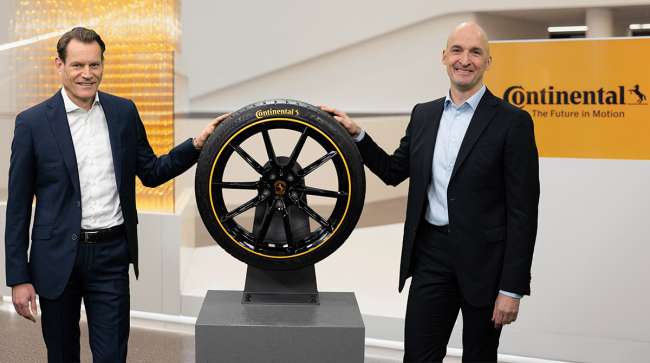 Leadership Shift at Continental AG Marks New Era with Christian Kötz as CEO During Key Industrial Unit Sale">

Continental’s Strategic Leadership Transition
A significant change is underway at Continental AG, signaling a new chapter for the German automotive giant. Christian Kötz has been selected to take the helm as CEO, succeeding Nikolai Setzer, who is stepping down ahead of schedule. This leadership swap arrives just as Continental embarks on selling its ContiTech industrial segment, a move that caps off the company’s strategy to refocus and streamline its operations.
With Kötz set to officially start next month, he will oversee Continental as it navigates this critical sales process for the ContiTech division, known for manufacturing industrial products such as conveyor belts and agricultural hoses. This transition points to Continental’s clear intention to sharpen its focus entirely on its core tire business.
Rationale Behind the Shift
Setzer’s decision to leave before his contract ends in 2029 coincides with the company’s broader restructuring efforts, aiming to make Continental more agile amid ongoing challenges within the industry and rising competition globally. The sale of ContiTech serves as the final step in breaking up the company’s prior diverse portfolio.
Previously, Continental floated its automotive parts division, named Aumovio SE, publicly on the Frankfurt stock exchange earlier this year as part of efforts to respond to shifting market demands and boost responsiveness to structural issues. This pattern reflects a broader trend in the industry where companies slim down to scuttle inefficiencies and hone in on their strengths.
Profile of Christian Kötz: The New Steward of Continental
Christian Kötz brings nearly 30 years of experience within Continental, primarily centered on the tire division. His resume includes key leadership roles, notably as the global head of research and development. Kötz has also served on the executive board since 2019, which makes him exceptionally well-versed in the company’s vision and operational dynamics.
This deep-rooted experience offers Kötz a solid foundation to guide Continental through this pivotal moment. With firsthand understanding of the company’s technical and business challenges, he is positioned to steer the brand into a focused future centered on tire manufacturing excellence.
Impact on Continental’s Business Focus
The divestiture of ContiTech highlights a commitment to consolidating Continental’s market focus. By shedding the industrial segment and previously spinning off automotive parts, Continental aims to streamline its logistics and production processes for greater efficiency, reducing overhead and complexity.
This careful recalibration could also have rippling effects through the logistics and supply chain management layers of the company. Simplifying business lines often leads to more targeted freight handling, optimized shipment scheduling, and refined distribution networks—all critical considerations in today’s transport-heavy industries.
How This Leadership Change Relates to Logistics
On the surface, a change in CEO might seem like an internal corporate shuffle. But at the heart of a manufacturing giant like Continental, these moves cascade through logistics and supply chain strategies. The sale of ContiTech’s industrial products affects freight volumes, dispatch routes, and cargo priorities. A leaner company structure allows for a tighter integration among manufacturing plants, warehouses, and distribution centers.
For logistics providers and freight partners, this transition signals potential shifts in shipment frequencies, palletized goods handling, and container load planning—elements that impact day-to-day operations and long-term contracts.
Key Logistics Factors Affected
- Freight Volume Reduction: Divesting industrial goods reduces the shipment load diversity, enabling more focused transport solutions.
- Supply Chain Simplification: Streamlined operations often lead to more predictable dispatch timings and improved transit coordination.
- Optimized Distribution Routes: Eliminating certain product lines means networks can be adjusted to prioritize tire delivery, enhancing delivery speeds.
Table: Leadership and Business Changes Timeline
| Eveniment | Temporizare | Impact |
|---|---|---|
| Announcement of Christian Kötz as CEO | December 17, 2025 | Marks leadership transition ahead of ContiTech sale |
| Kötz officially assumes CEO role | January 2026 | Begins steering company through breakup completion |
| Initiation of ContiTech sale process | Early 2026 | Finalizes Continental’s exit from industrial products |
| Earlier Aumovio SE IPO | 2025 | Public listing of automotive parts division |
What This Means for Industry and Market Players
The move reinforces a notable trend: large manufacturers divesting non-core assets to focus on their strongest segments. For suppliers, forwarding companies, and logistics experts, adjustments in client cargo demand and coordination are inevitable.
Truckers who once handled mixed loads now face more specialized shipments, while warehousing might pivot toward handling bulk tire inventory and related packaging materials. Forwarders will need to recalibrate parcel and pallet planning strategies accordingly.
Personal Takeaways and the Value of Direct Experience
While reviews and market analyses offer valuable insights into such corporate shifts, nothing quite compares to experiencing the changes on the ground—be it through managing shipments, coordinating schedules, or handling freight firsthand. For anyone navigating cargo logistics in volatile markets, understanding these leadership moves adds an important layer to planning and execution strategies.
GetTransport.com offers a platform where the benefits of logistics transparency, affordability, and adaptability come to the fore. Whether handling office relocations, shipping bulky or sensitive cargo, or transporting vehicles, the platform’s extensive network helps streamline complex freight processes at competitive rates. Importantly, it empowers shippers to make informed decisions without costly missteps. Rezervă-ți cursa pe GetTransport.com to tap into this global cargo transport ecosystem.
Global Logistics Forecast and Continental’s Relevance
On the global scale, the sale of Continental’s ContiTech industrial unit might not send massive ripples through the logistics industry internationally. However, from a specialized viewpoint—particularly in European markets—this move represents a clear push toward leaner, more efficient supply chains and focused freight handling strategies.
As suppliers and transport partners adjust to Continental’s new streamlined focus, platforms like GetTransport.com remain crucial, providing real-time, affordable transportation solutions that quickly adapt to shifts caused by such corporate realignments. The logistics sector thrives on this agility and clarity, allowing businesses to stay ahead of the curve.
Începeți să vă planificați următoarea livrare și asigurați-vă încărcătura cu GetTransport.com.
Rezumat
The appointment of Christian Kötz as Continental AG’s new CEO coincides with a strategic milestone: the impending sale of the ContiTech industrial division. This significant transition is part of Continental’s broader plan to streamline its business and focus entirely on its core tire market. From a logistics perspective, this shift means changes in freight volumes, shipment planning, and distribution networks—key aspects for supply chain managers and transport partners alike.
With experienced leadership aimed at tightening operational efficiency, Continental is poised to reinforce its global footprint within the tire segment. For logistics providers, this evolution signals the need for adaptiveness in cargo dispatch and haulage.
GetTransport.com aligns perfectly with these changing times by offering globally reliable, cost-effective transport services for diverse shipment needs—be it house moves, corporate relocations, or the distribution of bulky goods like vehicle shipments and pallets. Embracing such tools simplifies freight forwarding and shipping, helping businesses and individuals manage transportation demands with confidence and ease.