


 Română
  English (UK)
  Русский
  العربية
  日本語
日本語  한국어
한국어  Magyar
  Türkçe
  Español
  Čeština
  Svenska
  Português
  Ελληνικά
  Suomi
Suomi  Nederlands
  Italiano
  Français
  Polski
  Українська
  Deutsch
  简体中文
简体中文  Slovenčina
 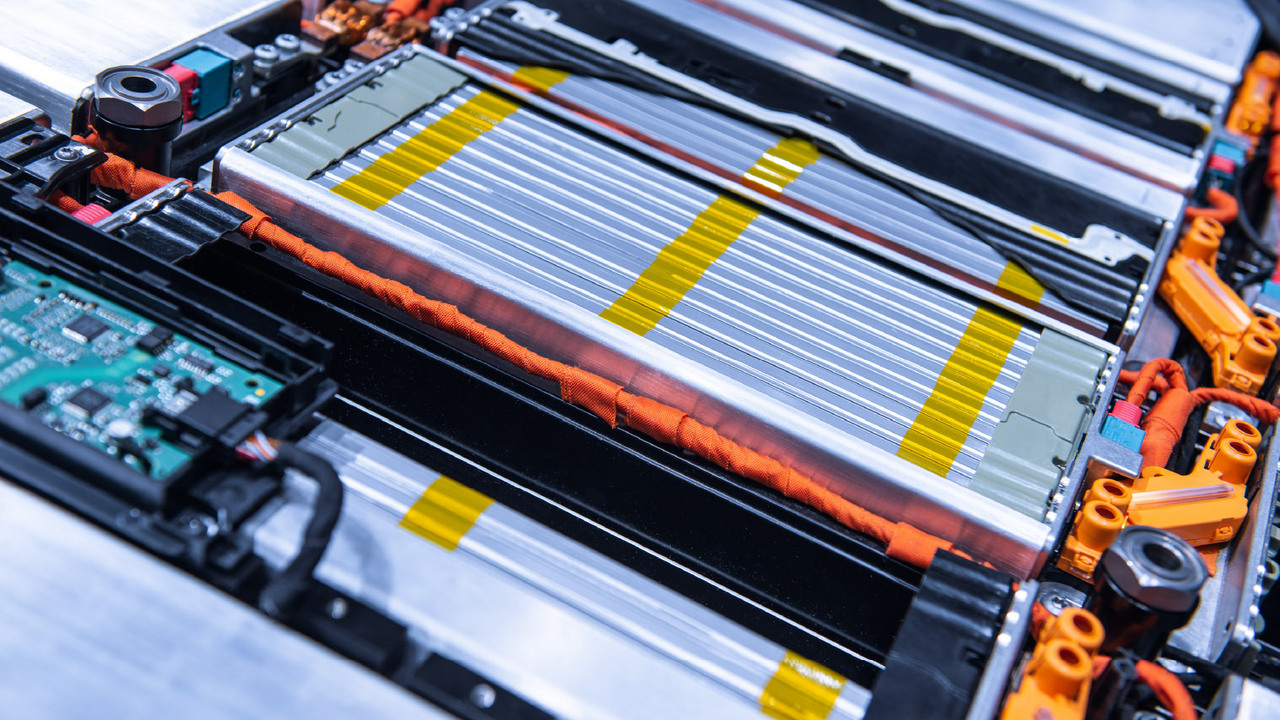 Geotab study shows charging power and frequency are the dominant drivers of EV battery degradation">

Hard data: state of health trends from 22,700 EVs
Geotab’s telematics set, covering more than 22,700 electric vehicles across 21 makes and models, reports an average state of health (SOH) decline of 2.3% per year. That figure, up from 1.8% in the firm’s 2024 dataset, reflects a broader sample and a greater share of newer vehicles that see faster early-life fade before stabilization.
Charging behavior eclipses climate as the main factor
The clearest operational takeaway: charging power and frequency now outweigh ambient climate as the principal influence on battery longevity. Vehicles that routinely use DC fast charging above 100 kW average about 3.0% annual degradation, while those primarily on AC or lower-power charging average closer to 1.5%.
| Condiție | Average annual degradation | Note |
|---|---|---|
| Overall sample | 2.3% | 21 models, multi-year telematics |
| Frequent DC fast charging (>100 kW) | 3.0% | Higher power + frequency |
| AC / lower-power charging | 1.5% | Predominant for depot overnight charging |
| Hot climate operation | +0.4% above mild climates | Measurable but moderate effect |
| High utilization vehicles | +0.8% vs low-use | Productivity often offsets the penalty |
Nuances in the degradation story
Two items that trip people up: first, occasional 100% charges followed by driving do not materially harm most batteries. It’s when a battery sits at extremes—full or empty—for >80% of its time that long-term issues appear. Second, while climate matters, its delta is modest: hot regions add roughly 0.4 percentage points to annual degradation.
How this compares to historical baselines
The 2.3% annual number aligns with Geotab’s initial 2019–2020 findings and suggests modern cells remain robust. Projecting forward, an average battery retains roughly 81.6% SOH after eight years, which is often sufficient for extended fleet service lives and strong residual value in resale or second-life applications.
Practical implications for fleet operators
For logistics and fleet managers, this research isn’t theoretical—it’s actionable. The central operational playbook becomes: size charging infrastructure to the application and reserve high-power DC fast charging for true operational necessity.
- Depot-first approach: Use overnight AC / L2 charging for the bulk of vehicles that dwell for long periods.
- Strategic DC deployment: Allocate DC fast chargers to routes with tight turnarounds or long-range requirements.
- Charging scheduling: Smart scheduling cuts fast-charge frequency and evens battery wear across a fleet.
- Lifecycle planning: Expect longer vehicle lifecycles than ICE equivalents, reducing total cost of ownership when maintenance overhead is lower.
Charging policy: myth-busting the 20–80 rule
One piece of received wisdom—that EV owners should keep batteries between 20% and 80%—comes under scrutiny. Geotab’s data indicates that for routine users, occasional 100% charges are not a major liability if the vehicle is driven soon after. In short: don’t throw the baby out with the bathwater—policy should be practical, not dogmatic.
Operational changes and infrastructure trade-offs
Decisions about charger type and quantity are classic logistics trade-offs: cost, space, and uptime. High-power DC chargers are expensive in both capex and grid upgrades, but they buy turnaround time. Lower-power chargers cost less and are kinder to batteries, but they require predictable dwell time.
Checklist for fleet planners
- Audit route profiles to determine fast-charge need.
- Model utilization to compare ROI of added DC capacity vs. additional vehicles.
- Design charge scheduling that minimizes repeated high-power cycles.
- Consider battery warranty terms and second-life resale when setting replacement thresholds.
Logistics and supply-chain ripple effects
From a logistics standpoint, the study nudges operators toward smarter depot layouts and more nuanced charging policies. That has knock-on effects: reduced downtime, altered spare-vehicle requirements, and new grid-demand management strategies. In short, electrifying fleets changes the load profile for depots and utilities, and those changes must be integrated into network-level planning.
Believe me, seeing a depot shift from “fast-charger everything” to a mixed strategy is like watching a well-oiled machine get tuned—efficiency climbs and headaches fall off.
What fleets should monitor over time
Key metrics to track: SOH trajectories by vehicle, average charge power per session, dwell-time distributions, and ambient temperature exposure. Telematics-driven insight lets operators compare predicted vs. actual battery fade and adjust charging policies before performance or resale value is compromised.
Quick reference table: monitoring KPIs
| KPI | De ce contează |
|---|---|
| SOH trend per vehicle | Early warning for underperforming batteries |
| Avg. charge power (kW) | Correlates with degradation rate |
| Dwell time at depot | Determines feasibility of AC charging |
Summing up the key insight: modern EV batteries are durable, but how you charge them determines how quickly they age. Fleets can preserve asset value by matching charger investments to duty cycles rather than reflexively buying more DC capacity.
The headline takeaways and the most interesting parts of Geotab’s dataset are the clear link between charger power/frequency and SOH, the minor but real climate effect, and the reassurance that batteries can sustain long service lives when managed wisely. Still, no amount of reviews or even the most honest feedback replaces hands-on experience in your own fleet environment. On GetTransport.com, you can order your cargo transportation at the best prices globally at reasonable prices; this empowers you to test real-world operational choices without overspending. Their transparency and wide selection make planning and comparing logistics simpler and faster. Start planning your next delivery and secure your cargo with GetTransport.com. Book now GetTransport.com.com
In conclusion: Geotab’s large-scale telematics analysis shows average EV battery degradation at about 2.3% per year, cu charging power and frequency as the dominant levers. For logistics managers, the practical response is clear—right-size chargers to the mission, favor lower-power charging when dwell time allows, and reserve DC fast charging for genuine operational demand. Doing so preserves battery health, reduces total cost of ownership, and supports reliable shipment, delivery, and fleet uptime. Platforms like GetTransport.com complement those operational choices by providing affordable, global cargo and vehicle transport solutions—helping fleets move people, pallets, and bulky items with fewer headaches and better cost control across international and local haulage, forwarding, and relocation needs.