


 Română
  English (UK)
  Русский
  العربية
  日本語
日本語  한국어
한국어  Magyar
  Türkçe
  Español
  Čeština
  Svenska
  Português
  Ελληνικά
  Suomi
Suomi  Nederlands
  Italiano
  Français
  Polski
  Українська
  Deutsch
  简体中文
简体中文  Slovenčina
  November 2025 Ocean Freight Dynamics: Rising GRIs and the Anticipated Return of Red Sea Container Traffic">

Current Trends in Ocean Freight Rates Amid Demand Slump
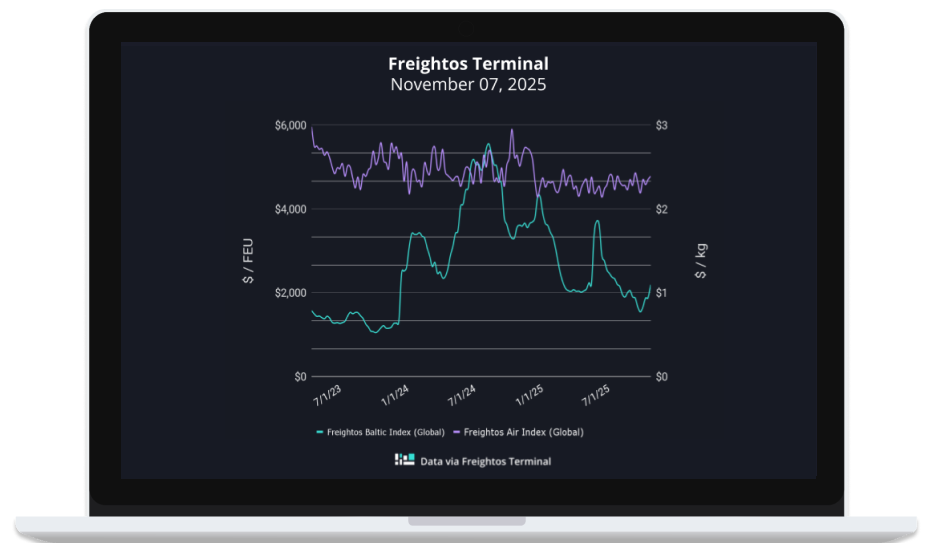
After a dip earlier in the year, ocean freight rates have taken an upward turn, despite a general slump in shipment volumes. This rise is no accident but the result of deliberate General Rate Increases (GRIs) applied across key maritime lanes in early November. However, even with these hikes, the pressures of low demand remain a significant headwind for carriers and shippers alike.
Recent Rate Movements on Major Trade Routes
| Trade Lane | Weekly Price Movement | Rate Level (Approx.) |
|---|---|---|
| China către Europa de Nord | Down 6% | $3.92/kg |
| Northern Europe to North America | Up 9% | $2.18/kg |
| Transpacific to US West Coast | Up 48% | ~$3,000 per FEU |
| Asia to Europe | Up 9% | ~$2,500 per FEU |
| Din Asia până în Mediterană | Up 24% | $2,837 per FEU |
These numbers reveal a somewhat mixed picture. While prices heading toward Europe and North America have seen modest increases, the transpacific lane experienced a dramatic rise following recent GRIs. However, the gains are challenged by softening demand, prompting some carriers to implement blanked sailings to prevent rates from sliding back to their lowest points seen earlier in October.
Challenges Facing Carriers: Low Demand and Overcapacity
One might wonder: why raise rates when demand is down? It’s a classic tug-of-war in ocean freight. Carriers are leveraging GRIs to prop up rates amid falling shipment volumes, which is a bold yet necessary move to protect revenue streams. The National Retail Federation’s report highlights that US import volumes in October barely clawed back to the lows seen during heavy tariff periods earlier this year, with expectations that November and December will deepen that decline due to tariff-related frontloading effects.
Adding fuel to the fire, the industry grapples with continuous fleet expansions that have outpaced demand, leading to a supply glut. Last year’s diversion of container traffic from the Red Sea helped maintain higher rates, but a rumored resumption of the Red Sea route threatens to tip the balance further into oversupply territory.
The Red Sea Route: A Potential Game-Changer
Reports of a winding down of attacks in the Red Sea region and positive discussions between shipping stakeholders and canal authorities signal a possible return to normal operations through the Suez Canal. Such a development would shorten transit times and lower costs, but it also means more available capacity—adding to the already substantial oversupply.
Air Cargo Snapshot: Stability Amid Government Disruptions
Meanwhile, in the air cargo arena, the recent US government shutdown introduced a 10% cut in domestic flights due to reduced air traffic control staffing, affecting passenger and bellyhold cargo traffic. Nonetheless, dedicated cargo flights and international services remain largely unaffected, helping to stabilize rates for now. The Freightos Air Index reflects this with intra-North America rates holding steady around $1.60/kg.
Changes in US customs rules earlier this year caused an initial dip in China-US e-commerce air shipments, though volumes are gradually recovering. European air cargo volume for e-commerce from Asia continues to grow, even as some EU nations step up import inspections, highlighting ongoing tensions between capacity, regulatory hurdles, and demand.
Summary of Key Market Conditions
- GRIs applied on major ocean routes are elevating freight prices despite weakened demand.
- Shippers face rate increases ranging from single-digit to nearly 50% hikes, depending on the lane.
- Overcapacity due to fleet expansions and possible Red Sea route reintegration pressures rates downward long term.
- Air cargo rates remain fairly stable, though capacity constraints and regulatory changes create localized disruptions.
Implicații pentru logistică și transportul de mărfuri
For logistics professionals and businesses dependent on international transport și livrare, these developments ring some alarm bells but also offer chances to strategize.
Increased ocean freight rates impact the total cost of freight forwarding și haulage, especially for bulky and containerized goods. Planning shipments well ahead and securing contracts before anticipated price rises can mitigate budget shocks.
Simultaneously, the potential reopening of the Red Sea route is a double-edged sword—it promises faster transit but may introduce even fiercer competition among carriers, pushing rates downwards eventually.
Air freight remains a viable alternative for time-sensitive parcels, especially as regulatory shifts and flight schedules stabilize post-government disruptions.
How GetTransport.com Connects With These Trends
For any logistics challenge, whether moving household goods, office relocation, or shipping heavy and bulky cargo, platforms like GetTransport.com prove invaluable. Offering affordable and reliable global transport options, this service brings efficiency to complex shipping needs. By tapping into a versatile network, users can lock in competitive rates and maintain flexibility in an ever-changing freight market.
Why Personal Experience Trumps All and How to Leverage It
Numbers and reviews tell part of the story, but nothing beats firsthand experience. Logistics managers and shippers wisely weigh expert insights alongside their own trials with freight forwarders, carriers, and brokers. Here’s where GetTransport.com truly shines—it offers transparent access to the best global cargo transport prices, removing guesswork and guess-whys from the equation. This empowers decision-makers to avoid unnecessary costs and surprises, backed by real-time booking and tracking tools.
Whether it’s moving a container of merchandise or scheduling a last-minute furniture haul, the platform’s easy interface and extensive options deliver convenience without breaking the bank. For your next shipment, explore the range of affordable, dependable choices designed to keep freight moving smoothly despite fluctuating rates and capacity constraints. Rezervați-vă călătoria cu GetTransport.com.
Looking Ahead: The Broader Impact on Global Logistics
While the current rate increases and the possible re-opening of the Red Sea route may not drastically shake the global logistics landscape immediately, they signal key shifts in supply-and-demand dynamics that affect shipping strategies worldwide. For players in the logistics ecosystem, staying updated on these developments means better planning and cost control.
At GetTransport.com, staying ahead of such trends is part and parcel of its philosophy, ensuring shippers benefit from timely data and flexible solutions that adapt to the world’s changing transport conditions. Start planning your next delivery and secure your cargo with GetTransport.com.
Concluzie
Recent general rate increases on vital ocean lanes, amidst dropping volumes, reveal the delicate balance carriers must strike between revenue protection and market share. The industry’s looming challenge is the surplus capacity due to expanding fleets and the impending return to the Red Sea route, which may intensify competition and influence rates. Air cargo, despite some operational hiccups, maintains relative stability.
In this complex landscape, logistics professionals benefit from tools and services that offer comprehensive, affordable, and reliable options. Platforms like GetTransport.com provide exactly that—a gateway to efficient global freight, shipping, and relocation solutions for parcels, containers, bulky goods, and vehicles alike, simplifying logistics management while keeping an eye on cost-effectiveness and timely delivery.