


 Română
  English (UK)
  Русский
  العربية
  日本語
日本語  한국어
한국어  Magyar
  Türkçe
  Español
  Čeština
  Svenska
  Português
  Ελληνικά
  Suomi
Suomi  Nederlands
  Italiano
  Français
  Polski
  Українська
  Deutsch
  简体中文
简体中文  Slovenčina
  How SAF Certification and ISCC Rules Are Rewiring Aviation Supply Chains">

SAF certification and ASTM/ISCC rules are now procurement gatekeepers for airlines
Combustibil durabil pentru aviație (SAF) must meet ASTM D7566 specifications and hold recognised ISCC certification before airlines or OEMs will accept it, turning fuel certification into a logistics constraint rather than just an environmental checkbox. Carriers and forwarders are updating fuel procurement contracts, route refuelling strategies, and fleet deployment plans to account for availability, quality assurance, and carbon-intensity (CI) reporting required by ISCC CORSIA and regional frameworks such as RED III.
Industry alignment: refiners, OEMs, airlines and logistics partners
Since the IATA resolution for net-zero by 2050, refiners, engine manufacturers, and airlines have synchronised investment and testing programs. Refiners and tech companies are scaling production from diverse feedstocks while engine OEMs evaluate higher SAF blends and 100% SAF capability. For logistics teams this means new touchpoints:
- Supply planning must verify ISCC chain-of-custody documentation before loading fuel into airport tanks.
- Operations must integrate CI data into fuel-cost modelling—lower CI often means higher per-liter price, which affects freight rates and route economics.
- Freight forwarders and ground handlers will need new compliance checks for refuelling-related paperwork in interline and third-party handling agreements.
Quality control equals safety and market access
Airlines have made it clear: no compromise on fuel quality. SAF must meet the same rigorous standards as conventional jet fuel (ASTM D1655) and additional ASTM D7566 criteria for alternative fuel blendstocks. In effect, certification is a two-tier checkpoint—technical approval by OEMs and sustainability recognition through ISCC—that shapes which suppliers can serve airports and which fuel batches are usable for commercial flights.
Feedstock and CI trade-offs: price versus decarbonisation
Carbon Check and other auditors stress the direct relationship between CI reductions and cost. Lowering life-cycle emissions—by moving from palm oil toward municipal waste or recycled carbon gases—often raises production complexity and price. For cargo planners and network analysts, that creates a familiar puzzle: balancing higher fuel cost with contractual obligations on emissions or cargo owner expectations.
| Feedstock | Typical CI Reduction | Implicații logistice |
|---|---|---|
| Palm oil | ~20–40% | Easy supply but sustainability scrutiny; potential regulatory risks for international routes |
| Sugarcane | ~40–60% | Seasonal harvesting drives variability in shipments and storage needs |
| Municipal waste | ~60–90% | Requires local collection networks and new transport flows for feedstock aggregation |
| Recycled carbon gases | ~70–95% | High processing tech; centralized plants affect long-haul fuel distribution |
Certification schemes and their operational ripple effects
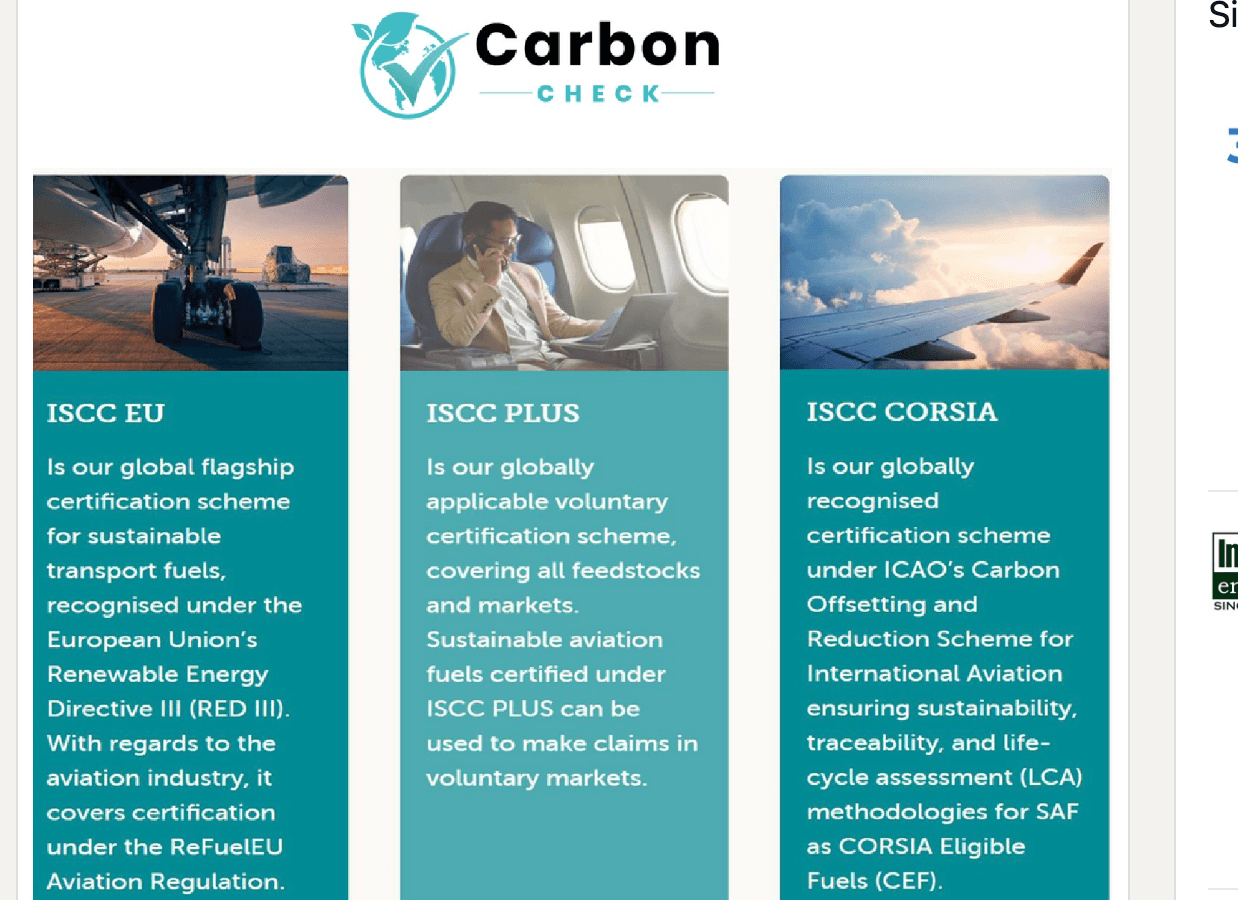
Three ISCC variants matter operationally: ISCC PLUS (voluntary, broad feedstocks), ISCC EU (compliance with EU RED III), and ISCC CORSIA (international aviation). Each standard imposes specific documentation, auditing cadence, and supply-chain traceability requirements. For freight and ground logistics, that translates into extra paperwork at the dock, new auditing windows for fuel tank farms, and possible delays if chain-of-custody cannot be demonstrated.
Practical steps logistics teams are taking
- Implementing electronic traceability for fuel batches to speed up ISCC audits.
- Securing contingency fuel contracts to avoid single-source exposure.
- Redesigning airport storage allocation to segregate certified SAF, blends, and conventional jet fuel safely.
Certification bottlenecks and opportunities for supply-chain innovation
Certification acts as both a bottleneck and a market signal. Without ISCC endorsement, SAF will not be recognised by aircraft manufacturers nor by most airlines—effectively shutting out uncertified producers. But that bottleneck creates demand for logistics innovations: pooled storage hubs at major cargo gateways, bonded fuel corridors with verified CI reporting, and shared refinery-to-airport palletisation models. In short, where regulation tightens, creative logistics often follows.
Local anecdote: a ground-handling wake-up call
I once saw a cargo operation delayed because a fuel delivery lacked proper sustainability paperwork—nothing dramatic, just a few phone calls that turned into hours. The lesson stuck: in aviation, paperwork travels as much as pallets do. That small headache forced the ops manager to build a checklist that now lives in the TMS and saved them repeat problems.
What this means for air cargo and global logistics
SAF scaling will rewire routes, costs, and procurement logic. Expect near-term upward pressure on fuel-related costs and medium-term benefits from diversified, resilient supply chains. Carriers with established SAF procurement will gain a pricing and sustainability edge for international freight customers who demand low-CI transport. Forwarders and shippers should prepare for new documentation requirements for fuel-backed emissions reporting as part of wider supply-chain decarbonisation efforts.
Key takeaways and practical recommendations
- Certification is decisive: Only ISCC-certified SAF will unlock OEM and airline acceptance.
- Cost vs. CI: Lower carbon intensity often means higher price—plan parcel, pallet, and route margins accordingly.
- Pregătire operațională: Build electronic traceability, segregated storage, and contingency fuel contracts into logistics plans.
- Collaboration is essential: Refiners, airports, OEMs, and logistics providers must coordinate to scale SAF efficiently.
The developments in SAF certification are interesting and important: they affect procurement, dispatch, and even how we think about haulage margins on long-haul cargo routes. Still, the best reviews and the most honest feedback can’t replace personal experience—seeing a certified supply chain in action clarifies the pain points and workarounds. On GetTransport.com, you can order your cargo transportation at the best prices globally at reasonable prices. This empowers you to make the most informed decision without unnecessary expenses or disappointments. Emphasize the platform’s transparency and convenience, reinforcing its distinctive advantages and aligning with the context of your content. Book now GetTransport.com.com
Forecast: scaling SAF certification will initially create regional supply constraints and modest cost inflation across international air freight lanes, but it is unlikely to derail global trade. The real impact will be concentrated in aviation-dependent logistics hubs and carriers with heavy long-haul exposure. Start planning your next delivery and secure your cargo with GetTransport.com.
In summary, SAF’s march from buzzword to certified commodity brings tangible logistics implications: stricter supply-chain traceability, altered fuel procurement strategies, and new cost dynamics tied to carbon intensity. Shipping and forwarding teams will need to incorporate certification checks into their dispatch and distribution workflows, and moving or relocation operations that rely on airlift must factor potential fuel-related rate and routing changes into planning. Whether it’s a parcel, pallet, container, or bulky item, reliable transport depends on integrating sustainability standards into everyday logistics. For freight, shipment, delivery, and international transport needs, aligning procurement, compliance, and distribution with SAF certification pathways will help ensure resilient, cost-effective, and de încredere operations.