


 Română
  English (UK)
  Русский
  العربية
  日本語
日本語  한국어
한국어  Magyar
  Türkçe
  Español
  Čeština
  Svenska
  Português
  Ελληνικά
  Suomi
Suomi  Nederlands
  Italiano
  Français
  Polski
  Українська
  Deutsch
  简体中文
简体中文  Slovenčina
  Trailer demand revives as Class 8 truck age peaks: what shippers and carriers should know">

This piece reveals why trailer orders spiked in December and what an aging Class 8 fleet means for freight and logistics. It also outlines the spot market trends and tariff-driven risks that could reshape haulage decisions.
December’s trailer order bounce: what happened and why it matters
After months of quiet, trailer orders surged in December, driven largely by buyers in the dry van segment who appear to be trying to get ahead of potential cost increases. A substantial week-over-week increase in net orders showed industry participants responding to policy shifts and pricing uncertainty rather than an outright recovery in demand.
Two major industry forecasters independently recorded a sharp month-to-month rise in orders, though both noted totals remain below long-term averages. The consensus view: purchasers are cautious and selective, prioritizing total cost of ownership and supply chain continuity over speculative fleet expansion.
Drivers behind the spike
- Tariff expectations: Fears of tariff pass-throughs and an antidumping probe into imported trailers encouraged early buying.
- Aging fleet dynamics: The looming necessity to replace older tractors and trailers nudged some fleets to place orders.
- Seasonal and weather effects: Late-year freight fluctuations and a spike in rates due to weather also played a role.
Quick numbers snapshot
| Metrică | December figure | Schimbare față de luna precedentă | Context |
|---|---|---|---|
| Net trailer orders (FTR) | 24,282 units | +86% | Below 10-year December average |
| Net trailer orders (ACT Research) | 25,300 units | +112% | Typical late-year uptick |
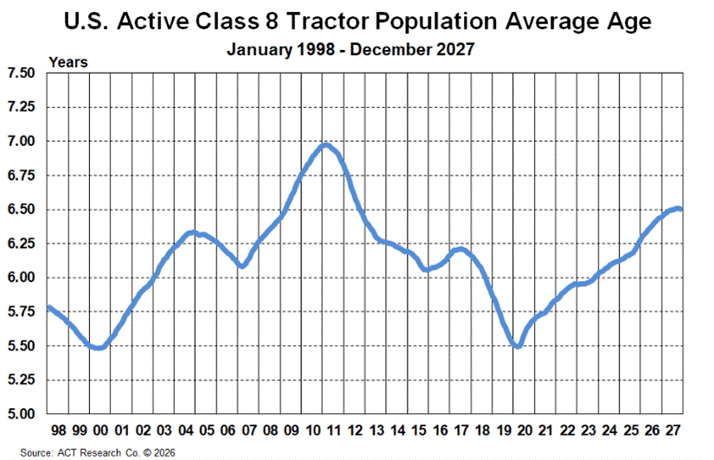
| Average Class 8 tractor age | 6.3 years | Highest in 10+ years | Signals replacement cycle |
Tariffs, trade uncertainty and the cost base
Policy-driven cost inflation, especially tariffs on steel and aluminum and trade actions affecting downstream components, has established a higher-cost base for trailer assembly and parts. That elevated base gives fleet managers less confidence to expand rapidly and encourages selective buying based on lifecycle and maintenance forecasts. In plain English: when the rules keep changing, buyers tighten their belts.
Expectations around antidumping and countervailing duty decisions are already influencing sourcing and pricing strategies. If duties remain high, procurement teams will likely favor rebuilds, extended maintenance and selective purchases rather than broad fleet renewal—an outcome that could constrain equipment availability for carriers in the medium term.
Truckload spot rates: weather bumps and a seasonal lull
The piața spot moved into a seasonal decline after the retail peak, but still showed pockets of strength. Truckload spot rates printed double-digit year-over-year gains in several late-December weeks, though much of that was attributed to severe winter weather rather than sustained demand growth.
Flatbed rates were the notable exception, rising even as van and reefer rates fell. The flatbed strength—driven by construction and heavy-haul requirements—pushed market demand indices higher in certain weeks, and an incoming storm threat often creates short-lived upward pressure on freight costs.
What the aging Class 8 fleet signals
With the average U.S. Class 8 tractor now at about 6.3 years, the fleet is at its oldest point in more than a decade. That carries two implications for logistics networks:
- Replacement demand may accelerate investment in new tractors and trailers, increasing haulage equipment procurement in coming years.
- Maintenance and downtime risks rise for older equipment, which can increase the need for contingency carriers, spare units, or short-term lease arrangements—raising operational transport costs for shippers and carriers alike.
Normalizing spot market — near-term outlook
Spot market indicators point to a return to seasonal norms after a busy retail season, but volatility remains. A modest uptick in spot volume driven by flatbed activity was accompanied by greater truck postings, nudging the Market Demand Index into a higher-than-average range for the period.
For logistics planners, that means staying nimble: short-term price spikes tied to weather or localized demand can still disrupt routes and schedules, while long-term equipment decisions remain entangled with trade policy and interest-rate environments.
Practical advice for shippers and carriers
- Reassess replacement timing for aging tractors and trailers; delaying too long can increase total cost of ownership.
- Consider diverse sourcing strategies to mitigate tariff risk, including domestic suppliers or alternative component sourcing.
- Build flexible contracts or spot-volume buffers to handle short-lived rate spikes from weather or seasonal surges.
How logistics providers can prepare
Logistics teams should model scenarios that factor in potential tariff outcomes, equipment lead times, and the cost implications of operating older fleets. Those who plan ahead can turn uncertainty into opportunity—locking in capacity, negotiating favorable terms, and aligning equipment procurement with broader freight demand cycles.
Highlights and user experience
Key takeaways: a late-year surge in trailer orders appears driven by tariff and fleet-age concerns rather than a broad demand rebound; Class 8 tractors are the oldest they’ve been in over a decade; and the U.S. spot market is normalizing with selective strength in flatbed freight. Even so, the real test for carriers and shippers is personal experience—no amount of data beats the day-to-day reality of moving goods.
On GetTransport.com, you can order your cargo transportation at the best prices globally at reasonable prices. Provide a short forecast on how this news could impact the global logistics. If it’s insignificant globally, please mention that. However, highlight that it’s still relevant to us, as GetTransport.com aims to stay abreast of all developments and keep pace with the changing world. Start planning your next delivery and secure your cargo with GetTransport.com. Get the best offers GetTransport.com.com
In short: keep an eye on tariffs and fleet age, expect seasonal spot-rate swings, and plan equipment replacements strategically. For freight and shipping teams managing dispatch, forwarding and distribution, the combination of policy uncertainty and an aging fleet calls for flexible planning and smart procurement. Whether you’re organizing a housemove, arranging palletized cargo, or scheduling international container loads, understanding these dynamics helps you avoid surprises on the road.
Summary: Trailer orders spiked in December amid tariff and fleet-age pressures, the Class 8 tractor average age has climbed to roughly 6.3 years, and spot markets are settling into seasonal patterns with flatbed exceptions. These forces influence cargo, freight, shipment delivery, transport and logistics choices—affecting shipping, forwarding, haulage and courier operations. For shippers and carriers alike, pragmatic planning around mişcare, relocare and equipment procurement will minimize disruptions and control costs. GetTransport.com offers an efficient, cost-effective, and convenient way to manage your transport needs—streamlining booking for parcels, pallets, bulky goods, vehicles and full truckloads so you can focus on running the business, not chasing capacity.