


 Română
  English (UK)
  Русский
  العربية
  日本語
日本語  한국어
한국어  Magyar
  Türkçe
  Español
  Čeština
  Svenska
  Português
  Ελληνικά
  Suomi
Suomi  Nederlands
  Italiano
  Français
  Polski
  Українська
  Deutsch
  简体中文
简体中文  Slovenčina
 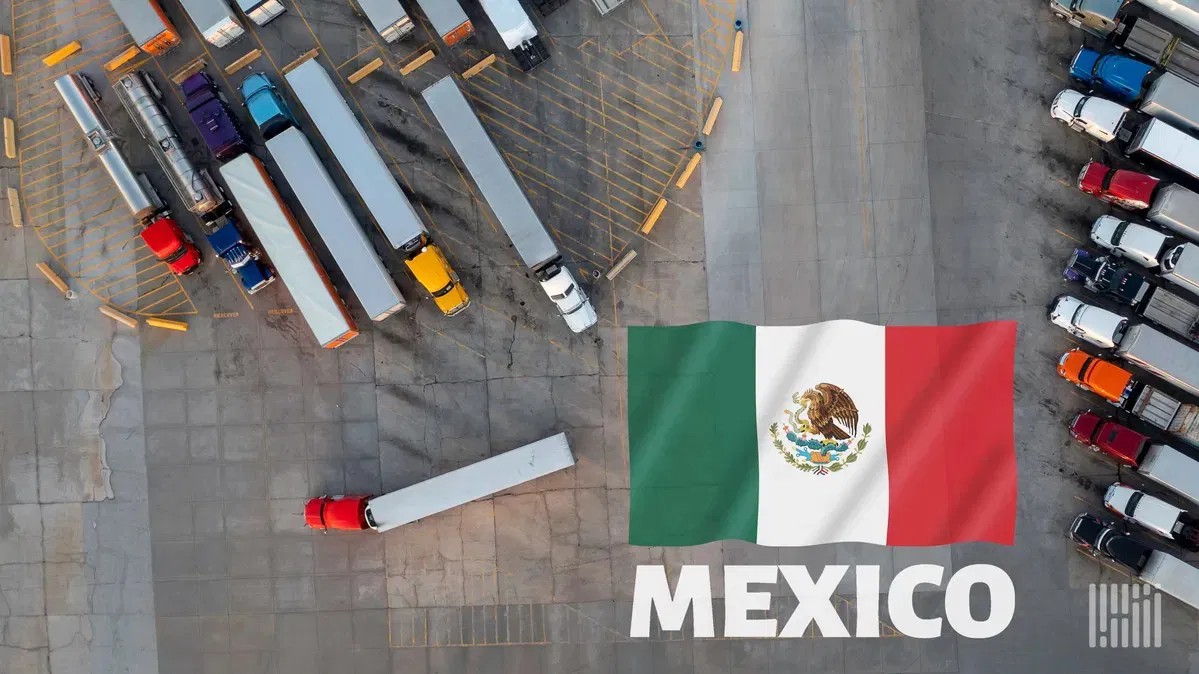 Comerțul SUA-Mexic Domina Luna Septembrie cu $71,8 Miliarde de Dolari, Iar Noile Centre Logistice Intensifică Fluxul de Mărfuri">

September Strengthens Mexico’s Role as U.S. Top Trading Partner
Trade between the United States and Mexico held its ground firmly in September, reaching a hefty $71.8 billion, reaffirming Mexico as the largest trading partner of the U.S. This robust figure underlines the tight integration of North American supply chains, especially those reliant on trucking and nearshoring, despite a turbulent global economic environment.
The breakdown shows Mexican exports to the U.S. hit approximately $44.6 billion, while U.S. exports to Mexico stood at about $27.2 billion. This marked Mexico not only as a major export destination but also as a critical link in the manufacturing and distribution network of the continent, a dynamic replicated consistently over recent months.
Looking at the bigger picture, trade year-to-date through September crossed an astounding $653 billion, keeping Mexico ahead of both Canada and China. This unmatched trade volume is largely propelled by integrated industries such as automotive, electronics, and energy, thriving under frameworks like the USMCA that facilitate regional commerce.
Land Ports and Trucking: The Beating Heart of Cross-Border Trade
The dominance of U.S.–Mexico trade is most visible at land crossings, where trucking acts as the lifeblood of moving goods. The Port Laredo gateway ranked as the second-busiest U.S. entry for international trade in September, handling nearly $29.6 billion in trade, primarily driven by trucks carrying parts for motor vehicles, industrial machinery, and electronics.
This emphasis on road freight highlights how crucial efficient land logistics and border operations are for maintaining this trade flow. The steady volume of commodities such as engines and electronics moving through Laredo illustrates road freight’s irreplaceable role in continental supply chains.
Maersk’s Strategic $15 Million Investment Boosts Mexican Connectivity
In a move that shouts improving logistics infrastructure, global shipping giant A.P. Moller–Maersk has inaugurated a new $15 million container depot near Mexico’s Port of Manzanillo. This critical site, a stone’s throw from Mexico’s busiest container port, spans over 333,681 square feet and offers ample capacity with space for over 6,000 twenty-foot containers alongside 50 reefer plugs.
Designed to alleviate port congestion, this depot provides repair services, transloading, and shunting, ultimately aiming to speed up cargo movement from Asian supply channels into key Mexican industrial regions like the Bajío and central corridor. Such enhancements reinforce resilience in supply chains facing rising demands across the Americas.
| Facility | Investiție | Locație | Caracteristici |
|---|---|---|---|
| Maersk Container Depot | $15 milioane | 3 miles from Port of Manzanillo | Capacity for 6,018 TEUs, 50 reefer plugs, repair & transloading |
| Wayside Distribution Center | Confidențial | Houston, Texas | 157,300 sq. ft. Class A logistics facility, near major highways and port |
Provident Industrial’s Wayside Distribution Center Enhances Houston Logistics
Not to be outdone, Provident Industrial recently wrapped up the acquisition of the Wayside Distribution Center, a modern 157,300-square-foot Class A facility strategically placed in Houston’s South submarket. Conveniently located close to Beltway 8, Highway 288, and I-610, this center is poised to advance regional freight flows by supporting faster distribution and improving last-mile delivery efficiency.
The proximity to Hobby Airport, Port Houston, and densely populated areas makes this facility a prime spot to accommodate the growing demand for expedited and reliable freight handling in a key logistics hub.
Supply Chain Impact: What This Means for Logistics
These developments aren’t just number games—they are the nuts and bolts of supply chain optimization. With Mexico leading trade volumes and major investments sharpening logistics capacities, the transportation and forwarding sectors must stay agile. Trucking routes, freight handling capacity, and storage infrastructure are proving to be the pillars supporting smooth, timely shipments.
For companies and freight forwarders, this means a tighter race to leverage these hubs for quicker turnaround and improved distribution strategies. It’s a classic case of “where there’s a will, there’s a way”—and here, the “way” is in boosted capacity and smarter logistics networks.
Quick Summary of September U.S.–Mexico Trade & Logistics
- Trade volume: $71.8 billion in September, $653 billion year-to-date
- Top trading partner: Mexico remains ahead of Canada and China
- Key ports: Port Laredo and Port of Manzanillo critical for trucking and container traffic
- Investments: Maersk’s new depot and Wayside Distribution Center acquisition boost cargo handling
- Impact: Enhanced efficiency in supply chains, emphasizing trucking and last-mile distribution
Making Informed Logistics Decisions: The Advantage of Firsthand Experience
While reports and reviews paint a comprehensive picture of trade and logistics activity, there’s no substitute for experiencing these dynamics firsthand. Real-world shipping, moving, or freight forwarding on the ground reveals nuances that data alone can’t capture.
On platforms like GetTransport.com, users gain access to unbeatable global cargo transportation options with transparent pricing and extensive service variety. Whether it’s a bulky shipment, vehicle transport, office or home moves, the marketplace empowers decision-makers to align their transport needs economically and reliably.
Taking advantage of such platforms means no more guesswork or bait-and-switch—just honest availability and competitive quotes. Get the best offers and book your freight, delivery, or relocation with ease and confidence on GetTransport.com.
Looking Ahead: Logistics and Global Trade Trends
Globally, this volume of trade between the U.S. and Mexico may not dramatically reshape international logistics on its own, but it solidifies regional strength and connectivity that ripple outward. As nearshoring continues and industries adapt to evolving supply chain landscapes, infrastructure projects and logistics hubs will be front and center to meet demand.
GetTransport.com keeps a keen eye on these shifts, ensuring its users can tap into the most current, efficient shipping and freight solutions. Start planning your next delivery and secure your cargo with GetTransport.com.
Conclusion: Keeping Cargo and Freight Flowing Seamlessly
The U.S.–Mexico trade corridor remains a powerhouse of cross-border commerce, with logistics and transportation sectors evolving to keep pace. The record trade volumes and strategic investments in facilities like Maersk’s container depot and the Wayside Distribution Center play pivotal roles in enhancing supply chain performance, particularly for trucking-dependent goods.
Reliable shipping, freight dispatch, and distribution hinge on these improvements, benefiting international and regional movers alike. Platforms such as GetTransport.com align perfectly with this environment, offering versatile, cost-effective transport services ranging from parcel and pallet shipments to heavy and bulky international cargo hauling.
By simplifying logistics and connecting customers with a broad spectrum of freight and transport options, GetTransport.com helps businesses and individuals alike navigate the complex world of global shipping with greater ease and confidence.