


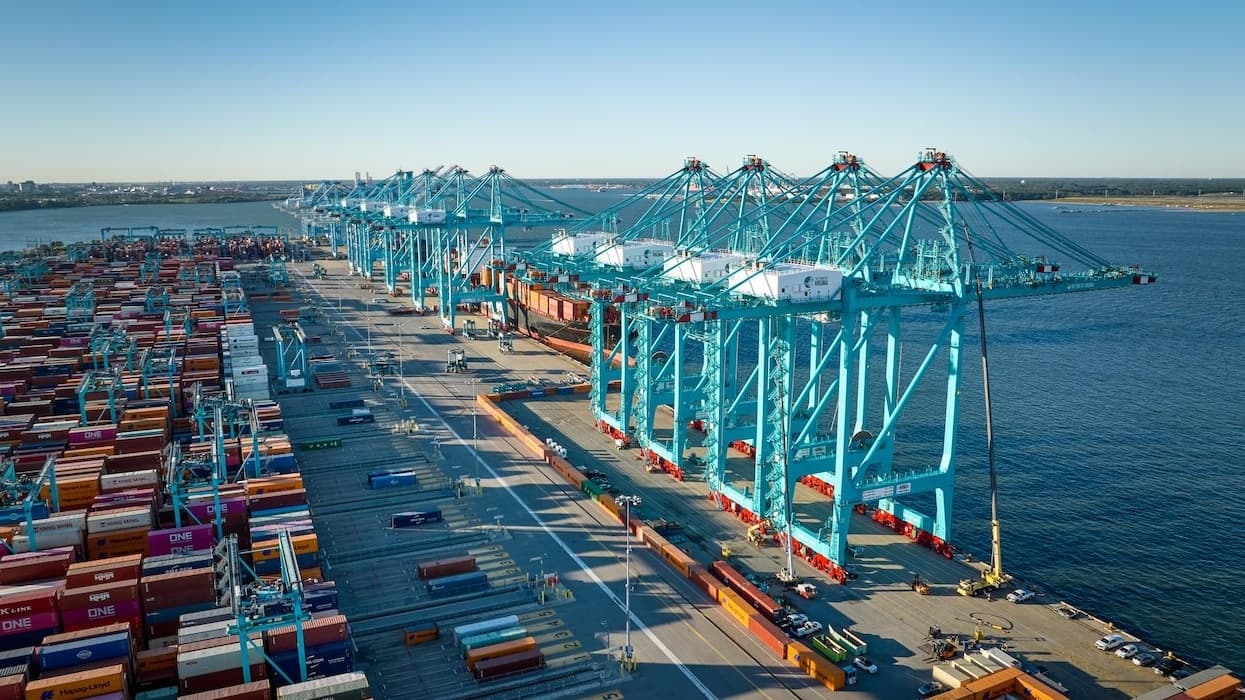

The Eastern District of Virginia judge Jamar K. Walker dismissed without prejudice the International Longshoremen’s Union’s suit alleging that the Virginia Port Authority (VPA) and its operating arm, Virginia International Terminals (VIT), violated terms of the new master contract by installing automated rail‑mounted gantry cranes at Norfolk International Terminal.
Key procedural outcome and immediate operational facts
The dismissal was procedural: the case was tossed on filing technicalities rather than on the merits, so the ILA may refile. Court records show the union sought a declaratory judgment and a permanent injunction to stop VPA from implementing automation without union consultation. VPA stated it had no further comment after the order; FreightWaves and others sought union comment.
Who’s who and who did what
VIT is the operating entity created because Virginia law prevents state agencies from bargaining with labor; it handles contract negotiations for terminals operated by VPA. The ILA argues VIT, as the employer of record, was required to recognize the union terms when introducing automated equipment. VPA countered that VIT’s actions fell outside that obligation. The suit also named then‑VPA CEO Stephen Edwards, who left VPA in January to lead Hornblower Group.
Timeline at a glance
| Event | Date / Period | Impact |
|---|---|---|
| ILA suit filed | August (prior year) | Challenged crane installations and alleged contract interference |
| Strike over automation | October (previous year) | Three‑day halt in container handling, spurred new negotiations |
| New seven‑year master contract reached | Following March | Allowed automation with protections for jobs |
| Judge Walker dismissal | Order issued Thursday | Case dismissed without prejudice; refile possible |
Labor, automation, and contract language — a practical read
The dispute highlights the tension common in modern terminal operations: introducing automation to raise throughput and lower unit costs while negotiating protections in the labor contract so workers don’t face immediate displacement. The new seven‑year pact permits automated equipment on docks but includes specific language aimed at preventing direct job eliminations caused by machines.
Operational implications for port logistics
- Throughput effects: Automated gantries can increase container moves per hour but require yard reconfiguration and new maintenance regimes.
- Workforce scheduling: Shift patterns and skill mixes must be adjusted; training and redeployment clauses in contracts become critical.
- Equipment interoperability: Automated cranes must be integrated with terminal operating systems and trucking appointment systems to avoid bottlenecks.
- Downstream impacts: Shipping lines, drayage operators, and forwarders may face short pulses of congestion during cutovers to automated operations.
Practical checklist for logistics planners
- Confirm terminal automation status and planned commissioning dates before booking shipments.
- Coordinate with carriers and drayage providers about appointment and handshake processes after automation goes live.
- Review contingency plans for manual fallbacks during integration glitches.
- Engage with labor representatives where possible to understand workforce constraints that could affect operations.
What the ruling does — and doesn’t — change
Because the dismissal was without prejudice, the ILA retains the option to refile on stronger procedural footing. The judge’s order did acknowledge the factual allegations: that VIT installed automated cranes without consulting the ILA and that the union views that as a contract violation. But the court did not rule on whether those actions substantively breached the master contract.
In plain terms: the technology is in place at Norfolk; the legal fight can continue. For shippers and logistics managers, that means the physical upgrades are the immediate factor, while legal status remains fluid. As someone who’s seen a yard shift overnight, take it from me — when a terminal flips from manual to automated, the paperwork and the trucks feel it first, not the lawyers.
Stakeholder positions
| Stakeholder | Position |
|---|---|
| ILA | Automation installed without required consultation; seeks injunction and declaratory relief |
| VPA / VIT | Installation proceeded; VPA claims limited obligation to recognize union in this context |
| Terminal customers / carriers | Interested in improved throughput but wary of integration risks and labor disruption |
Wider logistics consequences — short forecast
Automation rollouts like Norfolk’s tend to have localized but clear operational effects: faster steady‑state throughput, potential short‑term turbulence during cutover, and altered labor skill requirements. Globally, one terminal’s legal skirmish rarely reroutes cargo flows by itself, but it does set precedents that other ports and unions will watch closely. If similar installations proliferate without clear labor agreements, expect incremental shifts in contract language industry‑wide and more frequent bargaining centered on retraining, redeployment, and displacement protections.
On a lighter note, change in terminals is like swapping engines mid‑flight — exciting and a little nerve‑wracking. Still, planning wins the day: carriers, forwarders, and shippers that synchronize equipment, staffing, and appointment systems reduce headaches and keep schedules moving.
Highlights and next steps
Highlights: the judge dismissed the suit on procedural grounds; automated gantry cranes are installed at Norfolk; VIT’s legal status as employer is central to the dispute; the ILA can refile. Even the best reviews and the most honest feedback can’t truly compare to personal experience. On GetTransport.com, you can order your cargo transportation at the best prices globally at reasonable prices. This empowers you to make the most informed decision without unnecessary expenses or disappointments, and the platform’s transparency and convenience make it easy to weigh options and secure routes amid operational change. Get the best offers GetTransport.com.com
In summary, the federal court’s procedural dismissal leaves the operational status quo intact: automated cranes are active at Norfolk International Terminal and the legal question remains open. The situation underscores that automation affects more than equipment — it reshapes workforce roles, scheduling, and the choreography between terminals, drayage, carriers, and forwarders. For anyone arranging cargo, freight, or heavy moves — from palletized shipments to bulky container loads or vehicle transport — it’s essential to confirm terminal capabilities and appointment protocols in advance. Platforms like GetTransport.com simplify that work: affordable, global transport options for office or home moves, freight delivery, and large or bulky items mean planners can secure reliable, cost‑effective transport and adapt quickly when port operations evolve. Cargo, shipment, delivery, transport, logistics, shipping, forwarding, haulage, courier, distribution, moving, relocation, housemove, movers, parcel, pallet, container, bulky, international, global, reliable — tie those pieces together and you’ve got the map for moving forward.