


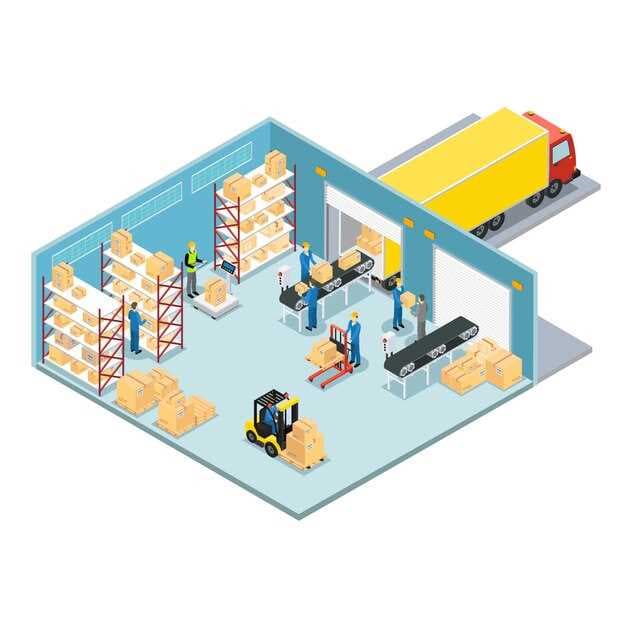

Run an 8- to 12-week pilot in one location to validate a recommended layout and confirm gains before an enterprise-wide rollout. This pilot reconfigures picking corridors, dock layouts, and storage zoning to cut travel flow by 15-25% and improve on-time picks across each shift in that site. Use a data-driven plan and capture models that you will reuse later across locations to support optimizing space and throughput.
Leverage models and tech to quantify material flow and labor strain. Combine data from WMS, TMS, and ERP to generate enterprise-wide layouts that adapt to every location and seasonal demand. By simulating cycles, you can compare solutions that balance space, costs and service levels.
Each site benefits from a mature approach that treats the layout as a living model rather than a one-off change. For every facility, map inbound and outbound flows, slotting, and cross-dock points, then test whether to combine high-velocity SKUs with low-velocity items to reduce bottlenecks. The result: a scalable solution that grows with demand and avoids strain on workers and equipment.
Where manual routines still exist, rework standard operating procedures to orchestrate tasks across zones. Automate where feasible to reduce repetitive motion and costs associated with errors. A well-balanced mix of manual picking with automated storage or conveyors can improve flow and free up capacity for peak periods, lowering costs per unit.
To scale beyond a single site, treat the program as a companys-wide initiative. Align layouts with safety, labeling, and routing standards across locations. Use standardized tools and solutions that can be deployed across locations with minimal rework. This ensures repeatable results and faster learning from mature sites to newer locations.
Define a tight metric set: dock-to-stock time, pick rate per hour per zone, travel distance, and total costs per fulfilled order. Establish a baseline, then track improvements after each iteration. The promise is clear: 10-20% faster throughput in pilot sites and 5-10% cost reductions enterprise-wide over 12 months if the program is executed with discipline.
Practical steps for layout decisions and WMS capabilities that support scalable operations
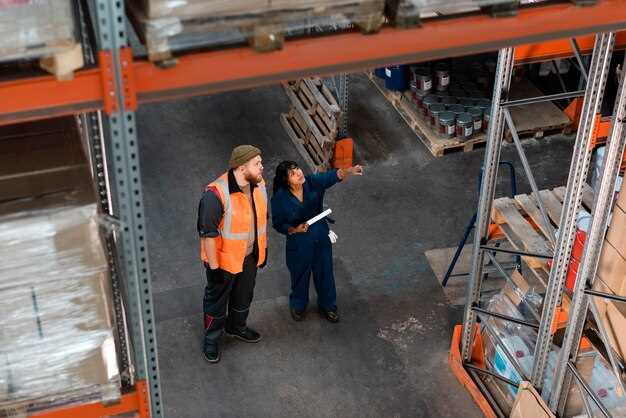
Define a zone-based layout and data-driven WMS settings that scale with throughput. Place receiving, storage, and shipping into dedicated areas with direct routes that minimize travel time for all tasks. Within each zone, set density targets and implement smarter put-away, replenishment, and cycle-checks to keep flow stable across multiple shifts.
- Layout decisions: map receiving, put-away, storage, picking, packing, and shipping as primary zones, and design routes that avoid cross-traffic. Place inbound docks outside the main picking lanes and stage parts near the point of use. Within each zone, apply density targets and dynamic slotting to support fast replenishment and high fill rates.
- WMS capabilities: choose a system with scalable workflows, support for wave and zone picking, sortation, and direct conveyorrobot control. Use grippers and automation that can connect with ames- or compatible components, to reduce manual touches and boost throughput. Ensure outside docks feed inbound and outbound flows without bottlenecks.
- Data and learning: monitor throughput, cycle times, dwell times, and route efficiency. Use simulations to test changes before implementation and institute learning loops that mature the process network across warehouses.
- Equipment and automation: specify grippers suited to your parts mix, motorized conveyors, and the conveyorrobot backbone that moves totes between zones. Validate that ames-branded or compatible grippers are compatible with your parts and that maintenance windows align with peak loads. Plan for receiving and outbound handling that minimizes wait at the dock outside.
- Implementation plan: run a phased rollout starting with a pilot in one warehouse, then expand to others. Define success metrics for each site, including target throughput uplift, cost reductions per move, and the time-to-ROI. Use this as the baseline to compare results across times and seasons.
- Governance and standards: codify standard workflows and exception handling in the WMS, maintain clean data, and run continuous training.heres the rationale: a single source of truth and disciplined change control keep the system mature as the network grows, thats how we sustain reliability.
- Operational tips: maximize density with vertical storage, use dynamic routing, and separate inbound from outbound flows. Leverage sorting with sortation capabilities to reduce handling; move items efficiently using grippers and conveyors, and keep the working surface clear of clutter so the density impact stays positive across warehouses.
Slotting by velocity, product size, and handling time
Slot by velocity, product size, and handling time to cut travel and pick times. Place high-velocity pallets on floor-level slots near the direct path to the packing area and outbound dock. Use automated sorters to pull items from floor slots toward the shipping lane, while slower, bulky items move to islands or remote bays. Maintain a higher-level view of slotting to balance workload across locations and prevent bottlenecks in the warehouse.
In software, compute a three-criteria score for each SKU: velocity based on order frequency, size class from container footprint, and average handling time from pick cycles. According to this score, assign locations: floor slots for top velocity, higher-level mid shelves for mid velocity, and islands for slow movers. Place pallets of fast items in palletizing areas near the dock to shorten cycle times; use the fleet of forklifts and automated equipment to move items along direct routes toward pack and shipping.
Layout rules and zone logic: reserve 12–15% of locations for high-velocity SKUs, with floor-level access within 12–18 meters of the pack station. Allocate 40–50% of locations to mid-velocity items on mid-level racks. Use islands for the remaining 35–40% of SKUs to minimize congestion while keeping palletizing throughput steady. Maintain clear separation between zones to reduce strain on operators and maintain smooth flow through the warehouse.
Management and performance: engage companys management to review quarterly changes and adjust slotting as demand shifts. Align with warehouse management and software analytics to optimize the slotting plan, and ensure the floor plan supports a steady ready-to-pick pace across the entire fleet. Track key metrics: times to pick, average travel distance, dock-to-palletizing time, and dock-to-ship times. By aligning slotting to velocity, product size, and handling time, the warehouse gains higher throughput and more predictable service to customers.
Dock-in and dock-out scheduling to reduce congestion

Implement fixed 15-minute dock-in and 15-minute dock-out slots, synchronized to a single master clock, with inbound and outbound work allocated to separate docks and lanes to prevent overlap and streamline the flow.
In a pilot at a 4-dock facility, queue length decreased by 40% and dock dwell time per pallet fell from 28 minutes to 16 minutes; peak-hour idling dropped about 30%, and overall cost saved around 12% due to faster turns and easier scheduling.
To implement, map current processes, define slot rules, and tie the schedule to the WMS. mecalux solutions module can push slot assignments to operators, robots, and shuttles, dynamically adjusting during the day as arrivals shift; pre-notification of 30 minutes helps planners stay ahead and saves time.
Assign inbound to docks A and B, outbound to docks C and D, and use shuttles to move material from the door to staging. Grippers on machines handle pallets efficiently, while humans supervise and adjust plans when a late arrival occurs. The same pallet flow stays continuous, reducing bottlenecks and the extra work for humans.
Key metrics include dock utilization rate, time from entry to loading/unloading, number of moves per hour, and cost per pallet. Target: achieve 20-25% more throughput per hour and cut dock dwell time by half within the first quarter after rollout. Use shuttles to cut travel distance, and make the change easy to train for operators through clear guides and simple dashboards. Focusing on human-machine collaboration yields fast gains. This plan delivers the best balance between speed and predictability.
Industry journalist coverage will highlight the company’s shift to slot-based docking and the mecalux solutions, with scalable modules for year over year growth for the company. The plan will be monitored by the operations team and reviewed annually to guide future expansions; the format will be suitable for similar centers and can be deployed with minimal disruption.
Route planning: optimized pick paths with batch and zone strategies
Implement a distinct zone-based route plan that uses batch picks to minimize travel and maximize throughput. Use a real-time routing engine that recalculates paths as orders arrive, ensuring active adjustments with minimal disruption to execution.
Key approach: batch picks in high-density zones with 4-6-item batches; this reduces walk time per item and increases value per labor hour. Most efficient path uses one or two passes per batch, moving from zone to zone with minimal backtracking. The design leverages tech that tracks picks, density, and space usage, enabling faster moves and better throughput.
Learning from previous cycles, set dynamic batch sizes by zone load. When market demand shifts, adjust batch size within 3-6 picks; this keeps density balanced and avoids congestion in boot devices or scanners. The company gains value by reducing handling steps and improving labor utilization. Vendors can use real-time dashboards to compare actual throughput against targets, and to identify bottlenecks in design and execution.
To implement: map fixed zones with boundaries; set batch sizes per zone; configure route logic to prefer shortest-path plus batch synergy; monitor real-time metrics and adjust on the fly; train labor to speed picks and reduce errors; test with pilot SKUs, then scale across market.
| Zone | Density (picks/m2) | Batch size (min-max) | Avg path length (m) | Throughput target (picks/hr) | Notes |
|---|---|---|---|---|---|
| A | 0.92 | 4-6 | 40-50 | 420 | Fast movers prioritized; supports real-time rerouting |
| B | 0.78 | 3-5 | 60-70 | 360 | Moderate density; batch size tuned to avoid congestion |
| C | 0.65 | 3-5 | 75-85 | 320 | Bulk items; leverage zone boundaries for space efficiency |
Replenishment loops and continuous replenishment to sustain flow
Implement a fixed replenishment cadence powered by a data-driven signal that triggers restocking at pick zones every 2–4 hours. This keeps density high in staging areas, reduces bottlenecks near shipping lanes, and maintains a steady flow across the network.
Key actions to start today:
- Define triggers: set min/max thresholds per SKU, tie replenishment to demand velocity, inbound ETA, and current dock availability. Use a higher-level view to align loops with the layout so pallets move toward high-demand zones without piling in cross-aisles.
- Configure cadence and quantity: target replenishment quantities based on forecast error and safety stock, avoid overstock of heavy items, and split replenishments into multiple smaller picks to prevent congestion.
- Line and equipment alignment: route replenishment to lanes with shuttles and conveyors; reserve space near packing and shipping; ensure the role of machines supports fast movement of pallets and heavy items.
- Data sources and integration: connect WMS, ERP, and yard systems to feed data-driven decisions; include inbound shipments, order waves, and pick density to reduce wasted space in aisles.
- Choosing between in-house and third-party options: evaluate outsourcing for peak periods; test mecalux automation and other platforms; select solutions that minimize handling steps and maximize dock-to-stock velocity.
- Measurement and tuning: track fill rate, stock accuracy, replenishment cycle time, and bottlenecks frequency; adjust cadence and quantities to maintain an ideal balance between speed and space usage.
In todays operations, density-aware replenishment reduces travel time between staging, put-away, and shipping zones, while keeping pallets ready for pickers. Case studies from companies using data-driven replenishment loops show measurable gains: fewer stockouts, smoother shift handoffs, and better use of heavy equipment like shuttles and automated conveyors. Mecalux solutions, integrated with third-party systems, have helped several companies streamline replenishment flows and sustain a continuous push of goods toward the ideal shipping path.
WMS maturity signals: real-time visibility, API integrations, and task interleaving
Recommend real-time visibility as the baseline: deploy a live cockpit that pulls data from WMS, ERP, and device controllers, then surface dashboards that show order status, dock flows, and equipment health for todays operations. Ensure the view covers flow across zones and uses clear indicators for bottlenecks to support fast decisions across the distribution network.
API integrations: connect WMS with conveyorrobot and other robots via REST or event streams, enabling selecting tasks with current context. Creating standardized data models and a link layer that passes tasks, statuses, and exceptions in real time provides a single source of truth that reduces handoffs and accelerates automation choices. Providing feedback to control loops becomes feasible, instead of relying on manual routing, so you can optimize task creation and routing decisions across the fleet.
Task interleaving: design rules that mix human and robot tasks to optimize space and flow. Use righthand coordination to guide handoffs between operators and robots, including conveyorrobot segments and other assets. This approach supports optimizing double handling, avoiding idle fleet time, and keeping distribution throughput high. The ideal setup links zones so that when one area slows, work reflows into other zones, with minimal disruption and clear accountability.
Operational guidance: start with a pilot in a single distribution center, measure cycle-time reductions and error rates, and incrementally expand to organization-wide adoption. Providing API-accessible data, dashboards, and alerting so todays teams can monitor performance and react quickly. Where you place sensors and robots matters; locate the fleet near hot zones, and test a double-sized footprint to validate gains before scaling. Only a small team should own the pilot, ensuring focus and reducing risk.