


 Русский
  English (UK)
  العربية
  日本語
日本語  한국어
한국어  Magyar
  Türkçe
  Español
  Čeština
  Svenska
  Português
  Ελληνικά
  Suomi
Suomi  Nederlands
  Română
  Italiano
  Français
  Polski
  Українська
  Deutsch
  简体中文
简体中文  Slovenčina
  6 Reasons Global Supply Chains Are Shifting – Key Drivers">

Diversify sourcing and regionalize procurement to stabilize rates and reduce exposure to regional disruptions. In нашей market this позволит improve agility across bordering suppliers, nuestra red de suministro, and evolving conditions.
Six influences reshaping the major landscape of world logistics emphasize technologies, nearshoring, data sharing, and new collaboration models, driving tighter coordination and more resilient networks.
Factor 1: Technologies and data-driven transparency enable real-time tracking, AI forecasting, and automation across suppliers, distribution hubs, and carriers–reducing volatility in тарифы and improving planning under changing conditions.
Factor 2: Nearshoring and bordering by design shorten transit times, lower exposure to long-haul disruptions, and improve collaboration with regional manufacturers while aligning with local market needs.
Factor 3: Economic conditions and capital allocation shape inventory targets, supplier financing, and risk buffers; traditional models are being rebalanced as inflation, rates, and consumer spending cycles influence where to locate stock.
Factor 4: Geopolitical disruptions and regulatory conditions including houthi-related tensions in Red Sea routes and related sanctions risk, forcing route diversification and new contracting terms.
Factor 5: Shifts in market demand and consumer expectations demand more responsive replenishment, flexible contracts, and performance metrics that reward reliability and speed.
Factor 6: двух-pronged digitalization leverages digital twins and edge computing along with cloud analytics to coordinate production and distribution, enabling scenario planning across two horizons and reducing latency.
Key Drivers Behind Global Supply Chain Shifts
Adopt regional supplier networks to shorten lead times and reduce drought-driven disruptions; target 40-60% of critical inputs from regional partners within three years, and align contracts to lock capacity while preserving optionality.
These principales influencers include regional demand shifts, faster harmonization of standards, and the rapid deployment of technologies that enable real-time visibility across networks.
Organizations assess a range of risk factors, including drought-related bottlenecks, energy volatility, and geopolitical pressures that drive input price swings; build scenario plans that anticipate 0.5-2.0 percentage point cost increases under stress scenarios.
For implementation, establish a clear manera: diversify suppliers, set up dual sourcing for critical items, and maintain safety stock; ejemplos from libro case studies illustrate outcomes, including tariffs during trump-era as stress tests.
Technologies such as AI-driven demand sensing, RFID tracking, digital twins, and cloud platforms boost predictability; corporate standards for data interoperability shorten decision cycles and enable faster action across regional footprints.
From a governance perspective, embed resilience metrics in procurement, production, and logistics; particularly, track основных indicators such as regional share, lead-time reliability, and cost volatility, with a mundo-wide risk framework and a libro-style summary for executives.
Summary: Target metrics include increasing regional input share to 40-60%, shortening lead times by 15-25%, and reducing drought-related exposure by 30% by 2026; monitor these within corporate risk dashboards and report progreso periodically.
Nearshoring and supplier diversification to reduce risk

Adopt a nearshoring-first framework and diversify providers across regions to significantly cut exposure to disruption, targeting a 40-60% reduction in transit risk and 20-30% faster inventory turns by consolidating critical parts in two regional hubs such as Mexico and select Caribbean or Central American sites. This move reduces lead-time variability and strengthens contingency capacity, with a practical 12–18 month roadmap.
Seven concrete steps to implement within 12–18 months: map critical items by function; classify by risk and criticality; identify two regions with complementary capabilities; run pilots with three to five suppliers per item; negotiate flexible contracts and shared incentives; establish regional logistics and vendor-managed inventory; build a regional supplier index and quarterly review cadence to meet targets.
Resource and benchmarking cues from getabstract and libros offer actionable guidance; assess seven principales aspectos of resilience and adapt the framework to parece your contexto. When assessing opciones, seek preguntas and metrics that illuminate costos, lead times, quality, and reliability, leveraging insights presented in libro content and inspired by historias de éxito in otros regiones. Use estas señales para alcanzar un nivel de interconexión (interconnected) that minimizes risk (уровень) and aligns with нашей стратегии, especialmente en regiones cercanas; for sobre, acéra a estas fuentes, presenta insights (presenta) that can be translated into prácticas concretas (acerca, para).
Meet regional suppliers with a common standards baseline, share logistics assets, and leverage digital dashboards to minimize disruption. Target regions with robust supplier ecosystems to improve adaptability (adapt) and offer efficient, cost-conscious options (efficient). Use a resource-centric approach to minimize total exposure, and seek to leverage local capabilities to deliver near-term results while expanding capacity across zonas and mercados (regions). Libros and getabstract annotations can help validate this path and inspire pragmatic, scalable steps.
Trade policies, tariffs, and geopolitical influence on sourcing
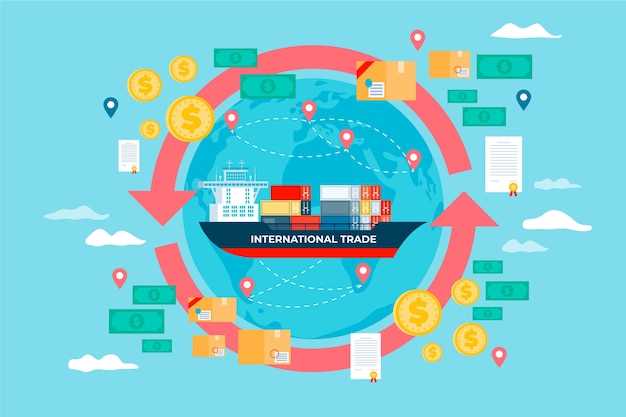
Diversify regional sourcing to minimize tariff shocks and strengthen resilience. Tariff rates have risen, creating enormous pressures on margins for billions of dollars of goods. A clasificación-aware approach and strict origin controls help minimize duties and stabilize costs while expanding conocimiento, полезная для нашей команды.
Geopolitical influence shapes where items are produced and sourced, often altering transit times and the flow of предмета across borders. Sanctions, policy blocs, and incidents in critical corridors can lift costs and reconfigure supplier maps. In the Red Sea region, houthi actions have added risk to shipping and raised freight costs, affecting a wide range of goods. Companies must build ready, flexible sourcing options to absorb these pressures without compromising quality.
Points to consider: regional interconnected networks, nearshoring potential, clasificación accuracy, and strict origin tracking to minimize costs. Considering policy shifts, monitor rates in real time and adjust plans across the range of suppliers. Ready, efficient procurement requires clear ownership, data, and contingency options that can minimize disruption during increases in duties or sanctions.
Implementation steps include building a libro de referencia with current trade policies, a robust clasificación workflow, and a real-time risk dashboard. Conocimiento útil for teams and a clear view of policy risk support faster decisions. Establish regional hubs to reduce transit times and costs. This approach scales to billions of dollars in goods and aligns with нашей стремлением to minimize costs while maintaining service levels.
Digital visibility and real-time analytics driving decision-making
Adopt a unified data fabric across procurement, manufacturing, and distribution, and deploy real-time dashboards that reduce decision lead times by 20–25% in the first quarter.
- Seven data streams: demand, inventory levels, supplier capacity, transit status, regional conditions, cost drivers including inflation, and related external signals; refresh cadence 5–10 minutes for critical nodes to support accurate calculations.
- Maintain aplicable data grammar across modules to ensure clean joins and reduce latency by 40% in pilot deployments.
- Link dashboards to automated decision rules: reorder points, production shifts, and carrier selection; this pressure reduces stockouts by up to 12% and improves service levels.
- Remove disincentives for data sharing through transparent governance, shared savings, and clearly defined ownership of information assets.
- Environmentally friendly routing and supplier selection: include energy intensity and emissions metrics to cut environmentally harmful outputs by 8–12% and lower fuel costs by 5–9%.
- уровень transparency across top regional hubs targets 95% coverage, enabling the beginning of rapid responses that are more predictable.
- This presenta KPI framework tracks time-to-decision, fill rate, and landed cost, which helps quantify impact and guide continuous improvement.
- Beginning with a 90-day pilot prompted by disruptions, the program expands regionally as демand signals stabilize and benefits materialize.
- Navigate this demands with scenario modeling that balances service levels and cost, providing clear trade-offs for management.
- Более детализированные представления для продуктовых семейств и регионов позволяют уточнять расчеты ценообразования и планирования мощностей, поддерживая своевременные ответы на инфляцию и изменения спроса.
- которые metrics align with environmental, regional, and time-based goals, helping leadership maintain контроль over levels of risk and performance.
Стратегии управления запасами: страховой запас, точки разъединения и уровни обслуживания.
Рекомендация: Установить многоуровневый страховой запас для критических материалов для поддержки целевых показателей уровня обслуживания (уровень) 97% для стратегических позиций и 90% для обычных позиций; разместить точки разъединения в местах friendshore для защиты операций от волатильности валют и скачков инфляции. Такой подход, встречающийся в нескольких эталонных моделях, позволит снизить риск дефицита и поддерживать показатели укомплектованности заказов на рынках, включая спрос и сезонность.
Этапы включают: 1) классифицировать материалы по степени влияния на бизнес и политическому риску; 2) рассчитать страховой запас с использованием изменчивости спроса и неопределенности сроков поставки; 3) расположить точки разъединения вблизи партнерских сетей (френдшор), чтобы смягчить колебания валюты; 4) установить целевые показатели уровня обслуживания, специфичные для рынка, по ассортименту товаров, включая спрос; 5) реализовать цикл непрерывной переоценки каждые 4–8 недель и отслеживать коэффициент выполнения заказов, факты отсутствия товара в наличии и затраты на хранение. Этот подход применим во всех отраслях и полезен в инфляционных условиях; он также поддерживает адаптацию к изменениям в политике и предоставляет полезные рекомендации для менеджеров, стремящихся оптимизировать операции на различных рынках.
| Стратегия | Действие | Metrics |
|---|---|---|
| Страховой запас | Рассчитать, используя спрос в течение времени выполнения заказа + буфер; целевой уровень обслуживания (уровень) 97% для критических позиций | Коэффициент заполнения, случаи дефицита, стоимость хранения |
| Разъединение точек | Размещайте узлы поблизости от дружественных береговых зон; регулируйте сетевые потоки для поглощения ударов | Сокращение бэклога, время цикла, индекс устойчивости |
| Уровни обслуживания, специфичные для рынка | Устанавливайте цели по рынку и разновидности; обновляйте ежемесячно. | Коэффициент заполнения рынка, своевременная доставка |
| Inventory governance | Регулярные обзоры; связь с инфляцией, требованиями | Повороты, затраты на содержание, достижение уровня обслуживания |
Транспортные расходы, волатильность рынка перевозок и оптимизация маршрутов
Рекомендация: Внедрить централизованную платформу маршрутизации в реальном времени, которая собирает данные от перевозчиков, складов и таможни, чтобы сократить затраты на доставку на 12–18% в течение 9–12 месяцев. Использовать сравнение маршрутов на основе диапазонов, сокращать перемещение, когда это возможно, и гарантировать качество обслуживания за счет стандартов и диверсификации поставщиков.
Волатильность рынка грузоперевозок обусловлена ценами на топливо, изменением производственных мощностей и политическими событиями. Планирование должно основываться на данных за 30 дней, с типичными месячными колебаниями в диапазоне 10–25% и пиковыми значениями до 30% в пиковые периоды. Снижайте риски с помощью предварительных бронирований, хеджирования ставок и контрактов с фиксированной ценой для снижения воздействия на стратегических маршрутах, при этом обеспечивая прозрачность расчетов во всех сценариях.
Тактики проектирования маршрутов направлены на сокращение циклов и повышение надежности. Объединяйте отгрузки, чтобы сократить поездки, объединяйте близлежащие маршруты в прилегающем коридоре и применяйте двухступенчатый подход к планированию, чтобы согласовать два соседних маршрута, сокращая передачи и время ожидания.
Расчеты и стандарты направляют решения. Детерминированные и сценарные расчеты лежат в основе выбора полосы и комбинации режимов, а стандарты обеспечивают совместимость между перевозчиками и системами. Создавайте conocimiento из данных и получайте insights о будущем, чтобы поддерживать принятие решений по всему миру коридорам.
План реализации: установить систему управления программой; отслеживать эффективные выгоды, затраты на обслуживание и своевременную доставку. Контролировать использование ресурсов и готовность к вызовам; поддерживать конкурентное преимущество; готовиться к политическим рискам и пограничным трениям; использовать данные, вызванные рыночными сигналами, для корректировки маршрутов.