


 Русский
  English (UK)
  العربية
  日本語
日本語  한국어
한국어  Magyar
  Türkçe
  Español
  Čeština
  Svenska
  Português
  Ελληνικά
  Suomi
Suomi  Nederlands
  Română
  Italiano
  Français
  Polski
  Українська
  Deutsch
  简体中文
简体中文  Slovenčina

Require mandatory DNA-based verification at key checkpoints: test a minimum of 5% of incoming meat and seafood lots at import terminals and retail distribution centers, escalate to 15% for suppliers flagged by trace history or prior noncompliance, and publish aggregated results quarterly so regulators and buyers can objectively assess progress.
Use a combined solution of COI barcoding for species ID and targeted qPCR assays for rapid screening; validated protocols identify vertebrate species with greater than 98% resolution and detect common substitutions in processed products at sensitivities near 0.1% w/w. Expect lab turnaround of 24–72 hours for routine batches and plan additional confirmatory sequencing for any discrepancies that affect labeling or public health.
Design chain-of-custody rules that meet trade and legal requirements: assign unique sample IDs, record cold-chain metrics at sampling, and integrate DNA results with supplier batch records. Build a centralized reference database that covers regional species variants and allow cross-checks by authorized auditors from multiple countries to strengthen control and reduce repeat offenses.
Operationalize actions when tests disagree with labels: require suppliers to take corrective measures within 14 days, mandate root-cause investigations for each nonconformity, and apply escalating penalties for repeat failures. Practical thresholds: a single positive substitution triggers supplier remediation; a substitution rate over 2% across three months should trigger suspension of contracts until compliance returns.
Pilot data and governance matter: internal pilots (project leads: scott, goltry) showed that combining random sampling with transparent reporting cut detected substitution rates from 18% to 2% over 12 months, while suppliers that still resisted testing lost major buyers. Complement DNA checks with targeted audits and supplier training to change procurement practices and preserve market access for compliant producers.
Adopt clear metrics for progress: publish monthly pass/fail rates by product class, track reduction in substitution incidents by supplier, and set a national target to halve detected mislabeling in meats and seafood within two years. Regulators and buyers should align on these targets, share anonymized data, and fund additional laboratory capacity where backlogs threaten timely control.
Implementing DNA-based Transparency in Meat Supply Chains
Require DNA sampling at slaughter and assign a unique molecular ID to each carcass within 24–48 hours to verify origin and linked claims.
- Set clear scope: implement targeted SNP panels for breed and individual ID (cost target $5–15/sample) and reserve whole-genome sequencing for dispute resolution ($80–150/sample). Favor 96–384 sample batch workflows to reach throughput of 1,000+ samples/day at a regional sequencing hub.
- Integrate sampling points: collect tissue swabs at on-farm tagging, at lairage and at slaughter; store barcoded cards that map into enterprise resource planning systems and public verification portals.
- Define turnaround and SLAs: labs commit to 24–72 hour results for SNP panels, 48–120 hours for sequencing; operators and packers include these windows in contracts to avoid cold-chain bottlenecks.
- Adopt physical and digital tags: attach QR-coded tags to primal cuts and batch cartons that resolve to the DNA record and certificate of verification; embed the same ID into online product pages and POS scanners used by retailers.
- Standardize sampling and metadata: require minimum metadata fields–farm ID, date, slaughterhouse ID, marbling score, animal species (including game species), and photo of carcass–so queries from buyers return consistent, machine-readable results.
- Run pilot projects with measurable KPIs: time-to-verify, sample failure rate <1.5%, cost per verified sale, and percent of premium cuts with matched DNA claim; iterate pilots quarterly.
Assign responsibilities across the supply chain:
- Farm operators: collect pre-slaughter samples and record animal history.
- Abattoirs and packers: perform secondary sampling, affix tags, and upload chain-of-custody data.
- Third-party labs: perform genotyping/sequencing, publish signed digital certificates.
- Retailers and brands: verify certificates at intake, publish verification badges on packaging–retail partners such as Heijn can pilot consumer-facing proofs.
- Regulators and states: audit databases and enforce labeling rules; conduct spot checks in states with major processing volumes, for example Nebraska pilots that simulate high-throughput operations.
Address common questions and commercial drivers: operators often ask the question “who owns the DNA data?”–require contractual data-sharing and anonymization rules to protect producer privacy while allowing buyers to verify claims. Buyers seeking premium marbling or single-origin provenance will pay price premiums; use those price signals to subsidize sampling costs for smaller producers so most supply remains economically viable.
Design data governance and verification workflows that become routine:
- Use cryptographic signatures on lab reports to prevent tampering.
- Publish an auditable ledger of verification events and commitments from suppliers and retailers; include explicit timestamps and operator IDs for every action involved.
- Allow cross-sector learning: lessons from seafood traceability can apply alike to red meat and game, especially for species substitution risks.
Scale recommendations: target regional hubs that serve 50–200 slaughterhouses, achieve break-even at ~50,000 samples/year, and reduce per-sample price by 30–40% as volume grows. Fund initial rollouts through buyer commitments and public grants; require transparent KPIs so stakeholders can verify progress rather than rely on marketing claims.
Choosing DNA assays for species, breed and geographic origin verification

Use a tiered strategy: apply validated qPCR or ddPCR assays for rapid species screening, then use targeted SNP panels or mitochondrial markers for breed and broad geographic assignment, and reserve targeted NGS for high-resolution origin or mixed-product deconvolution.
Sample products sold in retail packaging and samples from suppliers at least once per month for routine surveillance; increase frequency after supplier changes or complaints. For processed items such as burgers, increase sampling intensity because additional processing reduces intact DNA and raises complexity that comes from heat, binders and fat.
Choose qPCR when you need a fast yes/no species signal with a limit of detection (LOD) typically ~0.1% w/w for single-target assays and per-run cost near $20–$50. Choose ddPCR when you must quantify low-level admixture (LOD ~0.01%), detect low-level substitution, or compare copy-number differences; expect per-sample reagent costs of $40–$80 and lower operator variability. Use mtDNA markers when DNA is degraded (processed, canned or aged products) because copy number per cell improves recovery; use nuclear SNP panels or whole-mitogenome sequencing to separate breeds or close line alike populations.
Targeted amplicon NGS delivers higher resolution for mixed-species products and geographic assignment; plan for read depths over 1,000× at key loci to achieve ~0.1% sensitivity in complex mixtures. Trade-offs: higher per-sample value but lower throughput and increased bioinformatic work. Genome-wide SNP or low-pass WGS requires robust reference datasets from known-origin animals and suppliers to assign geographic origin with statistical certainty.
Document controls and validation: include extraction blanks, species-positive controls, synthetic spike-in controls, and matrix-matched standards. Validate LOD, specificity (cross-reactivity with closely related species or breeds), and repeatability across at least 20 replicates and multiple operators. Read depth, allele balance and laboratory control charts must be part of routine testing and audit trails.
Remember what DNA does not report: species and breed assays do not detect antibiotics, hormones or chemical residues; those require analytical chemistry. Communicate results to procurement and QC teams so they know the limits of DNA testing and coordinate additional chemical testing when food-safety or residue concerns arise.
Operational recommendations: use only assays with traceable reference materials, maintain a reference library of local breeds and regional genotypes, and run proficiency testing with external labs. When complexity increases (processed foods, mixed batches, or geographically similar breeds), combine methods and increase replicates to raise certainty.
| Assay | Наилучшее применение | LOD (approx.) | Cost/sample (USD) | Throughput (samples/month) | Примечания |
|---|---|---|---|---|---|
| qPCR | Rapid species ID, single-target screening | ~0.1% w/w | $20–$50 | 500–2,000 | Fast, low-cost; limited for mixed or degraded samples |
| ddPCR | Low-level admixture quantification, robust copy-number | ~0.01% | $40–$80 | 200–800 | Higher precision, higher reagent cost |
| Targeted amplicon NGS | Mixed products, high-resolution origin markers | ~0.1% at 1,000× | $100–$250 | 100–1,000 | Requires bioinformatics and deep read; good for burgers and sausages |
| Genome-wide SNP / low-pass WGS | Breed assignment, fine-scale geographic origin | Dependent on panel; breed assignment >90% with good references | $150–$300 | 50–500 | Needs reference panels from suppliers and known-origin samples |
Checklist: validate assays against local reference panels, record supplier lot numbers and packaging IDs, store extract archives for re-testing, and coordinate testing efforts with procurement so traceability data from farm-to-packaging link genotype assignments to supplier records.
Designing sampling protocols for slaughterhouses, processors and retail lots
Collect a minimum of 60 carcass-level samples per 1,000 head each week at slaughterhouses to detect adulteration at ~5% prevalence with ~95% confidence; stratify those samples across shifts, animal source, and cut type to reflect production variability.
For slaughter-floor practice, take two 25 g tissue punches (longissimus and rump) or one 10 cm swab of cutting surfaces per selected carcass; place tissue in labeled screw-cap tubes and freeze at -20 °C within 4 hours, and place swabs into DNA-stabilizing buffer if extraction will occur within 72 hours. Use barcode labels linked to a centralized chain-of-custody system that logs animal ID, kill date, harvest lot, operator, and line speed.
At processors, test per bulk lot: sample 30 units for 10% prevalence detection at 95% confidence and 60 units for 5% prevalence. For mixed-product lines (mince, sausages), pool up to 5 units per extraction to reduce cost, but validate that pooling reduces sensitivity no more than one cycle threshold; if a pooled result is positive, retest the individual units from that pool immediately.
Design retail sampling to reflect sales volume and product variety: allocate samples proportionally to weekly sales and popularity of labels and marbling grades, with minimum one sample per SKU per supermarket chain per week for high-turnover items and one per month for slow-moving items. Prioritize sampling at walmarts, heijns, and regional supermarkets that handle the same supplier lots to create a broader view of distribution.
Record metadata for every sample: store identifier, UPC or label text, marbling grade, sold date, retail price, promotional status, and photographic evidence of packaging. When a question arises about an SKU, escalate that SKU to targeted follow-up sampling across at least three different stores within the same chain and across other chains to check for systematic issues.
Run laboratory controls on each plate: include two extraction blanks, two negative PCR controls, and two positive controls representing low (0.1% target DNA) and high (5% target DNA) levels. Define reporting thresholds objectively: report detections ≥1% as actionable, 0.1–1% as supportive evidence requiring confirmatory testing, and <0.1% as trace with notation of potential cross-contamination.
Train staff for correct sampling technique: demonstrate how to collect tissue, how to handle clean tools between samples, and how to complete the chain-of-custody form correctly. Maintain a supportive audit trail with time-stamped images and supervisory sign-off for at least 12 months; require retraining if more than two protocol deviations occur in a month.
Align sampling frequency with commercial demands: increase sampling intensity during peak production weeks, product launches, or when labels change suppliers. Use a risk-based adjustment factor (×2 for new suppliers, ×1.5 for prior minor non-conformances) and document rationale within the sampling system so decisions remain objective and reproducible.
Share standardized data fields and raw results with involved stakeholders (quality, procurement, retail buyers) in machine-readable format to support traceback, corrective action, and supplier scorecards. Keep communication concise: supply chain partners expect clear thresholds, action timelines, and supportive evidence before de-listing a product.
Laboratory workflow controls: turnaround times, contamination prevention and chain-of-custody
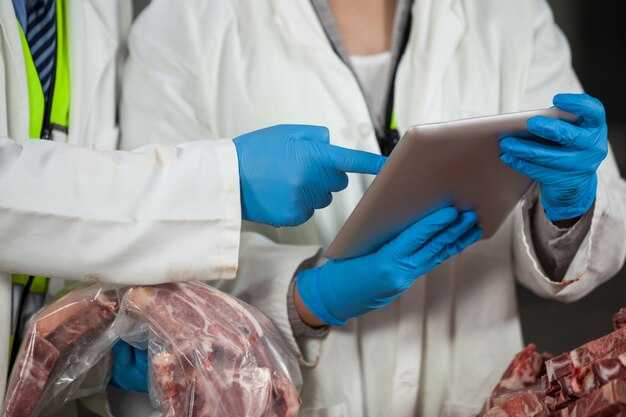
Set target turnaround times: 48 hours for priority meat and beverage samples, 72 hours for routine grocery and packaging specimens, and 5–7 days for confirmatory NGS runs; track on-time reporting and hold staff accountable to a >95% success rate.
Operational performance and staffing
- Allocate 1 operator per 40 qPCR samples per 8-hour shift and 1 operator per 16 NGS libraries per 8-hour shift to avoid bottlenecks; cross-train staff so shifts remain at target when absences occur.
- Use shift-based KPIs: sample accession-to-extraction ≤6 hours, extraction-to-analysis ≤18 hours for priority work, and final report issuance within the target windows above.
- Require weekly capacity reviews; if backlog exceeds 24 hours for >10% of samples, trigger overtime or outsource agreements with prequalified labs.
Contamination prevention – physical and molecular controls
- Design unidirectional workflow with three dedicated zones: pre-extraction (clean), extraction/amplification, and post-amplification; use separate HVAC or at minimum differential pressure and clear signage.
- Install UV decontamination in PCR setup benches and run daily for 15 minutes; perform surface swabs for target markers twice weekly and log Ct values; investigate any positive surface swab within 24 hours.
- Include process controls: one extraction blank per 12 samples and one positive control per 20 samples; include an internal amplification control in every reaction to detect inhibition.
- Apply enzymatic carryover prevention (UDG/UNG) for PCR workflows and use single-use consumables for pre-PCR steps; never open post-amplification products in pre-PCR areas to prevent aerosol contamination.
- Set quantitative thresholds: treat any negative control with Ct <40 as a fail and require batch re-extraction; document re-run rationale in the audit trail.
Chain-of-custody and traceability
- Assign a unique barcode at collection that persists through accessioning, extraction, analysis and storage; require six mandatory scan points: collection, dispatch, receipt, accession, extraction, reporting.
- Maintain electronic chain-of-custody records for at least five years with tamper-evident e-signatures and an immutable audit log; enable exportable logs for regulators and customers.
- Implement two-person verification for sample transfers and sample release to customers; retain CCTV records for transfer areas for 90 days.
- Link each sample to supplier lot, farm ID and animal identifiers where available to enable rapid traceback; where animals or farms are not provided, flag samples as incomplete and notify the submitting party within 4 hours.
Data integrity, reporting and customer interaction
- Deliver standardized reports that state method (e.g., dna-based qPCR or NGS), LOD, quantification uncertainty and chain-of-custody summary; include raw control results and timestamps so clients have certainty on evidence.
- When a consumer or retailer such as walmart or a grocery chain raises a claim, provide a packaged audit folder within 24 hours containing chain-of-custody, controls, instrument logs and personnel sign-offs to shorten dispute resolution.
- Keep a parallel protein-based assay record where protein assays were requested; store cross-method comparisons to support mixed-method investigations.
Continuous validation and vendor management
- Validate new kits and instruments against reference panels that contain expected species and commensals; report sensitivity, specificity and cross-reactivity in the validation document.
- Require vendors to provide lot certificates and stability data for reagents; perform incoming QA on each reagent lot (one functional positive and negative control) before use on production samples.
- Marshall adds that labs involved with multinational supply chains should harmonize SOPs so that partners across nations can accept shared QC metrics and expedite traceback.
- Hale found that labs that adopt barcode-based sample tracking reduce chain-of-custody discrepancies by >70% within six months; teams that have weekly audit drills further lower error rates.
Action checklist
- Set and publish turnaround targets and KPIs for customers seeking transparency.
- Implement the contamination controls above and require failed-control investigation within 24 hours.
- Enforce the six-scan chain-of-custody flow and retain records for five years to support traceback without gaps.
- Train operators quarterly on contamination avoidance and chain-of-custody procedures and log training completion.
- Proactively report trends in sample quality, packaging failures or mislabeling that may contain risk to food safety or protein product claims so supply-chain partners can take remediation steps.
Labs and clients interested in transparent, defensible results must adopt these controls to reduce contamination risk, speed turnaround and provide the certainty regulators and retailers will accept when issues are found.
Integrating DNA results with traceability platforms, barcodes and ERP systems
Map every DNA result to a single lot identifier and encode that identifier in the GS1-128 barcode and a consumer-facing QR; require your lab to return a JSON payload that contains: sample_id, lot_number, dna_report_id, species_id, percent_match, marbling_score, collection_date, processing_site, analyst_id, chain_of_custody_hash. Configure your traceability system to ingest that JSON via a secure webhook (TLS + mutual auth) and push a normalized record into the ERP within 15 minutes for high-value lots and hourly for bulk loads.
Define three access levels in the ERP: internal (full record, raw sequences hashed), commercial (certified summary for B2B partners), and consumer (short summary behind the QR). Use role-based permissions to address concerns about raw data exposure and regulatory audits. Maintain audit trails that record who queried each DNA record, when, and the export destination; retain records for six years unless local law requires longer.
Set objective thresholds and validation rules: treat species matches ≥99.5% as confirmed species, flag 95–99.5% for review, and reject <95% pending re-sample. For marbling-related genomic markers, report predictive confidence intervals and do not convert them into certification without a labeled model performance file from the lab; the science behind marbling prediction produces lower predictive power than species calls, so present them as probabilistic scores, not guarantees.
Adopt standardized identifiers so third-party providers like Identigen can plug in without remapping fields: GTIN for product, GLN for location, and ISO 3166 country codes for origin. Configure your ERP to accept a feed of verified DNA reference IDs and store a pointer rather than full sequences to reduce storage and privacy load. When possible, prefer API handshakes over FTP drops to reduce reconciliation errors by more than 70%.
Integrate barcodes at every cut point: from carcass to primal to retail steaks. Print a human-readable lot number and a QR that resolves to a short, mobile-optimized report showing species confirmation, processing state, and a timestamped chain-of-custody story for customers. Retail pilots in multiple countries show that visible DNA-backed verification increases trust for premium cuts more than price discounts alone; retailers such as Walmart and export markets like Japan value traceable claims when they can audit the underlying data.
Design the ERP workflow to auto-trigger actions based on DNA outcomes: quarantine lots when percent_match falls below threshold, notify quality teams and block outbound EDI to trading partners, and generate recall packs with the exact pallet IDs and shipment routes. Use asynchronous queues to keep operational systems responsive; push summaries to the warehouse management system while full records flow into the PLM and compliance modules.
Address vendor adoption by offering a lightweight integration kit and an onboarding playbook. Assign an internal champion–one practical approach assigns a technical lead (Scott) and an operations lead (Butler) to coordinate pilots, map 10 upstream data fields, and complete one live end-to-end test per plant. Require partners to adopt the same schema and to perform a back-test on a minimum of 100 samples before production cutover.
Harden security and data integrity: sign payloads with PKI, store hashes of raw sequences off-system, and run daily reconciliation checks that compare DNA_report_id counts between the lab and ERP. Track and log concerns raised by downstream customers and regulators so you can trace complaints from the point of sale over the lot back to the processing line; this improves response time for food-safety events and helps you move faster from detection to containment.
Measure program impact with KPIs: time-to-ingest (target <15 minutes for priority lots), percent of lots with dna-linked barcodes (target>95% within 12 months), reduction in species-mislabel incidents (report baseline and quarterly), and customer satisfaction scores for traceability pages. Use those metrics to boost adoption and to justify additional investment in sequencing throughput, automation, and staff training.
Plan next steps: run a three-month pilot across 2–4 plants, include a mix of species and product forms, capture marbling and species data for steaks and primal cuts, and report findings to buyers and regulators. Scale the system from pilot to country rollouts with phased gates and fixed acceptance criteria so integration work finishes predictably and the technology delivers measurable benefits to them and to customers.
Drafting label claims, presenting consumer-facing proof and meeting regulatory requirements
Make label claims verifiable: for each product state the species or breed, the percentage composition, the validated testing method and the test date, and publish the lab certificate via QR or short URL available on-pack within one week of testing.
Use precise phrasing on-pack: “Beef (Bos taurus) 95% ±2% by weight; DNA assay: qPCR (mitochondrial + nuclear markers, identigens panel); Test date: 2026-01-01; LOD 0.1% w/w; Lab: accredited ISO/IEC 17025.” Require method performance data in the supply chain file (sensitivity >95%, specificity >98%, inter-lab reproducibility CV <15%) and list the marker variety used so retailers and auditors can read the claims against raw outputs.
Present consumer-facing proof with layered transparency: a primary label summary for fast read on shelf, a QR that opens a human-readable certificate, and an optional deep-dive that exposes the chain-of-custody, samplings per batch, and anonymized raw read counts from identigens or equivalent marker panels. Use product examples (e.g., burgers sold at heijn stores) to test consumer comprehension: run A/B marketing on two label formats for one week to measure read rates and purchase lift.
Align documentation with regulators: retain full testing data and chain records for a minimum of two years or as local law requires, log lot IDs and sampling times, and store certificates in a supportive traceability system that links lab results to batches, transport logs, and retail stores. Some jurisdictions require laboratory accreditation and pre-market filing for specific claims; consult counsel and maintain a folder of validation studies to submit on request.
Operationalize the program through connected systems: integrate the traceability ledger with the lab information management system so testing results feed automatically into label-print templates and online proof pages, schedule routine testing cadence (weekly for high-turnover SKUs, per-batch for specialty or breed-specific lines), and set alerts for any marker anomalies that exceed pre-defined thresholds. This technology adds auditability, makes supplier conversations factual rather than anecdotal, and reduces risk without adding time to shipping when automated.
Measure impact and scale: track five KPIs for each SKU–claim accuracy rate, number of positive deviations, time from sampling to certificate (target <7 days), consumer read rate, and marketing uplift. Use those metrics to adjust sampling frequency, expand marker panels for broader detection, and prove sustainable sourcing claims across the chain rather than saying them only in marketing copy.