




Adopt end-to-end real-time tracking today across all shipments. Integrate GPS, RFID, and sensor data with your ERP and WMS to provide a single view from procurement to production to delivery. This alignment lets teams compare planned vs actual progress and triggers alerts within minutes when deviations occur.
Only data from devices you control should be shared with external dashboards. Access for partners is allowed under strict role-based controls, and only data from approved devices may be exposed to third-party systems.
In cold-chain contexts such as vaccines, real-time tracking with temperature logs and geofencing improves security and reduces spoilage risk. If temperature deviates, automated alerts enable immediate corrective actions, saving damage costs that can exceed 20-30% in some cases.
From perspective of production and procurement, real-time tracking helps you align capacity with demand. When schedules shift, the system surfaces interaction across suppliers and factories, enabling you to adjust orders, reroute shipments, or reschedule production without disrupting the delivery of critical items. This approach improves overall reliability.
Some organizations experience a 12-18% reduction in cycle time and a 5-10% cut in expediting costs. Real-time data reduces risk exposure, strengthens interaction with suppliers and carriers, and improves customer experiences by delivering accurate ETAs and timely alerts about delays. For shopping and consumer goods, this visibility reduces stockouts and unnecessary expedited shipments.
Scale only after you validate value. Map data sources: production line sensors, warehouse feeds, carrier feeds, and supplier portals. Ensure that data sharing with partners remains allowed under strict role-based permissions and time-bound access. Then extend to all shipments and monitor ETA accuracy, delivery performance, and damage rate to justify expansion.
Practical Guidelines for Real-Time Tracking and Data Processing Frequency in Online Retail
Set data processing frequency to 5–10 minutes for high-velocity items and 15–30 minutes for slower categories to prevent stockouts and sustain reliable purchases. On a cloud-based platform, implemented streaming data pipelines enable real-time visibility across warehouses, stores, and shipments, so teams can act accordingly.
For food and other perishable goods, tighten cycles to 5–8 minutes within distribution centers and at dock handoffs; for distant suppliers or high-velocity routes, consider 8–12 minutes in-transit and 3–5 minutes at receiving. Some categories may operate on 15–30 minute cycles when supply is stable and demand is steady, but monitor stockouts risk for promotion periods.
Establish a simple, robust data model and sharp handling rules. Flag sensitive data and restrict access; keep customer and price details protected while enabling teams to exploit real-time signals for operational decisions. Coordinate with others; advertising teams can adjust campaigns in near real time based on stock signals, avoiding mismatches between inventory and promotions.
Adopt an iterative rollout: start in controlled environments, measure impact on stockouts, order accuracy, and returns, then extend to all channels. This will help maintain control during the transition. The adoption plan should include clear success criteria and a rollback path if data quality dips. Use cloud-based dashboards to show metrics by channel and by SKU.
Metrics to track include stockouts reduction, on-time shipments, and purchase-to-delivery cycle times. Substantial savings appear when updates are kept within a short distance of the fulfillment activity; this also supports longer planning horizons for forecast adjustments. These improvements will help keep frequency tuned and maintain a responsive handle on market shifts. Keep a feedback loop with supply planners and store managers to tune frequency, handling rules, and forecast inputs.
In environments with sensitive customer data, apply strict access controls, encryption at rest and in transit, and audit trails. The future of online retail relies on real-time visibility, but privacy must stay central. Use a phased adoption with some pilot stores and a margin of safety around promotions, ensuring stock levels stay aligned with demand signals and advertising calendars.
Which Real-Time Tracking Technologies Best Improve Visibility in E-commerce
Implement a layered real-time tracking setup that combines GPS for transit, RFID/barcode scans at warehouses and fulfillment hubs, and BLE beacons in the stockroom to maximize visibility across the e-commerce path. This approach shortens response times, improves ETA accuracy, and ensuring transparent, traceable movement of orders from pickup to doorstep. This setup allows teams to respond faster and maintain customer communication throughout the journey.
For most e-commerce operations, start with a baseline comprising GPS in the delivery fleet, RFID or barcode scanning at receiving and packing, and BLE or Wi-Fi-based location in the warehouse. data-driven guidelines help tailor the mix: high-value or fragile items may justify continuous scanning; high-volume, low-margin stock benefits from lightweight tagging. If you are interested in measurable improvements, start with a pilot in a single fulfillment center to validate the gain before scaling. This setup is commonly used across retailers with diverse product ranges.
Technology specifics: GPS provides real-time position with 5-20 meter accuracy in open sky, while RFID (active or passive) offers near-field (1-2 meters) item-level visibility inside fulfillment centers; BLE beacons provide 10-30 meter ranges in warehouses and loading docks; a variety of sensors, including cameras for computer vision, enable reading barcodes and counting inventory without manual scans. Reading these readings in a unified stream supports data-driven decisions and yields a measurable gain in service levels. Integrating these sources with computational models creates a cohesive view that supports specific actions for operations teams.
Guidelines for selection: evaluate product value, turnover rate, and storage conditions; use a scoring matrix that weighs accuracy, latency, and tag costs. There, a financial impact model helps justify investment by linking visibility to reduced stockouts and faster returns processing. Furthermore, integrating data from carriers, warehouses, and marketplaces creates a cohesive view that supports decisions across procurement, pricing, and routing.
Data governance and retention: set guidelines that specify how long to keep event data, who can access it, and how to anonymize customer information. Data-driven insights enable retention improvements by routing exceptions to the right teams, enabling longer-term learning. These steps safeguard sensitive data while maintaining audit trails for customer service and compliance.
Outcome measurement: track metrics such as order visibility score, on-time in-full, and perfect order rate; monitor fleet utilization, average dwell time, and read-rate across tags. Setting target ranges supports e-commerce teams in making decisions quickly. In practice, a data-driven integration across transport, warehousing, and storefronts yields a more cohesive view that supports customers, strengthens retention, and improves service.
How Frequently Should Data Be Processed at Each Supply Chain Node
Recommendation: Process critical data at manufacturing nodes every 60 seconds to enable real-time fault prediction and rapid response. Temperature, vibration, and throughput metrics should feed channels for a continuous view, leveraging a single pane of glass to facilitate proactive control and reduce the risk of faulty equipment causing production disruption or product destruction due to contamination. This cadence keeps expectations aligned with customer demand and protects reputation.
Beyond fixed cadences, implement event-driven processing to handle anomalies. Whenever a temperature excursion, sensor fault, or contamination alert occurs, escalate data to the relevant channels within minutes to accelerate adjustment and decision-making. This approach supports strong relationships with suppliers and customers and strengthens the management of risk across the network.
At each node, balance raw data and digests to manage load. Retain raw streams for up to 7 days where feasible, then generate hourly and daily digests to analyze trends without saturating bandwidth. Use automated alerts for deviations, and let managers review aggregated views to guide action while keeping behaviour patterns in check and ensuring data integrity across handoffs.
Introduce an ackerman tagging scheme to map data cadence to risk. High-risk nodes–cold-chain transport and critical suppliers–receive faster processing and more granular temperature data; mid-risk channels run on standard hourly digests; low-risk routes aggregate daily summaries. This structure can lead to stronger engagement across teams and improve temperature controls, leveraging clear priorities to manage hard constraints in the network.
Coordinate across channels with stakeholders to set expectations up front. Concerning data governance, embed cadence requirements in supplier SLAs and logistics contracts to preserve reputation and ensure visibility. Link data quality to management decisions, and track how changes in frequency affect relationships among producers, carriers, retailers, and customers. This clarity helps avoid destructive delays and supports a resilient network. This cadence ever reinforces trust among partners and customers.
To optimize over time, establish a 90-day cadence review. Monitor latency, accuracy of predictions, and the lead time to actions. If faster data improves decisions by a measurable margin, raise cadence at the node; if benefits plateau, scale back to conserve bandwidth and avoid noise. Use a dashboard that highlights impact on forecast accuracy, service levels, and overall reliability, reinforcing the importance of timely data in maintaining a positive reputation.
Tradeoffs: Data Freshness, Bandwidth, and Storage Costs
Recommendation: adopt a tiered update scheme that delivers full state snapshots for high-value shipments and relies on delta readings for routine monitoring. This made the system more resilient, enabling faster decisions during peak times and reducing bandwidth and storage costs. Deploy sensors across the range of locations and validate data on an iphone app for quick local checks.
These choices shape discussions with the team about tradeoffs between data freshness, bandwidth, and storage. Because sensors in remote sites rely on sporadic connectivity, design for intermittent links to keep streams as continuous as possible and prevent data gaps. Use local buffering and batch uploads to streamline bandwidth usage, and use historical data for predictive analysis, analyzing patterns to identify when gaps will occur. dont push full updates too often when connectivity is limited.
Study shows that retaining data beyond a short window yields diminishing returns for most shipments. Focus on specific retention rules by risk tier and application, and purge stale data systematically to manage storage costs. Build your systems with tamper resistance and encrypted channels to protect security-sensitive location data; extend security checks to endpoints like validated iphone clients. Provide team with recommendations and dashboards for ongoing analysis to compare times-to-insight across streams.
Continual study and team conversations refine these choices, ensuring the data streams stay accurate without overwhelming networks. Humidity readings from environmental sensors add context for risk assessments without inflating storage, and they guide alert thresholds. They support times of day and operations, helping you tailor cadences and keep data flows secure. With defined times, clear recommendations, and proactive security measures, you can streamline visibility while keeping costs under control.
Steps to Implement Streaming vs Batch Processing in E-commerce Operations
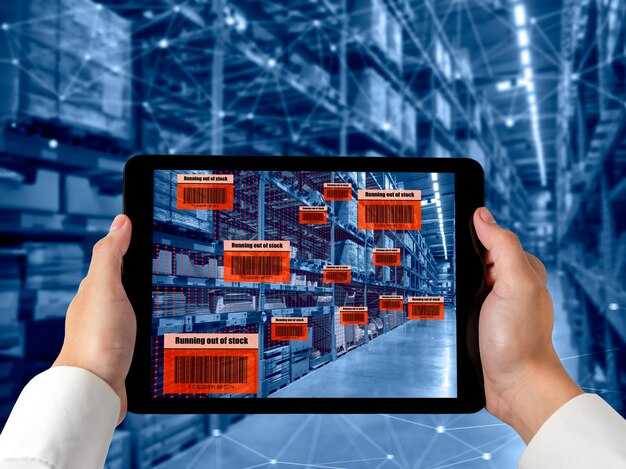
Implement streaming for real-time inventory and order events, utilizing a streaming platform to achieve low latency, while keeping a nightly batch for reconciliations. This approach informs stakeholders quickly and strengthens your resilience across environments.
Define a data model that ensures a common language and a consistent dimension across systems. Map signals from ERP, WMS, OMS, and TMS to a unified schema, so collected data from your existing fleet and supplier portals can be analyzed without ambiguity. This reduces integration friction and accelerates decision making for your teams.
Technical setup involves separating workloads by timing and priority. Create streaming lanes for high-frequency signals such as stock levels, Fulfillment Center status, and carrier events, and reserve batch windows for historical trends, end-of-day reconciliations, and regulatory reporting. Structure topics by domain, validate schemas with AVRO or JSON schemas, and implement idempotent processors to safeguard against duplicate messages.
Safeguarding data relies on encryption at rest and in transit, strict access controls, and end-to-end auditing. Implement replay-safe pipelines so you can recover from outages without data loss, and design failure handling that automatically shifts workload to reserve capacity without breaking customer experiences.
Involve employees through programs that blend hands-on practice with classroom-style learning. A university-style onboarding path helps your team become proficient in streaming concepts, while seasoned engineers define technical standards and review the results. This fosters a culture where your staff informs stakeholders on progress and risks.
Becoming proficient in both paradigms requires clear governance and a cadence for review. Establish performance targets, monitor latency and throughput, and compare streaming vs batch results against defined KPIs. Despite complexity, a disciplined approach yields faster insight, more accurate inventories, and improved service levels for your customers.
| Aspect | Streaming | Batch |
|---|---|---|
| Latency | Sub-2 seconds for core events (inventory, order status) | Hours for reconciliation and period-end reporting |
| Throughput | High, handles thousands to millions of events per hour | Moderate, depends on nightly windows and batch size |
| Data completeness | Continuously updated; risk of late events mitigated by replay | Guaranteed after job completion; gaps may exist until next run |
| Complexity | High–requires topology, schemas, and fault tolerance | Lower–simpler pipelines, but requires robust scheduling |
| Cost | Ongoing costs for streaming infrastructure and operators | Periodic costs for compute cycles and storage of history |
| Best use | Real-time visibility, alerts, fleet tracking, dynamic pricing | End-of-day analytics, regulatory reporting, trend analysis |
| Data consistency | Eventual with safeguards; supports exactly-once processing where possible | Strong consistency within batch window |
Review and iterate on pipelines every quarter, updating the language in data contracts, adjusting dimensions for new product categories, and refining braking points to prevent downstream lag during peak demand. This ongoing process keeps your program aligned with your existing goals and evolving customer expectations.
Key Metrics to Monitor for Visibility Gains and Processing Cadence
Implement a real-time dashboard that tracks cycle time, order aging, and exception rate hourly to establish a baseline and drive cadence. The purpose is to reduce damage and safeguarding customer commitments by making root causes visible and enabling rapid decisions without silos.
Identify the metrics that directly influence visibility gains and processing cadence: cycle time from order capture to delivery; ETA accuracy; on-time delivery rate; processing time per order; order fill rate; in-transit visibility; damage rate; returns and claims; exception rate; inventory accuracy; stock-out rate; data latency and data quality (missing fields); policy adherence; supplier lead times; and throughput at each node (receiving, stores, put-away, picking, packing, shipping). Reducing ineffective handoffs between nodes helps maintain momentum.
Assign metric owners and bind targets to policy guidelines. Tie service levels to customer preferences, and use automated alerts to flag when an order's processing time exceeds the target. Manage exceptions quickly to prevent cascading delays; adjust buffer levels, reorder points, and routing plans based on observed demand and carrier performance.
Amass data from stores, suppliers, and carriers to identify patterns across conditions and markets. Safeguarding data quality and privacy remains a priority, with role-based access and validation checks. Benchmark against google benchmarks and industry data to gauge competitive environment traction, helping the team grow and manage costs. Visit here for ongoing updates and context as conditions evolve.
Security and Privacy Considerations for Real-Time Tracking Data

Limit access to real-time tracking data to authorized users through role-based access controls (RBAC) and enforce AES-256 encryption at rest plus TLS 1.3 in transit. Define policies that specify who can view, query, or export data, and tailor these policies to different user groups to support personalized workflows.
- Minimize data collection to what is strictly needed and implement data life cycle management with explicit retention windows (for example, 90 days for operational signals, longer only for legally required cases). This approach reduces exposure and aligns with user concerns about privacy rights.
- Apply privacy by design and robust data classification. Use pseudonymization and, where possible, anonymization for analytics. Maintain clear records of data processing activities to support rights requests and accountability.
- Strengthen technical controls: encrypt data in transit and at rest, secure endpoints, and sign data payloads. Maintain tamper-evident logs and implement continuous monitoring to detect threats in real time, enabling faster overcoming of potential breaches.
- Limit sharing and avoid public exposure. If data must be shared with partners or for sales purposes, use aggregated or anonymized datasets and enforce strict data-sharing agreements with clear notices and opt-out options.
- Governance and practices: establish regular audits, quarterly access reviews, and ongoing training aligned with university guidelines. Pair automated checks with manual reviews for high-risk events to close gaps and reinforce enhanced security culture.
- Rights and accessibility: provide a user-friendly portal where users can view and exercise rights. Include options to visit policy pages, request data access or deletion, and review consent records related to real-time tracking usage.
- Threats and response planning: address insider risks, compromised devices, and data tampering. Deploy multi-factor authentication, device attestation, and anomaly detection to contain incidents early and minimize impact on life and operations.
- Transparency and clarity: publish concise descriptions of data practices, including what is collected, how it informs operations, and how it respects user concerns. Emphasize the value of data protection as a trust enabler for stakeholders, including public entities and customers.
- Value and resilience: frame improvements as made with controlled access and enhanced safeguards, ensuring data remains valuable for logistics optimization without exposing sensitive details to unintended audiences, including the public.