


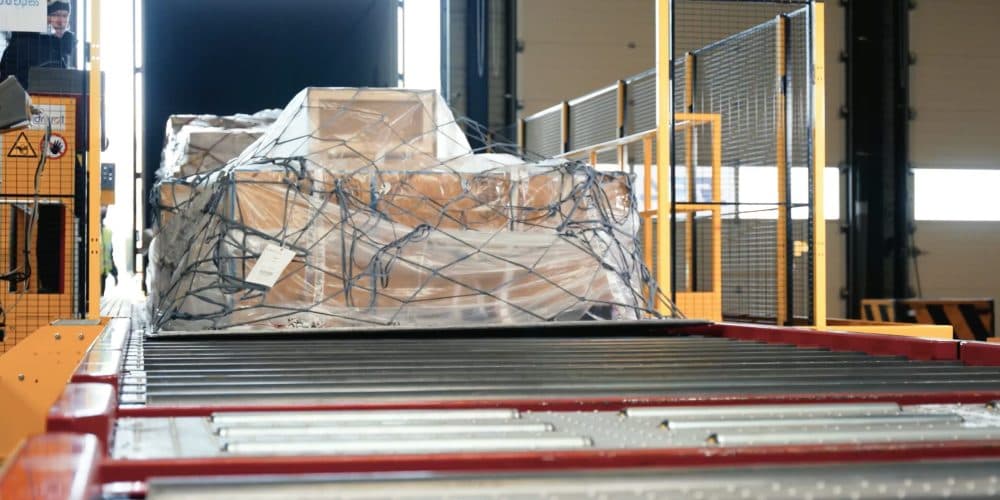

Air cargo volumes rose sharply—around 9.9% year‑on‑year to roughly 127 million tonnes in 2024—creating congestion at major hubs and forcing a rebalancing of flows toward regional airports and dedicated second‑line facilities. That shift puts immediate pressure on ground operations: tight turnarounds, ULD integrity, and strict IATA handling rules mean airports and handlers must invest in powered roller beds, height‑adjustable docks, and mobile workstations to maintain throughput without increasing damage or workplace injuries.
Expanding market dynamics and operational pressure
The surge in parcel and pallet volumes from e‑commerce sellers across the Far East has changed the arithmetic for many airports. Major hubs are saturated during peak windows, so operators and carriers are looking to smaller airports and on‑airport warehouses to absorb overflow and shorten transit times.
This redistribution is only practical when ground handling infrastructure can match demand. Without automated solutions, manual ULD movement becomes a bottleneck: slower processing, higher risk of pallet damage, and more safety incidents. In short, the market expansion exposes weak links in material handling that directly affect throughput, cost per shipment, and regulatory compliance.
Compliant and efficient air cargo handling systems
Nothing says “we mean business” like installing equipment at the land‑side/air‑side interface. Best practice now includes:
- Powered roller beds at docks and inside trailers to automate ULD transfer.
- Height‑adjustable truck docks to align trailer and warehouse floor for continuous movement.
- Mobile workstations (slave pallets) for safe in‑warehouse repositioning of ULDs.
- Modular, retrofittable roller systems to upgrade existing trailers without major capital rebuilds.
These systems reduce manual handling steps, enforce correct ULD posture (no concrete contact; no forklift dragging), and cut average dwell times on docks. Handlers that adopt the right mix of powered and unpowered roller beds typically show faster, more consistent throughput and fewer damaged consignments.
Why IATA guidance matters in day‑to‑day operations
IATA standards are not optional when airlines or auditors walk in. For example, ULDs must not be handled directly by forklifts or dropped to concrete; compliant equipment prevents such breaches. Investing in compliant equipment lowers audit risk and reduces insurance exposure while protecting worker safety—an ROI that’s sometimes obvious only after a near‑miss or a damaged consignment.
Equipment matrix: capabilities vs benefits
| Equipment | Primary Benefit | Logistics Impact |
|---|---|---|
| Powered roller beds | Continuous ULD transfer without manual push | Shorter dock times; higher throughput; reduced damage |
| Height‑adjustable docks | Safe alignment between trailer and warehouse | Fewer transfer errors; smoother handovers; regulatory compliance |
| Mobile workstations | Flexible in‑warehouse movement of ULDs | Less manual lifting; faster unit positioning |
| Modular retrofit beds | Upgrades legacy trailers quickly | Lower capex than new trailers; scalable expansion |
Consultative approach to site redesign
Scaling up operations is not just hardware—it's a process redesign. A proper risk assessment that checks IATA requirements, airline expectations, and local safety protocols should precede any equipment rollout. A consultative partner can map process flows, reduce handling steps, and identify quick wins such as retrofitting modular roller beds to existing trailers or introducing slave pallets to cut manual repositioning time.
Checklist for a scalable upgrade
- Conduct an IATA‑aligned risk assessment of ULD handling.
- Map current process steps and quantify manual touches per ULD.
- Prioritize installations at the land side / air side interface.
- Pilot—one dock lane with powered rollers and mobile workstations.
- Train staff on new equipment and update SOPs for audits.
Operational gains, workforce safety and scalability
Adding powered roller beds and mobile workstations can transform how many ULDs a facility handles per shift. Operators report fewer injuries, less pallet damage and a predictable flow that makes staffing and dispatch planning far easier. When push comes to shove, having the right kit on the dock is what separates a facility that can scale profitably from one that merely survives peak seasons.
Neutral note on vendor relationships
Bart Sloot, Sales Manager, Air Cargo Equipment at Joloda Hydraroll, has highlighted how equipment manufacturers are adapting modular designs for retrofit installations. The consultative supplier model—assessing layout, suggesting phased installations, and supporting training—tends to produce the best outcomes for constrained sites and growing second‑line airports.
How logistics platforms fit into the picture
Digital freight and booking platforms can help move the cargo once it’s processed faster and more transparently. For example, GetTransport.com provides affordable, global cargo transportation solutions and supports a range of moves including office and home relocations, bulky goods, and vehicle transfers—useful when handlers or shippers need flexible dispatch or onward forwarding options outside the main hub network.
Key takeaways and an honest caveat: investing in compliant material handling equipment reduces damage, speeds turnaround, and supports audit demands, but the best way to judge a system is to see it in operation. Reviews help—real experience helps more. On GetTransport.com, you can order your cargo transportation at the best prices globally at reasonable prices. This empowers you to make the most informed decision without unnecessary expenses or disappointments, owing to the platform's transparency, convenience and wide range of options. Start planning your next delivery and secure your cargo with GetTransport.com. Book now GetTransport.com.com
In summary, the growth of e‑commerce freight is pushing air cargo handling toward automation and stricter compliance. Pallet and ULD integrity, powered roller beds, height‑adjustable docks, and mobile workstations are central to improving throughput and safety. Those investments directly affect cargo flow, freight speed, shipment reliability and the overall cost of delivery. Whether you’re shipping parcels, pallets, containers or bulky goods, aligning transport, warehousing and dispatch systems is essential for efficient global logistics. Platforms such as GetTransport.com simplify dispatch and forwarding, helping shippers and handlers coordinate moving, relocation and courier services with reliable, affordable options for international and domestic transport.