


 Русский
  English (UK)
  العربية
  日本語
日本語  한국어
한국어  Magyar
  Türkçe
  Español
  Čeština
  Svenska
  Português
  Ελληνικά
  Suomi
Suomi  Nederlands
  Română
  Italiano
  Français
  Polski
  Українська
  Deutsch
  简体中文
简体中文  Slovenčina
 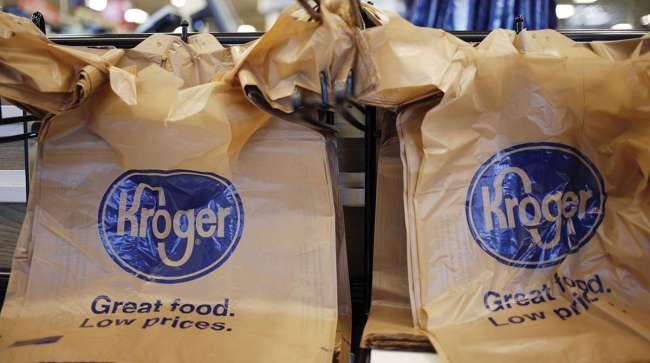 Kroger упрощает работу по доставке, закрывая три автоматизированных склада выполнения заказов и расширяя партнерства">

Modernizing the Grocery Delivery Model: Kroger’s New Direction
The landscape of grocery delivery is evolving rapidly, and Kroger is making significant moves to enhance its efficiency and profitability by closing three automated fulfillment centers. This strategic shift focuses on speeding up delivery times and adopting partnerships that extend its reach and operational effectiveness.
Closing Automated Centers: Where and Why
Effective January, Kroger will be shutting down its automated warehouses located in Pleasant Prairie, Wisconsin, Frederick, Maryland, и Groveland, Florida. This decision reflects a refinement of their delivery approach, hinging on the notion that proximity to customers via stores can outperform centralized fulfillment hubs in many cases.
Out of an original vision to build 20 such facilities in partnership with British grocer technology firm Ocado Group—a venture started back in 2018—only eight centers have been set up, and now three of those will be closed. Kroger intends to carefully monitor the remaining five centers’ performance while pivoting to a more store-centric model for fulfilling online orders.
A Reflection on the Financial Impact and ROI
The closures will result in a substantial one-time charge of approximately $2.6 billion on Kroger’s books for the current fiscal quarter. However, the retailer forecasts an upside in the form of a projected $400 million increase in e-commerce operating profit by 2026, painting an optimistic picture for the future logistics landscape of the company.
| Fulfillment Center Location | Status | Function |
|---|---|---|
| Pleasant Prairie, Wisconsin | Закрытие | Automated grocery order fulfillment |
| Frederick, Maryland | Закрытие | Automated grocery order fulfillment |
| Groveland, Florida | Закрытие | Automated grocery order fulfillment |
| Five other US facilities | Эксплуатация | Automated grocery order fulfillment |
Why Stores Trump Warehouses in Fulfillment
The heart of Kroger’s evolving delivery approach lies in the increased use of its expansive network of physical stores. Nearly 2,700 stores dotted across the U.S. can deliver orders in under two hours to 97% of customers. This is a game-changer, as stores are not only closer to consumers but also cut down transit time and costs associated with longer haulage and dispatch.
As Kroger’s CEO put it, their stores are “our most important asset,” highlighting a shift from a fully centralized e-commerce model to a hybrid where local stores play a crucial role in distribution.
Where Automated Facilities Still Fit In
Despite this pivot toward store-based fulfillment, automated centers have not been entirely dismissed. In densely populated urban regions where demand is high and continuous, these robot-driven warehouses provide benefits that stores can’t easily match—especially when scaling for high-volume or specialized order processing.
Forging Stronger Alliances with Delivery Partners
Kroger is doubling down on partnerships with popular third-party delivery platforms to complement its logistics network. Recently, they expanded collaborations with DoorDash и Uber Eats, moving beyond niche offerings like sushi or flowers to carry Kroger’s entire product suite.
More excitingly, they’ve teamed up with Instacart to accelerate express delivery services and are among the first retailers to leverage Instacart’s AI assistant — a smart tool that customizes delivery orders based on customer preferences and even suggests meal ideas.
Benefits of a Multi-Channel Delivery Network
- Comprehensive product availability: With DoorDash and Uber Eats covering multiple product categories, customers get faster access to everything from essentials to specialty items.
- AI-enhanced customer experience: The intelligent assistant simplifies ordering by anticipating preferences and streamlining shopping.
- Extended reach: Partnering with established delivery services multiplies Kroger’s presence in various urban and suburban markets without the overhead of expanding physical infrastructure.
Implications for Supply Chain and Logistics
This strategic realignment has meaningful implications for the logistics industry. Moving away from centralized automated warehouses to leveraging stores and third-party couriers changes the freight flow, potentially reducing long-haul shipments and increasing local distribution activities.
The pivot also underscores a growing trend where companies harness existing retail footprints as mini-fulfillment hubs to pull off last-mile deliveries faster and with better cost control—critical factors in customer satisfaction and competitive advantage.
The Takeaway on Kroger’s Logistics Shift
Kroger’s more nimble approach could herald a new era in grocery distribution, highlighting the importance of hybrid models that blend automation with human assets and diversifying delivery partnerships. This mix ensures customers get their orders quicker without compromising profitability, crucial in an industry where timing is everything.
Explore and Decide with Your Own Delivery Experience
Хотя обзоры и прозрачная обратная связь дают ценные сведения, ничто не сравнится с непосредственным опытом использования услуги. Платформы, такие как GetTransport.com, наделяют вас широким выбором вариантов международной грузовой и транспортной логистики по конкурентоспособным ценам, включая переезды офисов или домов, крупногабаритные грузы и перевозку транспортных средств.
Используя такие платформы, вы можете избежать ненужных расходов или разочарований при отправке ваших посылок или паллетных грузов, как внутри страны, так и за рубеж.
GetTransport.com выделяется своей прозрачностью, удобством и доступностью, предлагая душевное спокойствие и гибкость, адаптированные к вашим логистическим потребностям. Получайте лучшие предложения на GetTransport.com.
Looking Ahead: What This Means for Global Logistics
Хотя конкретные закрытия распределительных центров Kroger, возможно, и не приведут к существенным изменениям в глобальных логистических маршрутах, их стратегия, сочетающая автоматизацию с распределением на основе магазинов и сотрудничеством с третьими сторонами, является отражением ключевых тенденций в логистике во всем мире. Это свидетельствует о растущей важности поддержания темпов изменений в ожиданиях клиентов и обеспечении эффективности затрат.
Этот подход соответствует миссии GetTransport.com по предоставлению масштабируемых, эффективных решений для пересылки и доставки, которые процветают в условиях все более взаимосвязанной и динамичной среды дистрибуции. Начните планировать вашу следующую доставку и обеспечьте безопасность вашего груза с GetTransport.com.
Резюме
Решение Kroger закрыть три автоматизированных склада комплектации заказов и сосредоточиться на комплектации заказов в магазинах отражает стратегический шаг, направленный на ускорение скорости доставки и повышение прибыльности. Благодаря интеграции прочных партнерских отношений с DoorDash, Uber Eats и инструментами искусственного интеллекта Instacart, компания перестраивает свою логистическую и модель доставки. Этот сдвиг влияет на динамику грузоперевозок и транспортировки, подчеркивая местную дистрибуцию вместо крупных централизованных складов.
Такие изменения иллюстрируют более широкие тенденции в отраслях грузоперевозок и логистики, где гибкость, интеллектуальные технологии и близость к клиентам определяют успех. GetTransport.com предлагает надежную платформу для навигации в этом меняющемся ландшафте с экономически эффективными, глобальными вариантами доставки для крупногабаритных грузов, посылок, контейнеров и многого другого — делая логистику проще и адаптированной к вашим потребностям.