


 Русский
  English (UK)
  العربية
  日本語
日本語  한국어
한국어  Magyar
  Türkçe
  Español
  Čeština
  Svenska
  Português
  Ελληνικά
  Suomi
Suomi  Nederlands
  Română
  Italiano
  Français
  Polski
  Українська
  Deutsch
  简体中文
简体中文  Slovenčina
  Запасы слитков свинца упали до 15-месячного минимума, поскольку спрос смещается в сторону ближайших складских запасов">

Запасы свинцовых слитков достигли нового минимума
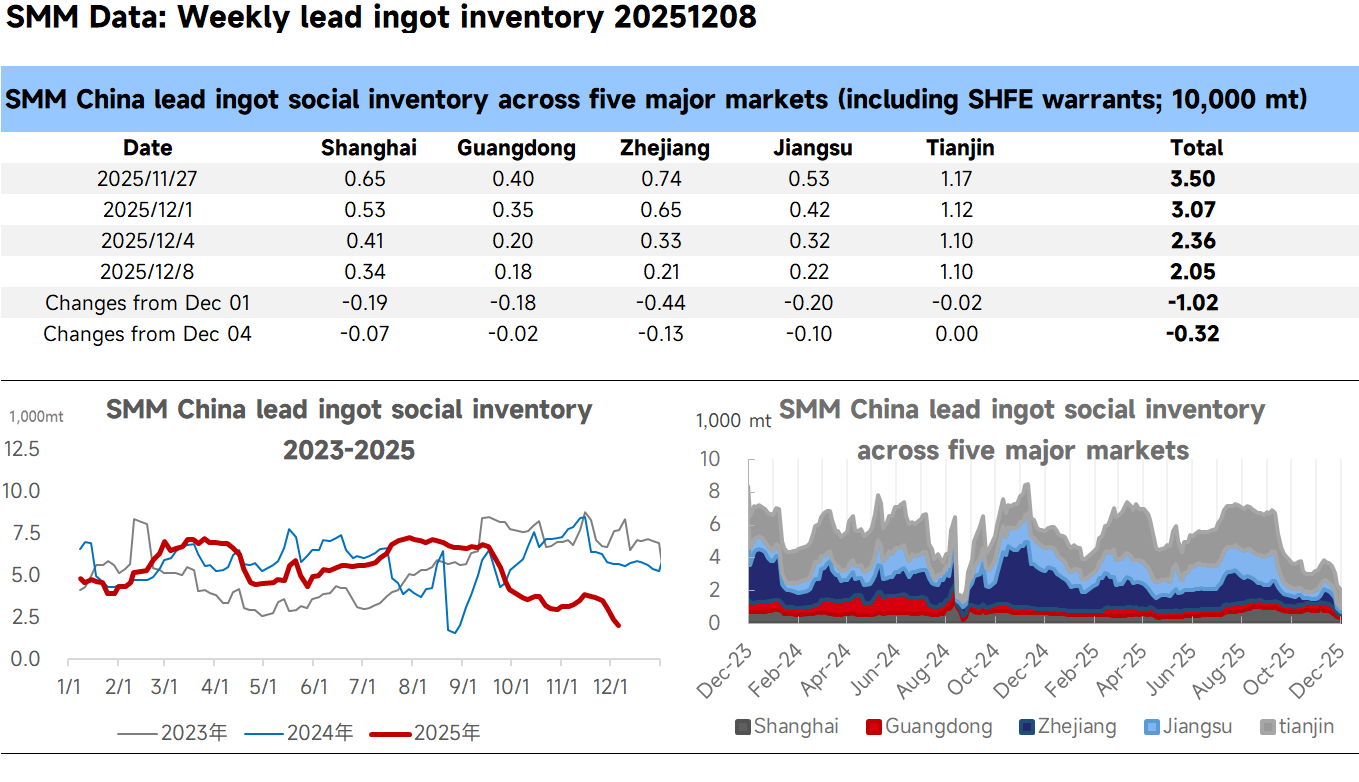
Последние данные показывают значительное падение запасов свинцовых чушек на складах в нескольких отслеживаемых регионах, при этом уровни запасов упали примерно до 20 500 метрических тонн. Это знаменует собой резкое снижение на 10 200 метрических тонн с начала декабря, в результате чего запасы упали до нового минимума, невиданного более чем за 15 месяцев.
Техническое обслуживание и сокращения производства ужесточают поставки
Этот дефицит запасов в основном вызван текущим обслуживанием и сокращением производства на первичных и вторичных свинцовых заводах. Сокращение региональных поставок привело к тому, что цены на самостоятельно отобранные грузы на производственных площадках остаются стабильными. Типичные премиальные котировки на эти партии свинцовых слитков варьируются в диапазоне от 0 до 50 юаней за метрическую тонну сверх официальной цены SMM 1# свинца франко-завод.
Складские запасы в крупных промышленных центрах, таких как Цзянсу, Чжэцзян и Шанхай, имеют аналогичные цены с премией до 50 юаней за метрическую тонну по сравнению с ближайшим фьючерсным контрактом SHFE на свинец с поставкой в январе. Данное ценообразование иллюстрирует признание рынком близости склада как фактора, влияющего на сроки и стоимость закупок.
Предпочтения смещаются в сторону грузов с ближайших складов.
Нижестоящие предприятия все чаще отдают предпочтение закупкам точно в срок, закупая свинцовые чушки на близлежащих складах, расположенных недалеко от центров потребления. Это пространственное предпочтение помогает сократить сроки доставки и затраты на хранение запасов, что еще больше истощает запасы социальных складов. Эта стратегия подчеркивает более широкую тенденцию в логистике, когда близость к центрам спроса может существенно влиять на динамику цепочки поставок и оборачиваемость запасов.
| Parameter | Current Status | С начала декабря |
|---|---|---|
| Социальные запасы свинцовых слитков (т) | 20 500 | -10 200 |
| Премия за груз с производственной площадки (юань/тонна) | 0–50 | Стабильный |
| Премия на груз на складе (юань/тонна) | 0–50 | Стабильный |
| Заводские запасы на первичных плавильных заводах (тонн) | >10 000 | Повышение |
Заводские запасы растут по мере сокращения социальных запасов
В отличие от падающих складских запасов в социальных хранилищах, запасы на площадках первичных свинцовых плавильных заводов выросли до более чем 10 000 метрических тонн. Некоторые плавильщики даже предлагают скидки для стимулирования продаж из-за этого накопления. Это расхождение указывает на то, что, хотя социальные запасы истощаются из-за предпочтений потребителей, физические запасы свинца остаются стабильными или увеличиваются в местах производства.
Что это значит для ландшафта логистики
Понимая, что конечные покупатели склоняются к грузы с близлежащего склада предлагает понимание развивающихся логистических стратегий. Близость сокращает время выполнения заказа и требования к хранению, напрямую влияя на решения по грузоперевозкам и дистрибуции. Для поставщиков логистических услуг становится крайне важным согласование транспортных мощностей для поддержки быстрой, локализованной доставки.
Более того, в условиях, когда производственные площадки содержат большие запасы, а социальные склады истощаются, транспортная сеть должна сбалансировать перемещение более крупных грузов от производителей на стратегически расположенные склады. Гибкое управление активами, включая своевременную отправку и распределение складских помещений, может оптимизировать эту цепочку поставок.
Транспортный спрос определяется предпочтениями в сфере закупок
- Точно в срок: Покупатели предпочитают быстрый доступ к материалам, хранящимся ближе к точкам потребления.
- Сокращение запасов: Нижестоящие фирмы стремятся минимизировать дорогостоящие складские запасы, перекладывая логистические потребности.
- Ценовые сигналы: Ценовые премии, обусловленные местоположением, подчеркивают влияние транспортных расходов и хранения на закупки.
Логистические вызовы и возможности
Эффективная транспортировка слитков свинца требует специализированных решений как для перевозки тяжелых грузов с заводов, так и для быстрой дистрибуции наподобие посылок со складов. Учитывая колебания запасов в различных узлах цепи поставок, транспортные компании должны тесно координировать свои действия с менеджерами по запасам, чтобы оптимизировать маршруты, сократить количество пустых рейсов и безопасно обрабатывать крупногабаритные грузы.
Ключевые выводы об изменении запасов
- Социальные запасы свинцовых слитков находятся на самом низком уровне за более чем год, значительно сократившись из-за поведения покупателей и ужесточения поставок.
- Покупатели, находящиеся ниже по цепочке поставок, все чаще отдают предпочтение складским грузам, расположенным близко к местам потребления, делая акцент на более быстром пополнении запасов.
- Первичные плавильщики держат больше слитков свинца на своих площадках, даже несмотря на снижение запасов на бирже, что влияет на логистические потоки.
- Решения в области транспорта и складирования должны адаптироваться к этим меняющимся условиям с помощью более локализованной и гибкой отправки грузов.
Хотя данные и анализ рынка предлагают четкую перспективу, ничто не заменит опыт из первых рук. Нет ничего лучше, чем наблюдать динамику движения грузов в режиме реального времени. Для тех, кто управляет поставками слитков свинца или аналогичных сыпучих материалов, такие платформы, как GetTransport.com, дают огромное преимущество. Благодаря глобальному охвату, доступным ценам и возможности обрабатывать все, от переездов офисов до крупных транспортных средств и объемных грузовых перевозок, она служит удобным инструментом для навигации по сложной логистической местности. Сопоставляя владельцев грузов с надежными транспортными операторами по всему миру, она эффективно оптимизирует экспедирование грузов и потребности в дистрибуции. Забронируйте грузоперевозки с GetTransport.com сегодня. и оцените легкость современной доставки на собственном опыте.
Взгляд в будущее: логистика в условиях быстро меняющейся цепочки поставок
Несмотря на то, что недавнее падение социальных запасов слитков свинца может казаться регионально ориентированным, его волновой эффект подчеркивает более широкие последствия для международных перевозок и управления грузоперевозками. Стратегии "точно в срок" подчеркивают важность гибких логистических сетей, расположенных вблизи ключевых центров спроса.
Для глобальных игроков в сфере логистики понимание этих моделей перемещения стимулирует инвестиции в гибкие складские помещения, динамическую маршрутизацию и интегрированные системы диспетчеризации. Хотя глобальное воздействие может быть незначительным, оставаться в курсе таких изменений в отрасли жизненно важно. Платформы, такие как GetTransport.com, соответствуют этим изменениям, помогая предприятиям идти в ногу с постоянно меняющимся миром. Начните планировать свою следующую доставку и обеспечьте сохранность своего груза с GetTransport.com.
Резюме
Социальные запасы слитков свинца упали до 15-месячного минимума из-за сокращений производства, вызванных техническим обслуживанием, и переориентации потребителей на закупки с местных складов. В то время как запасы на территории заводов растут, предпочтение своевременной доставке вблизи точек потребления меняет логистические стратегии. Это требует транспортных решений, которые сбалансируют перевозки тяжелых грузов с производственных площадок с быстрой дистрибуцией со складов. В меняющейся глобальной логистической арене такие платформы, как GetTransport.com, эффективно обеспечивают доступные и надежные грузоперевозки и экспедирование грузов. Они охватывают различные потребности — от перемещения объемных промышленных товаров до организации переездов, что делает их ключевыми союзниками в упрощении доставки и обеспечении бесперебойной работы цепочки поставок.