


 Русский
  English (UK)
  العربية
  日本語
日本語  한국어
한국어  Magyar
  Türkçe
  Español
  Čeština
  Svenska
  Português
  Ελληνικά
  Suomi
Suomi  Nederlands
  Română
  Italiano
  Français
  Polski
  Українська
  Deutsch
  简体中文
简体中文  Slovenčina
 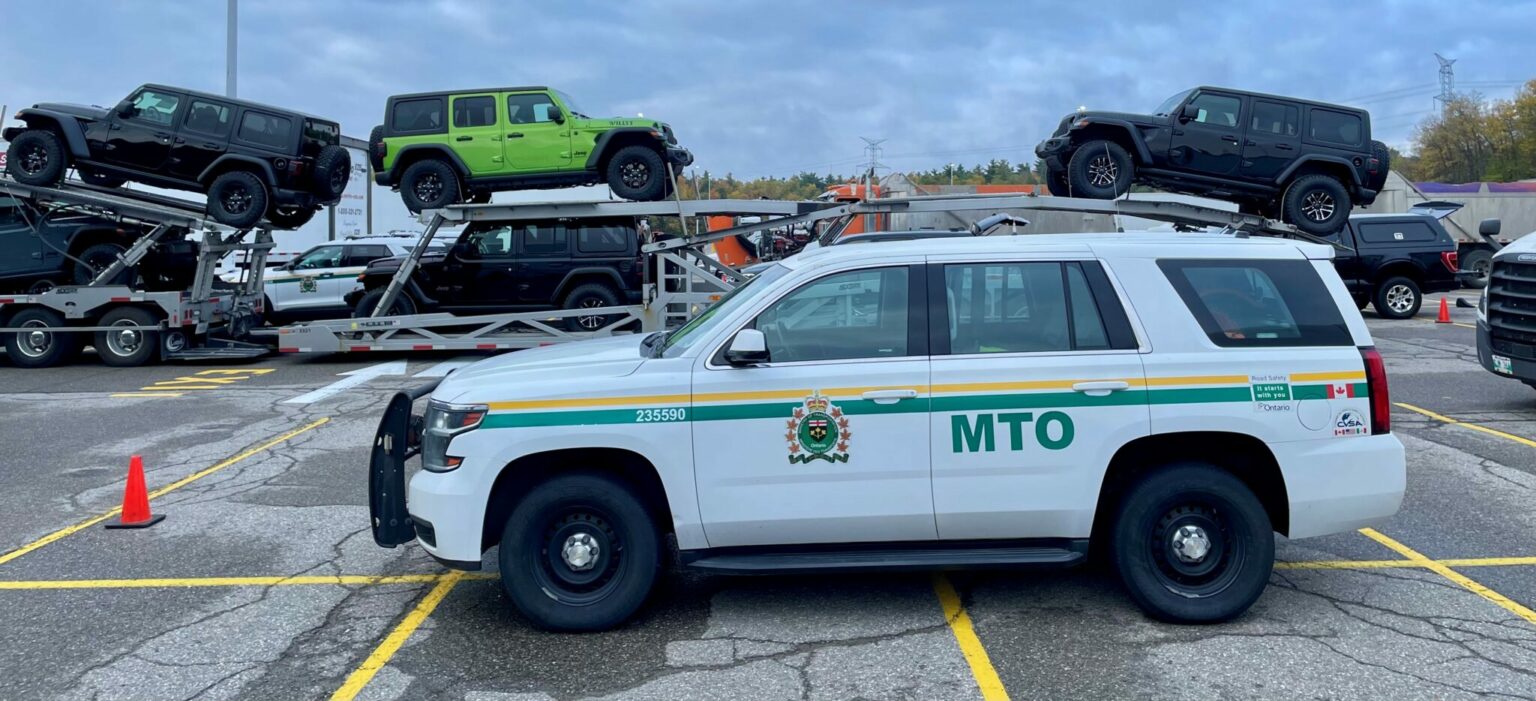 OTA calls on Ontario Ministry of Transportation to adopt tougher enforcement and compliance measures">

Ontario sits at the centre of Canada’s trucking activity, and the Ontario Trucking Association (OTA) says that stronger provincial enforcement — including 24/7 commercial vehicle inspection access and multi-agency presence at inspection sites — would be a catalytic step to reduce non-compliance tied to the Driver Inc. model.
What OTA is asking Ontario to do now
The OTA, represented in Ottawa discussions by Geoff Wood, senior vice president, policy, is pressing the Ontario Ministry of Transportation (MTO) to move quickly on a handful of enforceable measures that have immediate operational implications for carriers and shippers alike.
Priority enforcement measures
- Keep commercial vehicle inspection facilities open around the clock to intercept illegal operations outside regular business hours.
- Station multiple agencies (provincial and federal) at inspections to coordinate labor, tax and safety enforcement.
- Устранить the “satisfactory‑unaudited” safety rating that currently allows many fleets to avoid on‑site ministry inspections.
- Реализовать regular compliance verification visits at carrier business locations, similar to food safety or other industry audits.
- Strengthen safeguards against commercial driver licence fraud, including improved verification steps and penalties.
- Цель illegal truck parking and unauthorized storage yards with dedicated provincial resources.
- Представить known‑employer models in immigration streams relevant to trucking to curb worker abuse and forced‑labour risks.
- Mandate labour‑compliance checks for Crown corporations and government-funded projects that hire trucking services.
- Обзор insurance requirements for trucking facilities and update where inconsistencies threaten enforcement.
Operational impacts on carriers and shippers
Rollout of these measures would change everyday logistics rhythms. Around‑the‑clock inspections and on‑site carrier audits mean more unpredictable stoppages but also improved level playing field — illegal operators are less able to undercut legitimate carriers if enforcement is visible and frequent. Expect short-term friction: scheduling, driver hours-of-service planning, and gate processes will need tighter discipline. Long term, safer fleets and reliable compliance reduce insurance uncertainty and reputational risk.
Fast checklist for logistics teams
- Update compliance files and ensure on‑site records are audit-ready.
- Plan for possible inspection-related delays when quoting delivery windows.
- Validate driver credentials and training records more frequently.
- Audit subcontractors and parking/storage arrangements for legal compliance.
- Review facility insurance and liability documents against proposed provincial standards.
Table: Current practice vs OTA’s requested reforms
| Area | Current practice | OTA proposal | Likely logistics effect |
|---|---|---|---|
| Inspection hours | Limited hours at many CVIs | 24/7 operation | More interceptions, possible nighttime delays |
| Safety rating | Satisfactory‑unaudited category exists | Eliminate unaudited rating; onsite reviews | More carriers inspected; compliance costs may rise |
| Agency coordination | Ad hoc multi-agency presence | Routine federal-provincial staffing | Comprehensive enforcement; reduced illegal activity |
| Driver credentialing | Vulnerability to fraud | Stronger anti-fraud safeguards | Fewer fraudulent operators; better safety outcomes |
Broader implications for the supply chain
Tighter enforcement in Ontario could ripple through the distribution network. Carriers that relied on marginal compliance tactics will face higher operating costs or exit the market, shifting freight onto compliant carriers and affecting capacity and pricing in the short term. For import/export customers using container и поддон shipments, delivery windows may tighten while carriers rework routing and staging to avoid inspection bottlenecks. In plain talk: expect some turbulence before smoother sailing — a classic case of “short pain for long gain.”
Risks and mitigation
- Risk: Short-term capacity squeezes. Mitigation: build extra lead time into shipments.
- Risk: Increased admin burden for small carriers. Mitigation: centralized compliance templates and shared services.
- Risk: More frequent detention at yards. Mitigation: digitalize documentation and adopt pre-clearance checks.
How these measures intersect with labor and immigration policy
Introducing a known‑employer model in immigration programs tied to trucking is a structural way to reduce worker exploitation and forced labour exposure within the sector. It also helps logistics buyers and procurement teams ensure that suppliers are not only meeting safety standards but also labour and tax obligations. For buyers managing large distribution contracts, this could become a standard clause in RFPs and contractor vetting.
Practical note for procurement
Adding labour‑compliance checks to contracting rules for Crown projects and government-funded work will likely cascade to private-sector contracts. Expect procurement teams to request more evidence of proper classification, payroll records, and tax remittances before awarding haulage or forwarding work.
Enforcement vs. commercial reality — a quick anecdote
I once sat with a small fleet operator who shrugged and said, “You can’t fix everything overnight.” That’s true — enforcement ramps take time and the industry will grumble — but when enforcement is consistent, unfair operators lose their price advantage and the honest carriers breathe easier. As the saying goes, you can’t have your cake and eat it too: if safety and compliance rise, some cut‑rate options disappear — and so does the margin for risky behaviour.
Key takeaways
- Немедленно action by MTO could set a national tone.
- 24/7 inspections and multi-agency checks are the OTA’s centrepiece.
- Removing unaudited ratings forces more on-site verification and raises compliance visibility.
- Driver credential and labour protections reduce fraud and modern slavery risks.
A short forecast on how this news could impact the global logistics: the impact is mainly provincial and regional rather than global — these reforms are significant for Ontario and adjacent supply chains but unlikely to disrupt international lanes directly. However, the measures are relevant to GetTransport.com as the platform aims to stay abreast of all developments and keep pace with the changing world. On GetTransport.com, you can order your cargo transportation at the best prices globally at reasonable prices. For your next cargo transportation, consider the convenience and reliability of GetTransport.com. Get the best offers GetTransport.com.com
In summary, OTA’s recommendations — from around‑the‑clock inspections to the removal of the satisfactory‑unaudited rating and enhanced labor and licence safeguards — are designed to close enforcement gaps and protect legitimate carriers. These changes will affect груз scheduling, грузоперевозки мощности и доставка guarantees in the near term but should improve the reliability of транспорт и в целом логистика in the long run. Better enforcement means cleaner доставка lanes, fairer пересылка competition, and a stronger network for отправка, перевозка, courier and распространение partners — whether you’re moving a посылка, поддон, container, or bulky household goods for a переезд or commercial переезд. In short, these proposals aim to make the market more надежный for international and domestic shippers, movers and logistics buyers alike.