




Launch a six-month period pilot that deploys larger four-wheeled cargo bikes across the garland area to speed up deliveries and shrink truck trips. By shifting part of last-mile freight from enclosed vans to pedal-assisted fleets, the city reduces traffic on crowded streets and makes travel easier for couriers, retailers, and residents. The plan centers on a standard cargo box with a windshield and enclosed cargo space, protecting goods in all conditions.
The plan, according to rodriguez, rests on a clear insight: four-wheeled cargo bikes can carry substantial loads while maneuvering in dense corridors. The article outlines a concrete setup: 20 bikes, three microhubs within a 5 km radius, and weather-protected loading docks designed for quick swaps. The sharing model lets small businesses and residents participate, extending reach without adding clutter on the streets. Assets used in the pilot include 20 bikes and 3 microhubs.
The cargo bikes feature a wider loading area than typical two-wheeled cycles, improved stability, and a sturdy frame for urban travel. Riders benefit from a windshield, mirrors, and low vibration, while goods stay safe in the enclosed box. Trials show a drop in damage claims and a smoother flow through restricted streets where heavy vehicles face limits.
Projected outcomes for the pilot include 2,000–3,000 deliveries per week across the fleet, with on-time performance rising by 25–40%. The microhub network reduces idle time and travel distance by roughly 18–28% and unlocks multiple daily runs that align with shop hours. The enforced restrictions in core corridors, which passed earlier this year, allow these bikes to operate in zones that trucks cannot access.
To implement at scale, the department should secure secure enclosed loading bays in partner buildings, designate curb space for quick swaps, and publish a simple dashboard to track metrics like deliveries, travel time, and customer satisfaction. Staff training should cover safety in mixed traffic, careful loading, and proper signaling. This article will monitor the pilot, share iterations, and outline next steps for a broader adoption across the area. Readers can dive into the data as the pilot unfolds.
Defining dimensions, payload targets, and cargo volume for planning and procurement
Recommendation: Define a baseline four-wheeled, pedal-assisted cargo bike with a payload target of 200 kg and a cargo box volume of 0.75–1.0 m3, and launch pilots in brooklyn to validate performance on grocery and delivery routes. Equip the vehicle with a protected cargo area, a windshield, and a garland of strap anchors to hold loads securely. This setup makes procurement easier for departments looking to standardize safer, commonly used vehicles in urban fleets. When writing the proposal, include a statement of capabilities and added safety features, and set a plan to replace units that show poor endurance after testing.
Dimensions inform street integration and curbside efficiency. Plan for a width, including mirrors, of 1.0–1.15 meters, a wheelbase of 1.9–2.2 meters, and an overall length of 2.2–2.7 meters. Design the cargo deck to sit 0.40–0.50 meters above the ground and the cargo box interior to be about 0.75–0.90 meters wide and 0.50–0.65 meters high, yielding a practical cargo volume near 0.6–0.95 m3. This keeps down curbs and wind gusts manageable while maintaining visibility from the windshield for the rider and other traffic in the industry.
Payload and cargo volume targets balance city needs with rider effort. Aim for a practical payload range of 180–250 kg, with 200 kg as the baseline target. Target internal cargo volume of 0.6–0.95 m3 (600–950 liters). For grocery orders and regional deliveries, verify that the load distribution keeps the center of gravity within 150–320 mm of the front axle, and test with typical deliveries of 20–40 kg per bag. Four-wheeled configurations provide added stability and commonly perform well on busy streets, where frequent stops and starts occur.
Procurement and testing establish reliability. Use a standard spec sheet and require pedal-assisted motors with sufficient torque to climb 8–12% grades on city routes. Include braking tests on dry and wet pavement with a target stop distance under 15 meters from 25 km/h. Validate handling on down curbs and through typical street furniture. Require a windshield that remains clear in rain and protected wiring harnesses. Vendors should present a clear proposal with added features, warranty terms, and a robust service network; said evaluations should record endurance, maintenance needs, and total cost of ownership. When departments issue bids, align expectations with a transparent statement of requirements and a repeatable testing protocol, then replace underperforming units promptly.
Implementation and measurement anchor the rollout. When pilots begin, collect performance data across routes and times to refine the standard. Источник notes that standardization across borough fleets reduces procurement risk and speeds launches. Use a single, public specification sheet and require test results, warranty terms, and service support details in every proposal. Track metrics such as on-time delivery, cargo retention during braking, curb maneuverability, and rider comfort to guide ongoing investments in grocery and delivery operations. Look for suppliers with strong after-sales networks to keep four-wheeled cargo bikes available for daily use and scalable to larger urban districts.
How NYC DOT’s Commercial Cargo Bicycle Pilot operates: eligibility, timelines, and evaluation
Enroll your business now to join NYC DOT’s Commercial Cargo Bicycle Pilot if you operate commercial deliveries in the tri-state area; this plan offers a practical path to test a pedal-assisted four-wheeled cargo bicycle for loading-heavy delivery work while gathering real-world data.
Eligibility and enrollment
- Be a registered commercial business with a valid operating address in the tri-state area (NY, NJ, CT) that performs regular delivery work.
- Deliveries must occur within the pilot corridor set by NYC DOT, with planned expansion to cover a wider area after milestones are passed.
- Operate or lease a pedal-assisted four-wheeled cargo bicycle that meets safety and performance standards used in the program.
- Provide insurance, proof of business registration, and a safety plan for loading, unloading, and parking near protected curbs.
- Commit to data sharing on loads, routes, loading and unloading times, and customer feedback for the evaluation period.
- Agree to on-site checks, safety training, and secure locking procedures when parking in public spaces; demonstrate operational readiness when requested.
- The selection process includes demonstrating practical readiness; the review has passed a technical assessment by the commissioner’s team.
Timelines and evaluation
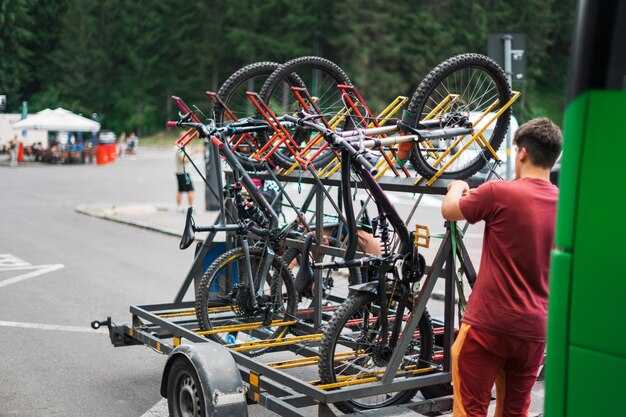
- Timeline spans a 12-month pilot period starting after enrollment, with a 6-week onboarding and training phase, aligned with the city’s transportation goals and decarbonization targets.
- Participating operations submit monthly reports; the evaluation team reviews quarterly performance and safety findings led by the commissioner.
- Key metrics include on-time delivery, loading and unloading times, and the rate of successful package unloads at curbside or protected loading zones, including on-time performance and route efficiency.
- Costs are tracked per mile and per package to compare pedal-assisted cargo bikes with conventional trucks in the same corridor.
- Area coverage and impact are measured, including how often deliveries use protected lanes and how curb loading affects pedestrian foot traffic.
- Equipment features such as a windshield and wide loading deck are evaluated for rider comfort, visibility, and weather resilience.
- Safety and security focus on well-practiced braking, locking procedures, and protection for riders during downhills and intersections; incidents are logged and addressed promptly.
- When milestones are met, the pilot demonstrates future scalability to add more routes and potentially other freight modes, providing insight into operational efficiency and stakeholder benefits.
- Funding and oversight include a dedicated budget line in the city budget, supported by a million-dollar investment; ongoing oversight is provided by the commissioner’s office.
- Commonly, pilots show improved reliability after standardizing loading procedures and coordinating curb use with parking space attendants; these practices are documented in the evaluation reports.
Regulatory changes to accommodate larger four-wheeled bikes: permits, street access, and parking
Recommendation: issue a streamlined permit package that authorizes 48-inch-wide pedal-assisted four-wheeled bikes for urban freight, with defined street access windows, staging zones, and curbside parking rules.
Adopt a unified rule set that clearly defines eligibility, vehicle specs, and operation limits. The package should require commercial use only, mandate a windshield for driver visibility, and specify a motor-assisted threshold that aligns with emission standards. Include locking mechanisms for secure parking and a stamped compliance statement to accompany each published permit, ensuring couriers can operate with predictable risk profiles while they perform deliveries for goods transporters.
Proposed changes focus on access, safety, and efficiency. Provide widely spaced intake windows to reduce conflicts with private traffic and to support staging without blocking curbs or sidewalks. Commonly used curb zones become loading areas, with posted signs indicating permissible times and maximum durations. This shift helps them avoid disruptive parking and delivers a consistent flow for sharing fleets, couriers, and commercial deliveries alike.
To guide implementation, publish a concise rulebook by april that outlines a 12-month rollout and a transition path for fleets replacing older models. The statement should address compliance milestones, on-street testing phases, and performance metrics such as incident rates, dwell times, and emission reductions. A clear package for city planners, enforcement officers, and operators will accelerate adoption while maintaining street safety and accessibility for all users.
Finally, recognize the value of a staged approach that allows operators to adjust gradually while maintaining service levels. The package should include a pilot framework, with publicly available data on mileage, load capacity, and route coverage. This enables operators to optimize their logistics networks, restructure their them fleets, and pursue a shift toward more efficient, pedal-assisted freight that reduces road congestion and improves urban mobility for transportation agencies and residents.
| Aspect | Current State | Proposed Change | Impact |
|---|---|---|---|
| Permits and eligibility | Fragmented permits; no standard 48-inch-wide spec | Unified permit package for 48-inch-wide pedal-assisted four-wheeled bikes; commercially used | Streamlines compliance; accelerates fleet deployment |
| Street access | Limited access; inconsistent scheduling | Defined street access windows plus dedicated staging zones and loading lanes | Reduces curb conflicts; improves flow for couriers and deliveries |
| Parking and staging | No formal curbside parking for large bikes | Specified curbside parking with time limits and staging areas | Enhances reliability of pickups and drop-offs |
| Safety equipment | General road rules; optional gear | Mandatory windshield, lighting, and locking features | Improves visibility and security |
| Compliance and enforcement | Voluntary adherence; limited penalties | Clear compliance checks, training, and penalties for non-compliance | Ensures consistent behavior across fleets |
| Timeline and publishing | Guidelines scattered; no fixed date | Guidelines published by april with a 12-month rollout plan | Provides clarity for operators and planners |
Implementing these changes positions broader use of them four-wheeled pedal-assisted vehicles as a practical, low-emission option for urban logistics. The rule package creates a predictable framework for sharing fleets, courier teams, and commercial operators, while preserving pedestrian space and curb safety. By aligning permits, street access, and parking with a cohesive set of expectations, transportation authorities can manage staging, compliance, and performance in a way that replaces ad hoc decisions with data-driven governance.
Infrastructure and safety adjustments: loading zones, bike lane integration, and rider training
Implement protected loading zones along key street corridors and integrate them with adjacent bike lanes to prevent curbside conflicts for pedal-assisted cargo bikes delivering goods. Use clear signs, bollards, and flexible curb markings to hold spaces during peak hours and release them for parking as needed. This shift in street logistics will support safer, faster trips and align with regulatory goals.
Design corridors with precise dimensions: a 2.0–2.5 m bike lane, a 0.5–0.8 m buffer, and a 3.0 m loading zone. Use enclosed loading areas with planters or bollards to protect riders and pedestrians and maintain a predictable flow for street travel. Remove parking only where essential to support goods movement on busy routes.
Regulatory changes: the regulatory framework now proposed in the bill would authorize four-wheeled cargo bikes in the same lane as bicycles where space allows, set time-based parking restrictions for curb use, and require operator compliance with safety standards. Establish a simple permit process and use spot checks to ensure ongoing adherence. Partners across city and state offices will help push the program forward with a clear path to scale.
Rider training: require a standardized program for operators that covers braking, signaling, turning, loading and unloading of goods, and handling pedal-assisted systems. Include on-street practice in enclosed yards and controlled test routes before trips begin. Incorporate guidance for safely interacting with pedestrians, parked cars, and other street users. Hold refresher sessions every six months in collaboration with partners such as fleet managers and municipal trainers.
Measurement and reporting: deploy a reporter-driven dashboard to track miles traveled, trips completed, emissions, travel times, and incidents, with auto-generated reports shared with city staff and operators. Use findings to adjust loading zones, refine parking restrictions, and improve lane integration. Aim to deliver consistent goods movement with minimal disruption to street users and to demonstrate a clear public benefits case with data.
Campaign and funding: the campaign proposes a targeted investment of $1 million to install loading zones, signage, and training; involve operators and parking enforcement; and create a feedback loop with rider forums, including an annual review of policy restrictions and a plan to replace older infrastructure as needed. The program will coordinate with partners across agencies to ensure a smooth rollout and measurable impact on emissions and travel times.
Projected outcomes and metrics: freight moved, traffic impact, and environmental effects
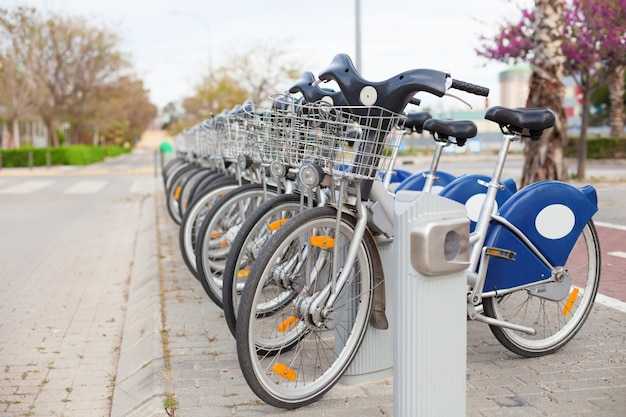
Adopt a standard metrics dashboard now to measure freight moved, traffic impact, and emission reductions across brooklyn and west street corridors. The department pushes for an allowable, consistent indicator set that captures mode share, delivery density, and curb parking demand, with a published statement and an agreement among city agencies and couriers to share data with them.
Projected freight moved: In year one, target 8,000-10,000 parcels per day moved by large four-wheeled cargo bikes in brooklyn corridors, equivalent to removing about 700-1,000 truck trips daily from the street network. Couriers and other carriers shift to pedal- and motor-assisted bikes, leveraging the unique advantages of this mode, and the published data provide a clear источник for the projection.
Traffic impact: Early pilots show 2-3 mph higher average speeds on core corridors after pedal-friendly cargo bike integration; curb-side loading times drop 15-25%, and parking demand shifts toward bike loading zones, reducing interleaving with general traffic. In addition, the measure indicates wider benefits throughout the network, with no-emission mode sharing creating space for pedestrians and cyclists.
Environmental effects: Emission per delivery falls by 60-80% when comparing large cargo bikes to conventional trucks for short-haul routes; over 1,000 daily shifts, citywide CO2e savings reach 250-400 metric tons annually, with particle matter reductions aiding air quality in brooklyn and west street neighborhoods. The no-emission advantage supports quieter operation and less fuel burn during peak hours.
Implementation and next steps: Pass a bill to widen sharing of curb space and loading lanes throughout west street and brooklyn, with restrictions that reserve curb space for large cargo bikes during peak delivery windows. Create no-emission zones near schools and hospitals, plus parking allowances for bike couriers and a clear allowable parking quota. Build an agreement with couriers to participate, provide pedal training, and publish a quarterly statement with progress and lessons learned; track them in the shared dashboard to inform broader expansion.