


 Русский
  English (UK)
  العربية
  日本語
日本語  한국어
한국어  Magyar
  Türkçe
  Español
  Čeština
  Svenska
  Português
  Ελληνικά
  Suomi
Suomi  Nederlands
  Română
  Italiano
  Français
  Polski
  Українська
  Deutsch
  简体中文
简体中文  Slovenčina
  COVID-19 Vaccines Supply Chain – How Real Is the Cybersecurity Threat?">

Adopt zero-trust across all components now. Take decisive actions now. Segment critical assets, enforce MFA for all access to logistics portals, and rotate credentials quarterly. Limit lateral movement by isolating site admin interfaces and procurement portals. Track suspicious activity on each node, requiring proactive collaboration between security teams and suppliers to close visibility gaps. This practical approach yields measurable gains in containment time and reduces blast radius in real-world events.
Hacking attempts increased as criminals pivot toward partners and remote workers. Analysts said last quarter that credential theft remains a leading entry vector. Within compact networks, attackers probe low-privilege accounts and leverage software updates to pivot across sites. A robust plan covers people, processes, and technology; emphasize networking with colleagues in small groups and ensure credible отслеживание of user activity across portals. A webinar program helps employees and contractors stay current on alerts and response steps.
Key metrics to watch include MTTD under 12 hours, MTTC under 24 hours, and time to restore critical services within 48 hours. Maintain a live inventory of partner software with a simple tracking method; require SBOMs; enforce least privilege; isolate production and distribution systems; implement network segmentation; require encrypted backups; perform quarterly tabletop scenario exercises; run phishing simulations for all employees; deploy automated alerting for anomalous login times; require rapid revocation of access when personnel shift roles; schedule weekly reviews of access logs. For workers at suppliers, ensure ongoing networking training, and security team writes incident notes into a shared repository.
In morphowave scenario modeling, a single breach can cascade into partner networks, disrupting work queues and delaying deliveries. To limit risk, maintain security requirements within contracts, designate security champions at every site, and deploy rapid-response playbooks accessible via webinar drills. Collaboration among manufacturers, distributors, and retailers accelerates information sharing, tracking, and coordinated containment, reducing impact across a wider network.
Outline: COVID-19 Vaccines Supply Chain Cybersecurity
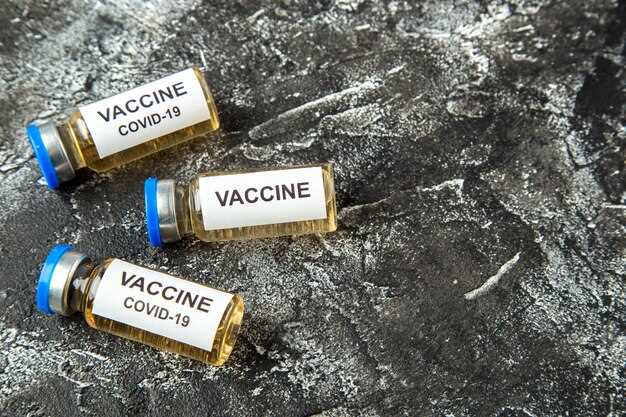
Recommendation: enforce zero-trust architecture across entry points, segment networks by facility, and require MFA for every worker and contractor; ready for immediate rollouts in warehouses and robotics-enabled lines; align access with capabilities and reducing blast radius; teams can begin today without disruption.
There are five threat vectors in this domain: supplier portals, ERP interfaces, WMS/TCM, robotics control nets, and remote maintenance sessions; monitor activity, enable anomaly detection, and conduct breach drills; publications and shared intel shorten detection cycles; went from hours to minutes in initial simulations; in a connected world, cross-team collaboration speeds response.
Entry controls: enforce least-privilege, role-based access, and continuous authentication; accessible controls for teams; adopt secure remote maintenance; order data and access logs must be signed and immutable; five critical entry points mapped to workstreams and robot-control domains; Specifically, implement privileged access management with segmentation and regular credential rotation.
Visibility, inventory, and maps: maintain live inventory across warehouses; build maps of data flows from supplier orders to infection indicators tested in simulations; infection indicators tested in simulations; risk resides in supplier catalogs; источник; emma led a postmortem on a recent incident.
Publications approach: rely on public reports and sector guidelines to shape baselines; ingest threat intelligence; align with common models; cross-team collaboration increases visibility and accelerates containment; workers on-site and remote operators gain accessible dashboards, reducing recovery time; parcel data feeds into inventory integrity checks.
Identify Critical Data Flows and Stakeholders in the Vaccine Supply Chain
Recommendation: Map critical data streams across logistics network, spanning devices at facilities, transport hubs, and end-point systems. Include entry points such as inspections and automated checks, including fulfillment updates, and identify who relies on each stream–partners, researchers, and operators.
Identify data types: environmental metrics, device fingerprints, lot and expiry data, authorization logs, and proof of inspections. For each type, specify which platforms handle it, which partner roles access it, and which devices contribute fingerprints. Ensure data provenance by linking entries to underlying transactions and component changes.
Stakeholders and roles: list manufacturers, distributors, cold-chain managers, labs, regulators, health networks, IT teams, and external researchers and platform vendors. Define each party’s part in data handling. Outline responsibilities, access rights, and incident response workflows so partners can respond quickly.
Governance and controls: map underlying risks across access, authentication, and automation. Deploy device management, networking hygiene, continuous monitoring, and platform-level inspections to limit exposure. Implement validation at entry points and enforce least-privilege access.
Operational steps: starting from minimal viable map, then expand data lines with additional types. Draft data-sharing agreements with partners, define cadence for updates, and tie data flows to business outcomes. Leverage Orion for cross-system analytics and fingerprint-based attestation to verify provenance.
Ransomware and Data-Tampering Risks in Cold Chain and Serialization Systems
Install airtight isolation between IT networks and OT devices in warehouses, enforce MFA and role-based access, and deploy tamper-evident signing for serialization records. Maintain offline backups for critical inventory data and validate integrity during every processing cycle.
Ransomware operators target large and small firms by exploiting weak credentials on networked devices, hijacking update channels, and launching hacking attempts through tricky attack vectors. A single compromised workstation can interrupt power feeds, corrupt track data, and disrupt inventory systems across multiple sites, risking accuracy of public health reporting.
Architecture should enforce segmentation between public interfaces, enterprise systems, and OT, plus redundant logging, immutable backups, and distributed ledgers for serialization. Linked monitoring feeds from existing sites empower executives to spot anomalies quickly; publications from government bodies guide architecture decisions. For existing firmware and devices, implement secure update practices and verify provenance.
Detection and response: apply anomaly detection, integrity monitoring, and rapid restoration procedures for sites, warehouses, and processing nodes. Routine drills with executives train teams; however, announced vulnerabilities require swift patches. If an incident occurs, isolated segments limit spread.
Operational controls: require registered suppliers to deliver signed updates, verify code provenance, and maintain an inventory of all devices on network. Public-private collaboration reduces risk; where possible, operate in linked, monitored environments rather than isolated pockets. This approach makes changes easy to implement.
Scenario snapshot: attackers may exploit a single entry point; layered defenses raise difficulty for intruders; but if access gains, quick isolation helps contain damage. In this landscape, where health data, track records, and serialization must stay accurate, a robust governance framework keeps stakeholders aligned, with linked publications guiding ongoing practices.
Zero-Trust, Access Controls, and Third-Party Risk Management Across Peers

Adopt zero-trust across peer interfaces; require explicit authentication, continuous authorization checks, and near real-time monitoring for each access attempt.
Context: in distributed ecosystems across worlds, enforce glove-level controls across contech vendors, suppliers, and research partners handling items and shipping. A glove becomes symbol of tight control. Controls extend throughout partner environments.
Policy design prioritizes role-based access, device posture, and session verification, with logging, anomaly detection, and networking safeguards baked into governance to support privacy, safety, and ready operations.
Remote operations rely on MFA, adaptive access, and continuous posture checks for remote workers; add additional guardrails and policy-driven revocation when risk signals appear. Organizations find this approach relatively scalable across multiple teams and regions.
Third-party risk management blossoms through ongoing vendor assessments, privacy impact reviews, and contractual controls; maintain an itemized inventory of partnerships and responsible owners. As mentioned, privacy protections support health objectives and public concerns, aligned with governments and health authorities. Costs stay manageable with transparent funding and cross-team collaboration.
Cost and funding: allocate additional funding for identity platforms, hardware tokens, monitoring, and training; remember that costs may be relatively predictable when governance is strong. Whole ecosystem safety improves as policy aligns with health and safety goals across teams and governments.
Education and outreach: run webinar series for teams, publish policy guidance on website, and share lessons with governments and organizations. Emphasize privacy, safety, and workers protection; ready status improves as teams adopt shared practices across distributed contexts.
| Area | Действие | Metrics | Owner |
|---|---|---|---|
| Identity and access | MFA, glove-level controls, context-aware access | denied requests per 1,000; average session duration; time-to-terminate | Безопасность |
| Vendor risk | Ongoing assessments; privacy reviews; contractual controls | risk score; privacy incidents; coverage of clauses | Procurement |
| Remote ops | Remote access policy; device posture; conditional access | incidents; policy violations; readiness score | IT |
| Мониторинг | Централизованная журналирование; обнаружение аномалий; аудиты | MTTD; ложные срабатывания; результаты аудита | Безопасность |
| Образование | Вебинары; обновления веб-сайта; обучение персонала | завершение обучения; восприимчивость к фишингу; соблюдение политики | Обучение |
Региональное возвращение производства: профили киберриска, местная инфраструктура и избыточность
Ускоренное развитие в сторону регионального производства минимизирует экспозицию на длинных грузовых маршрутах; разместите основные рабочие центры вблизи узлов занятости, разверните автоматизированные местные центры обработки данных и постройте избыточные сетевые каналы связи через нескольких перевозчиков, используя диверсифицированные маршруты.
В данном контексте профили рисков меняются в зависимости от качества местной инфраструктуры. Лондонский регион демонстрирует меньшую задержку для обработки данных на границе сети, в то время как удаленные зоны сталкиваются с более высоким риском сбоев. Проверьте средства контроля безопасности на каждом объекте, особенно удаленный доступ, слияние OT/IT и интерфейсы с третьими сторонами. Данные о киберпреступлениях, прошлых нарушениях и кампаниях по атакам хакеров показывают, что скомпрометированные сети могут распространяться по корпоративным сетям; безпанические ответы зависят от подготовленных планов локализации на каждом уровне операций.
Чертеж избыточности охватывает три столпа: локальная обработка, автономные резервные копии, диверсифицированные транспортные каналы. Используйте автоматическое переключение между двумя региональными центрами обработки данных для поддержания операций во время колебаний посещаемости или задержек в поставках. Работники и операторы проходят обучение пошаговым методом по реагированию на инциденты, с контрольными списками, адаптированными к конкретным районам, таким как Лондон и Хауик.
Организации в сфере логистики, производства и морской отрасли должны присоединиться к региональному проекту повышения устойчивости для обмена данными, уроками и связанными передовыми практиками. Прошлые годы показали, что злоумышленники используют зависимость от одного места; заметки операторов Maersk указывают на то, что диверсификация цепочек снижает воздействие. Векторы атак развиваются, что требует постоянной проверки рисков.
Метрики, богатые контекстом, обеспечивают конкретные сигналы прогресса. Шаги включают в себя картирование активов, перечисление путей атак и полное определение целей времени восстановления. Используйте автоматические проверки для подтверждения того, что локальные резервные копии остаются нетронутыми во время пиковых нагрузок или неблагоприятных событий. Связанные сайты по всей организации должны предоставлять результаты, основанные на фактических данных, с эталонами Лондона и Хоуика для стимулирования постоянного совершенствования.
Практические руководства по реагированию на инциденты: обнаружение, реагирование и восстановление в режиме реального времени
Немедленная рекомендация: развернуть изолированные узлы обнаружения в критически важных зданиях и транспортных узлах; автоматически запускать сценарии реагирования в течение пяти-десяти минут после обнаружения аномалий; предварительно загружать планы восстановления, чтобы свести к минимуму нарушение деятельности и ускорить восстановление.
- Обнаружение и оповещение: объединение больших потоков телеметрии из зданий, логистических узлов, хранилищ контента; часто сигналы исходят из результатов тестирования, журналов доступа и физических датчиков; корреляция событий с моделями аномалий; потенциально шумные данные отсеиваются по базовым порогам; избыточность между сетевыми сегментами гарантирует, что оповещение достигнет команды реагирования на инциденты, даже если один канал выйдет из строя; панели мониторинга предоставляются поставщикам, американским партнерам, включая площадку Howick; цель: быстрое обнаружение в течение нескольких минут.
- Немедленные действия по реагированию: при возникновении оповещения, изолируйте затронутые сетевые сегменты; отключите межведомственные маршруты; активируйте резервные утилиты; переключитесь на избыточные пути передачи данных; выберите готовые шаги по устранению неполадок и назначьте задачи отвечающим; уведомите поставщиков и клиентов; поддерживайте краткие коммуникации для снижения вероятности неверного толкования; проверка безопасности запасов вакцин и помещений для их хранения.
- Восстановление и обучение: проверяйте целостность с помощью тестирования и проверок содержимого; восстанавливайте данные из предоставленных резервных копий; месяцы данных должны быть проверены; повторно вводите операции в изолированном, контролируемом порядке; контролируйте заполненность и нагрузку на коммунальные сети, чтобы предотвратить перегрузки; проводите пост-инцидентное исследование с поставщиками и американскими партнерами; документируйте события, корректируйте элементы управления, внедряйте улучшенную избыточность и контроль рисков; делитесь практическими решениями, предоставленными для укрепления устойчивости площадки, включая обновления площадки Howick, меры безопасности инвентаризации вакцин. Преимущества включают сокращение времени простоя, улучшение целостности содержимого и ускорение циклов принятия решений.