


 Slovenčina
  English (UK)
  Русский
  العربية
  日本語
日本語  한국어
한국어  Magyar
  Türkçe
  Español
  Čeština
  Svenska
  Português
  Ελληνικά
  Suomi
Suomi  Nederlands
  Română
  Italiano
  Français
  Polski
  Українська
  Deutsch
  简体中文
简体中文 
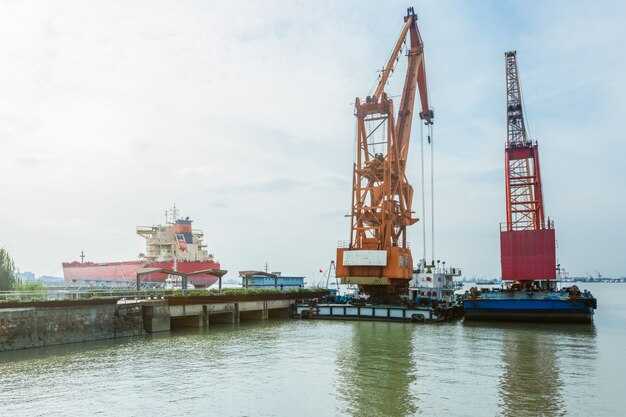
Adopt synchronized berthing windows and automated gate scheduling within 12 months to cut median truck turnaround by 20% and reduce berth idle time by 15%. Implementing a shared calendar across a group of terminals and establishing a secure link to hinterland rail and urban distribution hubs will reduce delays, allow predictable arrival intervals, and place capacity where demand peaks most.
Data from rotterdam and surrounding ports show peak queueing concentrates in two to three hourly intervals; then targeted 30‑minute buffers and real‑time slot reassignment lower average wait by 25%. Pilots that have been completed demonstrate that terminals connected via standard APIs move toward continuous coordination, with freighters experiencing fewer unplanned waits and city delivery schedules stabilizing.
Begin by establishing API governance, deploy a three‑phase roll‑out (connect, test, scale) over 9–12 months, and assign a small cross‑functional team to monitor the first 60 days. Use priority slots for short‑stay freighters, group gate assignments to limit lane switching, and set measurable KPIs: target a 20% reduction in delays, 10% higher berth utilization, and sub‑2‑hour truck dwell for most cargo types. Expect initial friction as systems become connected, then measurable improvement once integrations complete.
Practical Blockchain Applications for Port Operators
Adopt a permissioned blockchain for cargo provenance and gate automation to reduce container dwell time by 25–35% within 12 months; this recommendation targets measurable efficiency gains while minimizing disputes and manual paperwork.
-
Document exchange and custody tracking:
- Tokenize bills of lading and customs declarations so that a single cryptographic record replaces multiple PDFs. Targets: reduce document processing time from 6 hours to under 45 minutes per shipment and cut courier costs by up to 70%.
- Use role-based access to enable secure sharing of information among carriers, terminals, customs and forwarders; define what fields go on-chain (hashes) versus off-chain (encrypted payloads).
- Methods: anchor hashes on-chain for auditability, store full documents in secure object storage, and provide on-chain pointers to ensure provenance without exposing sensitive data.
-
Smart contracts for billing, demurrage and detention:
- Automate trigger-based invoicing when terminal operating systems report gate-out events. Expected outcome: reduce billing disputes by 50% and accelerate cash collection by 20–30 days.
- Design contracts with clear settlement rules, dispute windows, and escrow options to minimize counterparty risk and to make decision-making transparent.
-
Real-time visibility with IoT + blockchain:
- Connect container sensors and berth equipment to the ledger for immutable movement logs. Combine position, temperature and weather feeds to create a full event record that supports claims and insurance.
- Operational targets: increase on-time gate operations by 10–15% and reduce inspection rework by 30% through trusted telemetry.
-
Regulatory compliance and single source of truth:
- Provide customs and port authorities read-only access to authenticated proofs; customs said such access shortens clearance cycles and reduces manual checks.
- There should be predefined APIs and governance rules to ensure data provenance while respecting confidentiality.
-
Terminal integration and latency requirements:
- Integrate via message brokers with TOS and VTS; set latency targets under 1 second for gate confirmations and under 5 seconds for berth allocations to keep operations smooth.
- Run reconciliation jobs nightly and full audits monthly to measure data fidelity between on-chain records and legacy systems.
-
Workforce training and operational adoption:
- Set a minimum training plan: 8 hours for gate staff, 16 hours for supervisors and 24 hours for IT/security administrators. Include hands-on exercises and real incident playbooks.
- Assign a cross-functional adoption team (operations, IT, legal) to handle exceptions; this reduces errors and builds trust among users.
-
Pilot design and KPIs:
- Start with a 3-month pilot that processes at least 500 TEUs and involves two carriers, one customs office and one terminal. Ambition: prove ROI within the pilot window.
- Measure: container dwell time, dispute rate, paperwork volume, and throughput. Minimum acceptable outcomes: 15% dwell reduction, 40% fewer disputes, and paperwork down by 60%.
-
Security, privacy and standards:
- Choose a permissioned chain, apply encryption-at-rest, and adopt open standards for identity and messaging. Use selective disclosure and zero-knowledge proofs where privacy matters.
- Plan for key rotation, incident response and third-party audits to ensure resilience and stakeholder confidence.
-
Cost, scaling and ROI assumptions:
- Estimate initial integration and governance setup at $250k–$750k for a medium-size port; incremental node and maintenance costs typically run 10–15% of initial spend annually.
- Forecast payback within 12–24 months if you achieve the pilot targets above, driven by lower detention costs, faster customs release and increasing berth utilization.
Implement these steps iteratively: define minimum on-chain data schema, run a connected pilot, measure against defined KPIs, then scale interfaces and workforce training. This approach minimizes disruption, aligns stakeholders on what success means, and delivers very concrete operational gains for the harbor.
Replacing paper bills of lading: step-by-step migration and legal checks
Adopt an eBL solution that implements UNCITRAL MLETR compliance, PKI-backed signatures and an auditable transfer ledger as your mandatory baseline requirement.
Step 1 – Legal audit (2–4 weeks): map jurisdictions for every trade lane, confirm whether MLETR or equivalent local law exists, verify recognition of electronic transferable records, and list courts where paper negotiability still dominates. Require written confirmation from local counsel for ports, banks and flag states that eBLs will be enforceable; do not proceed without those confirmations.
Step 2 – Commercial contracts and clauses (3–6 weeks): update bills of lading, charterparties and freight contracts with explicit eBL clauses that define issuance, transfer, endorsement, and fallback to paper. Specify bank acceptance language for documentary credit workflows and include acceptance thresholds for endorsements, time-stamped custody handovers and dispute resolution forums.
Step 3 – Technical selection and tests (4–8 weeks): choose platforms that offer TLS 1.2/1.3, HSM key management, role-based access, RFC-compliant APIs, ISO/UN/CEFACT messaging compatibility and end-to-end audit trails. Require SLA commitments: >=99.95% uptime, RTO <1 hour, RPO <15 minutes, continuous monitoring and weekly security scans. Run a 4-week smoke test then a 12-week operational pilot that processes at least 200 shipments or 5% of weekly volume, including at least one heavy-duty shipment type such as project cargo.
Step 4 – Operational pilot and KPI gates (12 weeks): involve carriers, terminals, shippers, banks and customs. Set pass thresholds: >=95% successful e-releases, <2% manual interventions, reduction in average document release time by >=70%, and verified cost savings per BL of >=50%. If gates pass, then expand lanes; if not, remediate and re-run the pilot week cycle until thresholds meet targets.
Step 5 – Governance and training (continuous): establish a governance board with legal, IT, operations and bank representatives, implementing an incident-response plan, key-rotation schedule and dispute escalation ladder. Deliver role-specific training: 2 weeks for operations, 1 week for legal teams, and bite-sized micro-training for frontline staff. Record all sessions and require certification for staff handling negotiable transfers.
Step 6 – Scale and interoperability (3–9 months): roll out first to high-volume corridors and then to secondary lanes. Prioritize connectors to existing TMS, terminal OS and customs APIs to reach end-to-end automation. Maintain an interface catalogue and a sandbox for carriers to test integrations; adopt common message formats to reduce integration time by an estimated 40%.
Legal checks to perform at each stage: verify negotiability under local law, confirm bank acceptance for letters of credit, validate retention and archiving requirements (retention windows often vary from 3 to 10 years), perform data protection impact assessments, and ensure admissibility of electronic evidence in courts likely to hear disputes. Keep a register of legal opinions per jurisdiction and update it quarterly.
Technical and operational safeguards: require immutable audit trails, multi-factor operator authentication, explicit custody-transfer events, certificate revocation lists and transparent dispute logs. Plan a contingency for paper fallback with signed chain-of-custody rules; treat the fallback process as a heavy-duty workflow that must meet the same legal checks to avoid liability leaks.
Measurement and sustainability: track continuous KPIs – percentage eBL adoption, average release time, dispute rate, platform uptime and CO2 reduction from reduced courier movement. Target 12 months for widespread adoption on core lanes, align targets with the company’s green transport ambition, and publish monthly dashboards to maintain stakeholder confidence.
Commercial rollout note: focus first on corridors with high terminal digitization and supportive regulators – leading ports and hubs have smoother transitions; a targeted pilot in shanghai or similar hubs accelerates banking acceptance and carrier buy-in. Prioritize establishing long-term relationship agreements with your technology provider to lock SLA, maintenance windows and upgrade paths so that legal, operational and technical expectations do not drift forever.
Integrating blockchain with terminal operating systems: API design and data mapping

Adopt a dual-layer architecture: keep full records off-chain in a secure repository and anchor cryptographic hashes on-chain while exposing a versioned REST API and streaming webhooks to terminal operating systems for low-latency updates.
Design a common event schema that maps TOS entities to blockchain artifacts. Map container -> asset (ISO 6346 container_id), booking -> reference_id, and gate/yard moves -> event records. Examples show a minimal JSON event payload for a gate-in: {“event_type”:”GATE_IN”,”container_id”:”MSCU1234567″,”timestamp”:”2026-01-01T12:00:00Z”,”terminal”:”Terminal-South-A”,”vehicle_id”:”VEH-456″,”status”:”shipped”}. Keep payloads compact (max 2 KB) and include an attached hash field for on-chain anchoring.
Anchor strategy: compute a Merkle root for batched events every 1–5 minutes or every 1,000 events and publish the root to the chain. Anchor percent guidance: anchor 5–10 percent of raw records explicitly and use Merkle proofs to verify the remainder; this reduces cost while preserving proof integrity. Mark PII as hidden and store encrypted pointers off-chain; expose only necessary attestations to the port authority.
API design specifics: publish POST /v1/events (idempotent via client_uuid), GET /v1/assets/{id}/history, and POST /v1/webhooks/register. Require HMAC-SHA256 signatures on writes, TLS 1.3 for transport, and JWT-based mTLS for high-trust partners. Provide an execution model where each POST returns {“received”:true,”local_id”:”evt-0001″,”merkle_batch”:”batch-42″} and a separate callback when the batch is anchored on-chain with transaction info.
Data mapping recommendations: normalize codes to a single standard (UN/LOCODE for terminals, ISO 6346 for containers, UN/CEFACT for commodity codes) before hashing. Avoid circular references by using immutable keys (asset_id, event_id) and resolve relations via lookup endpoints. First validation step should enforce schema and ISO codes; second step signs and batches events for anchor.
Operational metrics and governance: track percent of events anchored, average anchor latency (target <300s), and error rate (<0.1%). Gather logs centrally and expose metrics to terminals and companies with role-based access. Use monitoring to detect data drift as growth approaches 2x yearly and scale batching accordingly.
Security and privacy: rotate keys quarterly, use threshold signing for multi-authority execution, and encrypt hidden fields with tenant-specific KEKs. Provide proof-of-existence without exposing payloads by returning Merkle proofs to auditors and the port authority only when requested under defined policies.
Interoperability and ecosystem play: make APIs compatibility-first with existing EDI flows so legacy systems can send normalized events while newer systems use JSON or gRPC. Pilot with a south country terminal and a technology partner such as sinay to validate emission tracking: record vehicle telemetry and pollution readings in the TOS, anchor summaries on-chain for regulator audits, and allow companies to query proofs that goods were shipped and monitored.
Onboarding partners and defining smart-contract roles: access, permissions, and SLA clauses
Adopt a mandatory three-step onboarding: verified KYC, role mapping in smart contracts, and SLA signature stored as an on-chain hash to create transparency that remains forever; register your stakeholders and issue role tokens immediately after verification.
Map roles with clear permissions: Admin (3-of-5 multisig for upgrades), TerminalOperator (role token granting port-gate and crane commands), Carrier (tracking and settlement rights), Auditor (read+challenge), OracleSigner (write sensor feeds). Use role-based access with attribute overrides for short-term needs, including time-limited JWT-style proofs and a back-channel revocation queue so you can handle emergency removals without hard forks.
Write SLA clauses into contracts with numeric thresholds: availability >= 99.9 percent per calendar month, telekom link latency <= 150 ms, sensor sampling >= 1 Hz for berth occupancy, maximum dwell increase due to congestion <= 15 percent. Encode penalties as staged holdbacks (5 percent per breach, capped at 50 percent) and a quick 48-hour remediation window before funds move to escrow. Tie success metrics to measurable KPIs and allocate costs reductions to parties (example: expected reconciliation costs fall 35 percent, dispute resolution time drops from 9 days to 48 hours).
Integrate on-chain rules with off-chain telemetry: sign sensor payloads at edge gateways, anchor SHA-256 hashes on blockchain, and store raw water- and cargo-sensor streams off-chain with immutable pointers. Combine rtificial intelligence models for berth prediction with deterministic oracles; seen improvements in berth assignment can reduce idle crane time by double digits. Use innovation labs with telekom partners to test UDP vs TCP feeds and measure packet loss against SLA windows.
Provide an onboarding checklist your operations team can run in under 48 hours: identity verification, role assignment, token mint, testnet SLA test, mainnet binding, stakeholder sign-off. Require documented decision rules for adaptive permissions, list who said yes for each role, and monitor three acceptance metrics: time-to-onboard, percent of automated disputes, and average time-to-decision. Deliver these stats to terminals and carriers weekly so teams can adapt resource allocation and scale access models as needs evolve.
Tracking cargo provenance on-chain: required sensors, data feeds, and validation rules
Deploy a layered on-chain provenance stack: tamper-proof edge sensors, redundant connectivity, content-addressed off-chain storage, and deterministic smart-contract validation that records only signed attestations and Merkle roots on-chain.
Sensors and sampling: use GPS/GNSS with RTK fallback for yard/vessel accuracy (1 Hz when moving, 0.01 Hz idle), a 3-axis accelerometer at 100 Hz for shock events, a tilt sensor sampled on change >1°, door-open reed switch or hall sensor latched on event, temperature/humidity probes at 5-minute intervals for chilled products, light/pressure sensors for seal breaches. For perishable freight set temperature thresholds: refrigerated: 2°C ±0.5°C; frozen: -18°C ±1°C. Flag a breach if threshold exceeded for >15 minutes. Battery sizing: target 3–5 year life with GPS duty-cycling and sleep-mode; energy harvesting (solar/vibration) helps extend life for yard assets.
Connectivity and availability: combine NB-IoT/4G + LoRaWAN gateways + BLE for local readouts to achieve >99.5% availability; design sensors to cache 7 days of samples when offline and to flush in FIFO on reconnection. Use dual-SIM cellular where GNSS + cellular gaps exist. Connected yard gateways should forward data to an edge validator within 5 seconds of receipt.
Data feeds to anchor provenance: push raw sensor payloads to IPFS (or S3 with content hash) and anchor Merkle roots on-chain every 1–5 minutes or per 100 events, whichever comes first, to balance cost and auditability. Integrate AIS vessel tracks, port gate OCR, RFID/EPC reads, carrier EDI manifests, and customs API feeds; annotate each on-chain attestation with source IDs, timestamps (UTC, NTP-synced), and signer public keys. Use oracle middleware (open standards or vetted providers) for external feeds and record oracle SLA/availability metrics on-chain.
Cryptographic and signing rules: require ECDSA secp256k1 signatures from the last custodian and the recipient for each transfer event; anchor a Merkle proof of the signed payload to the block. Store private keys in HSMs or secure enclaves; rotate keys on a 90-day schedule and mandate multi-sig (2-of-3) for high-value transfers. Timestamp validation: accept events with clock skew ≤ ±120 seconds from node NTP baseline; reject or quarantine otherwise.
Deterministic validation rules (smart contracts): enforce state transitions only after passing these checks: 1) identify: container ID (GS1/EPC) matches manifest and at least one physical sensor read within ±15 minutes; 2) transfer: require recipient signature plus proximity evidence (RFID read or BLE RSSI within gateway) or gate OCR corroboration within 15 minutes; 3) enter/exit port: require gate OCR + RFID or two independent sensor corroborations; 4) anomaly rules: accelerate inspection if accelerometer records >5 g peak, tilt >15°, or temperature breach > preconfigured tolerance for >15 minutes. Implement a quarantine state that prevents subsequent automated transfer events until manual review by authorized operators.
Anti-tamper and validation heuristics: detect tampering by combining metrics: sudden loss of heartbeat >30 minutes, repeated time jumps, inconsistent GNSS jumps >500 m in <60 seconds, sensor signature mismatches, or unmatched gateway routes. Require at least two independent sources for any critical state change (e.g., gate-entered must have OCR + RFID or OCR + GPS). Log all reconciliations and exceptions on-chain to create an auditable trail that saves dispute resolution time.
Operational metrics and costs: target sensor hardware cost $60–$120 per unit, connectivity $5–$12/month (NB-IoT/LoRa), edge gateway $500–$2,000. Batch Merkle anchoring or use Layer‑2 to reduce per-event on-chain cost to < $0.01 equivalent; expect a pilot to pay ~$0.02–$0.05 per attestation on public L1 without batching. Early anomaly detection can reduce claims by ~25–35% and cut dwell time by 10–30%, a huge ROI for high-volume terminals.
Governance, training, and roll-out: define roles, key rotation, and dispute arbitration in a consortium charter; require operator training on sensor replacement, gateway diagnostics, and exception workflows–two 4‑hour sessions per site plus quarterly refreshers. Address integration gaps with carriers and customs while running a 3‑month pilot in a south hub port (example: a port serving 1.2M inhabitants) to validate latency, coverage, and operational procedures. Several companies have been using these rules; companys operational teams reported fewer manual interventions and faster handovers.
Follow these recommendations to identify provenance steps, reduce manual reconciliation, and create an efficient, auditable on-chain trail that could become the best practice for modern freight tracking.
Designing pilot projects: scope, KPIs to measure, and scale-up decision points
Begin a pilot that lasts 6–12 weeks, covers a single berth, one cargo type, and one shift, and includes a signed go/no-go matrix that ties payments and vendor commitments to KPI thresholds.
Define scope precisely: 10–30 vessel calls, 1–3 cranes per berth, 24/7 operations monitored for at least 30 calendar days. Establish baseline metrics during a two-week pre-pilot window so the delta for each KPI reflects operational reality.
Measure operational KPIs hourly and report daily: berth occupancy (% of time a vessel is alongside), average ship turnaround (hours), crane moves per hour, truck gate wait (minutes), dwell time (hours), and TEU throughput per 24h. Set numerical targets: turnaround reduces ≥15%, crane productivity improves ≥10%, gate wait reduces ≥25%, dwell time reduces ≥20% and energy per move reduces ≥8%. Require ≥99% system uptime over 30 consecutive days and zero increase in reportable safety incidents.
Capture financial and commercial KPIs: OPEX delta per TEU, pilot cost recovery (months to break-even), incremental revenue from faster berth reuse, and client satisfaction (Net Promoter Score ≥+30 or 4/5 average). Weight the scorecard: 40% operational, 30% financial, 15% safety, 15% client feedback.
Instrument the site for objective tracking: AIS + mooring sensors for berth events, RFID/CCTV for yard, gate sensors, and a telemetry feed for cranes. Integrate a rtificial module for anomaly detection, and choose interoperable stacks – e.g., data-plane components from nextlogic and secure networking services from cisco – to avoid vendor lock-in.
Ensure human factors: assign dedicated operators for the pilot, run daily debriefs, schedule safety patrol rounds, and mandate a second trained operator per shift. Operator acceptance must reach ≥75% positive in surveys before scale-out; training cadence should be 2 hours/day for the first two weeks.
Establish governance and approvals up front: local port authority sign-off on operating limits, customs/inspection coordination, and clear SLAs for incident response. Engage clients early: two anchor clients should sign trial acceptance criteria and participate in weekly reviews so commercial impacts become visible fast.
Set scale-up decision points: if after 6 weeks the weighted score exceeds 75% and key deltas (turnaround, crane productivity, gate wait) meet targets for a continuous 14-day window, expand to a second berth for 8–12 weeks. If improvements persist and international compliance checks pass, move to terminal-wide roll-out in staged tranches between 1 and 6 months.
Document risks and mitigations explicitly: operational disruption – phased roll-out and rollback plan; cybersecurity – hardened cisco networks and segmented VLANs; safety – continuous patrols and human override; commercial – short client opt-out clauses. Track residual risks, assign owners, and re-evaluate weekly.
Use a go/no-go checklist for each scale step that encompasses KPIs, vendor performance, human readiness, regulatory clearance, and client endorsements. Thanks to that checklist, stakeholders can quantify benefits, quantify impacts on schedule and cost, and decide whether adopting the solution will reduce costs and become standard practice across terminals.